10 Steps to Safely Fly With a Gun
To safely fly with a gun, start by verifying regulations and airline policies for your entire route. Knowing the rules ahead of time helps prevent any surprises at the airport. Each airline and destination might have slightly different requirements, so double-check everything before you pack.
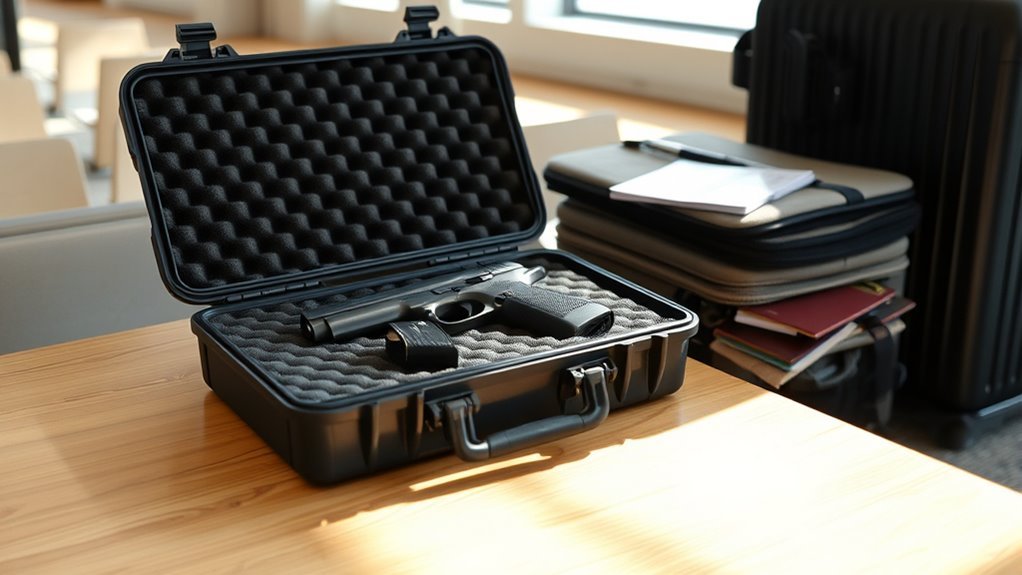
Use a hard-sided, TSA-approved lockable case and unload your firearm completely. This keeps your gun secure and follows TSA guidelines, which is super important.
Pack ammunition separately in approved containers within airline limits. Never mix your ammo with your firearm case to avoid any issues.
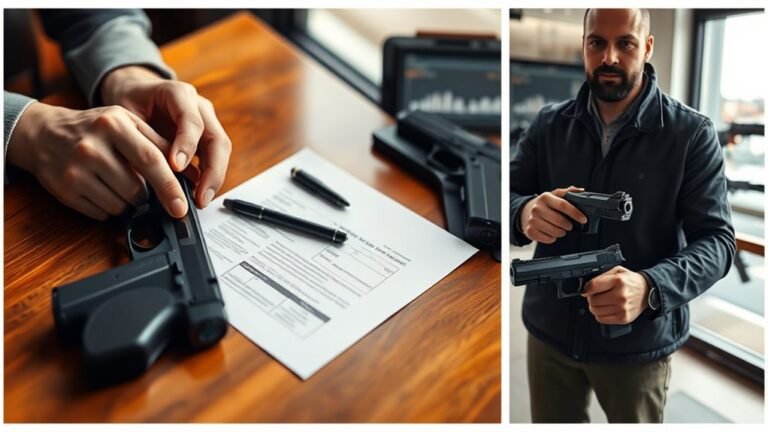
Declare your firearm and ammo at check-in, place the declaration card on top, and keep your keys handy for TSA inspection. Being upfront with the airline makes the process smoother.
Follow all security procedures carefully to avoid fines and delays. Keep these steps in mind to make certain smooth, legal travel with your firearm. It’s all about staying safe and compliant so your trip goes without a hitch.
Key Takeaways
– Verify firearm laws and airline policies at all travel points before flying to ensure compliance and avoid legal issues.
It’s super important to check these ahead of time so you don’t run into any surprises at the airport.
– Unload firearms completely and pack them in a hard-sided, TSA-approved locked case with ammunition stored separately.
This helps keep everything safe and follows TSA regulations to a T.
– Declare all firearms and ammunition at airline check-in and complete required declaration forms accurately.
Being upfront here makes the process smoother for you and the airline staff.
– Keep keys or combinations accessible for TSA inspection and remain nearby during potential security screening delays.
That way, if TSA needs to check your case, you can quickly assist without any hassle.
– Follow all TSA and airline procedures patiently to ensure smooth inspection and prevent penalties or confiscation.
Staying calm and cooperative really goes a long way in making your travel experience stress-free.
Verify Destination and Airline Firearm Travel Policies
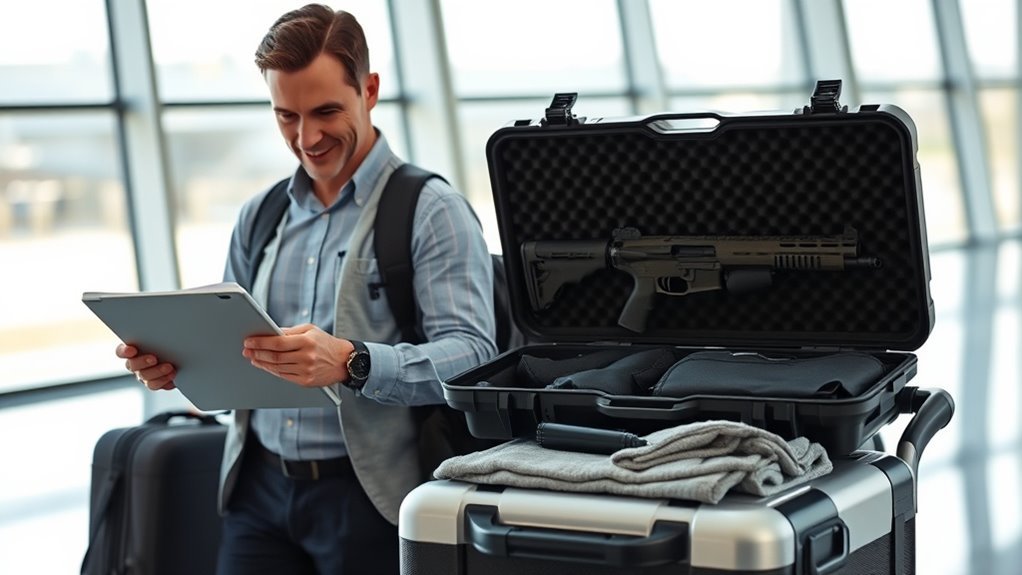
Before you pack your firearm for a flight, make sure you verify the laws and regulations at your destination and any layover locations. Firearm possession rules can vary widely, so checking compliance with all applicable regulations is vital.
Review your airline’s specific policies on transporting firearms, including whether your firearm must be placed in checked baggage and how to complete any required declaration forms. Some airlines may require additional documentation or have weight limits, so it’s essential to follow their procedures precisely.
Also, consider the regulations at any connecting airports, as firearm rules might differ during layovers. By confirming these details ahead of time, you’ll guarantee a smooth, legal journey with your firearm and avoid unexpected complications.
Choose a Hard-Sided Case and Secure Lock for Your Firearm
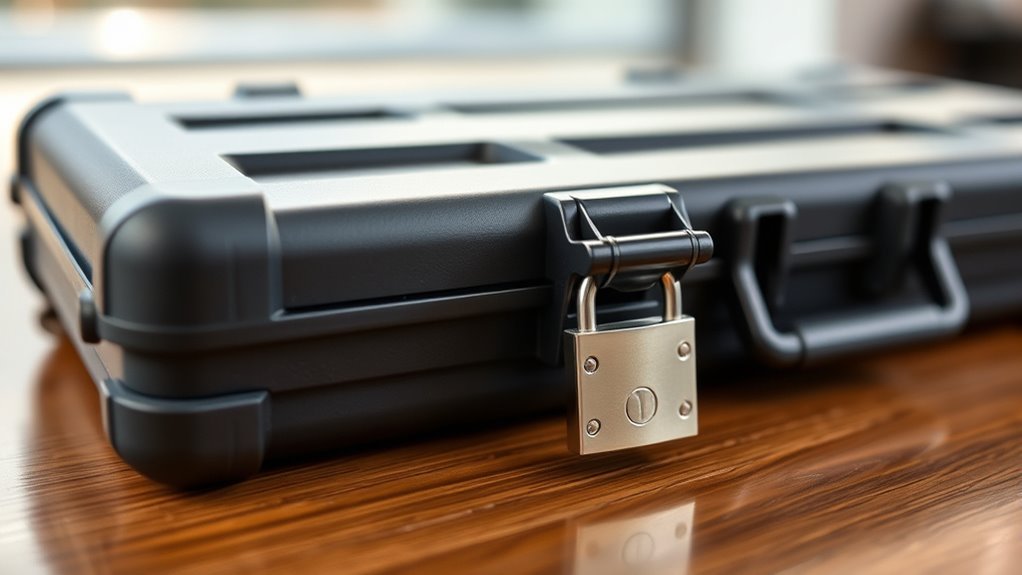
You’ll want to use a hard-sided case to protect your firearm from damage and keep it secure during travel. Choose a lock that’s TSA-approved so airport security can access it if needed without breaking your lock.
Make sure you keep your keys or access code with you. Also, double-check that the case is fully locked before checking it in. That way, you’ll avoid any surprises at the airport.
Hard-Sided Case Benefits
Choosing a hard-sided case with a secure lock is essential when flying with a firearm. A hard-sided case offers superior impact protection, shielding your firearm from rough handling during transit.
TSA regulations require that firearms be transported in a tamper-proof, lockable container, guaranteeing only you or authorized personnel can access it. This secure design minimizes the risk of accidental discharge or damage, giving you peace of mind throughout your journey.
Using a lockable hard case also complies with TSA regulations, making the check-in process smoother and hassle-free. Ultimately, investing in a quality hard-sided case not only protects your firearm but also ensures safe, legal, and worry-free firearm transport every time you fly.
Lock Types and Options
While selecting a hard-sided case is essential, pairing it with the right lock is equally important to keep your firearm secure during travel. Choose a lockable case that accepts a sturdy lock type, either a key lock or a combination lock, depending on your preference.
TSA-recognized locks are widely accepted and designed to meet security standards, but you can use any strong, tamper-proof lock that fits your case. Just make sure you keep the key or combination to yourself, as only you should access the firearm unless TSA requests otherwise.
Before packing, test the lock and case compatibility to ensure they work seamlessly together. This careful selection enhances security and complies with airline regulations, giving you peace of mind throughout your journey.
TSA Access Considerations
Pairing your hard-sided case with the right lock is just the start of securing your firearm for air travel. Use a TSA-recognized lock or any secure lock to keep your firearm in a locked case that won’t be easily pried open.
Keep the keys or combination with you, never in checked baggage, unless TSA requests access. During inspection, TSA may need to open your locked case, so be prepared to provide access promptly.
Unload and Pack Your Firearm Safely for Air Travel
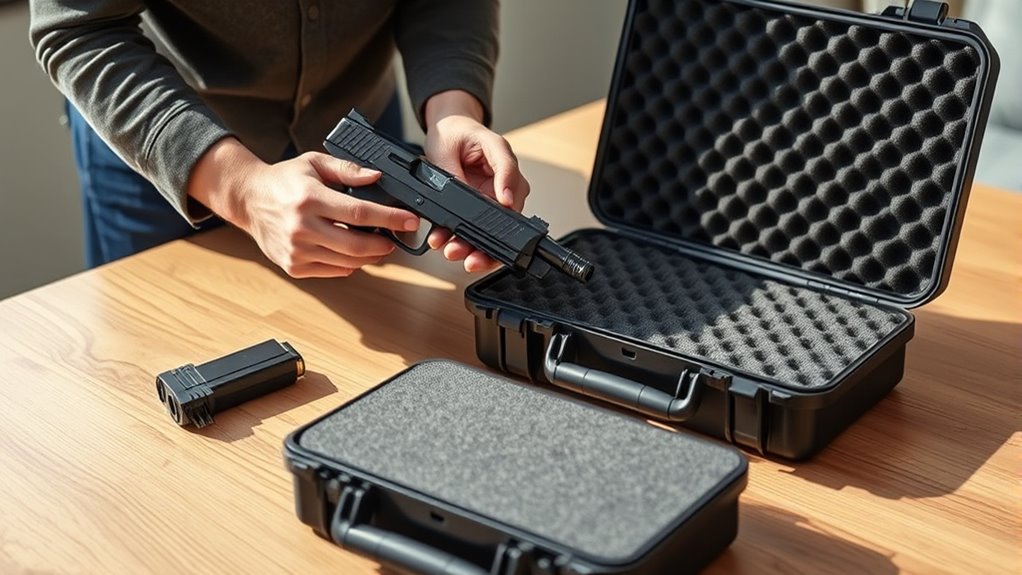
Before you pack your firearm for air travel, make sure it’s completely unloaded, with an empty chamber and no rounds in the magazine. Use a hard-sided, lockable firearm case to secure your gun.
Make sure the case is properly locked with a TSA-recognized lock, or another lock if TSA access is needed. Inside the case, add padding like foam or cloth to keep your firearm from moving around and getting damaged during the trip.
Store magazines separately, and double-check they’re unloaded too. You can pack them inside the locked firearm case or in your checked luggage.
When you get to the airport, don’t forget to declare your firearm at check-in. Just let the airline staff know and place your declaration card on top of the locked case.
Following these steps will help you stay within regulations and keep your firearm safe the whole journey.
Pack Ammunition Properly Within TSA and Airline Limits
Since ammunition has specific packing and weight requirements, you’ll need to store it in a secure, hard-sided container—like the original box or a purpose-made ammo case. Make sure to keep it separate from your firearm within your checked baggage.
Always guarantee your case is locked to comply with TSA regulations and airline policies. Different airlines have varying limits, so be sure to check those before you pack.
| Requirement | Detail | Tip |
|---|---|---|
| Container Type | Hard-sided, locked case | Use ammo box or original box |
| Storage | Separate from firearm | Declare and pack in checked baggage |
| Weight Limits | Varies by airline | Southwest allows 11 lbs max |
Following these guidelines helps keep your ammunition secure and prevents confiscation or delays. It’s always better to be safe and prepared!
Pack Multiple Firearms and Ammunition Within Airline Limits
When you’re flying with multiple firearms and ammunition, you’ll need to pack each firearm in its own locked, hard-sided case. Make sure each one is fully unloaded and declared at check-in.
Place all firearms in your checked baggage, making sure each is secured in a separate, TSA-compliant container. Store ammunition separately in secure containers designed to prevent damage or movement, like original manufacturer’s boxes.
Be mindful of airline-specific ammo limits—often around 11 pounds—and check the quantity restrictions for both firearms and ammo before you pack. Going over these limits can cause delays or even violations.
Always declare firearms and ammunition clearly at check-in, following TSA regulations to keep things running smoothly. By carefully packing multiple firearms and ammo within airline limits, you’ll help keep your travel safe and hassle-free.
Declare Your Firearm and Ammunition Clearly at Check-In
You’ll need to declare each firearm and all ammunition separately at the airline check-in counter to guarantee compliance and avoid delays.
When you arrive, let the airline staff know about every firearm you’re transporting. Then, fill out a declaration card with your details, confirming each firearm is unloaded and securely stored.
Place this card on top of the locked, hard-sided case inside your checked luggage. If you’re carrying multiple firearms in one locked case, be sure the airline staff knows about it.
Also, make sure all firearms are unloaded and locked according to TSA regulations. Declaring clearly at the check-in counter helps streamline the process and ensures your firearms meet legal requirements.
Proper declaration prevents misunderstandings and sets you up for a smooth security experience. It really makes the whole process easier for everyone involved.
Get Ready for TSA Firearm Inspections and Keep Your Keys Handy
One key step to smooth TSA firearm inspections is keeping your case keys or combination with you at all times. Use a TSA-recognized lock to secure your firearm case, but never leave keys inside.
Declare the firearm at check-in, then guarantee your firearm case is locked before the TSA inspection. TSA may request access, so have your keys handy and stay nearby for any additional checks.
| Step | Action | Reason |
|---|---|---|
| Declare the firearm | Inform airline at check-in | Avoid penalties |
| Secure your case | Use TSA-recognized lock | Protect firearm integrity |
| Keep keys handy | Carry keys or combination | Facilitate TSA inspection |
Follow Airline and TSA Procedures During Firearm Security Screening
When you check in, always declare your firearm to the airline staff and follow their instructions carefully. Expect TSA agents to inspect your locked, unloaded firearm case and be ready to provide access if requested.
Staying patient and cooperative will help your screening go smoothly. It’s really just about keeping things easy and safe for everyone involved.
Firearm Declaration Process
Although flying with a firearm requires careful preparation, following the airline and TSA declaration procedures guarantees a smooth security screening.
When you arrive at airline check-in, declare your firearm and place it in checked baggage inside a locked case. Make sure to unload the firearm before packing.
Complete and sign the declaration card, affirming that the firearm is unloaded and stored securely. Then, place this card on top of your firearm case so TSA can easily find it.
Remember to:
- Declare your firearm clearly at airline check-in
- Use a sturdy, locked case compliant with TSA regulations
- Unload the firearm before packing it in checked baggage
- Fill out and sign the declaration card accurately
- Keep lock keys accessible for TSA inspection
Following these steps ensures safe, hassle-free firearm transport. Just take your time and double-check everything before you head to the airport!
TSA Inspection Expectations
TSA agents typically inspect your locked firearm case with care, only opening it if necessary. So, keep your keys accessible for quick access.
During security screening, you must declare the firearm and confirm it is unloaded. TSA may ask to see your declaration form or packing documentation to verify compliance.
If they open your case, it will be done in your presence. They may re-lock it using TSA-recognized locks or your own lock.
Stay nearby for at least 30 minutes after check-in to accommodate potential TSA inspection delays.
| Step | Requirement | TSA Procedure |
|---|---|---|
| Declare the firearm | Submit declaration form | Verify documentation |
| Locked firearm case | Use TSA-recognized locks | Open only if necessary |
| Unloaded firearms | Firearm must be completely unloaded | Inspect in your presence |
Know the Legal Risks and Penalties for Traveling With Firearms
Because firearm laws vary widely across local, state, and international jurisdictions, you need to fully understand the legal risks before traveling with a gun. Violating firearm transportation rules can lead to severe legal penalties, including hefty fines and criminal charges.
TSA regulations require you to declare your firearm and secure it in a locked gun case. Bringing a loaded or accessible firearm to security can result in immediate criminal charges. Ignoring these rules can cost you TSA PreCheck privileges, heavy fines, or even arrest.
- Facing fines exceeding $17,000 for violations
- Risking criminal charges for unsecured firearms
- Losing TSA PreCheck privileges permanently
- Having your firearm confiscated unexpectedly
- Being arrested at the airport or destination
Stay informed and comply fully to avoid these dangers. It’s always better to be safe and prepared than to face serious consequences later.
Plan for Arrival, Flight Diversions, and Local Firearm Laws
When you travel with a firearm, you need to plan ahead for your arrival, potential flight diversions, and the local laws that apply at each stop. First, verify firearm laws at your destination and along your route to guarantee legal compliance.
Always keep your firearm unloaded, securely locked in a hard-sided case, and declared at check-in as checked baggage. Flight diversions can complicate matters, as you must follow the local regulations of the new jurisdiction, which may vary considerably.
Use tools like the USCCA reciprocity map to stay informed about state-specific firearm laws during disruptions. Staying aware of these details helps you avoid legal issues and assures your firearm remains compliant no matter where your travels take you.
Frequently Asked Questions
How Do I Bring My Gun When Flying?
You must declare your unloaded gun at check-in, pack it in a locked, hard case, and separate ammunition properly.
Also, make sure to confirm the airline’s policies before you fly. It’s a good idea to arrive early and be ready for TSA inspections.
Doing all this helps guarantee a smooth, legal flight experience. Better safe than sorry, right?
What Is the 333 Rule for Guns?
Think of the 333 Rule as your firearm travel compass. It lets you carry up to 3 guns in 3 locked cases.
Each case can weigh no more than 33 pounds—keeping your journey smooth and compliant with airline regulations. It’s a simple way to stay on the safe side when flying with firearms.
How Difficult Is It to Fly With a Gun?
Flying with a gun isn’t too difficult if you follow rules carefully. You’ll need to declare it, pack it unloaded in a locked case, and comply with airline policies.
Staying organized helps you avoid serious penalties. Just make sure you know the regulations before you go, and you’ll be good to fly without stress.
How Do I Declare My Firearm to TSA?
You declare your firearm by informing the airline agent at check-in and filling out a declaration card.
Keep the gun unloaded, locked in a hard case, and place the card on top inside your checked luggage for TSA inspection.
It’s pretty straightforward once you know the steps. Just make sure everything’s secure and properly declared before you head to the airport.
Conclusion
Traveling with a firearm requires careful planning—did you know TSA screens over 4 million firearms annually, with many found improperly packed? By following these 10 steps, you’ll avoid delays, fines, or legal trouble.
Always double-check airline policies, securely pack your unloaded gun and ammo, and stay prepared for inspections. These small but important details can save you a lot of hassle at the airport.
With the right precautions, you can fly safely and responsibly. This means protecting your peace of mind while staying fully compliant with federal and airline regulations.
Remember, traveling with a gun isn’t just about convenience—it’s about safety and legality. Stick to the rules, pack smart, and you’ll have a smooth trip every time you fly with your firearm.