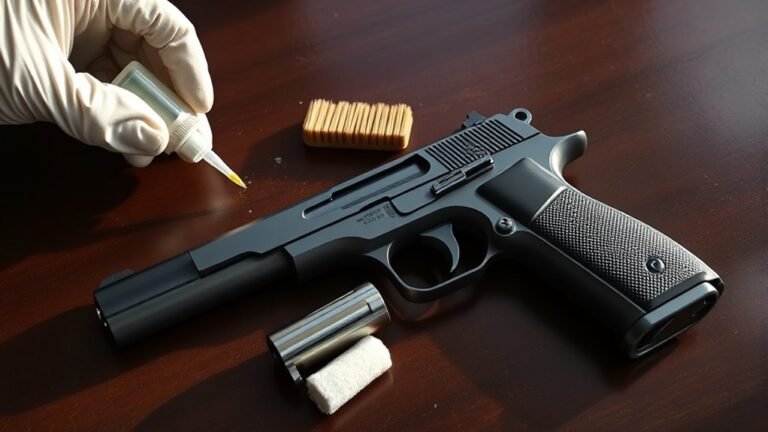
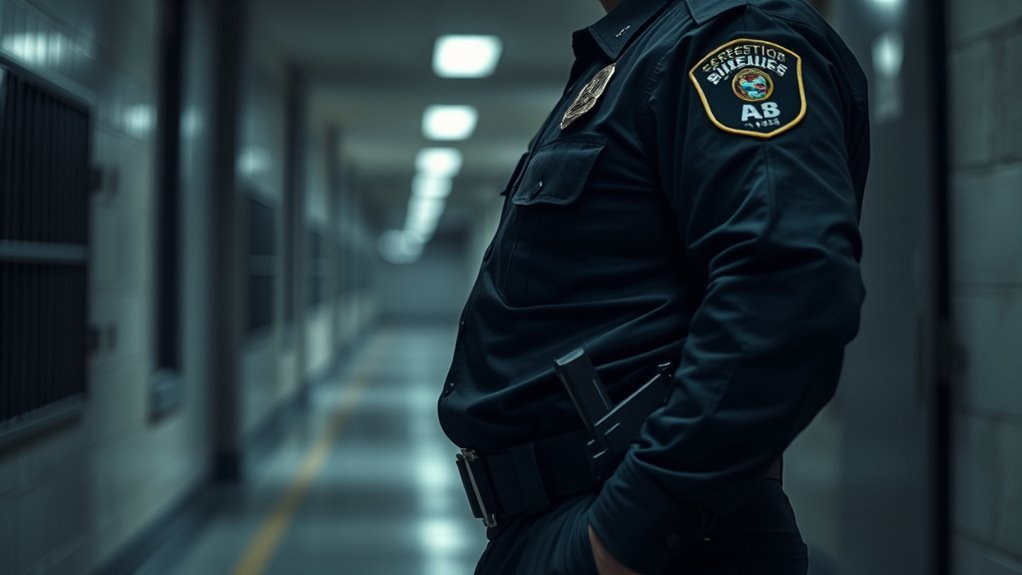
Does Correctional Officers Carry Guns?
Yes, correctional officers can carry guns on and off duty, but only if they have active certification and follow strict state laws and agency policies. Carrying firearms is part of their job, especially for maintaining security and handling potentially dangerous situations.
They often carry handguns during official duties, while rifles and shotguns are reserved for emergencies.
Inside prisons, firearms are usually secured and rarely carried to prioritize safety. This helps prevent accidents and reduces risks for both officers and inmates.
Officers also undergo intensive training to handle weapons responsibly and make quick decisions under pressure.
If you want to understand the specific rules and the impact of gun use in corrections, there’s definitely more to uncover. The policies can vary widely depending on the state and the correctional facility.
So, it’s important to look deeper into how these rules shape the daily work of correctional officers.
Key Takeaways
- Certified correctional officers are authorized to carry firearms on and off duty under state law and agency policies. Firearm carry is regulated, with off-duty concealed carry requiring supervisor approval and proper certification.
- Inside correctional facilities, firearms are rarely carried routinely and are securely stored for emergency use only. Correctional officers may carry handguns, shotguns, and semi-automatic rifles depending on their role and situation.
- Agencies emphasize non-lethal tools and strict protocols to ensure firearm use is safe and controlled. This helps keep everyone safer while maintaining order.
Can Correctional Officers Carry Guns?
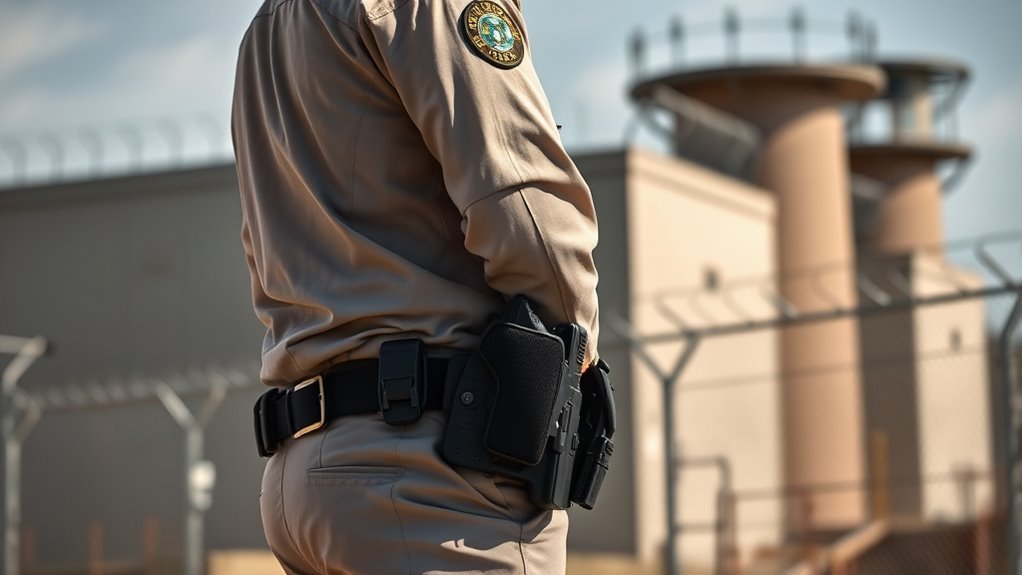
While correctional officers primarily work within secure facilities, they can carry guns both on and off duty if they hold active certification from the Criminal Justice Standards and Training Commission. You should know that correctional officers are authorized to carry firearms openly or concealed, depending on agency rules and their certification.
State laws, like Florida’s Sections 790.052(1) and 790.06, legally empower correctional officers to carry guns beyond their official duties. If you’re a correctional officer, you may also carry weapons during transport, hospital visits, or other approved activities, but only with agency permission.
Legal protections further support your right to carry firearms without needing additional licenses when acting within your job scope. This guarantees correctional officers can maintain safety effectively both on and off duty.
Where and When Correctional Officers Can Carry Guns
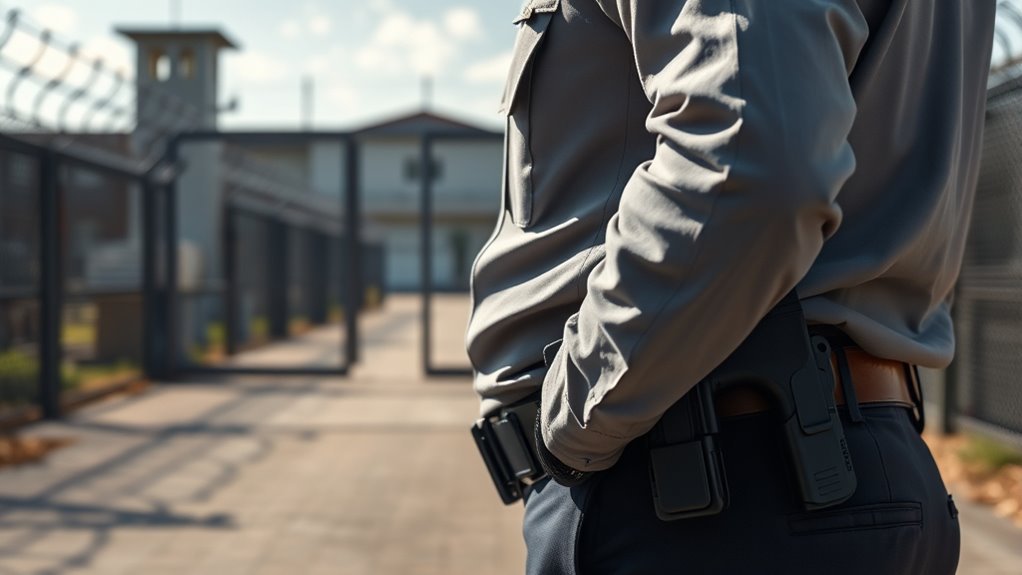
Because correctional officers hold active certification and follow agency policies, you can carry firearms both on and off duty across the state. Whether you’re transporting inmates, providing security, or performing other authorized duties, you’re permitted to carry weapons openly or concealed with agency approval.
Off duty, state laws like Section 790.052(1) allow you to carry concealed firearms if your supervisor agrees. Your agency’s policies usually outline specific times and places for carrying firearms, but your legal authority covers statewide carry as long as you act within your role.
Types of Guns Used by Correctional Officers
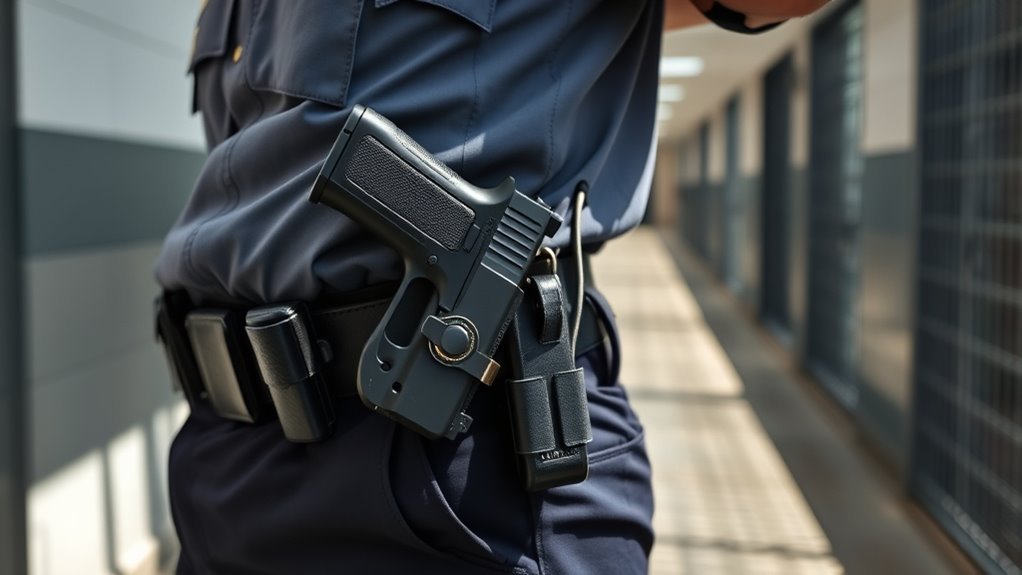
You’ll find correctional officers carrying a range of firearms, from semi-automatic rifles like the Ruger Mini-14 to shotguns loaded with birdshot in certain prisons.
Policies on firearm use vary widely, dictating when and how these weapons come into play. Understanding these differences helps you see how officers balance security with safety inside correctional facilities.
Shotguns In Prison Use
Although many states restrict firearms inside prison walls, correctional officers in some Nevada facilities carry shotguns loaded with birdshot to control inmate behavior. You’ll find shotguns in prison use primarily as a non-lethal option to manage disturbances, with birdshot designed to incapacitate inmates without lethal force.
Officers often rely on models like the Ruger Mini-14 during riots or emergencies, highlighting their role in maintaining order. However, using shotguns inside prisons raises safety concerns since birdshot can still cause serious injuries.
Policies usually require officers to issue warnings before firing, balancing control with caution. Compared to other states, Nevada stands out for its relatively frequent shotgun deployments within correctional facilities.
That makes shotguns in prison use a distinctive part of its security approach.
Semi-Automatic Rifle Access
When correctional officers face emergencies like riots or hostage situations, they sometimes rely on semi-automatic rifles such as the Ruger Mini-14 to maintain control. These rifles provide greater firepower and range, which are essential in vital incidents.
While less common than handguns, the use of firearms like semi-automatic rifles is carefully controlled. They’re stored securely and only accessed under strict protocols.
You’ll find that policies vary by facility, but training is always mandatory before officers handle these weapons.
Key points about semi-automatic rifle access include:
- Reserved for specialized, high-risk situations
- Stored in secure locations within the facility
- Provides enhanced firepower and accuracy
- Use governed by strict protocols and training
- Less common than handguns but indispensable in emergencies
Policy On Firearms
How do correctional officers manage their firearms across different duties and settings? Typically, officers carry handguns, tasers, and sometimes shotguns or semi-automatic rifles, depending on facility policies and their specific roles.
Inside prisons, they usually don’t carry firearms routinely but have access to shotguns loaded with birdshot for certain situations. When officers perform off-site duties like inmate transport, they often carry handguns and shotguns to guarantee security.
Many agencies also issue tasers and body cameras, emphasizing non-lethal force and accountability. This approach reduces the need to rely on firearms inside facilities.
State laws and agency policies regulate the types of guns officers can use. Some facilities even allow certified officers to carry concealed firearms off-duty, showing how varied and controlled the use of firearms is in correctional work.
How Correctional Officers Train to Carry Guns
Because carrying a firearm requires more than just aiming skills, correctional officers train through scenario-based drills, proficiency tests, and safety protocols designed to prepare them for real-life situations.
You’ll learn to handle firearms safely, make quick decisions under stress, and work effectively with your team. Maintaining certification from the Criminal Justice Standards and Training Commission is essential to legally carry firearms.
Training also covers managing transport situations and following strict departmental policies to prevent misuse. Here’s what you can expect in training:
- Scenario-based firearm drills simulating real incidents
- Regular proficiency evaluations
- Emphasis on communication and teamwork
- Instruction on legal and safety protocols
- Continuous training to keep skills sharp and certified
This all-encompassing approach ensures you’re ready whenever firearms are necessary.
Why Officers Don’t Usually Carry Guns Inside Prisons
Although correctional officers are trained to carry firearms, they rarely bring guns inside prisons. You won’t usually see officers carrying firearms during routine inmate supervision because prisons prioritize safety and control differently.
Instead, officers rely on tools like tasers, gas, and physical force to manage inmates. Firearms are stored securely and only accessed in extreme situations, such as riots or hostage crises.
Carrying guns inside correctional facilities poses significant risks, so internal policies discourage their routine use. Officers generally carry badges and radios as their primary equipment, keeping firearms reserved for emergencies.
Many states and the federal system even limit or prohibit firearms inside prisons to maintain order and reduce the chances of accidents or misuse. It’s all about keeping everyone as safe as possible.
Policies and Laws Governing Gun Use by Correctional Officers
You need to understand the specific regulations and legal restrictions that govern how correctional officers carry and use firearms. Agencies set policies that outline when and where officers can carry guns, but state laws also provide key protections and authority.
Let’s explore how these rules shape firearm use for correctional officers. It’s important to know both the agency policies and the legal framework they operate within. This way, officers can stay safe and act within the law.
Firearm Use Regulations
When correctional officers maintain active certification, they can carry firearms both on-duty and off-duty, depending on their agency’s rules. You’ll find that state laws, like Florida’s sections 790.052 and 790.06, give officers the legal right to carry concealed firearms outside work.
However, agencies set policies that regulate when and where you can carry firearms, ensuring safety and compliance. You may carry weapons openly or concealed as authorized, but always within your official duties.
Legal protections often exempt you from licensing and provide liability immunity under specific statutes. So, while the law supports your rights, it’s important to follow your agency’s guidelines closely.
- Firearm carry rights depend on active certification
- Agency policies can restrict carry locations and times
- Concealed and open carry allowed per agency rules
- State laws support off-duty concealed carry
- Legal immunities protect officers using firearms appropriately
Legal Restrictions Overview
Understanding the legal restrictions on firearm use by correctional officers helps clarify how state laws and agency policies work together to regulate gun carrying. You must be certified by the Criminal Justice Standards and Training Commission to legally carry firearms on and off duty.
Florida statutes generally prohibit civilians from carrying firearms, but certified correctional officers get specific exceptions. Off-duty carrying of concealed firearms depends on supervisor approval, while agency policies may set additional limits without overriding your statutory rights.
| Aspect | Details |
|---|---|
| Certification | Required for legal firearm carrying |
| Statutory Exceptions | Allow certified officers to carry firearms |
| Concealed Carry Off-Duty | Allowed with supervisor discretion |
| Agency Restrictions | May limit carrying time/location |
| Legal Protections | State laws explicitly protect firearm use at work |
Correctional Policies Summary
Although state laws grant correctional officers the authority to carry firearms both on and off duty, agency policies play an essential role in defining when and where you can carry your weapon. These correctional policies guarantee you follow specific guidelines while exercising your rights and responsibilities.
Let’s break down some key points about correctional policies:
- You must have active certification from the Criminal Justice Standards and Training Commission.
- State statutes allow concealed carry off-duty, but agency discretion applies.
- Policies may restrict firearm use to certain locations and times.
- Your authority to carry extends statewide within official duties.
- Legal protections shield you from licensing requirements and liability.
Understanding and adhering to these correctional policies ensures you carry your firearm lawfully and safely. This protects both yourself and the public.
Safety Measures for Gun Use in Correctional Facilities
Because correctional facilities prioritize safety, officers rarely carry firearms inside jails or prisons. They usually reserve guns for emergencies like riots or hostage crises.
When guns are used, strict safety measures for gun use in correctional facilities come into play. You’ll find that officers undergo scenario-based training focusing on safe handling, clear communication, and sound decision-making.
Protocols require verbal warnings and warning shots before any live rounds are fired. This helps minimize risks.
While some places, like Nevada, may use shotguns loaded with birdshot due to staffing challenges, most facilities favor non-lethal tools such as tasers or gas.
These safety measures for gun use in correctional facilities ensure that when firearms are necessary, they’re handled responsibly to protect both staff and inmates.
How Gun Use Affects Officer and Inmate Safety
When correctional officers carry firearms, the risk of escalating violence rises sharply, putting both staff and inmates in greater danger. The use of force involving guns can lead to serious injuries, long-term health problems, and emotional trauma.
You should know that firearm use in prisons often results in unpredictable outcomes, including collateral damage to bystanders during disturbances. This has sparked lawsuits and heightened concerns over safety and excessive force.
Instead, many facilities prefer non-lethal alternatives to reduce these risks.
- Firearm use increases violence and injury risks
- Shots can cause unintended harm to inmates and staff
- Lawsuits arise from excessive use of force claims
- Gunfire leads to long-term health and trauma issues
- Non-lethal tools like tasers better protect everyone involved
Frequently Asked Questions
Why Do Correctional Officers Not Carry Guns?
You don’t carry guns because they increase risk inside prisons. Instead, you rely on less-lethal tools and training to control inmates safely.
This helps prevent accidental injuries or escalation while maintaining security. It’s all about keeping things under control in a volatile environment.
What Do Corrections Officers Carry?
Like a sheriff in a classic Western, you carry badges, handcuffs, radios, and sometimes tasers or batons. Your gear guarantees control and safety, adapting to your facility’s rules and the challenges you face daily.
It’s all about being prepared for whatever comes your way. Every piece has its purpose, helping you keep things in check and stay safe on the job.
Are Correctional Officers Real Cops?
Yes, you can consider correctional officers real cops since they’re certified law enforcement personnel with authority similar to police officers. They enforce laws, maintain order, and carry firearms within their jurisdiction, especially in correctional settings.
Basically, they play a crucial role in keeping the system safe and secure. So, while their work environment might be different, they do have real law enforcement responsibilities.
Why Does No One Want to Be a Correctional Officer?
You don’t want to be a correctional officer because the job feels like walking through a minefield—constant danger, long hours, little pay, and high stress.
It wears you down mentally and physically, making it tough to stay. Honestly, it’s just exhausting in every way.
Conclusion
When it comes to carrying guns, correctional officers walk a fine line between safety and control. While they’re usually armed outside or in specific situations, inside prisons, they keep it low-key to avoid stirring the pot.
You’ve seen how training, policies, and safety measures work together to keep everyone secure. In the end, it’s all about balancing protection without adding fuel to the fire—because keeping peace behind bars is no small feat.
Correctional officers carry guns primarily to maintain safety and order, but they have to be careful about when and where they’re armed. Inside prisons, the goal is to prevent violence while avoiding unnecessary risks. So, yes, correctional officers do carry guns, but their use is controlled and strategic to ensure both security and calm within correctional facilities.