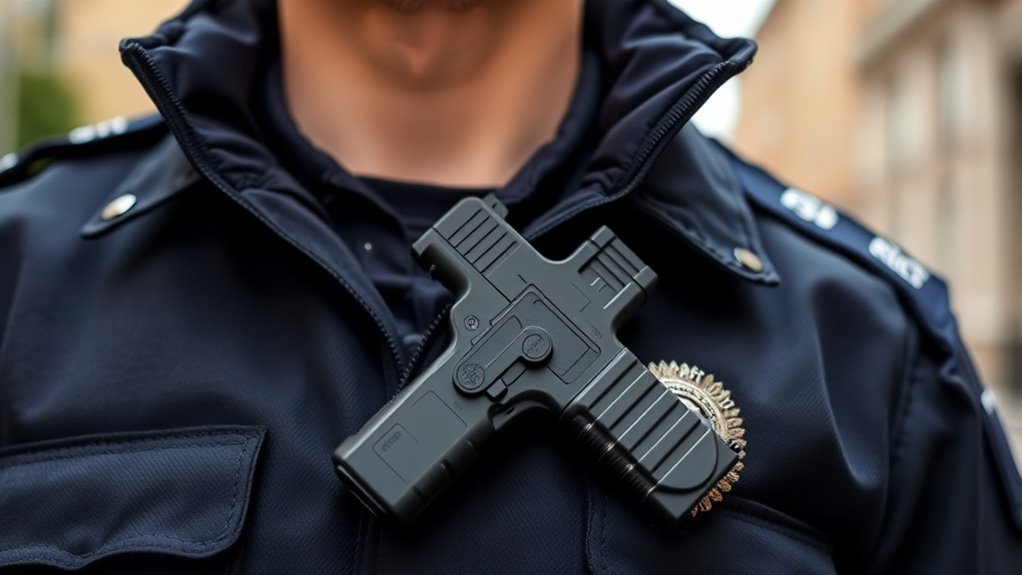
What Guns Do British Cops Carry?
You won’t normally see British cops carrying guns, as only about 5% are authorized to do so. When they are armed, you’ll find them carrying Glock 17 pistols or Heckler & Koch rifles, especially in specially trained firearms units.
These officers go through rigorous training and are deployed mainly via Armed Response Vehicles for quick action in high-risk situations.
If you’re curious about how these firearms are managed across different regions and the strict policies behind their use, there’s more to explore.
Key Takeaways
- Only about 5% of police officers in England and Wales are authorized to carry firearms.
- These authorized officers commonly carry Glock 17 pistols and Heckler & Koch G36 rifles.
- Armed Response Vehicles (ARVs) store firearms securely, so trained officers can access them quickly when needed.
- In Northern Ireland, Police Service officers routinely carry Glock 17 pistols both on and off duty.
- Firearms are issued exclusively to specially trained and authorized personnel, and there are strict protocols in place.
Types of Firearms Issued to Police Officers
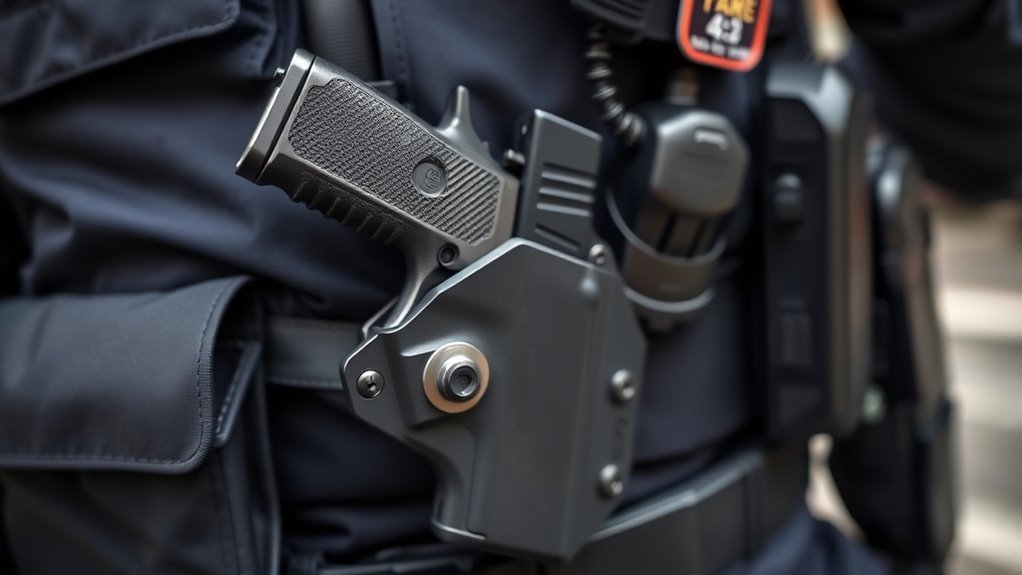
What kinds of firearms do British police officers carry? In England and Wales, only around 5% of police officers are authorized to carry guns, primarily in specialist firearms units. These firearms units, often called armed response vehicles (ARVs), are equipped with weapons like Glock 17 pistols and Heckler & Koch G36 rifles.
ARVs serve as the backbone of armed response, deploying officers trained to handle serious threats. In Northern Ireland, police officers routinely carry Glock 17 pistols both on and off duty, with weapons securely stored in ARVs’ armouries.
While most police patrols remain unarmed, these specialist firearms and armed response teams stand ready. This way, when firearms are necessary, trained personnel can respond swiftly and effectively to protect the public.
Deployment and Training of Armed Officers
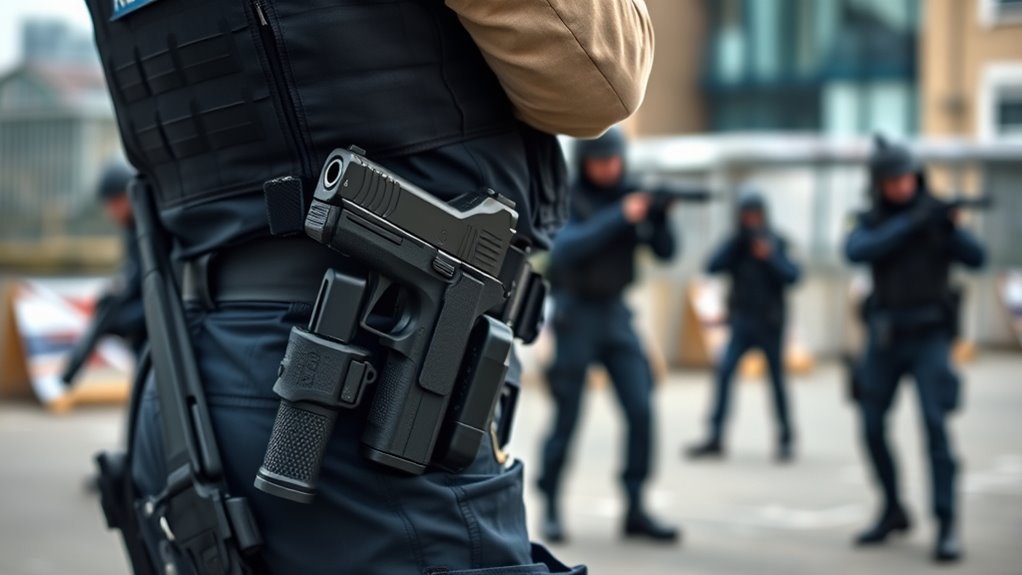
Although only a small percentage of police officers in England and Wales carry firearms, those who do undergo rigorous training and must receive authorization from at least an Inspector before being armed. Armed officers belong to a Specially Trained firearms unit, ensuring they meet strict legal standards and operational procedures.
Only specially trained officers, authorized by an Inspector, carry firearms in England and Wales.
You’ll find these officers deployed via Armed Response Vehicles (ARVs) for rapid intervention in high-risk scenarios. Training covers weapon handling, use of force, and policing by consent principles, emphasizing law enforcement accountability.
While most officers don’t routinely carry guns, those in Northern Ireland’s PSNI do, highlighting a distinct approach. This measured deployment balances public safety with community trust, making sure only qualified personnel carry firearms.
When you consider how British police carry firearms, their specialized training and controlled authorization stand out as key.
Frequently Asked Questions
Do Any British Police Officers Carry Guns?
Only about 5% of British police officers carry guns, so you usually won’t see armed cops. However, specially trained units do carry firearms.
And in Northern Ireland, officers routinely carry Glock pistols for protection. So, while most officers are unarmed, there are exceptions depending on the area and situation.
What Guns Do UK Police Have?
You’ll find UK police mainly using Glock 17 pistols, especially in Northern Ireland and armed units.
Armed Response Officers carry these and sometimes other firearms, always following strict guidelines and specialized training to guarantee public safety.
In What Country Do Cops Not Carry Guns?
Like a peaceful garden, the UK’s police usually don’t carry guns. You’ll find most officers armed with only batons or Tasers, relying on trust and community cooperation rather than firearms to keep the peace.
It’s kind of refreshing, right? Instead of pulling out guns, they focus on building relationships and calming situations down gently.
Do Canadian Police Carry Guns?
Yes, Canadian police do carry guns. You’ll find most frontline officers armed with semi-automatic pistols like Glock 17 or 19.
Specialized units carry rifles and shotguns, all under strict regulations and rigorous training. It’s all about keeping things safe and controlled.
Conclusion
You might think British cops carry guns like their American counterparts, but most don’t. Only specially trained officers carry firearms, like the iconic Glock 17.
Think of it like a firefighter’s hose: they don’t carry it everywhere, only when the fire’s serious. In fact, less than 5% of officers are armed, showing how the UK relies more on trust and skill than constant firepower to keep you safe.
British police carry guns only when necessary, emphasizing community safety and responsible policing. This approach highlights why most British cops don’t routinely carry firearms, unlike in other countries. The focus remains on de-escalation, communication, and public trust rather than visible armament, making British policing unique and effective.


One Comment