How to Determine If a BB Gun Is Considered a Firearm
To determine if your BB gun counts as a firearm, start by checking its design, muzzle velocity, and ammo type.
Federal law usually excludes BB guns unless they shoot metal projectiles over 350-500 fps or look like real guns. So, these details really matter when figuring out the legal status of your BB gun.
Also, don’t forget to verify your state and local laws because classifications can vary widely. Some places might require licenses or have restrictions that could affect you.
How your BB gun is labeled and how you use it in public also play a role in its legal classification.
It’s a good idea to keep exploring these factors. Understanding how velocity, laws, and safety all impact your BB gun’s legal status will help you stay informed and responsible.
Key Takeaways
- Check federal law criteria, as most BB guns aren’t classified as firearms unless they meet specific velocity or design requirements.
- Review your state laws, since some states classify all non-powder guns, including BB guns, as firearms.
- Evaluate the BB gun’s muzzle velocity. Guns shooting metal projectiles over 350-500 fps often face firearm classification.
- Consider the projectile type. Metal BBs at high velocity are more likely to be regulated as firearms.
- Verify local ordinances for additional restrictions or classifications beyond federal and state laws affecting BB guns.
It’s always a good idea to double-check because rules can vary quite a bit depending on where you live.
What Defines a Firearm Under the Law for BB Guns?
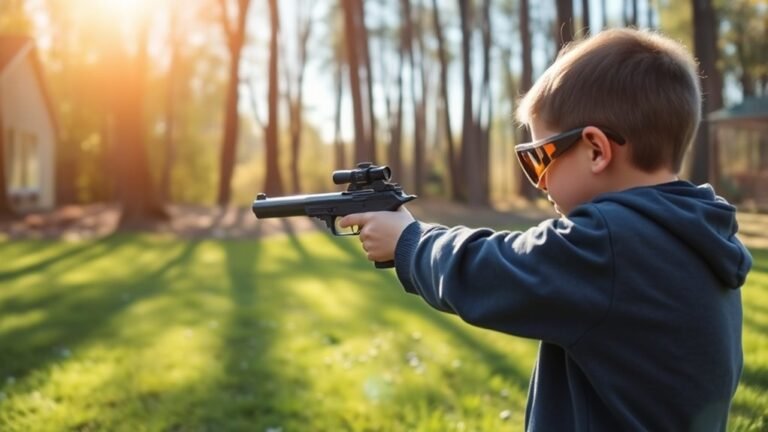
Although BB guns often look like firearms, the law doesn’t always treat them that way. Whether a BB gun is classified as a firearm depends largely on its design, velocity, and the type of projectile it expels.
Under federal law, most BB guns aren’t considered firearms unless they meet specific criteria, like achieving a certain velocity or using gunpowder to launch projectiles. But state laws can differ quite a bit.
For example, New Jersey and Rhode Island classify all non-powder guns, including BB guns, as firearms. This classification impacts how the law regulates their possession and use.
How Do BB Guns Differ From Real Firearms?

Understanding whether your BB gun counts as a firearm under the law sets the stage for recognizing how BB guns differ from real firearms. Here’s what sets them apart:
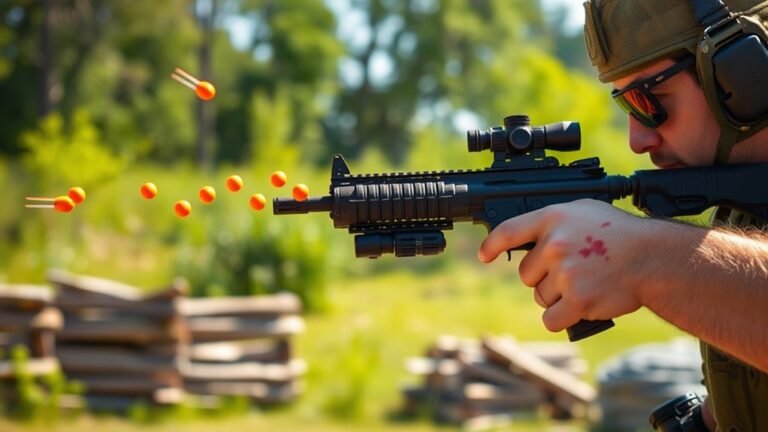
BB guns shoot metal projectiles, usually .177 caliber, at velocities below 500 fps. Firearms, on the other hand, use higher velocity rounds.
BB guns fire metal pellets at speeds under 500 fps, unlike firearms that use faster rounds.
BB guns rely on compressed air, CO2, or springs to propel the projectile. They don’t use gunpowder or combustion like real guns do.
Although BB guns can look like real firearms, they generally lack the internal firing mechanisms and safety features of actual guns.
Legally, BB guns aren’t classified as firearms. They often don’t require the orange-tipped markings that real guns do.
Knowing these differences helps you handle BB guns with proper safety and legal awareness. It’s always good to stay informed!
When Can a BB Gun Be Considered a Deadly Weapon?
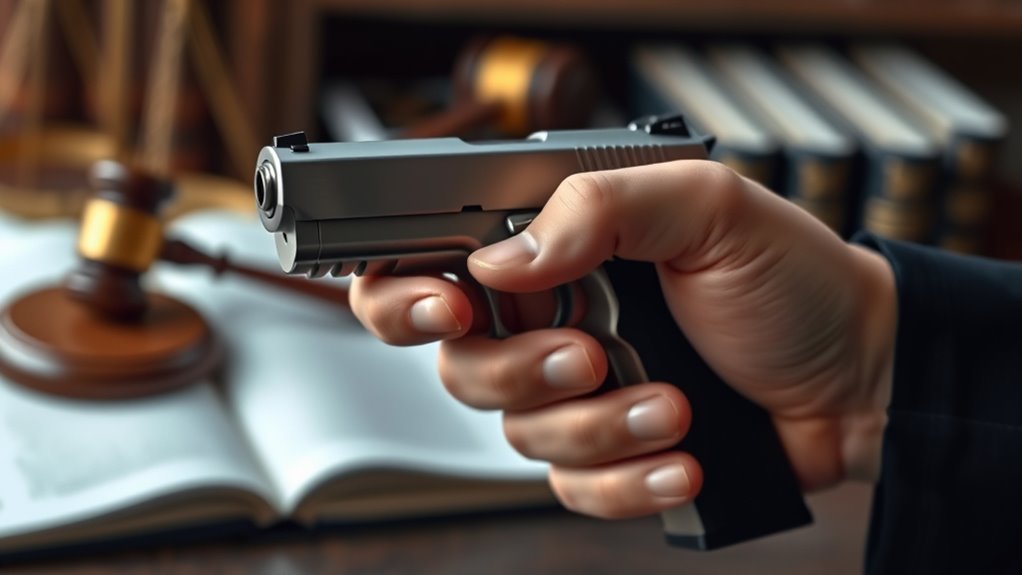
If a BB gun can cause serious injury or death, the law might treat it as a deadly weapon. Whether a BB gun qualifies depends largely on its muzzle velocity and ability to penetrate flesh or bone.
Courts often look at velocity—typically around 350 fps or higher—as a key factor in classification. It’s not just about how the gun looks but its actual potential to cause harm.
Injury reports and expert testimony play essential roles in determining if a BB gun’s impact can inflict injuries similar to those caused by traditional firearms. So, if your BB gun can penetrate flesh and cause significant injury, it may be legally classified as a deadly weapon.
That means you could face stricter regulations and consequences.
How Does Velocity and Ammo Affect BB Gun Classification?
You need to pay close attention to a BB gun’s velocity since speeds over certain limits, like 350 fps, can change its legal status. The type of ammo you use—metal BBs versus plastic pellets—also plays an essential role in classification.
Together, these factors can determine if your BB gun is treated as a firearm under the law. So, it’s not just about how fast it shoots but also what you’re shooting with. Keep both in mind to stay on the safe side.
Velocity Thresholds Impact
Because BB guns can fire projectiles at varying speeds, the velocity plays an essential role in determining their legal classification. You need to pay close attention to how fast your BB gun shoots, usually measured in feet per second (fps).
Here’s why velocity matters:
- BB guns exceeding 500 fps may be classified as firearms under certain laws. Some states set lower thresholds, like 350 fps, where BB guns become considered dangerous weapons.
- Higher velocity pellets increase injury risk, prompting stricter regulations. Velocity directly influences whether your BB gun faces firearm-related legal restrictions.
In short, the velocity of the BB or pellet can shift your BB gun’s status from a simple toy to a regulated firearm. Understanding these velocity thresholds helps you stay compliant with local laws and avoid serious legal trouble.
Ammo Type Significance
How exactly do the type of ammunition and velocity work together to influence whether a BB gun is legally considered a firearm? The ammo type, caliber, and projectile velocity combine to affect classification and regulation.
Higher velocities, especially above 500 fps, often trigger firearm status. Metal BBs typically have stricter rules compared to plastic pellets due to injury risks.
| Ammo Type | Typical Caliber | Velocity Range (fps) | Classification Impact |
|---|---|---|---|
| Metal BBs | 4.5mm (.177) | 350-600+ | Higher velocity may classify as firearm |
| Plastic Pellets | 4.5mm (.177) | Usually <350 | Often considered toy or air weapon |
You’ll want to check local laws since velocity and ammo type dictate if your BB gun falls under firearm regulation. It’s always better to be safe and informed!
How Different States Treat BB Guns Legally
Although BB guns look a lot like real firearms, most states don’t actually classify them that way. This means they fall under different legal rules compared to traditional guns.
It’s important to understand how state laws treat these non-powder guns so you can stay compliant. Here’s a quick breakdown:
- New Jersey and Rhode Island treat all non-powder guns, including BB guns, as firearms under state law.
- States like California, New York, and Illinois require licenses or put restrictions on the possession and sale of BB guns.
- Many states don’t allow minors to have BB guns without adult supervision or parental permission.
- Other states don’t classify BB guns as firearms but might consider them dangerous weapons, which affects how they regulate possession.
Knowing these differences in firearm classification and state laws helps you handle BB guns responsibly and legally. It’s always good to be informed!
What Federal Laws Apply to BB Guns?
While BB guns look a lot like real firearms, federal laws actually treat them differently because they don’t use gunpowder or explosives.
Under federal law, BB guns aren’t officially considered firearms. That means they don’t fall under the usual firearm regulations.
Unlike Airsoft guns, BB guns don’t have to have an orange tip to show they aren’t real guns.
The federal government also stops states from banning the sale of BB guns altogether, but states can still regulate sales to minors.
That said, only New Jersey and Rhode Island treat all non-powder guns, including BB guns, as firearms under their state laws.
What Are the Legal Risks of Carrying and Displaying BB Guns?
You need to be careful about carrying or displaying a BB gun in public since many places have strict rules against it. Showing a BB gun openly can lead to serious legal consequences like fines, confiscation, or even criminal charges.
It’s really important to understand local laws to avoid trouble with law enforcement. You don’t want any misunderstandings that might put you at risk.
Public Carrying Restrictions
Because BB guns often look like real firearms, carrying or showing one in public can get you into serious legal trouble. Lots of laws treat BB guns as imitation firearms or dangerous weapons, especially when you’re out in public. So, it’s really important to know the rules.
First off, the law usually says you have to carry BB guns in concealed cases or make sure they have clear safety markings. If you carry or show a BB gun openly, it can scare people and might get you charged with a misdemeanor or disorderly conduct.
Also, police might think a BB gun is a real firearm. That means you could get arrested or even face use of force. And heads up—some states, like California, don’t allow you to show BB guns in public at all. Breaking that law can lead to specific criminal charges.
Bottom line: following these rules helps you stay safe and out of trouble when you’re handling BB guns outside your home.
Legal Consequences
Although BB guns may seem harmless, carrying or displaying one in public can expose you to serious legal risks. Depending on local law, you might face criminal charges such as disorderly conduct or unlawful display of an imitation firearm.
Some areas treat BB guns as dangerous weapons, especially if they look like real firearms. This can lead to arrest or assault charges.
Law enforcement might respond aggressively if they mistake your BB gun for a firearm, which could risk use-of-force incidents. Violating possession or display rules can result in fines, confiscation, or even misdemeanor or felony charges.
How to Confirm If Your BB Gun Is Regulated as a Firearm
How can you determine if your BB gun counts as a firearm under the law? Since BB guns often fall under different legal classifications, it’s crucial to check state regulations carefully.
Here’s how you can confirm if your BB gun is regulated as a firearm:
Steps to verify if your BB gun is legally considered a firearm in your state and locality.
- Review your state’s firearm laws to see if non-powder guns, including BB guns, are classified as firearms.
- Verify whether your BB gun has an orange tip, as some states use this to differentiate BB guns from real firearms.
- Check if your state treats all realistic-looking BB guns as firearms regardless of orange tips.
- Consult local ordinances for additional rules beyond federal regulations, which typically don’t require orange tips.
Frequently Asked Questions
Does a BB Gun Qualify as a Firearm?
A BB gun usually doesn’t qualify as a firearm because it doesn’t use gunpowder. However, some states treat certain BB guns as firearms, so you need to check your local laws to be sure.
It’s always a good idea to know the rules where you live. That way, you can avoid any surprises or legal issues down the road.
How to Tell if a Gun Is a BB Gun?
You can tell if a gun is a BB gun by checking for a lack of gunpowder chamber and a smaller barrel size. Also, look for the absence of real firearm safety features.
BB guns use metal BB ammunition. They often look like a real gun but aren’t. So, it’s important to know what to look for!
Can a Felon Own a BB Gun or a Pellet Gun?
Did you know over 30 states don’t classify BB guns as firearms? You usually can own one as a felon, but check your state laws carefully.
Some states treat high-powered BB or pellet guns like firearms, restricting ownership. So, it’s always smart to double-check before you buy or carry one.
Can You Get in Trouble for Shooting a BB Gun?
Yes, you can get in trouble for shooting a BB gun, especially if you do it in public, near people, or cause damage.
Always check local laws and avoid reckless use to stay out of legal trouble.
It’s better to be safe and responsible when handling a BB gun. That way, you won’t have to worry about any legal issues.
Conclusion
Think of your BB gun like a car with a powerful engine—it might look small, but under the hood, it can pack a punch. Just like a car’s speed defines how it’s regulated, a BB gun’s velocity and state laws determine if it’s a firearm.
By checking local rules and understanding its specs, you avoid surprises. Remember, knowing your BB gun’s legal status is like having the right keys—it keeps you safe and out of trouble.
In short, whether your BB gun counts as a firearm depends mainly on how fast it shoots and the laws where you live. Always review your state’s regulations and consider your BB gun’s velocity before you use or buy one. Staying informed about BB guns and firearms laws helps you handle your equipment responsibly and stay within legal boundaries.