
Does British Police Carry Guns?
You’ll rarely see British police carrying guns because only about 5% are authorized to do so, mainly specialist officers with extra training. Most officers work unarmed to build trust and focus on de-escalation.
Firearms are tightly controlled, used mainly in high-risk situations by Armed Response Units, and legal rules ensure accountability.
Though gun use is very rare, it plays an essential role in safety.
Keep exploring to understand how British policing balances security and community trust.
Key Takeaways
- Only about 5% of British police officers in England and Wales are authorized to carry firearms. These are mainly specialized units that undergo rigorous training.
- Regular officers are generally unarmed. They need senior approval to carry firearms, and that only happens in exceptional situations.
- Armed Response Units handle most firearm operations. Meanwhile, the majority of officers rely on non-lethal weapons like Tasers.
- Firearm use by British police is extremely rare. In fact, discharges occur in only 0.02% of operations.
- The UK really emphasizes unarmed policing. This helps maintain community trust, makes officers more approachable, and supports the idea of policing by consent.
Who In The British Police Is Authorized To Carry Firearms
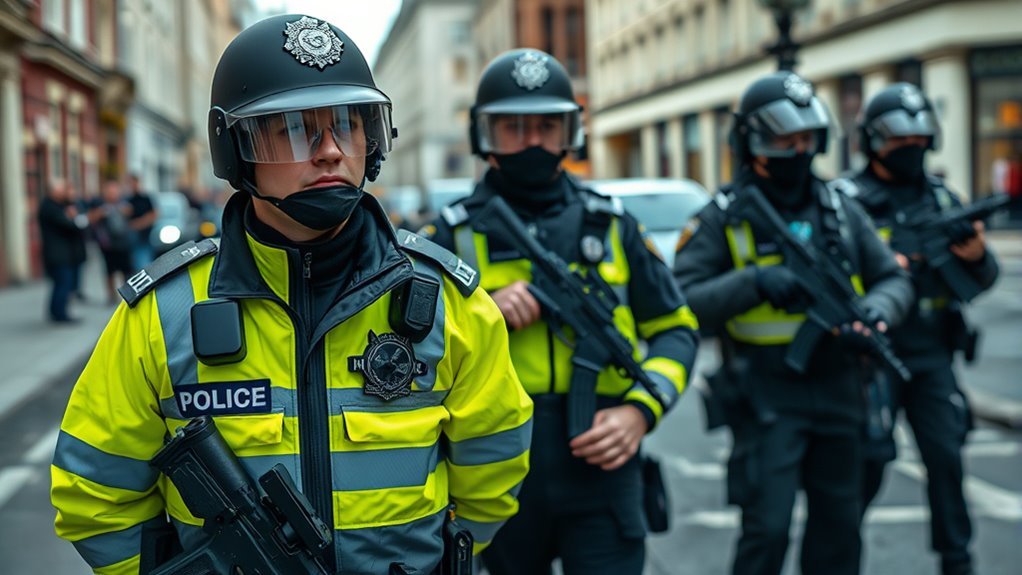
Although most British police officers don’t carry guns, you should know that only specially trained officers in England and Wales are authorized to carry firearms—about 5% of the force as of 2024.
These authorized police officers include Specialist Firearms Officers who undergo rigorous training to handle high-risk situations. Armed Response Vehicles, staffed by these officers, are deployed to incidents requiring immediate armed intervention.
Regular police officers usually don’t carry firearms but must receive authorization from at least an Inspector to do so in exceptional cases. Some officers have Standing Authority to carry firearms in sensitive locations like airports and nuclear sites.
Reasons Most British Police Remain Unarmed
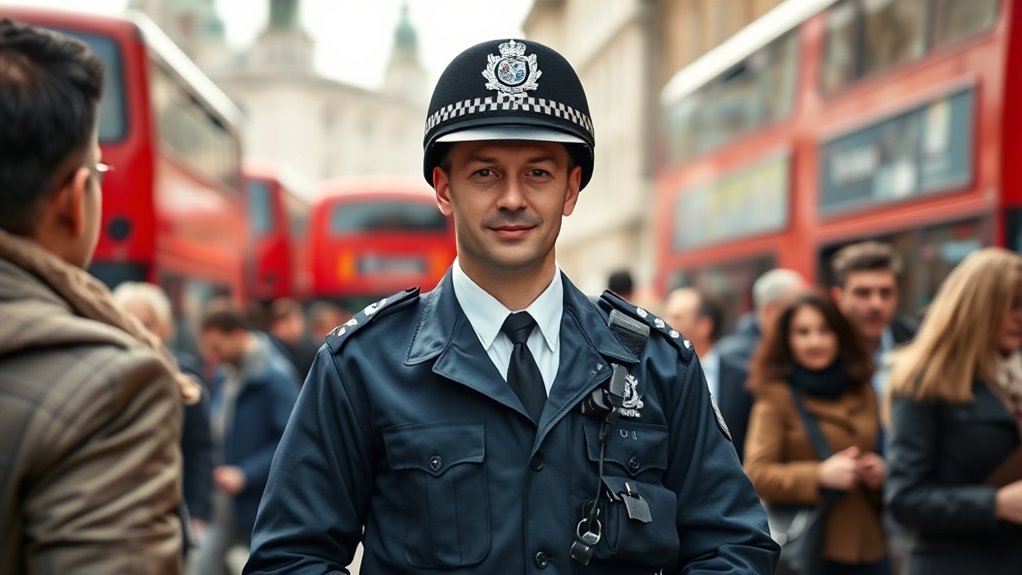
Because only about 5% of police officers in England and Wales carry firearms, most remain unarmed to preserve community trust and uphold the principle of policing by consent. You’ll find unarmed policing encourages approachability and strengthens public confidence, reducing reliance on force.
The limited use of firearms in the UK aligns with a low rate of firearm-related crimes, so police use of force is carefully controlled. Armed officers handle situations requiring weapons, letting others focus on communication and de-escalation.
| Reason | Impact on Policing | Outcome |
|---|---|---|
| Policing by consent | Builds community trust | Enhanced public confidence |
| Low firearm crime | Less need for armed officers | Safer, less confrontational |
| Emphasis on dialogue | Minimizes police use of force | Stronger police-public relations |
Frequency Of Firearms Use By British Armed Police
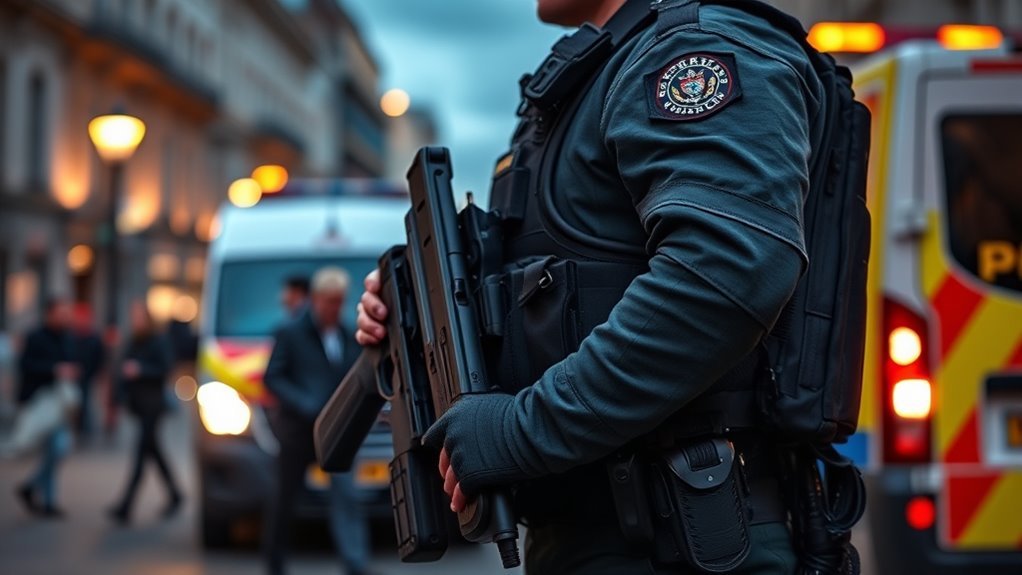
You’ll find that only about 5% of officers in England and Wales carry firearms, mostly within specialized Armed Response Vehicles handling 93% of firearm operations.
Despite their deployment, actual use of firearms is extremely rare, with just a handful of discharges reported each year.
Let’s take a closer look at how often these armed officers actually use their weapons.
Armed Officers Deployment
When armed officers are deployed in England and Wales, they make up only about 5% of the police force, with roughly 6,653 trained to carry firearms. These Authorised Firearms Officers handle most police firearms duties, but the majority of the force remains unarmed.
You’ll see armed response vehicles (ARVs) leading about 93% of firearms operations, which really highlights their vital role in deployment. The use of armed officers is carefully managed and usually reserved for high-risk situations. This ensures police firearms aren’t deployed unnecessarily.
While firearms operations have slightly decreased recently, your understanding of their deployment shows a cautious, targeted approach in British policing. It’s all about balancing public safety with minimal use of lethal force. This controlled deployment really reflects the unique strategy behind armed officers in the UK.
Firearms Use Statistics
While armed officers make up only a small fraction of the police force and are deployed with great care, the actual use of firearms remains extremely rare. Only about 5% of officers in England and Wales are authorised to carry firearms, with around 6,653 armed officers as of 2025.
Most firearms operations involve Armed Response Vehicles (ARVs), which handle about 93% of deployments. So, these officers and vehicles are really focused on managing situations where firearms might be needed.
Here’s what the firearms use statistics reveal:
- Firearm discharges at persons happen in roughly 0.02% of operations. That’s incredibly rare.
- Police shootings are tightly regulated and data is meticulously recorded. It’s all about keeping things transparent.
- The number of armed officers has slightly decreased from 6,621 in 2019 to 6,367 in 2025. So, fewer officers are carrying firearms now than a few years ago.
This careful approach highlights how infrequent and controlled firearms use is by British armed officers. It really shows the level of responsibility involved.
Types Of Firearms Carried By British Police
Although most British police officers don’t carry firearms, a small percentage of specially trained units are authorized to do so. These designated units, such as Armed Response Units, undergo rigorous training to handle firearms safely and effectively.
While the majority of police officers rely on non-lethal weapons like Tasers, those in Armed Response Units carry firearms including revolvers, rifles, and the widely used Glock 17 pistol. This pistol is especially common in Northern Ireland.
Strict firearms regulations govern who can carry these weapons and under what circumstances. This approach guarantees that firearms are reserved for situations requiring a higher level of force, minimizing risks to the public and officers alike.
You’ll notice that only about 5% of officers are equipped this way, highlighting the UK’s cautious stance on policing with guns. It’s all about keeping things safe and controlled.
Legal Framework Governing Police Firearms In Britain
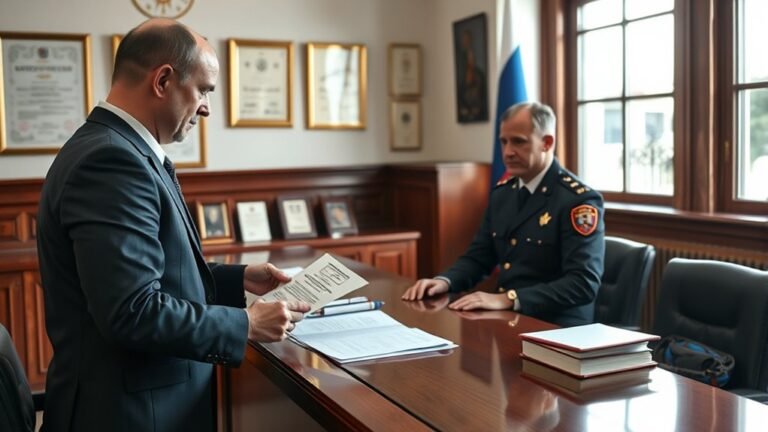
Because British police generally operate unarmed, strict legal frameworks govern when and how officers can carry firearms. You’ll find that authorisation is essential, with at least an Inspector’s approval needed before any officer can be armed.
The Police and Criminal Evidence Act 1984 sets out the legal standards police must follow when using firearms. The ACPO Manual provides detailed guidance on deploying armed officers, ensuring operations meet legal and operational protocols.
Additionally, a Standing Authority allows firearms to be carried routinely at sensitive sites like airports. So, there are clear rules and systems in place to keep everything above board.
Here are the key points to understand:
- Firearms authorisation requires senior approval and specific training.
- The Police and Criminal Evidence Act 1984 governs firearm use strictly.
- The ACPO Manual and Standing Authority ensure consistent legal standards.
How Armed Policing Works Differently In Northern Ireland
In Northern Ireland, you’ll find that all PSNI officers carry firearms routinely, unlike the rest of the UK where only specialized units do. Their firearms policy includes strict ballistic tracking and regular testing to maintain accountability.
This approach reflects the unique security challenges they face every day. It’s a different way of policing that suits the local context.
Routine Firearm Carriage
When you step into Northern Ireland, you’ll notice its police officers carry firearms like Glock 17 pistols routinely, whether on or off duty. This routine firearm carriage sets Northern Ireland apart from the rest of the UK, where police officers carry guns only in specific situations.
Here’s how armed policing works differently: Police officers carry guns at all times, reflecting ongoing security threats and a history rooted in The Troubles. The Police Service of Northern Ireland (PSNI) uses armed response vehicles regularly to provide rapid armed support.
All police firearms are strictly registered, tested, and securely stored, ensuring accountability and safety. In Northern Ireland, armed police are a norm due to unique security needs.
This makes routine firearm carriage a critical part of policing compared to other UK regions.
PSNI Firearms Policy
Northern Ireland’s unique security challenges shape how the Police Service of Northern Ireland (PSNI) handles firearms. Unlike other UK forces, PSNI armed officers routinely carry firearms, including Glock 17 pistols and rifles, both on and off duty. This distinct firearms policy reflects the region’s history of threats, making police firearms a daily necessity rather than a specialist tool.
You’ll notice the PSNI maintains strict protocols for all firearms use, including regular testing, recording, and oversight to guarantee accountability. They also keep a detailed ballistic register and forensic storage system for every weapon and round.
Public Opinion And Its Impact On Police Armament
Although opinions on arming police officers in the UK are divided, you’ll find that public sentiment plays a crucial role in shaping police policies. Public opinion influences how firearms are integrated into everyday policing while maintaining community trust and policing by consent.
Here’s what you should know about public attitudes and their impact:
- Support for armed police spikes during heightened security threats, with 72% backing more armed patrols post-terrorist events.
- Despite this, many prefer unarmed officers, believing it fosters better community trust and reduces tension.
- Public support fluctuates because firearm incidents remain rare, reinforcing traditional British policing methods focused on de-escalation.
Impact Of Notable Police Firearms Incidents On Policy And Opinion
Notable police firearms incidents like the 2005 Jean Charles de Menezes shooting and the 2022 Chris Kaba case have sharply influenced public opinion and police policy in the UK. These high-profile errors exposed flaws in armed police operations, sparking demands for greater accountability and clearer policy changes.
You’ll notice that public opinion often swings—support for armed police rises after terrorist threats but dips due to concerns over misuse and mistakes. The controversy around shoot-to-kill policies, especially in terrorism cases, fuels ongoing debates about safety and transparency.
As a result, the UK continues prioritizing community trust over militarization, shaping policies that reflect caution with firearms incidents. Overall, these events have reinforced the careful balance between protecting the public and avoiding unnecessary force.
Frequently Asked Questions
In What Country Do Cops Not Carry Guns?
You’ll find cops don’t carry guns in countries like the UK, Ireland, and Japan. These places prioritize community trust and use specialized armed units only when necessary.
Do Canadian Police Carry Guns?
Yes, Canadian police usually carry guns while on duty, though it depends on their province and role.
You’ll find frontline officers armed routinely, and specialized units equipped even more heavily for tactical situations.
Are Irish Police Armed?
Of course, you won’t find Irish police unarmed—they’re actually armed routinely. You’ll notice Garda officers carry guns every day, trained to use pistols and rifles.
Because in Ireland, policing means being ready for anything.
Do Australian Cops Carry Guns?
Yes, Australian cops generally carry guns while on duty. You’ll find most frontline officers armed with pistols, shotguns, or rifles depending on their region.
They’re trained to use firearms routinely, unlike police in some other countries. So, it’s pretty normal for them to be equipped this way.
Conclusion
So, you’re wondering if British police carry guns? Well, most don’t—because nothing says “keep calm and carry on” like unarmed officers strolling about. Only specially trained units get the shiny toys, proving that in Britain, even policing embraces subtlety over spectacle.
Armed police pop up rarely, ensuring your average bobbies remain more tea-sipping than trigger-happy. After all, why brandish guns when you’ve got a stiff upper lip and a well-timed “Oi!”?
In conclusion, British police generally do not carry guns as part of their everyday duties. Instead, only specially trained armed units are authorized to carry firearms, reflecting the UK’s emphasis on community policing and minimal use of force. This approach helps maintain public trust and safety. So, while the image of armed police is rare in Britain, it’s all part of a system designed to keep everyone calm and safe without relying on guns.