
How to Use a Gun in 7 Essential Steps
Start by choosing a handgun that fits your hand and uses manageable ammo like 9mm. Picking the right gun is key—it should feel comfortable and easy to handle. That way, you’ll have better control and accuracy.
Always treat the gun as loaded, keep your finger off the trigger until you’re ready to shoot, and wear proper protection. Safety first, always.
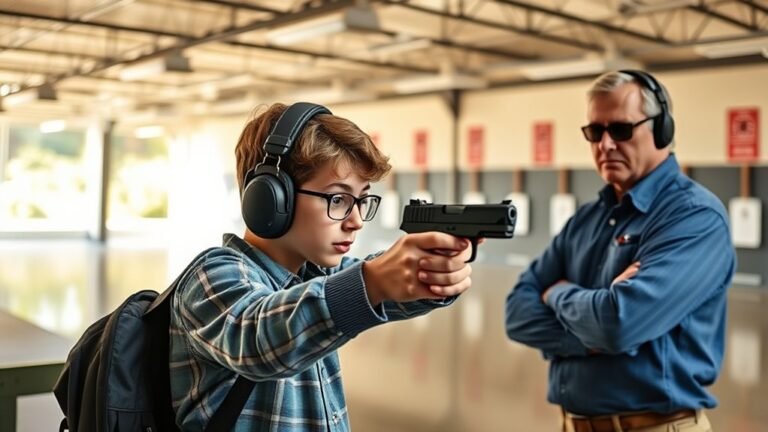
Grip firmly with your thumbs pointed forward and adopt a stable stance. This helps you stay balanced and steady when aiming.
Control your breathing and press the trigger smoothly. Don’t jerk it; a steady squeeze makes all the difference.
Draw and present your gun safely, follow through with recoil, and scan your environment after each shot. Stay aware of what’s around you at all times.
Keep practicing these steps, and you’ll gain deeper skills and confidence. The more you practice, the better you’ll get.
Key Takeaways
– Choose a handgun with manageable recoil and a proper fit.
Make sure it’s clear and loaded with matching factory-new ammunition.
– Always treat the gun as if it’s loaded.
Keep the muzzle pointed in a safe direction, your finger off the trigger, and wear eye and ear protection.
– Grip the gun firmly with both hands and adopt a stable stance.
Align the front and rear sights on your target for better accuracy.
– Draw smoothly using a thumbs-forward grip.
Present the pistol with your elbows slightly bent, and keep your finger indexed outside the trigger guard.
– Press the trigger with steady, rearward pressure during a natural respiratory pause.
Maintain your sight picture through the recoil, then perform a post-shot environmental scan.
Choose the Right Handgun: Safety and Basics

When choosing the right handgun, you should prioritize a common, lower-recoil caliber like 9mm. This helps guarantee manageable control, ample magazine capacity, and easy access to ammunition.
Opt for a common, low-recoil caliber like 9mm for better control and ammo availability.
You’ll want to select between semi-automatic pistols and revolvers based on your comfort and intended use. Semi-autos offer faster reloads, while revolvers provide simpler operation.
Make sure the grip fits your hand well so you can maintain a proper thumbs-forward hold and natural point of aim. This really helps enhance both safety and accuracy.
Always verify the firearm’s marked caliber and manufacturer, and assure the barrel is clear. Use factory-new ammo that matches the caliber.
And remember, safety comes first. Practice handling skills with a qualified instructor, treat every gun as if it’s loaded, and always wear eye and ear protection during use.
Master Handgun Safety Before Handling or Shooting

Before you handle or shoot a handgun, you must master essential safety practices to protect yourself and others. Following strict safety rules helps prevent accidents and builds responsible habits.
Start with these three key steps:
- Always treat every handgun as if it’s loaded. Keep the muzzle pointed in a safe direction and your finger indexed outside the trigger guard until you’re ready to fire.
- Visually and physically check that the chamber and magazine are empty before handling by removing the magazine, locking the slide open, and inspecting the chamber and bore.
- Wear properly fitted eye and hearing protection every time you handle or shoot. And never use a handgun under the influence of alcohol, drugs, or emotional distress.
Master these safety rules before moving on to shooting techniques.
Establish Grip, Stance, and Sight Alignment for Accuracy

Establishing a solid grip, stance, and sight alignment sets the foundation for accurate shooting. Grip the gun firmly with both hands, wrapping your support hand over your firing hand, thumbs forward, creating a straight axis for recoil control.
Position your weight slightly forward, about 60% on the balls of your feet, and adopt a shoulder-width, bladed stance to keep the gun stable and in front of your eyes during recoil. Focus on aligning the front sight centered and level within the rear sight notch, ensuring equal light on both sides and a level top.
Place the front sight on your intended point of impact, not the target, and maintain this alignment through each shot for consistent accuracy. Keep your wrist locked and grip pressure steady to recover quickly for follow-up shots.
Practice Trigger Control and Breathing for Better Shots
Because trigger control and breathing account for most practical shooting accuracy, mastering these skills is crucial for improving your shots. Focus on isolating your trigger finger so only the pad presses straight rearward, applying steady pressure through the “pressure wall” to minimize sight disruption.
Try to coordinate your shot during the natural respiratory pause after a normal exhale without holding your breath. It’s all about timing and smoothness.
To sharpen your trigger control and breathing:
- Use a consistent trigger-press tempo. Go slow for precision or faster when under pressure. Practicing dry-fire reps helps reduce flinch.
- Keep your sights aligned on the front sight, following the BRASS-F flow for controlled execution.
- Evaluate shot recovery and split times with live-fire strings. Use this info to adjust your grip or stance if recoil messes with your follow-through.
These habits really build steadiness and accuracy in every shot. Stick with them, and you’ll see your shooting improve.
Draw and Present Your Handgun Smoothly and Safely
When you draw your handgun, keep the muzzle pointed in a safe direction and your finger indexed along the frame outside the trigger guard to maintain control.
Handle a firearm with a firm, high grip using your dominant hand, keeping the support hand clear until the weapon clears the holster.
Use a smooth, economical motion to disengage any retention devices and lift the muzzle into the line of sight quickly.
Present the pistol by driving your arms forward with elbows slightly bent and a thumbs-forward grip, aligning the sights to the target.
Maintain a stable platform for immediate sight picture.
Throughout the draw and presentation, focus on safe handling by controlling muzzle direction and trigger finger placement to prevent accidental discharge.
Follow Through and Manage Recoil for Effective Shooting
Although managing recoil can be challenging, keeping your eyes on the front sight through the shot helps maintain your sight picture and reduces common aiming errors.
Effective follow-through means allowing the sights to move naturally with your firearm during recoil instead of immediately shifting focus to the target.
To manage recoil and maintain accuracy, start by using a stable platform with a consistent grip. Push slightly forward to absorb recoil and keep the muzzle aligned.
Keep your knees bent and your weight on the balls of your feet to control the firearm’s rearward impulse. This stance really helps manage the kick.
After each shot, make sure to re-establish your trigger press from the pressure wall. Then, recover your sight picture before taking your next shot.
Train these steps regularly. Doing so will help you develop smooth follow-through and make your shooting faster and more accurate.
Develop Recovery Habits: Breathing, Scanning, and Weapon Care
After each shot, take controlled breaths to calm your heart and clear your vision. Then, scan your surroundings carefully.
Keep your weapon steady and pointed safely while you check for any threats or injured persons. Once the area is secure, clear and care for your firearm.
This way, you make certain it’s ready for the next use. It’s all about staying sharp and prepared.
Controlled Breathing Techniques
Mastering controlled breathing techniques helps you steady your aim and maintain clarity throughout each shot and recovery phase. Before pulling the trigger, use a controlled breath cycle: inhale naturally, exhale partially, then hold your breath for 1–2 seconds to steady your sight picture without cutting off oxygen.
Right after the shot, get back to normal breathing to reduce tremors and stay aware.
Practice this 3-step recovery sequence to build muscle memory:
- Resume normal breathing within 1–2 seconds post-shot.
- Perform a quick 360° scan while keeping your finger off the trigger and muzzle safe.
- Check weapon condition—tap the magazine, visually inspect the chamber, and confirm your grip.
Training this routine during dry-fire and live-fire drills will turn it into an automatic habit when you’re under stress.
Environmental Scanning Importance
When you finish firing, take a controlled exhale and steady your breath for a few seconds before scanning your surroundings; this pause helps you clear tunnel vision and regain focus.
Next, scan the immediate 360° area for 5 to 10 seconds using short, deliberate head movements to spot threats, cover, and bystanders. While doing this, keep your muzzle pointed safely, finger off the trigger, and maintain a firm grip so you’re ready to react if needed.
Incorporate a quick functional check of your weapon—confirm magazine presence, chamber status, and check for obstructions by sight and touch. Make these recovery steps a practiced routine: breath control, 360° scan, and weapon check.
This habit guarantees you stay aware and prepared under stress. It’s all about staying sharp and ready, no matter what’s going on around you.
Post-Shot Weapon Handling
Keep your sight picture steady through the full recoil cycle and smoothly bring your sights back on target, all while keeping your trigger finger indexed along the frame. This follow-through is critical to maintain control and readiness for any follow-up shots.
After firing, control your breathing by exhaling slightly and returning to a normal rhythm—avoid breath-holds that blur your vision.
Next, perform a rapid 360° scan for threats and bystanders, keeping the muzzle safe and finger off the trigger.
Finally, once the threat is cleared or the situation de-escalates, engage the manual safety and secure your weapon, ensuring the chamber is open and visually cleared.
Remember these key steps:
- Maintain follow-through and sight alignment.
- Control breathing before reassessing.
- Scan surroundings before safely securing your weapon.
Frequently Asked Questions
How to Hold and Fire a Handgun?
You’ll grip the handgun with both hands, thumbs forward, keeping it steady. Lean slightly forward, line up your sights carefully, then press the trigger smoothly without jerking.
Keep your stance and sight picture through recoil. It takes a bit of practice, but staying calm and controlled really helps.
How to Equip a Gun on Roblox?
Did you know over 40% of Roblox players customize tools? To equip a gun, just select it from your Backpack or press the hotkey (1–9).
Make sure it’s properly scripted to work seamlessly in-game. That way, you’ll have no trouble using it when the action starts!
What Are the Different Types of Guns and Their Names?
You’ll find three main types of guns: handguns (like pistols and revolvers), rifles (bolt-action, lever-action, semi-automatic), and shotguns (pump-action, break-action).
Each has unique features and uses, so choose based on your needs.
It really depends on what you want to do with it. Some are better for target shooting, others for hunting or self-defense.
What Are the Seven Gun Rules?
You follow seven gun rules: treat every firearm as loaded, always point the muzzle safely, keep your finger off the trigger until ready.
Know your target and beyond. Never rely solely on memory.
Secure guns properly, and stay alert. These rules keep you and others safe.
Conclusion
So, now that you’ve mastered shooting like a pro—remember, guns aren’t magic wands that fix everything. You’ll need more than just a good grip and steady aim; maybe a little common sense too.
Keep practicing safety, or you might end up starring in your own accidental comedy. Stay sharp, breathe steady, and treat your handgun like the serious tool it is—not a fancy toy.
Happy shooting, and try not to shoot your foot! Always prioritize gun safety, proper handling, and consistent practice to become a responsible shooter. With these essential steps, using a gun effectively and safely becomes second nature.