

How to Remove Rust From a Gun in 5 Easy Steps
To remove rust from your gun, start by spotting reddish or flaky spots on metal parts using your fingertip or a flashlight.
Having good lighting is key here, so set up a well-lit workspace before you begin.
Gather your supplies like ultra-fine steel wool, gun oil, brushes, and gloves to make the process smoother.
For light rust, apply gun oil and let it soak in for a bit.
Then, gently rub the rusted areas with steel wool, always following the metal grain to avoid scratches.
If you’re dealing with tougher rust, don’t worry—diluted vinegar or a baking soda paste can do the trick.
Once the rust is gone, finish up by oiling your firearm to protect it from future damage.
Keep going to uncover detailed tips for lasting care and maintenance!
Key Takeaways
- Apply gun oil to rusted areas and let it soak for 30 minutes to loosen surface rust. This helps make the rust easier to remove without causing damage.
- Gently rub rust with 0000-grade steel wool following the metal grain to avoid damaging the finish. Take your time here; rushing can scratch the metal.
- For tough rust, soak parts in diluted vinegar or use a baking soda paste. Then scrub lightly and rinse immediately to avoid any lingering residue.
- Dry all parts thoroughly after cleaning to prevent flash rust. Once dry, apply a light, even coat of gun oil to protect the metal.
- Store the firearm in a cool, dry place and regularly wipe it with an oiled cloth. This simple step helps keep rust from coming back.
How to Spot Rust on Your Gun

You’ll often spot rust as reddish-brown or orange flaky spots on your gun’s metal surfaces, especially near seams, screws, or moisture-prone areas. To catch rust early on your firearm, inspect high-contact spots like the barrel exterior, slide rails, trigger guard, magazine well, and around sights.
Run a clean, dry fingertip or soft cloth over these areas—if it feels gritty or rough, you’re likely dealing with early surface rust. Don’t forget to check inside crevices and under grips with a flashlight and cotton swab, since rust often starts hidden away.
If you find a heavily rusted area, try removing a tiny spot with oiled 0000 steel wool. If the discoloration wipes away without damaging the bluing, you can proceed to remove rust safely.
Get Your Workspace and Rust Removal Tools Ready

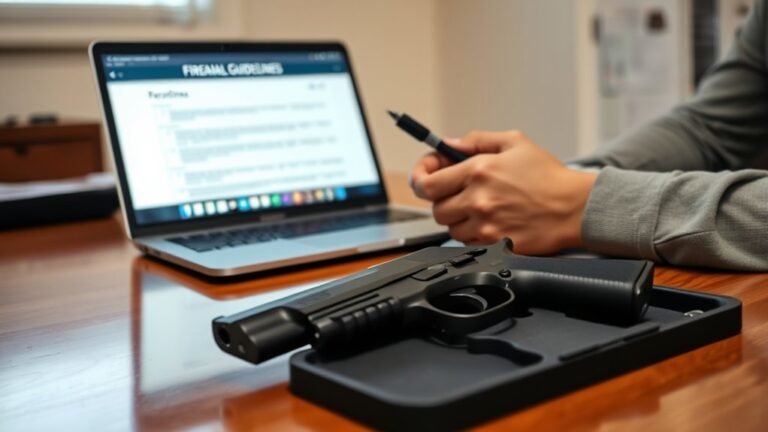
Before tackling rust removal, set up your workspace in a well-ventilated, well-lit area with a stable workbench. Cover it with newspaper or a non-abrasive mat to protect your gun’s finish and catch debris.
Prepare a clean, well-lit workspace with protective covering to safeguard your firearm’s finish during rust removal.
Next, gather your rust removal tools: ultra-fine 0000 steel wool, a soft brass or nylon brush, cotton rags, and a crumpled piece of aluminum foil for gentle scrubbing. Keep essential fluids nearby, including quality gun oil and a diluted white vinegar solution for sensitive bluing.
Make sure to wear nitrile gloves and safety glasses. Then, organize a small tray for removed parts and a container of clean cloths.
Having everything within reach helps prevent contamination. Plus, it guarantees you work efficiently while protecting your firearm’s finish throughout the rust removal process.
Remove Light Rust Using Gun Oil and Steel Wool

Start by laying your firearm on a protected surface and applying a few drops of quality gun oil to the rusted areas. Let the oil soak for about 30 minutes to loosen the corrosion.
Next, take 0000-grade steel wool and gently rub the rust from the gun in the direction of the metal grain. Use light pressure to avoid damaging the finish.
Keep adding gun oil as you work to lubricate and lift away rust particles. Never scrub dry — the oil helps protect the metal while you clean.
Once the rust is removed, wipe the area clean with a lint-free cloth and inspect for any remaining spots. If you see more rust, just repeat the oil soak and steel wool process.
Finally, thoroughly clean off any residue and apply a light, even coat of gun oil. This will protect the metal and restore its protective finish.
Tackle Tough Rust With Vinegar or Baking Soda
When light rust resists removal with gun oil and steel wool, stronger methods come into play. For tougher corrosion, you can tackle rust using vinegar or baking soda without damaging your firearm.
Soak small parts in diluted vinegar for 30–60 minutes to dissolve iron oxide, then gently rub with steel wool or aluminum foil. For larger parts, apply a thick baking soda paste for an hour, scrub lightly with a brass brush, and rinse thoroughly.
- Vinegar’s acidity breaks down rust effectively
- Baking soda’s mild abrasiveness is safe on blued finishes
Always rinse and dry immediately to prevent flash rust. Finish by oiling to protect metal surfaces.
This approach lets you remove rust without damaging your gun’s finish.
Keep Your Gun Rust-Free With Simple Maintenance
Regularly wiping your firearm with a lightly oiled cloth after each use helps prevent rust from forming on its surface. It’s a simple step that makes a big difference.
Lightly oil and wipe your firearm after use to effectively prevent surface rust.
Store your gun without exposing it to high humidity—aim for less than 50% relative humidity in a cool, dry place. This keeps moisture from causing rust over time.
If you spot light surface rust, apply a few drops of gun oil, let it sit 15–30 minutes, then gently rub with 0000-grade steel wool or a soft brass wire brush. Just be careful not to scrub too hard to protect the bluing.
Stainless steel parts resist rust better but still benefit from regular cleaning. Keeping them clean means they’ll last longer and work better.
For stubborn rust, try a vinegar-and-water spray with crumpled aluminum foil, then rinse and dry thoroughly before re-oiling. This trick can really help without damaging your gun.
Consistent maintenance keeps your firearm rust-free and ready to perform when you need it most. It’s worth the effort!
Frequently Asked Questions
What Is the Best Thing to Clean Rust off a Gun?
The best thing to clean rust off a gun is gun oil combined with 0000 steel wool for light rust. For tougher spots, use penetrating oil or aluminum foil with vinegar.
Always dry and re-oil afterward to protect it. That way, your gun stays in good shape and rust-free!
Will a Rusty Gun Still Shoot?
Yes, your rusty gun might still shoot, but rust can cause malfunctions or unsafe conditions. You shouldn’t rely on it firing properly.
Inspect and clean it thoroughly, or have a gunsmith evaluate it before shooting again. It’s better to be safe than sorry when it comes to firearms.
Does WD-40 Remove Rust off Metal?
Yes, WD-40 can remove light rust by penetrating and loosening it, making it easier for you to wipe or gently scrub off.
Just remember, it’s not a chemical rust remover and needs follow-up protection. So, after you clean the rust, make sure to protect the metal to keep it from coming back.
What Is the Best Homemade Rust Remover?
The best homemade rust remover is a thick baking soda paste you apply. Then, wait 30-60 minutes before gently scrubbing with 0000 steel wool.
It’s safe, effective, and won’t harm your gun’s bluing if you’re careful. Just take your time and be gentle with the scrubbing.
Conclusion
Rust can seriously damage your gun, but you’re not alone—over 60% of gun owners face rust issues at some point. By spotting rust early and using simple tools like gun oil, steel wool, vinegar, or baking soda, you can easily restore your firearm.
Remember, regular maintenance is key to keeping your gun in top shape. Follow these steps, and you’ll protect your investment and enjoy your gun for years to come!
Taking care of rust on your gun doesn’t have to be complicated. With the right approach, removing rust is straightforward and effective. Using common household items like vinegar or baking soda along with gun oil can prevent further damage and keep your firearm functioning smoothly.
Routine cleaning and proper storage are essential to avoid rust buildup. So, keep a close eye on your gun’s condition, clean it regularly, and apply these easy rust removal tips. That way, you’ll maintain your gun’s reliability and extend its lifespan, making sure it stays ready whenever you need it.


One Comment