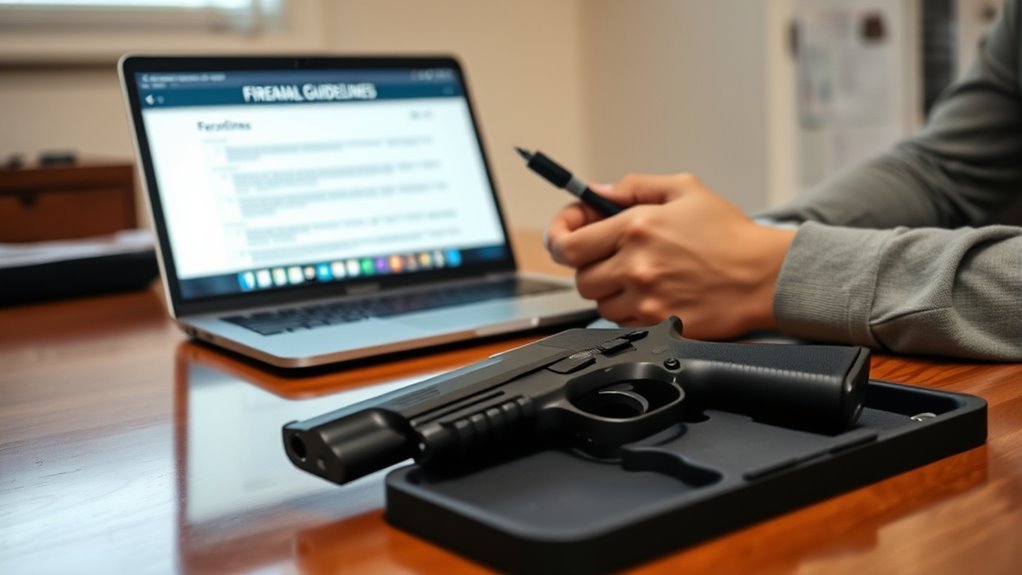
How Do You Register a Gun in 10 Essential Steps?
To register a gun, start by identifying the permit or license type you need. Make sure to gather all the required documents, like purchase permits and a photo ID. These are essential to get the process going smoothly.
Next, complete the proper registration form accurately. Double-check your information to avoid any mistakes.
Then, submit your forms on time and provide fingerprints if the law requires it.
Don’t forget to pay any fees associated with your registration. Keep all your documents safe and organized for easy access.
It’s a good idea to confirm your registration status with local authorities.
Stay aware of any additional compliance steps you might need to follow. Keeping your records organized helps you stay on top of legal requirements.
Following these essentials guarantees you meet all the legal steps. There’s more to explore if you want full details!
Key Takeaways
– Verify if your state or local laws require firearm registration and obtain any necessary permits or licenses.
It’s important to know the rules before you start the process. This way, you won’t miss any crucial steps.
– Collect all required documents, including purchase permits, valid ID, and firearm details like serial number and model.
Having everything ready makes the registration smoother. Double-check to avoid any last-minute hassles.
– Accurately complete official registration forms, sign them, and keep copies for your records.
Filling out the forms carefully helps prevent delays. Always keep a copy just in case you need to reference it later.
– Submit the registration paperwork and fees in person or by mail within the legal deadline, using receipt confirmation if mailed.
Meeting the deadline is key to staying compliant. If you mail it, getting a receipt confirmation is a smart move.
– Store original registration documents securely, create digital backups, and periodically confirm and update records with local authorities.
Keeping your documents safe protects your investment. Checking in with authorities now and then helps keep everything current.
Identify Your Gun Registration Permit or License Type

Before you begin registering your firearm, you need to identify the specific permit or license required in your state or locality. Gun registration laws vary, so check if your state, like California or Illinois, mandates registration for all guns.
Identify your state’s specific firearm permit or registration requirements before starting the registration process.
Determine whether your firearm needs a particular permit, such as a concealed carry license or a registration certificate like RI-60. Also, verify if your firearm falls under federal regulations—NFA items, for example, require special registration.
Confirm whether your jurisdiction issues a firearm registration permit or license and understand the exact type you need. Finally, check if you already hold a valid permit or license that allows you to register or possess your firearm legally.
Knowing these details streamlines the gun registration process and keeps you compliant. It’s always better to be informed upfront, so you don’t run into any surprises later on.
Gather Required Documentation for Gun Registration
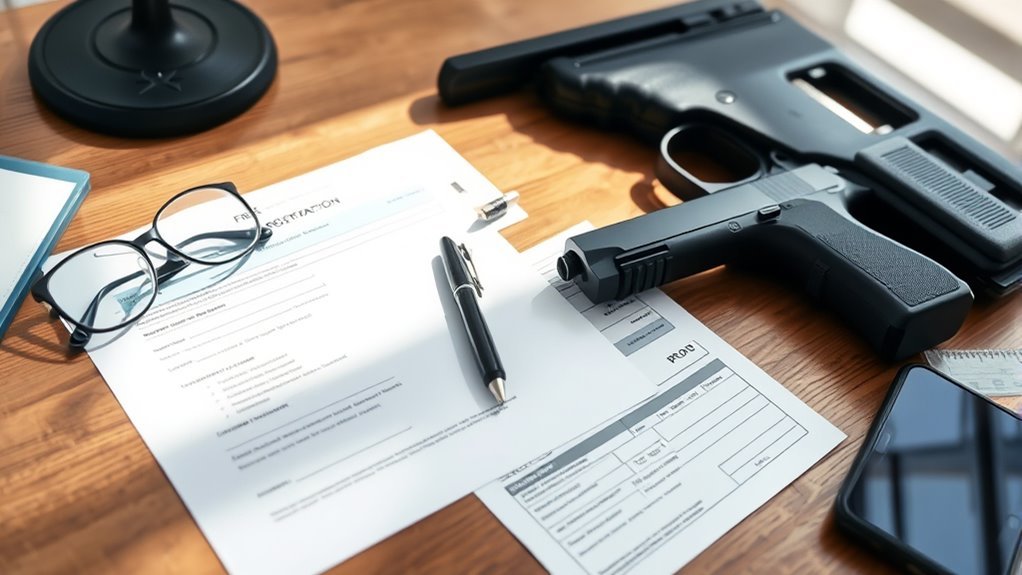
What documents do you need to register your gun? Before starting the registration process, you’ll want to gather all necessary paperwork to avoid delays.
Make certain you have the following: purchase permit and proof of ownership, like the Purchaser’s Copy or registration receipt. You’ll also need a valid photo ID and any required background check documents.
Don’t forget details of the firearm, including the serial number, make, and model. If applicable, have previous registration or transfer records on hand as well.
Having these documents ready ensures you can accurately complete your firearm’s registration. Remember, the serial number and other identifying information are critical for the registration authority to verify your firearm.
Double-check your local requirements, too. Some places may have specific forms or online portals you must use.
Complete the Right Registration or Sale Form

Once you have your documents ready, you’ll need to complete the appropriate registration or sale form, such as the RI-60 Pistol Sale Record. You can get the form from the sheriff’s office, a firearms dealer, or their official websites.
Make sure to fill out all required fields carefully, including firearm details and purchaser information, to avoid delays. Signing and dating the form is vital, as it verifies the accuracy of the information you’ve provided.
This form is essential for firearm transfers, documenting the legal change of ownership. After completing it, keep a copy for your records and follow any instructions for submission.
Completing this step correctly guarantees your firearm transfers comply with legal requirements and sets the stage for a smooth registration process.
Submit Gun Registration Forms to the Sheriff’s Office on Time
Although completing the registration form is essential, you must also submit it to the sheriff’s office within the required timeframe, usually 30 days after your purchase.
Timely submission guarantees you avoid fines or civil infractions, which can be as high as $250.
To submit your registration correctly:
- Use both the agency and registry copies of the RI-60 form for proper documentation.
- Bring the forms in person to get an immediate date stamp as proof.
If mailing, send the registration within 10 days of purchase. Request Return Receipt to confirm your forms were received on time.
Following these steps guarantees your gun registration is processed smoothly and legally. Don’t delay—stay on top of your registration submission.
Provide Identification and Fingerprints When Needed
You’ll need to provide valid identification, like a driver’s license or state ID, when registering your gun.
In some areas, submitting fingerprints is also required. This is usually done at a police station or an authorized office.
Make sure you complete these steps on time and keep all documentation handy. That way, you can avoid any delays.
Identification Requirements Overview
Because verifying your identity is essential, most firearm registration processes require you to present valid government-issued ID, like a driver’s license or state ID. Identification helps confirm you’re legally eligible to register the firearm and prevents fraud.
Requirements may vary based on your location and the firearm type, so it’s important to check local laws.
Here’s what you typically need for identification during registration:
- Valid government-issued ID (driver’s license, state ID)
- Proof of firearm ownership (purchase receipt or prior registration)
- Compliance with any additional local ID rules
- Submission of fingerprints, if required by your jurisdiction
Fingerprint Submission Process
Providing valid identification often goes hand-in-hand with submitting your fingerprints during firearm registration in some areas. When required, you’ll need to bring a government-issued ID, like a driver’s license or state ID, to verify your identity.
Fingerprinting typically takes place at designated police stations, sheriff’s offices, or authorized centers. Here, your fingertips are rolled on an inkless or ink-based scanner to capture clear prints.
This fingerprinting process is essential because your prints are used to conduct background checks. These checks ensure you meet all eligibility requirements for registering a firearm.
Timing And Documentation
When registering a firearm, you need to submit valid identification and fingerprints within the timeframe required by your jurisdiction. Getting your paperwork in on time is really important to avoid any penalties or delays.
Here’s what you should keep in mind:
- Provide current, valid ID like a driver’s license or state ID.
- Complete fingerprinting if your jurisdiction requires it.
- Submit all documentation within the specified period after purchase or transfer.
- Keep copies of your registration and fingerprint records for future reference.
Following these steps will help make sure your firearm registration goes smoothly. Just remember, every area can have different timing and documentation rules, so be sure to check your local regulations carefully to stay compliant.
Pay Fees and Confirm Submission
After completing your registration documents, you’ll need to pay the required fees at the designated government office or online portal. Be sure to keep the receipt as proof.
The National Firearms Act and Gun Control Act require registration for certain firearms, including short-barreled rifles and handguns. Whether you’re registering through a Police Department, a firearm dealer, or directly submitting to the registry of firearms, paying the fee is essential.
Make sure you submit your paperwork and payment within the deadline. Once you’ve paid, ask for confirmation of your submission to verify your gun is registered.
If you don’t receive a receipt or confirmation within the expected timeframe, follow up to check on it. Remember, completing the Background Check and fee payment finalizes the registration process for your firearms.
Keep Your Purchase and Registration Documents Safe
Keep your proof of ownership and registration documents secure by storing them in a fireproof, lockable place. Make photocopies of important papers and keep those copies separate from the originals. This way, you won’t lose everything at once.
Also, regularly check your documents to guarantee they’re up to date. It’s a good idea to keep them easily accessible when you need them.
Retain Proof Of Ownership
Although owning a firearm comes with responsibility, safeguarding your proof of ownership is essential to avoid complications. You need to keep your purchase permit and registration documents secure and well-organized.
Here’s how to retain proof of ownership effectively:
- Store documents separately from the firearm to protect your ownership proof if it’s lost or stolen.
- Keep your papers in a safe, accessible place at home or business, not on your person when carrying the gun.
- Maintain digital backups in password-protected storage to prevent loss due to physical damage.
- Retain original documents and photocopies for at least six months as reliable proof of ownership.
Doing this will save you a lot of headaches down the line. It’s all about being prepared and keeping your important paperwork safe and easy to find.
Photocopy Important Documents
Besides storing your original purchase and registration documents safely, making photocopies adds an important layer of protection. You never know when the originals might get lost or stolen, so having backups guarantees you won’t lose proof of ownership.
Keep these copies for at least six months to support your registration process. Photocopies also provide a quick reference if you need to prove ownership to authorities.
Make sure to store them in a secure place separate from the originals to avoid unauthorized access. Additionally, creating digital scans offers extra security and easy access when needed.
This way, you’re prepared for any situation without risking the safety of your original documents.
Secure Storage Practices
To protect your purchase and registration documents, start by storing them in a secure, fireproof safe or lockbox. This prevents theft and damage, ensuring your important paperwork stays intact.
You should also keep digital copies or photocopies separate from the originals, so you have backups in case of loss. It’s a good idea to limit access to these documents to trusted individuals only, helping maintain your privacy and security.
Regularly review your storage methods to protect against environmental hazards and outdated practices. For added security, consider encrypted digital storage for electronic copies.
- Use a fireproof safe or lockbox
- Store copies separately from originals
- Restrict document access to trusted people
- Update your storage practices regularly
Confirm Your Gun Registration Has Been Processed
How do you know your gun registration is officially processed? Start by visiting your local sheriff’s office or police department to request verification. Bring your proof of registration or submission receipt, like a date-stamped copy or Return Receipt Requested mail receipt.
Ask if they’ve issued an official confirmation or registration card—this confirms your firearm is officially registered. Make sure to follow up within the registration timeline, typically 30 days after purchase, to confirm your registration is recorded in their system.
Keep copies of all registration documents and any confirmation notices you receive. Having these on hand will make future verification easier. Taking these steps ensures you know your registration is complete and helps you stay compliant with local regulations.
Understand Additional Steps for Registration Compliance
Although registering your gun involves several straightforward steps, you’ll need to complete all required forms accurately and submit them to the correct agency within the specified timeframe. To stay compliant, make sure you:
- Provide all necessary documentation, including proof of ownership, firearm specifics, and valid ID.
- Follow the submission process carefully, whether it’s hand delivery or mailing with proof.
Also, check if your state or local area requires extra steps like background checks or permits. These can vary quite a bit depending on where you live.
Submit everything to the right office, such as the sheriff’s department or police station, within deadlines.
Completing these steps thoroughly helps guarantee your registration is valid and prevents future legal issues. Pay close attention to your jurisdiction’s unique rules to avoid delays or complications.
Store Your Registration Documents for Future Reference
Where should you keep your firearm registration documents to guarantee they’re safe and accessible? Store them in a secure drawer or fireproof safe, away from common areas to reduce the risk of loss, theft, or damage.
Make digital copies or photocopies and keep these backups separately from the originals. It’s always good to have a backup just in case something happens to the original documents.
Retain your documents for as long as you own the firearm, and consider keeping them for several years after in case of future inquiries. Also, don’t forget to regularly review and update your stored papers if ownership or legal requirements change.
| Storage Location | Purpose |
|---|---|
| Fireproof safe | Protects against fire |
| Secure drawer | Easy access |
| Separate backup copies | Prevents total loss |
| Away from common areas | Reduces theft or damage |
Frequently Asked Questions
What Is the Process of Registering a Gun?
You visit your local law enforcement with your gun, proof of ownership, and ID. You’ll fill out forms and undergo a background check.
Once that’s done, you wait for approval. After you’re approved, you receive a registration certificate confirming your firearm is registered.
Do I Need to Get My Gun Registered?
You might need to register your gun depending on your state’s laws and the type of firearm you have. Always check local regulations to be sure, especially for NFA items or if your state mandates registration.
It’s a good idea to stay informed because laws can vary a lot from place to place. When in doubt, reach out to local authorities for the most accurate info.
What Happens if You Forgot to Register Your Pistol in Michigan?
If you forgot to register your pistol in Michigan, you could face fines or criminal charges. You should contact local authorities immediately to register it.
It’s also a good idea to consider legal advice to avoid further penalties or complications. Don’t wait too long—taking action quickly can make a big difference.
What Are the Essentials for a New Gun Owner?
About 30% of new gun owners skip essential training. You should complete safety courses and understand local laws.
Make sure to register your firearm properly and keep purchase records. Also, store your gun securely to guarantee responsibility and legal compliance.
Taking these steps really helps keep you and others safe. It’s all about being a responsible gun owner from the start.
Conclusion
Registering your gun is like planting a seed—you need the right steps to help it grow smoothly. By following these essential steps carefully, you’ll guarantee your registration is complete and compliant.
Keep your documents safe and confirm your registration promptly to avoid any issues. Staying organized and informed makes the process easier, giving you peace of mind and confidence in your responsible gun ownership.
Remember, gun registration isn’t just a formality—it’s a crucial part of responsible gun ownership. Taking the time to follow each step ensures your registration is accurate and legally sound. Staying on top of paperwork and deadlines helps prevent problems down the road, making the whole process straightforward and stress-free. So, stay informed, stay organized, and enjoy the confidence that comes with knowing your gun is properly registered.