Does a Hot Glue Gun Work on Fabric?
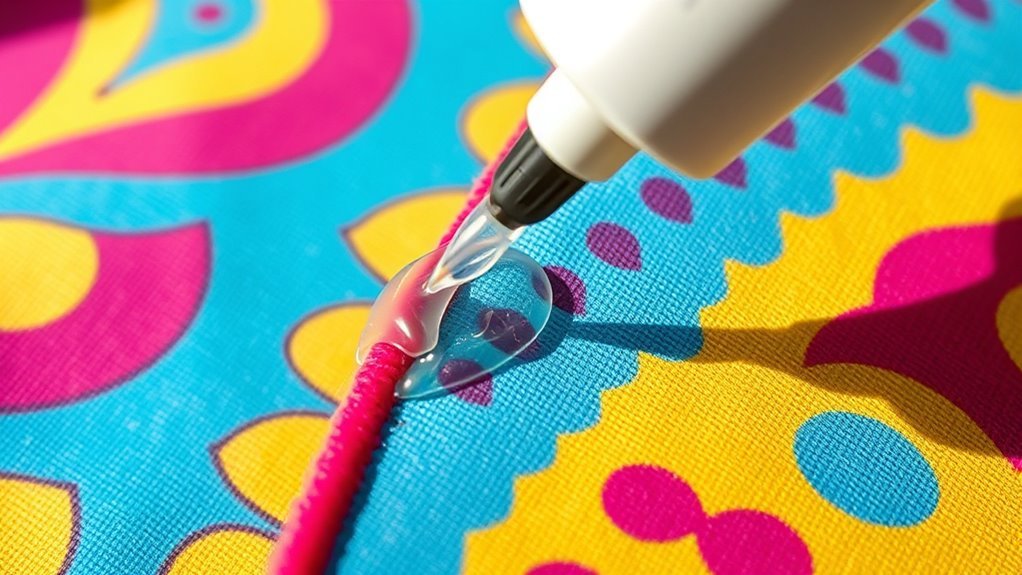
Yes, you can use a hot glue gun on fabric for quick fixes and craft projects. It’s a handy tool, especially when you need something done fast. But you’ll want to pick the right temperature and glue sticks to avoid damaging your material.
Low-temp or adjustable guns with fabric-safe sticks work best, particularly on delicate fabrics. Keep in mind, hot glue creates a rigid bond, so it’s not ideal for stretchy fabrics or items that need washing.
If you want things to last longer, combining glue with sewing is a smart move.
Stick around, and you’ll discover tips to protect your fabric and choose the best tools for the job. Once you get the hang of it, hot glue can be a real game-changer for your fabric crafts!
Key Takeaways
- Hot glue guns work on fabric for quick, temporary fixes or craft projects, but they’re not the best choice for permanent or washable items.
- Using low-temperature glue guns and fabric-safe glue sticks can help minimize damage and give you a more flexible bond.
- Keep in mind, hot glue creates a pretty rigid bond, so it’s not great for stretchy or delicate fabrics.
- It’s always a good idea to test the glue on a small area of the fabric first to avoid any burns, melting, or discoloration.
- If you want something more durable, try combining hot glue with sewing. That way, your fabric projects get both strength and flexibility.
Can You Use Hot Glue on Fabric? What You Need to Know
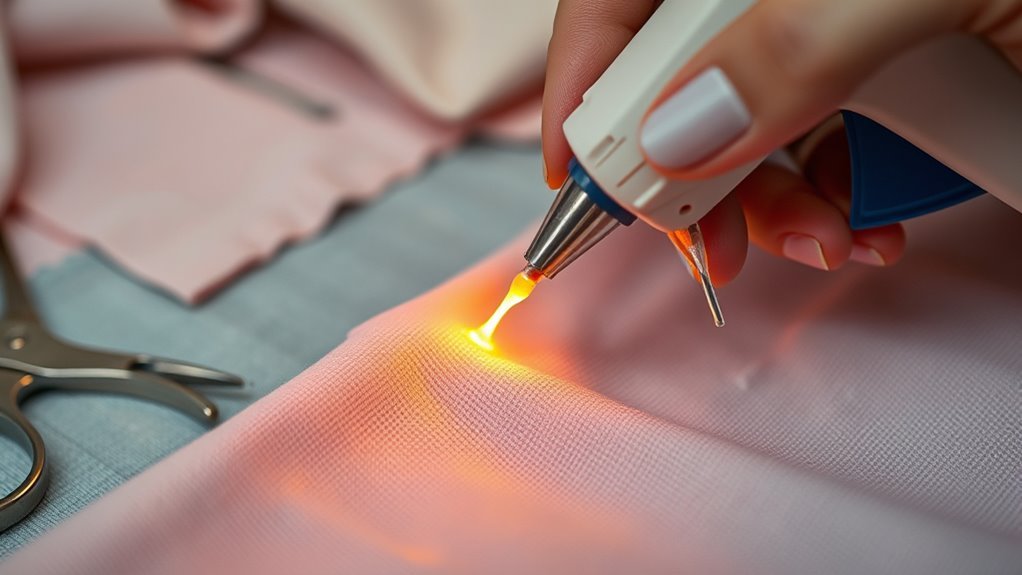
Although hot glue guns can work on fabric, you need to choose the right temperature and glue sticks to avoid damaging your material. When using hot glue as fabric glue, low-temp glue guns around 260°F are safer, especially for delicate or heat-sensitive fabrics.
Using glue sticks designed specifically for fabric improves the bond and helps prevent melting or burning. Remember, hot glue works best for quick, temporary fixes or craft projects rather than permanent, washable applications.
To get the best results, apply small amounts of glue in sections and let it cool completely before handling. Keep in mind that stretchy or heat-sensitive fabrics might not bond well with hot glue, so exploring specialized adhesives could be necessary for those materials.
Choosing the Right Glue Gun Temperature
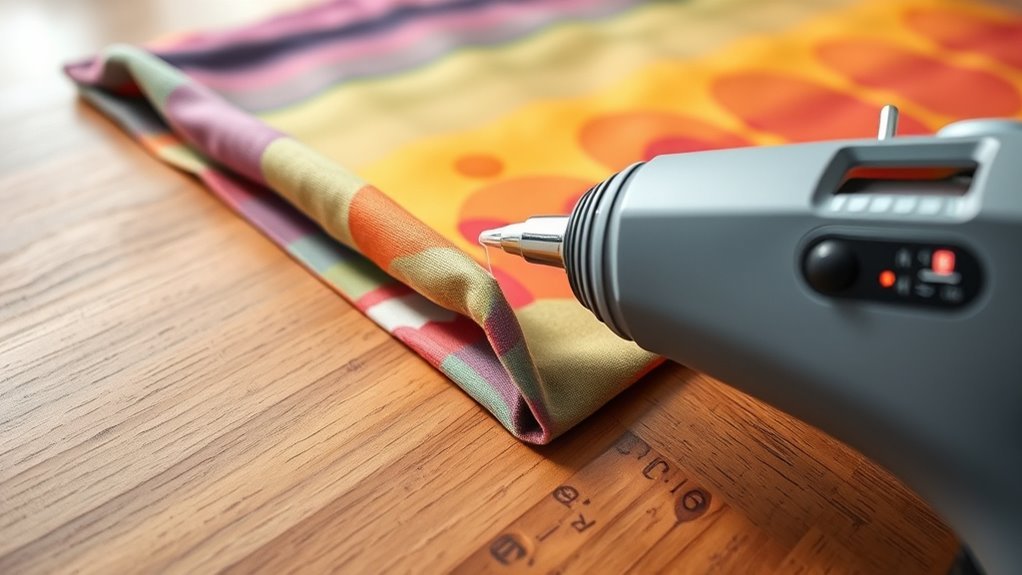
When working with fabric, selecting the right glue gun temperature makes a big difference in protecting your material and achieving a strong bond. Low-temp glue guns, heating to about 260°F, are ideal since they prevent burning and keep the fabric flexible.
High-temp guns, around 380°F, pose a risk of damaging delicate fibers and aren’t recommended for sensitive fabrics. Choosing a glue gun with adjustable temperature gives you control to match the heat to your fabric’s sensitivity.
This versatility helps you avoid weakening or scorching your material while ensuring a durable hold. By dialing in the correct temperature, you improve your project’s quality and longevity, making your glue gun a reliable tool for various fabric types.
Picking the Best Glue Sticks for Fabric
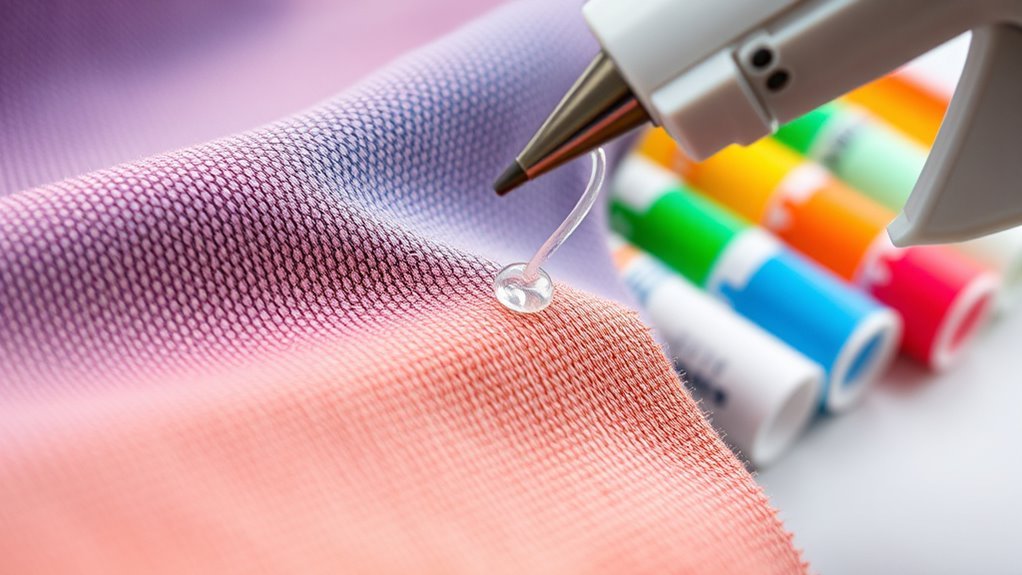
When picking glue sticks for fabric, you’ll want to choose low-temp sticks to protect delicate materials from heat damage.
All-temperature sticks offer flexibility if you use different glue guns or need stronger bonds.
Look for fabric-safe options designed specifically to hold textiles securely without weakening the fibers.
Low-Temp Glue Sticks
Since fabric requires gentle handling, low-temp glue sticks are your best bet for crafting with delicate materials. These sticks melt around 260°F, which helps you use glue without scorching or burning sensitive fabrics.
When paired with a low-temperature hot glue gun, they offer a strong, flexible bond that holds up well in most craft projects. You’ll find options like Ad Tech 2030 and Infinity Fabric Hot Glue Sticks, available in various sizes to fit your needs.
All-Temperature Stick Benefits
Although choosing the right glue stick can be tricky, all-temperature sticks offer a versatile solution that works well with adjustable-temperature glue guns. Using an all-temperature stick lets you switch between high and low heat settings easily, ensuring strong bonds without damaging delicate fabrics.
This flexibility simplifies projects with multiple fabric types and heat sensitivities. Plus, all-temperature sticks provide excellent adhesion and durability across various textures.
| Feature | Benefit | Fabric Impact |
|---|---|---|
| Broad melting range | Works on multiple materials | Safe for delicate fabrics |
| Adjustable-gun compatible | Easy temperature switching | Prevents overheating |
| Strong bond strength | Durable hold | Long-lasting fabric bonds |
| Simplifies supply needs | One stick for many projects | Reduces material waste |
| Versatility | Ideal for mixed fabric projects | Enhances creative freedom |
Fabric-Safe Adhesive Options
Choosing the right glue stick plays a big role in protecting your fabric while ensuring a strong hold. For fabric-safe adhesive options, low-temp glue sticks are your best bet. They melt at around 260°F, bonding fabric gently without causing burns or weakening fibers.
These sticks are perfect for delicate or heat-sensitive fabrics, giving you a reliable grip without damage. Alternatively, all-temperature glue sticks offer versatility since they work with adjustable glue guns at both high and low settings.
However, if you want to maximize fabric safety, low-temp sticks are ideal. Picking the proper fabric-safe glue stick not only strengthens your project but also enhances durability, keeping your fabric intact over time. So, always choose glue sticks designed to protect and bond fabric effectively.
How to Prevent Fabric Damage With Hot Glue
To safeguard your fabric, choose a low-temperature or adjustable hot glue gun that suits delicate materials. Always test a small, hidden area before applying glue to your entire project.
This way, you can avoid damage and guarantee the glue works well with your fabric. It’s a simple step, but it really makes a difference!
Choose Appropriate Glue Gun
When working with fabric, you’ll want to use a low-temp or adjustable-temp hot glue gun to prevent burning delicate materials. To choose an appropriate glue gun, match the glue stick type to your device—low-temp glue sticks for low-temp guns or all-temperature sticks for adjustable guns. This way, you won’t apply excessive heat that could scorch or weaken your fabric.
Always test the glue on a small, inconspicuous fabric area first to check for any damage. When applying, avoid prolonged heat exposure directly on the fabric to prevent melting or burning.
Let the hot glue cool slightly before pressing your fabric into it. This helps you get a strong bond without risking damage. Selecting the right glue gun is key to protecting your fabric while crafting.
Use Low-Temperature Glue
Although using a hot glue gun on fabric can be tricky, low-temperature glue guns make the process safer and more effective. These guns operate around 260°F, which helps reduce the chance of burning or weakening delicate fabric fibers.
To use low-temperature glue guns effectively, follow these steps:
- Use glue sticks designed for lower melting points to ensure safe bonding.
- Apply glue sparingly to avoid saturating the fabric.
- Let the glue cool slightly before pressing fabric together for a strong hold.
- Choose adjustable or low-temp glue guns for better control and to prevent warping sensitive materials.
It’s pretty straightforward once you get the hang of it! Just take your time, and you’ll get great results without damaging your fabrics.
Test Fabric Before Gluing
Since fabrics react differently to heat and adhesives, you should always test a small, hidden section before gluing. Choose an inconspicuous spot that matches the fabric type and thickness you’ll use in your project.
Use a low-temperature glue gun to reduce the risk of burning or damaging delicate fibers during the test. After applying the hot glue, let the patch cool completely before inspecting it closely.
Look for any signs of melting, shrinking, discoloration, or weakening in the fabric. Document the results to decide if hot glue fits your fabric.
Conducting this test helps prevent costly mistakes and guarantees your project stays intact without unwanted damage from the adhesive or heat. Always test first—it’s the key step to protecting your fabric.
When Hot Glue Isn’t the Best Choice for Fabric
If you’re working with delicate or heat-sensitive fabrics, you’ll want to skip the hot glue gun. The high temperature can cause burns, discoloration, or even melting. You must always consider the fabric type before choosing hot glue.
Here are four situations when hot glue isn’t the best choice for fabric:
- When the fabric is thin, synthetic, or easily distorted by heat.
- If the project requires washing or long-term durability, as hot glue weakens over time.
- When the fabric needs flexibility, like stretchy materials, since hot glue forms a rigid bond.
- If the fabric is delicate and prone to damage, risking burns or discoloration from the glue gun’s heat.
In these cases, alternative adhesives or sewing might serve you better. It’s always good to pick the right method for the fabric you’re working with!
Using Spray Hot Melt Glue on Fabric
When traditional hot glue guns pose risks to delicate or heat-sensitive fabrics, spray hot melt glue offers a safer and more flexible alternative. You can adjust the spray pattern to cover narrow or broad areas, making it perfect for various fabric projects.
With interchangeable nozzles, you gain precise control over glue dispersion and pattern width, ensuring even application. Spray hot melt glue, like SprayMelt 70 APAO, features low viscosity and a long open time, allowing you to work carefully without rushing.
It distributes glue evenly without exposing fabrics to excessive heat, protecting sensitive materials. Plus, it covers larger fabric surfaces smoothly, providing a strong yet gentle bond that traditional hot glue guns might not achieve on delicate textiles.
Combining Hot Glue With Sewing for Durable Projects
Although hot glue offers quick adhesion for fabric layers, combining it with sewing can markedly boost the durability of your projects. Using a Hot Glue Gun first stabilizes fabric pieces, making sewing easier and more precise.
To get the best results, follow these steps:
- Apply hot glue to bond fabric layers quickly.
- Let the glue cool and set completely to avoid puckering.
- Sew over glued areas to add strength and flexibility.
- Use this combo especially for stress-prone or movable parts.
This approach lets you enjoy the speed of a Hot Glue Gun while ensuring your fabric projects hold up over time, even through washing and wear. It’s a great way to get the best of both worlds!
Recommended Hot Glue Guns and Sticks for Fabric
Selecting the right hot glue gun and sticks plays a crucial role in safely and effectively bonding fabric. You’ll want to choose a low-temp hot glue gun, which operates around 260°F, to avoid burning or damaging delicate materials.
If you need versatility, an adjustable glue gun paired with all-temperature glue sticks offers flexibility for various fabric types. For the best results, consider Infinity Fabric Hot Glue Sticks, formulated specifically for fabric bonding to provide a reliable hold without harsh heat.
When working with heat-sensitive fabrics, opt for low-temp or spray hot melt glue sticks to ensure a gentler adhesion. Using the right combination of gun and glue sticks lets you create strong, safe bonds without compromising your fabric’s integrity.
Frequently Asked Questions
Will a Hot Glue Gun Glue Fabric to Fabric?
Yes, you can use a hot glue gun to bond fabric to fabric, but the hold isn’t always permanent or washing-proof.
Use low-temperature glue sticks and fabric-safe techniques to avoid damage and guarantee better adhesion.
It’s a quick fix, but if you want something that lasts, you might want to consider sewing or fabric glue instead.
Which Glue Gun Is Best for Fabric?
You’ll want a low-temperature glue gun, heating around 260°F, since 75% of fabric crafters prefer it to avoid damage.
Adjustable temps let you tailor heat, ensuring strong bonds without ruining delicate materials.
This way, you get the perfect balance for your fabric projects every time.
What Is the Best Hot Glue for Fabric?
You’ll want low-temperature or all-temperature glue sticks made for fabric, like flexible, washable options. Spray hot melt adhesives work well for larger areas.
Use a quality 40–60W glue gun for the best, lasting bond. It really makes a difference in how well your fabric holds together.
Will Hot Glue Stay on Fabric?
Though hot glue won’t last like a knight’s armor, it can stay on fabric temporarily. You’ll need the right glue, fabric, and care, but expect it to weaken, especially after washing or heavy use.
Conclusion
Using a hot glue gun on fabric can be like adding a quick spark to your creative fire—it’s fast and effective when you choose the right temperature and glue sticks. Just be careful to protect your fabric and know when sewing or other adhesives might work better.
By combining hot glue with smart techniques, you’ll keep your projects strong and stylish. With the right tools, you’re ready to make your fabric crafts truly shine.
Remember, hot glue works well for many fabric projects but isn’t always the best choice for delicate materials or items needing a flexible hold. Knowing when to use hot glue versus sewing or fabric-specific adhesives is key to getting the best results. When done right, hot glue can be a fantastic tool in your fabric crafting arsenal, helping your creations stay secure and look great.