
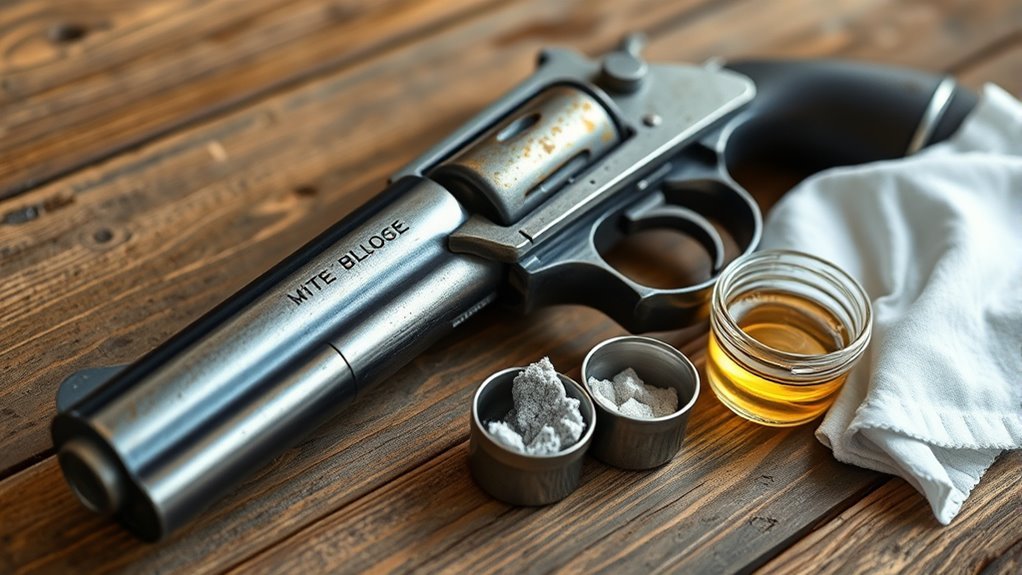
Remove Gun Rust Without Damaging Bluing in 3 Steps
To remove rust from your gun’s blued finish without causing any damage, start by choosing a non-steel abrasive like brass or copper wool. These materials gently rub away rust spots without harming the delicate bluing. It’s important to avoid using oil during this step because oil can trap rust particles and make the problem worse.
Once the rust is completely gone and the surface is clean and dry, the next step is to apply a thin, even coat of quality gun oil. This protects the metal and helps prevent future rusting. Follow these steps carefully, and you’ll keep your bluing intact while effectively removing rust.
Taking care of your gun’s finish doesn’t have to be complicated. With just a little patience and the right materials, you can preserve that beautiful blued look and keep rust at bay.
There’s more to learn about maintaining that finish, so stay curious and keep your gear in top shape!
Key Takeaways
- Use non-ferrous abrasives like brass or copper wool to gently remove surface rust without scratching the blued finish. These materials are much softer than steel, so they help protect your gun’s finish.
- Avoid oil during rust removal to prevent trapping rust particles and damaging the bluing layer. It’s better to keep the area dry while you work.
- Work in small spots with light pressure, wiping residue away frequently with a soft cotton cloth. Taking it slow helps keep the bluing intact.
- If steel wool is necessary, use only ultra-fine 0000 grade and apply very gently. This minimizes the risk of scratching the metal.
- After rust removal, apply a thin, even coat of quality gun oil using a soft cloth to protect the bluing. This will help keep your gun looking great and prevent future rust.
Pick the Best Abrasive for Removing Rust on Bluing
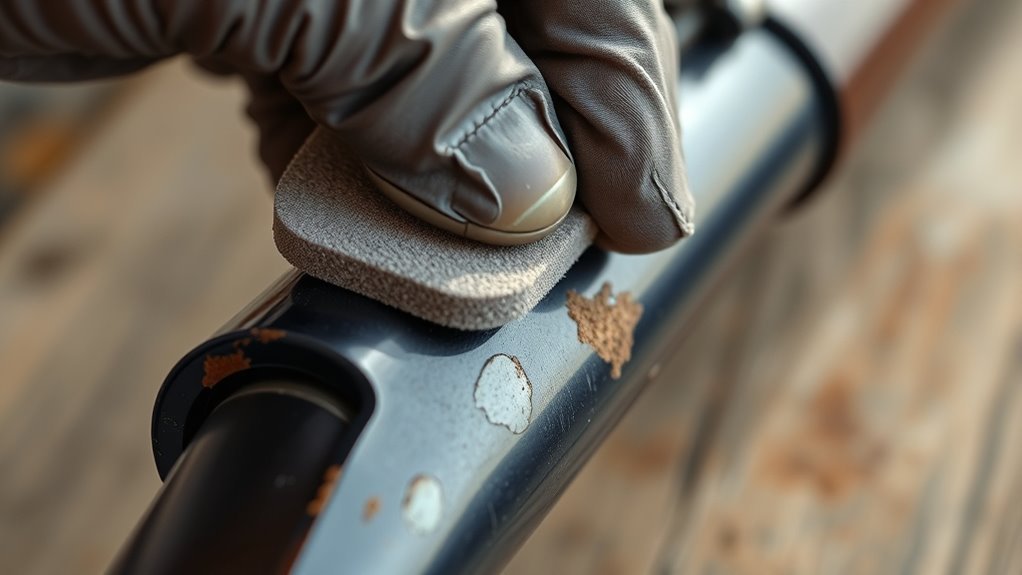
Choose abrasives carefully when removing rust from blued finishes to protect the delicate coating. You’ll want to prefer brass or copper wool since their softer, non-ferrous fibers remove rust without damaging the finish of your firearm.
An all-copper sponge from the cleaning aisle is also a great alternative. It minimizes the risk of scratches compared to steel-based options.
If you decide to use steel wool, pick only ultra-fine 0000 grade and work very gently on small spots. Avoid any abrasives coarser than 0000 or aggressive pads and brushes—they can strip the bluing and leave visible marks.
Gently Remove Surface Rust: Avoid Using Oil
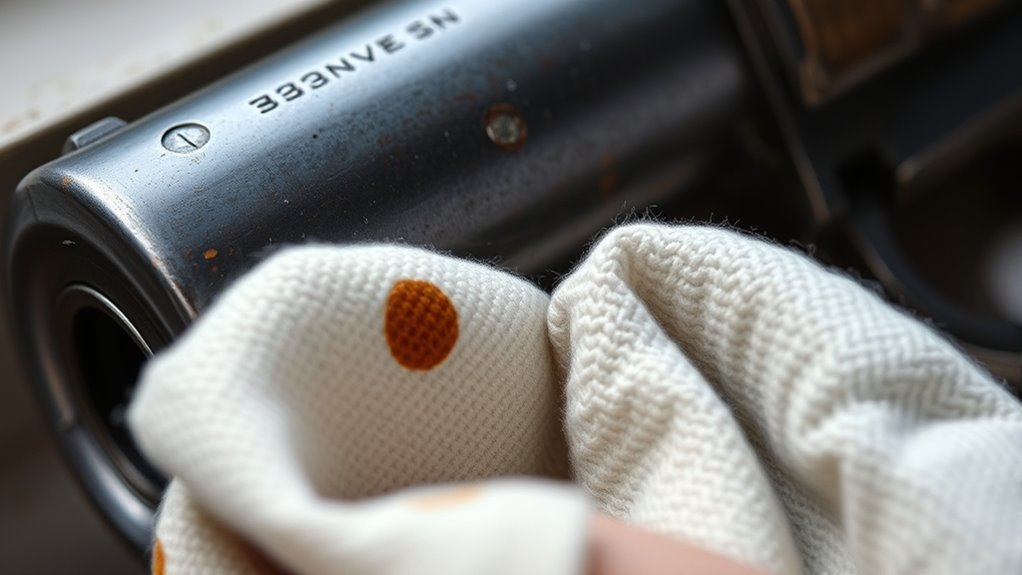
Although it might seem natural to apply oil while removing surface rust, you should avoid doing so because oil can trap rust particles and scratch the blued finish.
Applying oil during rust removal can trap particles and damage the firearm’s blued finish.
As gun owners, you want to protect the integrity of your firearm’s surface. Instead, use a non-ferrous abrasive like brass or copper wool, or very fine 0000 steel wool if you’re careful.
Gently rub the rusted area in small spots to remove the bulk of the surface rust without damaging the bluing. Wipe away residue with a soft cotton cloth before continuing.
Avoid coarser abrasives that can scratch or remove the bluing. Only after all visible rust is gone and the area is clean and dry should you consider applying oil to protect your gun’s finish.
Apply Oil to Protect Your Gun’s Bluing After Cleaning
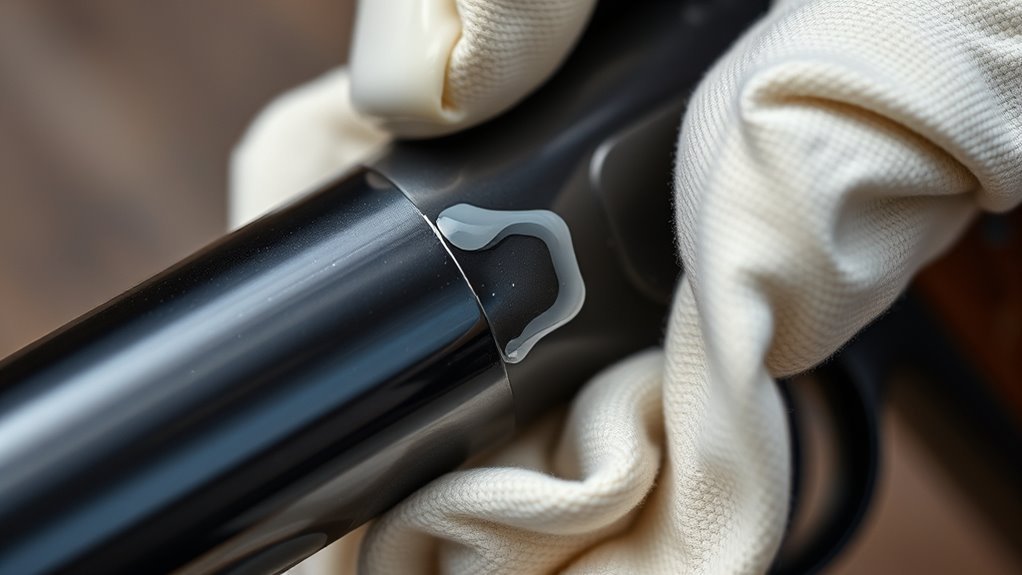
Once you’ve fully removed the rust and wiped the area clean and dry, it’s time to apply a thin, even coat of quality gun oil to protect your firearm’s blued finish.
Head to your local hardware store to find a good option like CLP or 20–30 wt. mineral oil. Use a soft cotton cloth and just a little bit of oil—only a few drops—to lightly buff the metal surfaces.
Avoid heavy pooling, as excess oil traps dust and moisture. Focus on high-contact spots like the barrel exterior, receiver edges, bolt, and slide, since these areas wear through bluing fastest.
Reapply oil regularly—after handling or every few weeks in storage—to keep a protective barrier against rust. And store your gun in a cool, low-humidity place for the best results.
Frequently Asked Questions
What Is the Best Thing to Clean Rust off a Gun?
You should use brass or copper wool to gently clean rust off your gun. If you don’t have those, fine 0000 steel wool can work too, just be careful with it.
Try to avoid using oil while you’re cleaning. Once you’re done, apply a thin protective coat to help maintain the finish. It really helps keep your gun looking good and rust-free.
Does Coca-Cola Remove Rust?
Yes, Coca-Cola can remove light rust because of its acids, but it works slowly and can harm your gun’s bluing.
You’ll want to use safer methods like gentle mechanical abrasion for better, damage-free results. It’s usually a smarter choice if you care about preserving the finish.
How Is Rust Bluing Done?
You’ll gently invite rust to dance on your metal, then transform it through careful neutralizing and oiling.
Repeating this ritual builds a rich, protective patina, turning your gun’s surface into a timeless, elegant masterpiece.
Does WD-40 Remove Rust off Metal?
Yes, WD-40 removes light surface rust by loosening and displacing iron oxide, but it won’t fix heavy or pitted rust.
You should use it carefully and avoid scrubbing while applying to protect finishes. It’s great for quick touch-ups but not a deep rust remover.
Conclusion
Removing rust without harming your gun’s bluing is like walking a tightrope—you need balance and care. By choosing the right abrasive, you can gently remove surface rust without oil.
After that, applying protective oil helps keep your firearm looking sharp and functioning smoothly. Stick to these steps, and your gun will stay in prime condition.
This method preserves the finish and value of your firearm for years to come. A little care goes a long way when it comes to removing gun rust without damaging bluing.
Following these simple steps ensures your gun remains rust-free while protecting its delicate bluing finish. With just a bit of patience and the right technique, you can maintain your firearm’s beauty and performance effortlessly. It’s a small effort that makes a big difference in preserving your gun’s condition and value over time.



3 Comments