
What Does BB Gun Stand For?
A BB gun stands for a type of air-powered rifle that shoots small metal balls called BBs, which originally meant “ball bearings.” These tiny projectiles are about 4.5 mm in diameter and were once made from actual ball bearings.
BB guns use compressed air, CO2, or springs to propel these metal balls.
People often use them for target practice or just for fun.
If you want to understand more about how BB guns work and the safety tips you should follow, there’s plenty more to explore. They’re pretty interesting once you get into the details!
Key Takeaways
- BB Gun stands for “Ball Bearing Gun,” named after the small metal ball bearings originally used as ammunition. The term “BB” refers to the size of the spherical projectiles, approximately 4.5 mm or .177 inches in diameter.
- BB guns are air-powered rifles designed to shoot these small metal or plastic BBs for recreational shooting. The name originated in the late 19th century when ball bearings were adapted for training and target practice.
- Unlike firearms, BB guns use compressed air, CO2, or springs to propel BBs, making them distinct from bullet-firing guns. So, they’re kind of like the sporty, safer cousins of real guns.
What Is a BB Gun: and Where Did the Name Come From?

What exactly is a BB gun, and why is it called that? BB guns are air-powered rifles that shoot small spherical projectiles known as BBs, typically about 4.5 mm in diameter.
The name “BB” actually comes from “ball bearing,” because early BBs were made from tiny metal ball bearings used as ammunition. These guns first appeared in the late 19th century, mainly for training and recreational shooting.
The “BB” label helps distinguish these guns from larger caliber air rifles or firearms. Over time, BB guns have become a popular term for small air guns that shoot either BBs or pellets, mostly used for target practice and fun.
How Do BB Guns Work?

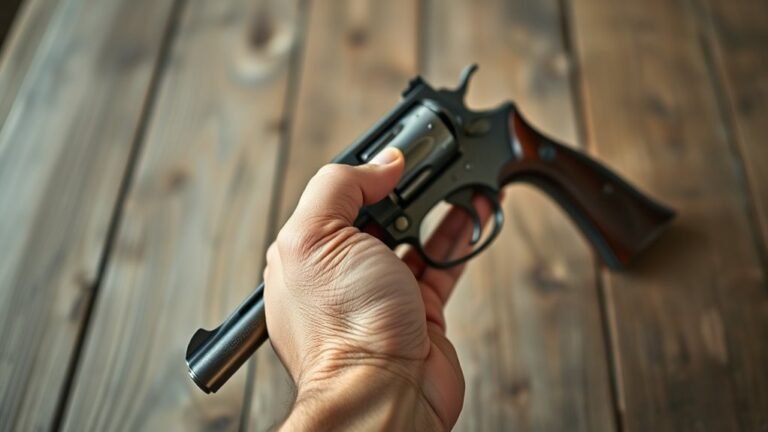
Ever wondered how BB guns manage to shoot tiny metal or plastic pellets with such speed and accuracy? When you pull the trigger, a stored energy source—usually compressed air, CO2, or a spring—releases, propelling the BB out of the barrel at a high velocity, often between 200 to 600 feet per second.
Many BB guns use a hop-up system that puts backspin on the BB, enhancing its distance and accuracy. Pretty clever, right?
To guarantee gun safety, most models include manual safeties or trigger locks to prevent accidental firing. It’s good to know these safety features are there.
Understanding how the firing mechanism works helps you appreciate the design behind these devices. Plus, it reminds us how important it is to handle them responsibly every time you use a BB gun.
What Size and Type of Ammunition Do BB Guns Use?
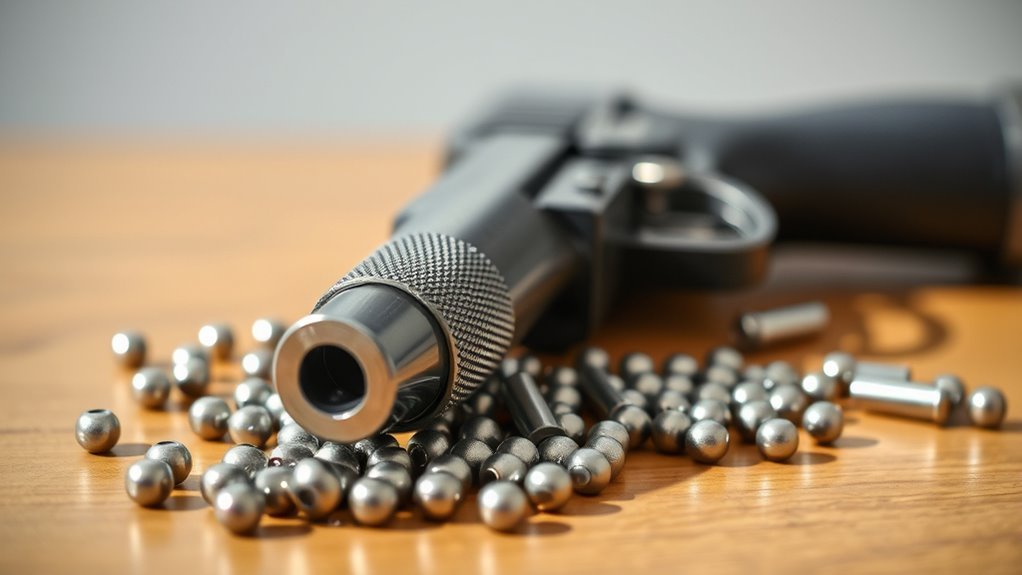
Wondering which ammunition fits your BB gun best? Most BB guns use small, round BBs measuring .177 inches (4.5mm) in diameter. The standard ammunition is steel or zinc-coated steel BBs, designed specifically for air-powered shooting.
Using the correct size and type of ammunition guarantees your BB gun functions safely and accurately. While some models can fire plastic BBs or pellets, steel BBs remain the most common choice due to their weight and durability.
The velocity and power of your BB gun largely depend on the material and weight of the BBs you use. To keep your BB gun working properly and safely, always stick to the recommended steel BBs sized .177 inches for maximum performance.
How Are BB Guns Different From Other Air Guns and Firearms?
You might notice BB guns fire small steel or lead BBs using compressed air or springs, unlike firearms that rely on gunpowder.
Air guns come in various types, often shooting larger pellets with more power than BB guns. Plus, legal classifications can vary, with BB guns sometimes treated like firearms depending on where you live.
BB Guns Versus Firearms
How do BB guns differ from traditional firearms and other air guns? BB guns shoot small metal or plastic BBs using compressed air or CO2, whereas traditional firearms use gunpowder to fire bullets.
While BB guns have lower velocities and are mainly for recreational use, many states classify them as firearms due to safety concerns.
Unlike other air guns that shoot heavier pellets, BB guns fire lighter metal BBs.
| Feature | BB Guns |
|---|---|
| Ammunition | Metal/plastic BBs |
| Propulsion | Compressed air/CO2 |
| Velocity | Lower than firearms |
| Legal Status | Often classified as firearms |
Understanding these differences helps you respect safety and legal requirements when handling BB guns. It’s always good to be informed before you start using one!
Air Guns Types Explained
Although BB guns fall under the broader category of air guns, they differ markedly from other types like pellet rifles and traditional firearms. BB guns shoot small spherical BBs, usually 4.5mm in diameter, propelled by compressed air or spring mechanisms.
In contrast, pellet rifles fire shaped pellets that often provide better accuracy and higher velocity. Unlike firearms that use gunpowder to fire projectiles explosively, BB guns rely solely on compressed air, CO2, or spring power without explosives, making them less powerful.
As air guns, BB guns are mainly designed for casual target shooting or small game hunting rather than serious marksmanship. Understanding these distinctions helps you appreciate how BB guns fit into the broader spectrum of air guns and why their projectiles and mechanisms differ profoundly from firearms.
Legal Classification Differences
Why do BB guns often face stricter legal controls compared to other air guns? It’s mainly because they’re legally classified as firearms in some states, like New Jersey. This classification means BB guns are treated more like real firearms under the law.
That includes things like needing permits and facing restricted use. Other air guns, like pellet guns, usually have lighter regulations at the federal level. But BB guns powered by compressed air or CO2 often fall under tighter state laws.
| Type | Legal Classification | Regulation Impact |
|---|---|---|
| BB Guns | Firearm (in some states) | Requires permits, restricted use |
| Pellet Guns | Air gun | Generally less regulated |
| Firearms | Firearm | Strict federal and state laws |
| Air Pistols | Often firearm if BB | Similar to BB gun regulations |
| Air Rifles | Varies by state | Depends on power and local laws |
Knowing these differences helps you navigate BB gun laws with confidence. It’s good to stay informed so you can handle your BB gun responsibly.
Common Uses for BB Guns: From Recreation to Training
Where can you use a BB gun safely and effectively? BB guns are perfect for recreational shooting, target practice, and plinking. They’re affordable and easy to use, which makes them great for beginners.
Whether you’re honing your aim in the backyard or at a designated shooting range, they offer a fun way to develop basic marksmanship skills. Lots of people start with BB guns to train before moving on to firearms. It’s a great way to build confidence and learn proper technique.
Use BB guns in the backyard or shooting range to build confidence and master marksmanship basics.
Beyond just having fun, some BB gun models can help with small game hunting or pest control, where accuracy really matters. Also, airsoft guns—a type of BB gun—are super popular in competitive and military simulation games.
Shooting sports programs often use BB guns as educational tools, too. They’re perfect for teaching safety and responsible handling to new shooters.
Safety Concerns and Legal Definitions of BB Guns
Because BB guns can shoot metal or plastic pellets at high speeds, you need to treat them with the same caution as real firearms. Safety concerns include the risk of injury from high-velocity projectiles and improper handling.
Legally, BB guns are often classified and regulated like real firearms—New Jersey, for example, lists them under statute 2C:39-5. To keep things safe and legal, remember these key points:
- You must follow local regulations, which often require permits for possession and use.
- Always wear protective gear to prevent injury.
- Store your BB gun securely to avoid accidents or unauthorized access.
Understanding these safety and legal requirements will help you handle BB guns responsibly and within the law. It’s really important to stay informed and cautious!
How to Choose the Right BB Gun for Your Needs
Handling BB guns responsibly starts with choosing the right one for your needs. First, consider the type of BB gun—spring-piston, CO2, or pump-action—based on how you plan to use it.
Next, evaluate safety switches and trigger locks to *guarantee* secure handling, especially if you’re new to shooting. Don’t overlook performance factors like velocity, accuracy, and build quality; these determine if the BB gun fits target practice or casual recreation.
Also, check local laws to confirm your choice complies with regulations. Finally, prioritize guns made with durable materials like aluminum or steel for long-term reliability and safety.
Recent Innovations Shaping Modern BB Guns
As technology advances, modern BB guns have evolved to offer greater safety, accuracy, and performance than ever before. Whether you’re a new account holder or an experienced shooter, you’ll appreciate these innovations:
Enhanced safety features like automatic trigger locks and manual safety switches protect users, making the gun safer for all skill levels. Plus, these features give you peace of mind every time you pick up your BB gun.
Automatic trigger locks and manual safety switches ensure safer use and greater peace of mind for all shooters.
Improved accuracy and power come from hop-up systems and precision barrels, extending shooting distance and impact. This means you can hit your target more consistently, which is always a win.
Semi-automatic and fully-automatic firing modes increase shooting speed, mimicking real firearms for competitive and recreational use. It’s a lot of fun and adds a new level of excitement to your shooting experience.
Additionally, lightweight alloys and durable plastics improve ergonomics and reliability. CO2 and compressed air systems ensure consistent performance, so you can trust your BB gun in every session. These advances make modern BB guns more enjoyable and accessible for everyone.
Frequently Asked Questions
Why Do They Call It a BB Gun?
They call it a BB gun because it shoots small, round pellets called BBs, originally meaning ball bearings.
You’ll notice the name stuck since these tiny projectiles became popular for fun target shooting.
They also help distinguish these guns from others.
What Is Stronger, a BB Gun or a Pellet Gun?
Think of a pellet gun as a lightning bolt—more powerful and precise. You’ll find it stronger than a BB gun, which is more like a gentle breeze.
It’s perfect for casual plinking but lacks serious stopping power. So, if you want something with a bit more kick, the pellet gun’s your go-to.
Does BB Stand for Anything?
BB doesn’t officially stand for anything now, but it originally meant “Ball Bearing.”
You’ll find that today, it’s just a term used to describe the small metal pellets BB guns shoot.
Is a BB Gun a Lethal Weapon?
A BB gun isn’t usually lethal, but you can seriously hurt someone if you’re careless. It can cause eye injuries or skin wounds, so you should always handle it responsibly.
Also, make sure to follow local laws carefully. Safety first, right?
Conclusion
You might picture a small, harmless BB gun in your hands, yet it packs more precision and power than you’d expect. While it looks simple, it operates with complex mechanics and serves various roles—from fun backyard target practice to serious training tools.
Understanding its size, function, and safety rules helps you respect its potential. So, next time you see a BB gun, remember: it’s more than just a toy—it’s a blend of simplicity and sophistication.
BB guns stand for more than just casual play. They combine precision engineering with practical use, making them ideal for everything from beginner shooting practice to advanced skill development. Always treat a BB gun with care and awareness of safety, because despite its name, it’s a powerful tool that demands respect.