
What Does AR Stand for in Guns?
When you see “AR” in guns, it stands for Armalite Rifle, named after the company that designed the original platform in the 1950s. This is important to know because many people mistakenly think it means “assault rifle” or “automatic.”
The popular AR-15, for example, is actually a semi-automatic rifle. That means it fires one round per trigger pull, not automatically.
Understanding what AR really stands for helps clear up common misconceptions.
Plus, there’s a lot more to discover about its history and unique features if you want to get the full story behind this famous firearm.
Key Takeaways
- “AR” stands for Armalite Rifle, named after the company that originally designed the firearm platform.
- The “AR” designation is specific to Armalite models like the AR-10 and AR-15, not a generic term for assault rifles.
- The AR-15 is a semi-automatic rifle developed by Eugene Stoner in 1959 using a gas-operated direct impingement system.
- “AR” does not mean “assault rifle” or “automatic rifle”; it solely refers to the manufacturer and model line.
- Most civilian AR-15s fire one round per trigger pull and lack fully automatic or burst-fire capabilities typical of assault rifles.
What Does “AR” Actually Stand For in Guns?

What does “AR” really mean when it comes to guns? You might think AR stands for assault rifle, but it actually means Armalite Rifle, named after the company that designed the original platform.
Back in the 1950s, Armalite created the AR-15, which later inspired many civilian models. The “AR” prefix applies to a family of rifles, including the AR-10 and AR-15, all based on that original design.
It’s important to know that AR is a brand-specific abbreviation tied to Armalite, not a generic term for any assault rifle or automatic weapon. So, when you hear “AR,” remember it points directly to Armalite’s designs, not the broader category of assault rifles.
Why “AR” Isn’t Short for “Assault Rifle
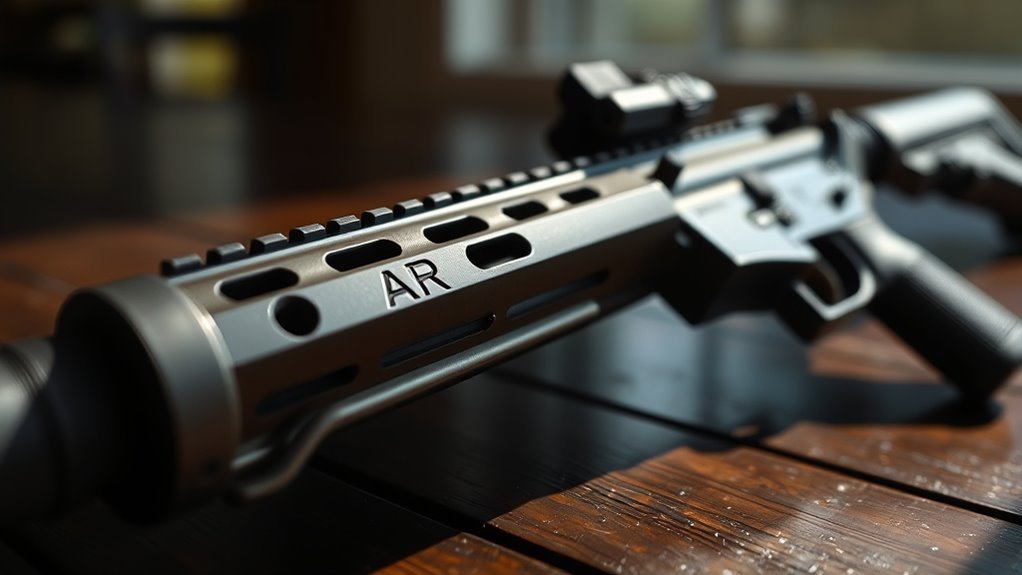
Understanding that “AR” stands for Armalite, not assault rifle, clears up a common confusion. Many people think AR means assault rifle, but it’s actually a brand name from the original manufacturer.
Here’s why “AR” isn’t short for assault rifle:
- An assault rifle features select-fire capability, which allows automatic or burst fire.
- The AR-15 is semi-automatic, meaning it fires one round per trigger pull, unlike true assault rifles.
- The “AR” simply identifies the Armalite company, not a weapon type or function.
The History of Armalite and the AR-15
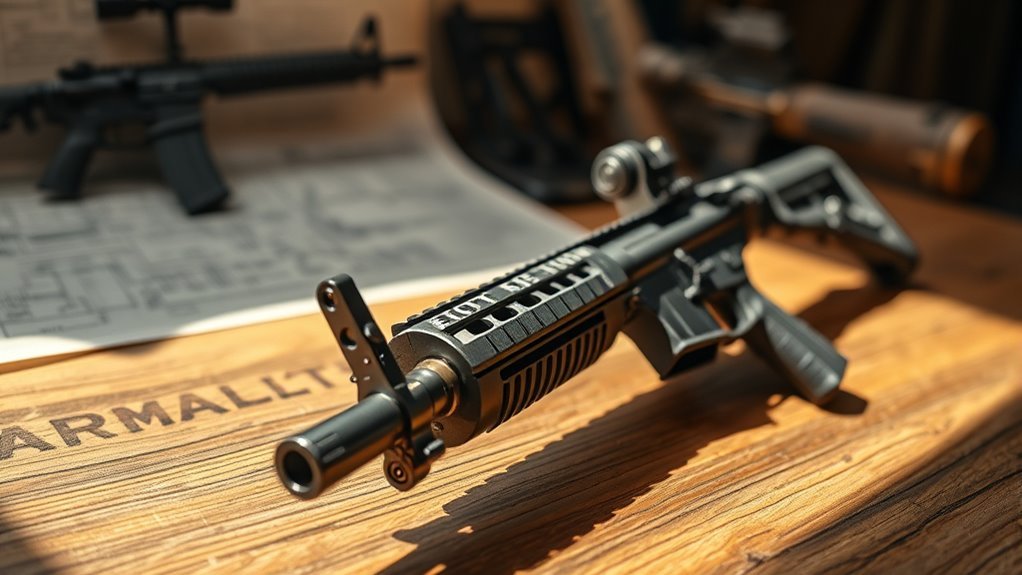
Although many know the AR-15 as a popular rifle, few realize it originated with Armalite, an American aerospace and defense company founded in 1954. You should know that the “AR” in AR-15 stands for “Armalite Rifle,” named after this innovative company.
Eugene Stoner, Armalite’s lead designer, developed the AR-15 in 1959 using a gas-operated, direct impingement system, making it lightweight and accurate. This design was groundbreaking and aimed at both military and civilian markets.
When Colt began manufacturing the AR-15 in 1963, it helped cement the rifle’s connection to Armalite. Understanding this history clears up confusion about the AR-15’s origin and highlights Eugene Stoner’s significant role in its design.
How the AR-15 Became Popular
You’ll find the AR-15’s rise to popularity started in the 1950s when Armalite designed it as a civilian rifle. Colt’s manufacturing and marketing efforts in the 1960s helped it reach more shooters.
Its modular design made it easy to customize, boosting its appeal even further. That’s really what set it apart and made it a favorite among many.
Origins of AR-15
How did the AR-15 rise from a military project to a civilian favorite? The AR-15 started as an innovative design by Eugene Stoner at Armalite in the late 1950s. The “AR” stands for “Armalite Rifle,” reflecting its origin, not “assault rifle.”
Here’s how it evolved: Armalite designed the AR-15 to be lightweight and modular for military use, emphasizing ease of customization.
Then, Colt purchased the rights in the 1960s to manufacture the rifle for civilians, expanding its reach.
Its adaptable design allowed users to modify and personalize the rifle, which really boosted its appeal.
Thanks to this thoughtful design and smooth transition, the AR-15 became one of the most recognizable and customizable rifles available today.
Rise in Popularity
Why did the AR-15 become one of the most popular rifles in the United States? You can trace its rise to a mix of military use, marketing, and design.
Originally developed in the 1950s, the AR-15’s lightweight, modular build made it highly adaptable. The U.S. military’s adoption of a full auto version, the M16, boosted its reputation.
Gun manufacturers marketed the semi-automatic AR-15 to civilians, highlighting its customizable features and light trigger pull. This made shooting easier and more accurate.
Unfortunately, its use in high-profile mass shootings increased media attention, embedding the rifle deeply in American gun culture. Because of its versatility and visibility, the AR-15 became a symbol of both modern firearm innovation and controversy.
Common Misconceptions About the AR-15
What does the “AR” in AR-15 actually stand for? It means Armalite Rifle, not “assault rifle” or “automatic rifle” as many misconceptions suggest.
You might hear people confuse the AR-15 as an automatic weapon, but it’s actually semi-automatic, firing one round per trigger pull. Here are three common misunderstandings you should know:
- AR-15s are fully automatic — they’re not; automatic rifles can fire continuously with one trigger pull.
- The “AR” means assault rifle — it doesn’t; it refers to the original manufacturer, Armalite.
- AR-15s are military weapons — in reality, the civilian AR-15 is designed mainly for sporting and self-defense.
Knowing these facts helps you separate myth from reality about the AR-15. It’s always good to get the story straight!
How the AR-15 Differs From Other Rifles
You might think the “AR” in AR-15 means assault rifle, but it actually stands for Armalite, the company that designed it.
Unlike military rifles with automatic fire, the AR-15 is semi-automatic and customizable for civilian use.
Understanding these differences clears up common misconceptions about what this rifle really is.
AR Meaning Explained
How did the AR-15 get its name, and what sets it apart from other rifles you might know? The “AR” stands for Armalite Rifle, named after the company that designed it—not “assault rifle” as many think.
This semi-automatic rifle is distinct in several ways: it fires one round per trigger pull, unlike select-fire military rifles. Plus, its modular design lets you customize parts easily to fit your needs.
Originally made for military use, the AR-15 was adapted for civilian ownership with semi-automatic operation only. Understanding these points helps you see why the AR-15 stands apart from other rifles, combining versatility and user control under the Armalite Rifle legacy.
AR-15 Versus Military Rifles
Although the AR-15 shares many design features with military rifles like the M16 and M4, it differs considerably in firing capabilities and intended use. The AR-15 is a semi-automatic rifle, meaning it fires one round per trigger pull.
In contrast, military rifles such as the M16 and M4 offer select fire options, allowing fully automatic or burst fire modes. This distinction is key: the AR-15 cannot shoot fully automatic without special, legal modifications.
Both types share features like detachable magazines and customization options, but the AR-15 is designed primarily for civilian use and self-defense. Understanding these differences helps you see why the AR-15 isn’t classified the same way as military rifles despite their similar appearance.
Misconceptions About Assault Rifles
Why do so many people confuse the AR-15 with an assault rifle? It’s mainly due to misunderstandings about how these rifles function. The AR-15 is a semi-automatic rifle, not an assault rifle, which technically requires select-fire capability—including full auto or burst modes.
Here’s how the AR-15 differs from true assault rifles: The AR-15 fires one shot per trigger pull (semi-automatic), while assault rifles can switch between semi-auto and full auto. Civilian AR-15s lack full auto firing modes, a defining feature of assault rifles.
Also, “AR” stands for Armalite, not assault rifle, so the name itself is misleading. Understanding these points helps clear up the common misconceptions about what makes an assault rifle distinct from a semi-automatic AR-15.
Why Getting Gun Terms Right Matters
When you use correct firearm terms like “magazine” instead of “clip,” you prevent misunderstandings and make conversations clearer. Accurate terminology ensures you communicate effectively about firearm features and classifications. This is essential for both safety and legal contexts.
Knowing that “AR” stands for Armalite, the original manufacturer, not “assault rifle,” helps you avoid spreading common misconceptions. This accuracy improves your credibility and supports informed, respectful discussions about guns.
Misusing terms can lead to confusion or even serious consequences, especially when precision matters most. By educating yourself on proper firearm vocabulary, you contribute to clearer dialogue and better understanding among gun owners, enthusiasts, and the general public.
Getting your terms right matters—it helps you navigate conversations with confidence and responsibility.
Don’t Confuse “AR” With Full Auto or Other Features
If you hear someone refer to an “AR” as a fully automatic weapon, it’s important to know that this is a common misunderstanding. The “AR” in AR-15 actually stands for “Armalite Rifle,” not “assault rifle” or “automatic rifle.”
Most civilian firearms labeled as AR-15 are semi-automatic, meaning they fire one round per trigger pull, unlike fully automatic military rifles. So, it’s a bit different than what some people think.
Here’s what you should keep in mind:
- Fully automatic guns can fire multiple rounds with one trigger pull and are heavily restricted for civilians.
- Semi-automatic AR-15s require a trigger pull for each shot and are widely available legally.
- The “AR” designation is simply a model name, not a feature indicating automatic fire capability.
Don’t confuse the name with firing modes or features. It’s really just the model name, nothing more.
Frequently Asked Questions
What Do AK and AR Mean?
AK means Avtomat Kalashnikova, named after the designer of the Soviet rifle. AR stands for Armalite Rifle, from the company that created the design.
Don’t confuse AR with “assault rifle” — it’s a brand name. It’s a common mix-up, but they’re not the same thing.
What Is the Difference Between AR and Assault Rifle?
Imagine using a telegraph today: AR means Armalite Rifle, a semi-auto civilian gun, while an assault rifle is a military weapon with selective fire.
You’ll notice ARs don’t have full-auto modes like true assault rifles do. So, they function differently even though the names sound similar.
Why Is an AR-15 Not an Assault Rifle?
You shouldn’t call an AR-15 an assault rifle because it’s semi-automatic, firing one shot per trigger pull.
Assault rifles have fully automatic or burst fire, which the AR-15 doesn’t have. That makes it legally different.
What Does AR Stand for in AR-15?
You might assume “AR” means assault rifle, but it actually stands for Armalite, the company that designed the AR-15.
It’s a coincidence that the abbreviation matches a common firearm term, so don’t get confused!
Conclusion
Now that you know, “AR” stands for Armalite Rifle—not “assault rifle”—you won’t fall into common traps. Like a vintage knight misunderstanding his lance, many get this wrong.
The AR-15’s story is about design and popularity, not full-auto fire or scary labels. Getting these terms right matters because clear talk cuts through confusion.
So next time someone drops “AR,” you’ll set the record straight with confidence and clarity. Understanding that AR means Armalite Rifle helps avoid myths around assault rifles. Using the right terms makes gun discussions clearer and more accurate, so you’re always informed and ready to explain.