What Does a Massage Gun Do for Muscle Recovery?
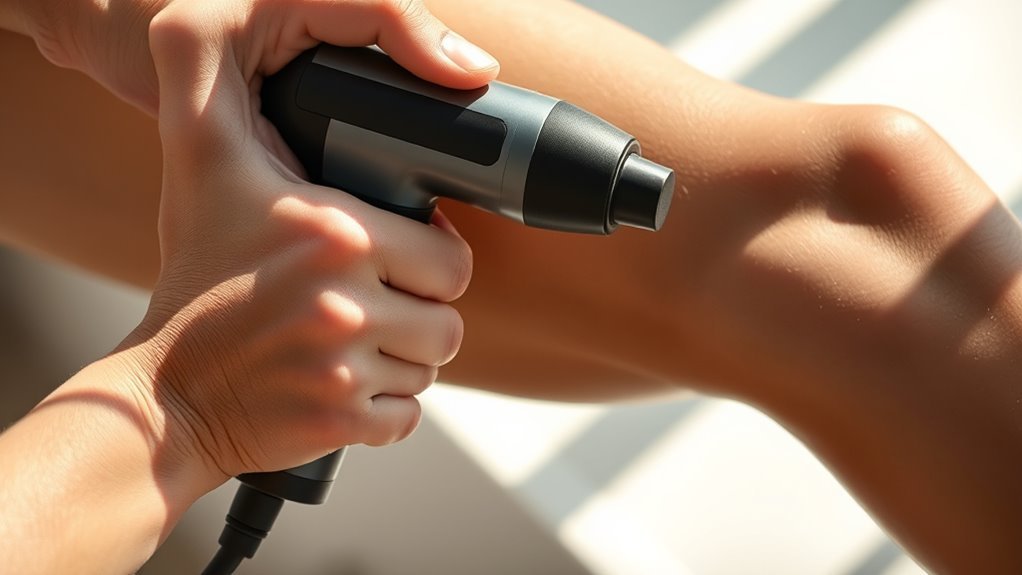
A massage gun speeds up your muscle recovery by delivering targeted pulses that boost blood flow and reduce soreness. It’s a handy tool designed to break down tension and ease muscle stiffness, helping you heal faster and improve flexibility.
By breaking up scar tissue, it also supports better muscle function and quicker recovery after workouts.
You can use it both before and after exercise for quicker relief and enhanced mobility. It’s pretty simple to incorporate into your routine, and it makes a real difference when you’re dealing with tight muscles or soreness.
If you want to know how to use it safely and get the most from its benefits, there’s plenty more to explore. Stick around to find out all the tips and tricks!
Key Takeaways
- Massage guns increase blood flow and circulation to accelerate nutrient delivery for faster muscle repair. This means your muscles get what they need, quicker.
- They reduce muscle soreness, stiffness, and delayed onset muscle soreness (DOMS) after exercise. So, you feel less ache and more ready to move.
- Percussive therapy breaks down scar tissue and adhesions, enhancing muscle flexibility and relaxation. It’s like giving your muscles a deep, targeted massage.
- Massage guns help remove metabolic waste like lactic acid, promoting quicker recovery. This helps you bounce back faster after a tough workout.
- They provide targeted, customizable therapy for precise muscle treatment and self-administered recovery. You get to control where and how you want the relief.
How Massage Guns Speed Muscle Recovery
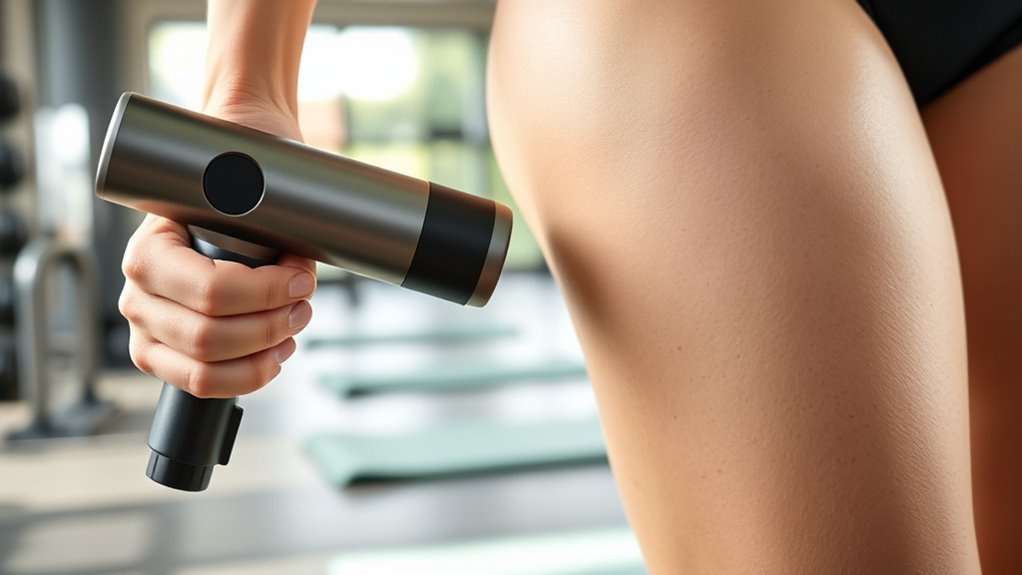
Although you might think rest alone speeds muscle recovery, using a massage gun can substantially accelerate the process. Massage guns apply percussive therapy, delivering rapid pulses that boost blood flow to your muscles.
This increased circulation speeds up tissue repair by supplying nutrients and removing waste products more efficiently. After intense workouts, you’ll notice reduced delayed onset muscle soreness and decreased muscle stiffness, thanks to the deep tissue stimulation these devices provide.
The vibrations from massage guns also activate receptors that promote muscle relaxation and lower pain perception, helping you feel better faster. Regular use breaks up scar tissue and adhesions, enhancing tissue pliability and restoring normal muscle function.
How Massage Guns Help Muscles Heal
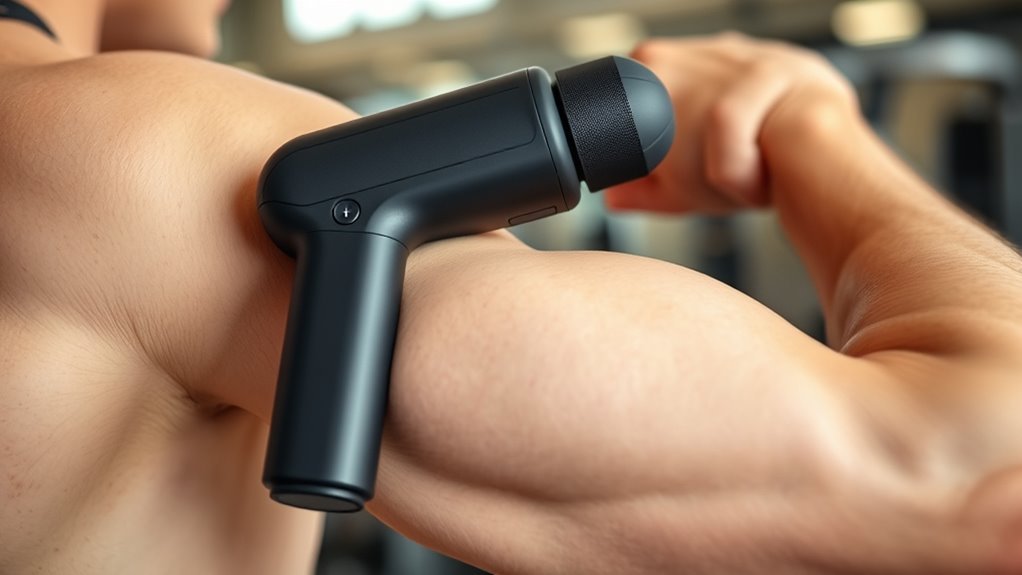
When you use a massage gun on injured muscles, its rapid percussive pulses boost blood flow, delivering essential nutrients that speed healing. Massage guns use percussive therapy to stimulate mechanoreceptors, promoting tissue repair while reducing inflammation.
Percussive pulses from massage guns boost blood flow and activate mechanoreceptors to speed muscle healing and reduce inflammation.
They also break down scar tissue and adhesions, enhancing tissue flexibility and overall healing. This combination supports faster muscle recovery after injury.
Here’s how massage guns help muscles heal:
- Increase blood flow for nutrient delivery
- Reduce inflammation in damaged tissues
- Break up scar tissue and adhesions
- Stimulate tissue repair through mechanoreceptor activation
- Improve tissue flexibility and accelerate healing
Top Recovery Benefits of Massage Guns Post-Workout
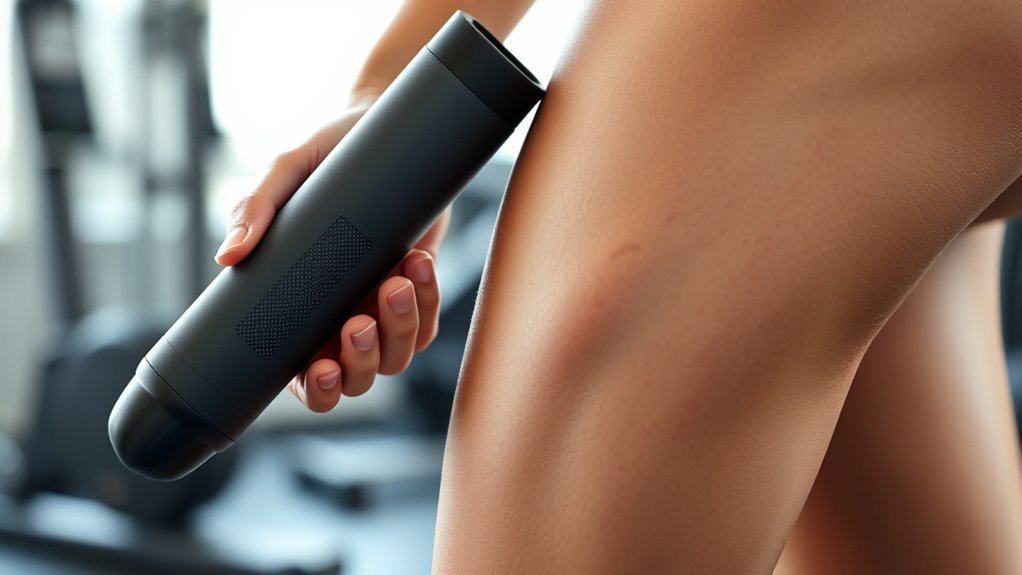
Beyond aiding injured muscles, massage guns offer significant benefits after your workouts. They boost blood flow, accelerating the removal of metabolic waste like lactic acid, which speeds up muscle recovery.
Percussive therapy from the massage gun breaks up adhesions and scar tissue, enhancing tissue healing and flexibility. This helps reduce delayed-onset muscle soreness (DOMS) by relaxing muscles and improving circulation.
Using a massage gun regularly eases muscle tension, decreases stiffness, and improves your range of motion. These recovery benefits not only help you feel better faster but also prepare your muscles for your next workout session.
Incorporating a massage gun into your post-workout routine supports quicker recovery and promotes overall muscle health effectively. It’s a simple way to give your body the care it deserves after hard training.
Best Muscle Groups for Massage Gun Therapy
Since massage guns target deep muscle layers, focusing on large muscle groups like the quadriceps, hamstrings, and glutes will give you the most effective relief and recovery.
These areas benefit greatly from increased blood flow, reducing soreness and speeding muscle recovery. Don’t overlook other key muscle groups where massage guns excel.
- Spinal muscles for tension release using fork attachments
- Calves and shoulders to target trigger points with bullet attachments
- Back and arms to enhance flexibility and decrease muscle tightness
- Hamstrings and quadriceps for deep tissue soreness relief
- Glutes for improved circulation and muscle relaxation
When and How Long to Use Your Massage Gun
You should use your massage gun for 30 seconds to 2 minutes on each muscle group to get the best results. Applying it right after exercise helps reduce soreness and stiffness effectively.
Just remember not to exceed 3 minutes per area to avoid irritation. It’s all about finding the right balance for your body!
Optimal Application Duration
How long should you use a massage gun on each muscle group to get the best results? The most effective application duration ranges from 30 seconds to 2 minutes per muscle group. This time frame effectively promotes circulation and supports muscle recovery without causing discomfort or tissue irritation.
Shorter durations, around 30 seconds to 1 minute, work well for warming up muscles. On the other hand, 1 to 2-minute sessions are ideal for post-exercise recovery to reduce soreness and improve flexibility. Always pay attention to how your body reacts and stop if you feel pain or excessive sensitivity.
- Use 30 seconds to 2 minutes per muscle group
- Shorter durations for warm-up
- Longer sessions for post-exercise recovery
- Avoid exceeding 2 minutes to prevent discomfort
- Stop if you experience pain or irritation
Best Usage Timing
Knowing the ideal duration for using a massage gun on each muscle group sets the stage for understanding the best times to incorporate it into your routine. For effective muscle recovery, use the massage gun for 30 seconds to 2 minutes per muscle group during warm-up, cool-down, or post-exercise phases.
Applying it on sore muscles post-exercise can reduce soreness and stiffness, promoting relaxation and easing muscle tension. It’s best to focus on targeting muscles when they’re warm and relaxed to maximize the benefits.
Start with lower settings and shorter durations, then gradually increase as your body adapts. Just be sure to avoid using the massage gun continuously on the same spot for more than a few minutes—that can cause tissue irritation.
Proper usage timing guarantees safe and efficient muscle recovery while minimizing discomfort. So, take it slow and listen to your body for the best results.
Mistakes to Avoid With Your Massage Gun
You’ve got to be careful not to overuse your massage gun or apply it incorrectly. Pressing too hard, using it on injured areas, or treating bones can cause pain or injury.
Starting slow and limiting time on each muscle helps you avoid these common mistakes. It’s all about finding the right balance and being gentle with your body.
Overuse Risks
What happens when you overuse a massage gun? Overuse can lead to bruising, tissue damage, and inflammation. This is especially true if you apply excessive pressure or ignore safety guidelines.
Using the device too long on one muscle group may aggravate existing injuries and cause muscle damage. So, it’s really important to follow the manufacturer’s recommendations carefully to avoid any adverse effects.
Be mindful of these risks:
- Applying too much pressure causing bruising and soreness
- Using the massage gun on the same muscle for over 2 minutes repeatedly
- Ignoring safety guidelines on frequency and intensity
Also, avoid targeting bony or sensitive areas, as this can lead to nerve irritation. And don’t rely solely on the massage gun without proper rest, because that can actually hinder your recovery.
Preventing overuse helps you recover safely and effectively. Just take it easy and listen to your body!
Incorrect Application
Although massage guns can boost muscle recovery, incorrect application can cause more harm than good. Applying too much pressure or using high speed settings can lead to tissue damage or bruising, so always start gently.
Avoid using the device over bony areas like the spine or collarbone to prevent discomfort or injury. Staying too long on one spot, especially beyond two minutes, risks irritation and soreness.
It’s vital to listen to your pain signals—ignoring them can worsen injuries or cause new damage. Also, avoid using the massage gun on open wounds, scars, or skin abrasions, as this increases the risk of injury or infection.
To maximize benefits and avoid harm, focus on the proper use and steer clear of these common mistakes. Trust me, a little caution goes a long way!
Massage Guns vs. Traditional Recovery Methods
While traditional recovery methods like foam rolling and manual massage remain popular, massage guns offer a more targeted and efficient way to relieve muscle stiffness and boost blood flow. Using percussive therapy, massage guns deliver rapid, adjustable pulses that can enhance muscle recovery better than many traditional methods.
They’re portable and perfect for self-treatment, letting you address delayed-onset muscle soreness and improve your range of motion anytime. Compared to manual techniques, massage guns provide consistent vibrations you can tailor, speeding up recovery with less effort.
- Targeted percussive therapy for precise relief
- Adjustable frequency and amplitude settings
- Enhances blood flow and reduces muscle stiffness
- Effective against delayed-onset muscle soreness
- Convenient self-treatment on the go
Safety Tips and When to Skip Massage Guns
Because massage guns deliver powerful percussive therapy, you need to use them carefully to avoid injury. Follow safety tips like limiting use to 2-3 minutes per muscle group and avoiding bony areas or joints without medical guidance.
Never use a massage gun on injured muscles, open wounds, or areas with skin sensitivity to prevent discomfort or overstimulation. Stop immediately if you feel pain and seek professional advice if symptoms continue.
Proper use guarantees effective recovery and prevents harm.
| When to Use | When to Avoid | Key Safety Tips |
|---|---|---|
| Soft muscle tissue | Injured muscles | Limit 2-3 minutes per area |
| Healthy skin | Open wounds | Avoid bony prominences |
| Areas cleared by doctor | Sensitive joints | Cease if discomfort occurs |
Frequently Asked Questions
Do Massage Guns Break up Muscle Knots?
Yes, massage guns can break up muscle knots by applying deep, targeted pressure that loosens tight tissue.
They increase blood flow and reduce tension, helping you feel relief. With consistent use, they can gradually shrink those stubborn knots.
What Are the Downsides of Using a Massage Gun?
“Too much of a good thing can hurt you.” You might bruise, irritate nerves, or worsen injuries if you overuse a massage gun or apply too much pressure.
How Long Should You Use a Massage Gun on Your Muscles?
You should use a massage gun on your muscles for about 30 seconds to 2 minutes per area. Don’t go beyond 2 minutes to avoid discomfort or irritation.
Always listen to your body’s signals while using it. If something feels off, it’s best to stop or adjust the pressure. Taking care of your muscles means paying attention to what they need.
Can a Massage Gun Break up Belly Fat?
You might picture a massage gun melting belly fat, but it actually can’t break up fat cells. Instead, it targets muscles and fascia, improving circulation and flexibility.
But when it comes to losing fat, you need diet and cardio—not percussive therapy. So, don’t rely on a massage gun to shed belly fat. It’s better for muscle recovery than fat loss.
Conclusion
If you want to bounce back from tough workouts like a superhero, a massage gun is your secret weapon. It doesn’t just speed up recovery—it practically rewrites the rules of muscle healing. Using it right can make soreness vanish faster than you thought possible.
Just remember, with great power comes great responsibility—avoid mistakes, listen to your body, and you’ll release recovery levels you didn’t even know existed. When used properly, a massage gun helps improve blood flow, reduce muscle tension, and decrease delayed onset muscle soreness (DOMS).
Your muscles will thank you endlessly! Incorporating a massage gun into your muscle recovery routine can boost healing, enhance flexibility, and get you back to training stronger and faster. So, give your body the care it deserves and make muscle recovery easier and more effective with this powerful tool.



2 Comments