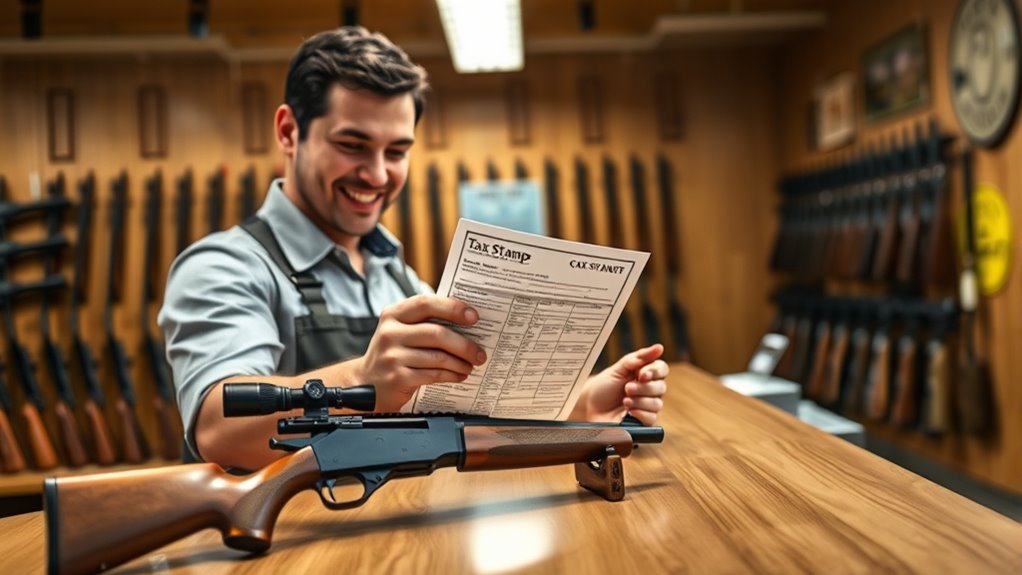
Does Prmbrooke Gun Range Check Tax Stamps?
At Pembroke Gun Range, staff may ask to see your NFA tax stamp or silencer papers as part of their internal policies. This means they might check your documents to ensure everything looks in order before you use certain items on their range.
However, they don’t have the legal authority to require or enforce proof of registration.
Showing your tax stamp is completely voluntary, and refusing to show it won’t lead to any legal trouble. The only consequence might be limited access to that private range, since they set their own rules.
Understanding why staff make these requests can help you feel more confident and calm if you’re ever asked. It’s good to know your rights and the reasons behind these policies.
There’s definitely more to think about when it comes to your legal protections and how private ranges operate.
Key Takeaways
- Pembroke Gun Range staff may ask to see NFA tax stamps based on their internal safety policies. However, they don’t have any legal authority to enforce this.
- Showing your tax stamps at Pembroke Gun Range is completely voluntary. You’re not breaking any laws if you choose not to show them.
- The range officers are private managers, not law enforcement officers. This means they can’t legally demand proof of your NFA registration.
- If you refuse to show your tax stamps, you might be denied access to the range. But keep in mind, there are no legal penalties for that.
- So, complying with tax stamp requests at Pembroke Gun Range is more about their private policy than any federal legal requirement.
Who Can Legally Require Your NFA Tax Stamp at Pembroke?
While private range officers at Pembroke Gun Range may ask to see your NFA tax stamp, only ATF agents or the attorney general have the legal authority to require proof of NFA registration during official inquiries.
You should know that private range staff don’t have law enforcement powers to demand your tax stamp. Their requests for proof of NFA compliance are based on range policy, not legal obligation.
If you choose not to show your NFA tax stamp to the range officers, you aren’t breaking any laws, and they can’t force you to comply.
Only federal law enforcement agents, like those from the ATF or the attorney general’s office, can legally require such proof during an official investigation or enforcement action.
What Are Your Rights When Asked for an NFA Tax Stamp?
When you’re asked for your NFA tax stamp at the range, remember that range officers don’t have the legal authority to demand it. Showing your tax stamp is voluntary unless the range has a specific policy requiring it for access.
You have the right to refuse without facing legal penalties. So, don’t feel pressured if you’re not comfortable sharing it. It’s your choice to show it or not.
Legal Authority Limits
Even though range officers might ask to see your NFA tax stamp, they don’t have the legal authority to demand it. Only federal law enforcement or ATF agents can require proof of NFA registration during official inquiries.
At a private range, staff may request to see your tax stamp, but they can’t enforce this or penalize you legally. Refusing to show it might lead to being asked to leave, not legal trouble.
| Entity | Authority on NFA Tax Stamp |
|---|---|
| Federal Law Enforcement | Can legally demand proof |
| ATF Agents | Authorized to check NFA tax stamps |
| Range Officers | Can request but not demand |
| Private Range Staff | May set policies, no legal power |
| You (the owner) | Not legally required to show |
Range Officers’ Role
Range officers act as private individuals managing the range environment, not as law enforcement. They don’t have the legal authority to demand proof of registration or an NFA tax stamp.
While range officers can request to see your registration documents as part of their range access policies, they can’t legally force you to produce them. Refusing to show an NFA tax stamp isn’t a violation of law, and range officers can’t penalize you or enforce compliance through legal means.
Any request for tax stamps comes from the range’s internal rules, not federal law. Understanding this distinction helps you know your rights and what range officers can and cannot do regarding proof of registration at Prmbrooke Gun Range.
Voluntary Tax Stamp Showing
Although you might be asked to show your NFA tax stamp at Prmbrooke Gun Range, you’re under no legal obligation to comply. Showing your tax stamp is entirely voluntary, and range officers can’t legally demand it.
While some range policies may request voluntary showing of your tax stamp, refusing doesn’t violate any laws or regulations. Range personnel aren’t authorized to compel you to produce it or enforce compliance through legal means.
Your rights allow you to decline displaying your NFA tax stamp and still maintain access unless specific range policies explicitly state otherwise. Understanding that showing your tax stamp is voluntary helps you navigate requests confidently without fearing legal penalties or exclusion based solely on your choice.
Why Might Pembroke Staff Ask to See Your Tax Stamp or Silencer Papers?
You might notice Pembroke staff asking to see your tax stamp or silencer papers as part of their internal policies, even though they don’t have legal authority to enforce this. They do it mainly to follow range rules and maintain safety protocols.
Understanding their reasons can help you navigate these requests more smoothly. It’s all about keeping things safe and running smoothly for everyone.
Range Policy Reasons
Because Pembroke staff prioritize safety and responsible firearm use, they may ask to see your tax stamp or silencer papers when you bring NFA items to the range. This practice aligns with their range policy designed to guarantee everyone handles firearms legally and safely.
By checking tax stamps and silencer documentation, staff verify that you’re the rightful owner of your NFA items. This helps prevent unauthorized or illegal weapons on the premises.
While they don’t have legal authority to enforce these checks, Pembroke’s internal rules focus on promoting safety and responsible firearm handling. So, when you’re asked for this paperwork, understand it’s a precautionary step rooted in the range policy aimed at maintaining a secure environment for all shooters.
Legal Authority Limits
Pembroke staff may ask to see your tax stamp or silencer papers as part of their internal policies, but they don’t have the legal authority to demand or enforce this verification. Here’s why:
Only ATF agents or law enforcement have the legal authority to request and verify tax stamps. Range policies about checking tax stamps are internal guidelines, not legal requirements.
Staff can ask for documentation as a precaution but can’t compel you to show it or enforce penalties. Federal law mandates proof of registration only during official law enforcement actions, not routine range visits.
Staff Safety Concerns
Why might range staff ask to see your tax stamp or silencer papers? At Pembroke Gun Range, this request usually comes from safety concerns and internal policies designed to keep everyone secure.
While staff don’t have the legal authority to enforce tax stamp verification, they may still ask for documentation to confirm your firearms or NFA items are legally registered. This helps prevent unauthorized or illegal use on the range.
You might notice staff requesting proof of ownership, especially if you’re using rental firearms or suppressors. These measures aren’t about legal enforcement but are focused on making sure everyone stays safe and secure.
How Pembroke’s Range Policies Differ From Federal Law
Although gun range staff can ask you to show documentation like tax stamps, they don’t have the legal power to demand them. Pembroke’s range policies differ from federal law in key ways:
Pembroke staff can request proof of legality but lack the legal authority to compel it. Federal law grants only ATF agents and certain officials authority to demand NFA tax stamps.
Pembroke staff may ask for proof but cannot legally require NFA tax stamps—only ATF agents have that authority.
Range rules, including those affecting concealed carry firearms, are private policies, not legal mandates. Refusing to show a tax stamp at Pembroke isn’t illegal but may affect your access to the range.
In short, Pembroke’s policies reflect safety preferences, not enforcement of federal laws concerning legal authority. So, it’s more about keeping things safe and smooth rather than acting as law enforcement.
Why Range Officers Can’t Legally Demand Your Tax Stamp
While range staff can ask to see your tax stamp, they don’t have the legal right to demand it. At a gun range, range officers are private actors without legal authority to enforce federal NFA tax stamp requirements. Only ATF or law enforcement can legally require proof of registration.
When you’re using the range, remember that any tax stamp checks are based on internal policies, not law. Refusing to show your tax stamp isn’t illegal, and range officers can’t compel compliance by law.
| Authority | Can Demand Tax Stamp? |
|---|---|
| Range Officers | No |
| ATF Agents | Yes |
| Local Police | Yes |
| Gun Range Policies | No (internal rules) |
What Happens If You Refuse to Show Your Tax Stamp at Pembroke?
Even though Pembroke Gun Range can ask to see your tax stamp, they can’t legally force you to show it. If you refuse, here’s what you need to know:
Refusing to show your tax stamp isn’t a legal violation or punishable offense. Range staff have no legal authority to demand or enforce tax stamp verification.
That said, Pembroke may ask you to leave or deny range access based on their private policies. Your choice to withhold the tax stamp won’t involve law enforcement or legal penalties.
In short, while Pembroke can request your tax stamp, refusing only impacts your access to their private facility. You won’t face legal consequences, but the range reserves the right to enforce its own rules about tax stamp presentation.
How to Handle Requests for Tax Stamps or Silencer Documentation
When range staff ask to see your tax stamp or silencer documentation, remember they don’t have the legal authority to demand it. They’re not ATF agents or law enforcement, so you’re under no legal obligation to show these papers.
Some ranges may have internal policies requesting proof of ownership, but complying is voluntary. If you choose not to present your tax stamp or silencer paperwork, you’re not breaking any laws.
Range policies may request ownership proof, but providing it is optional and not legally required.
It’s important to know your rights and respond calmly and clearly. While range staff can enforce their own rules, they can’t coerce you into producing documents.
Handling such requests confidently helps maintain your rights without escalating the situation or causing unnecessary conflict.
Where to Get Legal Help About NFA Tax Stamps and Range Issues
If you have questions about NFA tax stamps or face issues at a gun range, you can turn to licensed firearm attorneys or specialized law firms for expert legal help. These professionals understand the complexities of firearm laws and can guide you through any challenges.
Here’s where to seek assistance:
- Consult a licensed firearms lawyer for personalized advice on NFA tax stamp rights and obligations.
- Reach out to law firms specializing in firearm law for detailed legal interpretations.
- Use ATF resources to verify tax stamps and understand registration requirements.
- Gun range owners can seek legal counsel to clarify their responsibilities regarding NFA item enforcement.
This approach ensures you navigate tax stamp and range issues with confidence and legal clarity. It’s always better to get the right advice early on!
Frequently Asked Questions
Is the ATF Waiving Tax Stamp for SBR?
No, the ATF isn’t waiving the tax stamp for SBRs. You still need to register your SBR and pay the tax stamp fee to comply with federal law.
There are no exemptions or waivers available. So, make sure you follow the proper steps to stay legal.
What Guns Require a Tax Stamp?
You need a tax stamp for NFA firearms like suppressors, short-barreled rifles, short-barreled shotguns, and machine guns. Regular rifles and handguns don’t require one.
Can the ATF Come to Your House if You Own a Suppressor?
The ATF can come to your house if they have a warrant or reasonable suspicion about illegal suppressor activity.
They won’t just show up for owning one legally, so keep your registration and tax stamp current.
Do I Have to Carry My Tax Stamp With My Suppressor?
Think of your tax stamp like a backstage pass—you don’t have to carry it everywhere with your suppressor.
It’s wise to have it handy, but legally, you’re not required to keep it on you at all times.
Conclusion
Picture yourself at Pembroke, firearm in hand, feeling the tension as staff ask for your NFA tax stamp. Remember, while they may request it, they don’t have the legal right to demand it.
Knowing your rights is like having a shield—protecting you from unnecessary hassle. Stay calm, stay informed, and handle requests with confidence.
When in doubt, legal help is just a call away, keeping your range experience smooth and stress-free. Understanding whether Pembroke Gun Range checks tax stamps can save you time and stress. Always be prepared and know what to expect to ensure your visit goes without a hitch.