How Old to Go to a Gun Range | Age Requirements Explained
You generally need to be at least 12 years old to shoot at a gun range, but minors must be supervised by a parent or guardian. Age requirements at gun ranges are important to know before you go.
For handguns, the minimum age is usually 18 or 21, depending on the range’s rules.
Renting firearms and buying ammo also have age limits, which are often stricter for handguns. Each range’s policies can vary a lot, so it’s a good idea to check ahead.
Knowing these details upfront helps you prepare safely and avoid surprises.
Keep going to uncover more about these requirements and safety tips. Staying informed means you can enjoy your time at the range with confidence and responsibility.
Key Takeaways
- Most gun ranges require shooters to be at least 12 years old. If you’re a minor, you’ll need parental supervision on the same lane.
- When it comes to handguns, shooters usually have to be 18 or older. Some ranges do allow kids as young as 6 to shoot, but only with strict supervision.
- Renting firearms generally means you have to be at least 18 for rifles and 21 for handguns. Don’t forget, you’ll need to show a valid ID to rent.
- If you’re a minor, you’ll need written parental consent and a guardian who’s 21 or older to supervise you. Plus, you often have to complete safety training before you can start shooting.
- Keep in mind, age and eligibility rules vary by state and by range. So, it’s always a good idea to check their specific policies before you go to make sure you’re following their rules.
What Are the Minimum Age Requirements to Shoot at a Range?
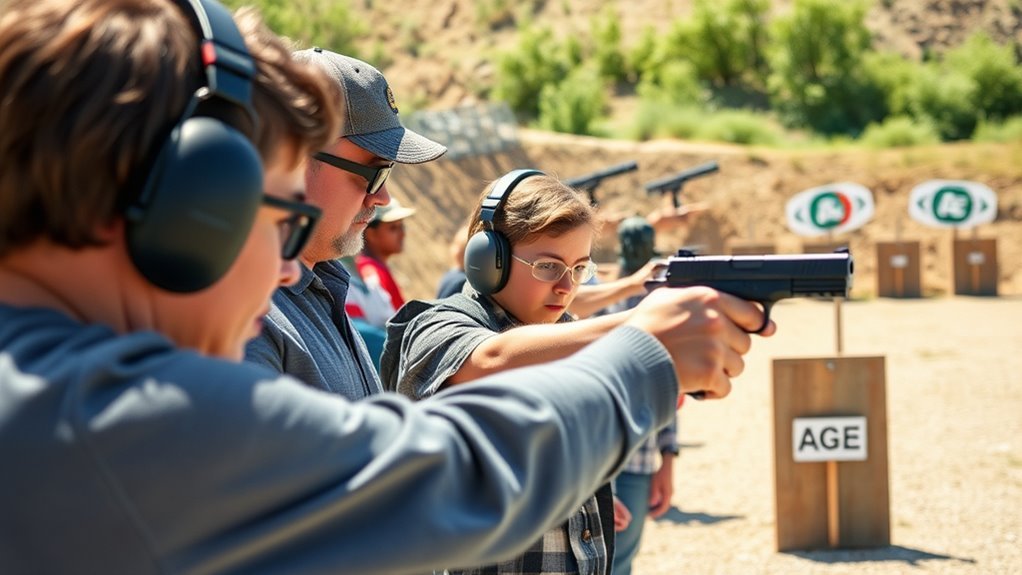
Although age requirements vary by range and firearm type, most gun ranges set the minimum age to shoot at around 12 years old, with minors needing supervision.
If you want to shoot handguns, however, be aware the minimum age is typically 18 or older. Some ranges allow younger kids, even as young as 6, to shoot but only under strict parent or guardian supervision.
For teens aged 16-17, expect to be accompanied at all times by a parent or guardian on the range. These minimum age rules are strictly enforced, so you’ll want to check each range’s policies before planning your visit.
Knowing the minimum age requirements helps guarantee you stay safe and compliant while enjoying the shooting experience.
How Parents Affect Age Rules for Minors at Shooting Ranges
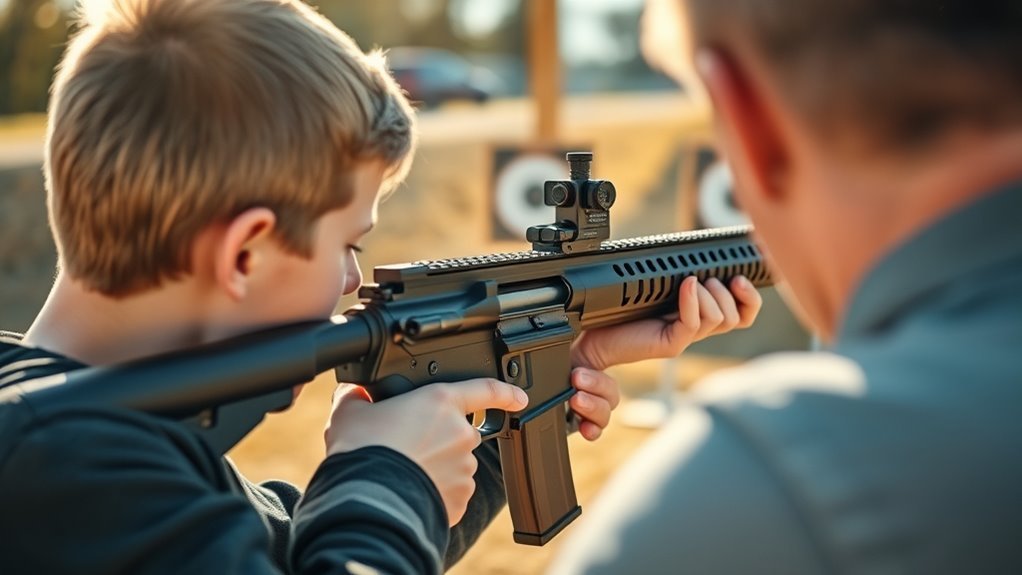
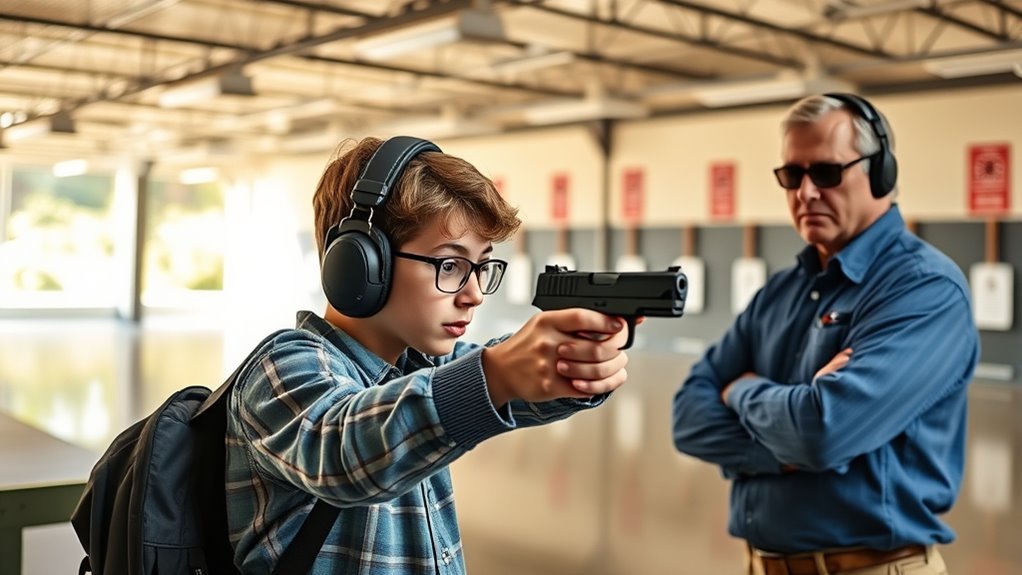
When you bring a minor to a shooting range, you’ll need to stay right there with them, often on the same lane.
You’ll also have to provide written consent and proof of ID before they can handle any firearms. Your presence and approval play a key role in whether they can participate safely and legally.
Parental Supervision Requirements
Since minors under 18 can’t use a gun range unsupervised, you’ll need to be present as a parent or guardian whenever they shoot. Most ranges require you to stay on the same lane as your child, guaranteeing close supervision throughout the session.
As a parent, you must meet the range’s eligibility rules, typically being at least 21 years old. This supervision isn’t just a formality—it ensures your child’s safety and helps the range comply with legal age restrictions.
Your presence allows minors to participate in shooting activities, often alongside other requirements like written consent. Ultimately, your role as a parent at the range is essential for both safety and adherence to regulations.
Written Consent Necessity
Because minors under 18 need written, signed parental consent before shooting at a gun range, you’ll need to provide a clear authorization note with your ID verification.
This written consent guarantees that the parent or guardian officially approves the minor’s participation, even if the minor is accompanied by someone else.
To make sure your consent is valid, include:
- The minor’s full name
- Parent or guardian’s signature
- Date of authorization
- Clear statement permitting the minor to shoot
Range staff will ask for this written consent before allowing minors to use firearms without a parent present.
Without it, the minor won’t be allowed to shoot, so having this document ready is essential for a smooth visit to the range.
Guardian Presence On-Lane
Providing written parental consent is just one part of allowing minors to shoot at a gun range. You also need a guardian present on the same lane to supervise the minor at all times.
This means if you’re under 18, you can’t handle firearms without an adult guardian right beside you. The guardian must meet age and ID verification standards, ensuring they’re qualified to oversee safety.
Even with written consent, most ranges still require the physical presence of a guardian during shooting. Range policies strictly prohibit minors from operating firearms without direct, on-lane supervision.
State Laws vs. Range Policies on Shooting Age Limits
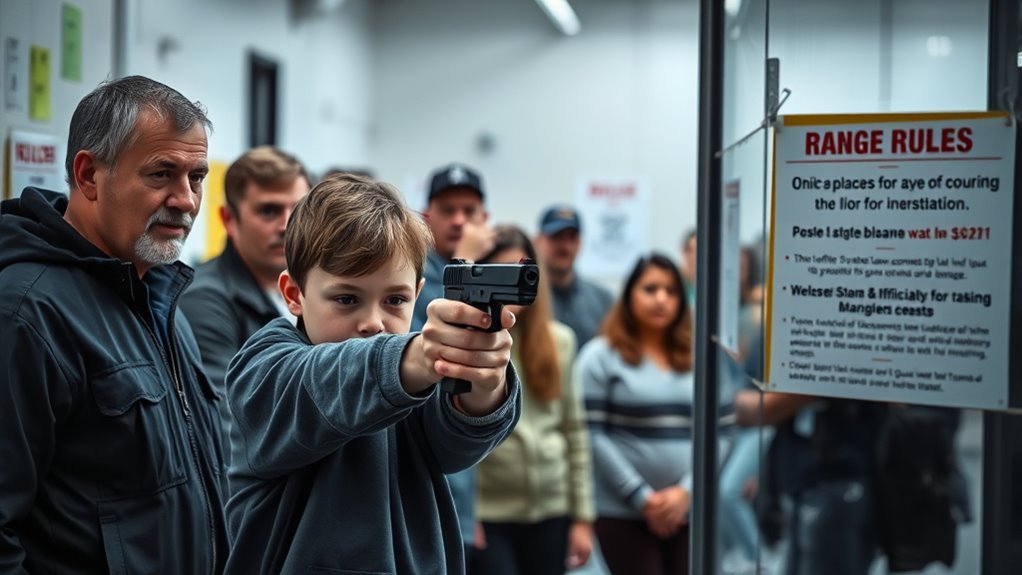
Although state laws set the legal minimum age for firearm possession, gun ranges often enforce stricter age limits to prioritize safety. When you’re planning a visit, know that range policies can be more restrictive than state laws.
Gun ranges may require older minimum ages than state laws to ensure safety during visits.
Here’s what you should expect:
- Minimum age requirements can exceed state law, especially for handguns or automatic weapons.
- Minors usually need parental supervision on the range, regardless of legal age.
- Many ranges insist on safety training or parental consent for shooters under 18.
- Range policies vary widely, so checking each facility’s rules beforehand is essential.
It’s always a good idea to double-check before you go. That way, you won’t run into any surprises at the door!
Age Restrictions for Renting Firearms at Shooting Ranges
When you rent firearms at a shooting range, your age determines what types you can handle—usually 18 for rifles and shotguns, and 21 for handguns or automatic weapons. Ranges strictly check your ID to enforce these rules and may require supervision for younger renters.
It’s important to understand these age and supervision guidelines. That way, you can stay compliant and safe while shooting.
Minimum Rental Age
At most shooting ranges, you need to be at least 18 years old to rent semiautomatic or bolt-action rifles and pump shotguns. The minimum age requirements help guarantee safety and comply with federal, state, and local laws.
When considering firearm rentals, keep in mind: renting handguns or suppressors usually requires you to be 21 or older. Automatic firearms rentals are strictly limited to those aged 21 and above.
Minimum age rules vary by firearm type but typically start at 18 for most rifles and shotguns. Always check the specific range’s policies, as some may have stricter age limits.
Understanding the minimum rental age helps you plan your visit and ensures you follow legal guidelines at every step.
Firearm Type Restrictions
Since firearm types vary widely, shooting ranges enforce specific age restrictions to guarantee safe handling and legal compliance. These firearm type restrictions mean you must be at least 18 to rent semiautomatic or bolt-action rifles and shotguns.
However, if you want to rent or operate handguns, suppressors, or automatic firearms, you need to be 21 or older. Ammunition sales for handguns, primers, and reloading powder also require you to be 21+.
These rules align with federal laws and range policies, ensuring only qualified individuals handle certain firearms. Understanding these firearm type restrictions helps you stay safe and follow the law when visiting a gun range. It also prevents underage access to more powerful or regulated weapons.
Supervision Requirements
Although age limits vary by firearm type, most shooting ranges require you to be at least 18 to rent rifles or shotguns and 21 to rent handguns.
When minors want to use a shooting range, supervision is key. You’ll need to follow strict rules to guarantee safety and compliance.
Here’s what you should know about supervision requirements:
- Minors under 18 must have a parent or guardian supervising them at all times.
- Written parental consent is required for minors to shoot.
- Minors must be accompanied by an adult on the same shooting lane.
- Safety instructions and training are mandatory before minors operate any firearm.
Without proper supervision, minors generally can’t handle or rent firearms at ranges. So, make sure all these steps are followed to keep things safe and smooth.
Age Requirements for Buying Ammunition at Shooting Ranges
When you buy ammunition at a shooting range, you’ll need to meet specific age requirements that vary by the type of ammo. For rifle and shotgun ammunition, you must be at least 18 years old.
However, if you’re looking to purchase handgun ammunition, primers, or reloading powders, you’ll have to be 21 or older. These age requirements are enforced through federal, state, and local laws, so they might differ depending on where you’re located.
When buying, you’ll need to show valid identification confirming your age to comply with these regulations. Keep in mind that some specialized or high-powered ammunition, like armor-piercing rounds, may have additional restrictions or be banned outright, regardless of your age.
Are There Exceptions for International Visitors and Non-Residents?
If you’re an international visitor or non-resident looking to use a gun range, you’ll need to provide valid proof of eligibility, like a visa or hunting permit, to rent firearms or buy ammunition. Here’s what you should know:
International visitors under the Visa Waiver Program can shoot with proper documentation. Non-Immigrant Visa holders and those with a valid hunting permit usually qualify to use ranges.
Most ranges require proof of legal status or specific documents for non-residents. Some facilities might have extra restrictions or ask for special permits to rent certain firearms.
Age requirements for international visitors typically match those for residents, usually 18 or 21, depending on the firearm or ammunition. So, always check the specific range policies before your visit to make sure you’re following the rules.
Safety and Training Rules for Young Shooters at the Range
Because safety is paramount, gun ranges enforce strict rules for young shooters to guarantee responsible firearm use. When you’re bringing a minor under 18, you must supervise them at all times.
They need written parental approval and valid ID before shooting. Most ranges require safety training or instruction before minors handle firearms. Unsupervised minors are prohibited from shooting to maintain safety.
| Rule | Description |
|---|---|
| Supervision | Parent/guardian must always accompany |
| Consent | Written, signed parental approval |
| ID Verification | Required before shooting |
| Safety Training | Mandatory before firearm use |
| Unsupervised Minors | Not allowed to handle or shoot firearms |
Following these safety rules protects young shooters and guarantees a secure range environment for everyone. It’s all about keeping things safe and responsible.
Preparing Your Teen for Their First Shooting Range Visit
Although gun ranges set clear rules for minors, preparing your teen for their first visit goes beyond just following policies. You need to guarantee proper supervision and clear communication to make the experience safe and enjoyable.
Start by reviewing the specific age policies of the range you’ll visit. Confirm any required parental consent forms and ID verification are completed beforehand.
Emphasize the importance of understanding and following all safety instructions and range rules. To get your teen ready, focus on:
- Ensuring constant supervision by a parent or guardian
- Reviewing written consent and identification requirements
- Discussing safety protocols and firearm handling
- Completing any necessary waivers or safety briefings
This preparation helps your teen feel confident and responsible during their first shooting range visit.
Frequently Asked Questions
What Is the Youngest Age to Go to a Gun Range?
You can usually go to a gun range as young as 12, but some places let kids around 6 shoot with a parent’s supervision.
Always check the specific range’s rules before you go. It’s different everywhere, so better to be safe than sorry!
Can a 17 Year Old Go to a Shooting Range in Texas?
Coincidentally, yes, you can go at 17 in Texas, but only with written parental consent and adult supervision.
Remember, some guns might be off-limits, and each range has its own rules you’ll need to follow.
Is a 12 Year Old Allowed to Shoot a Gun?
Yes, you can let a 12-year-old shoot a gun, but only with strict adult supervision and often written parental consent.
Make sure the range’s rules allow it, and always prioritize safety and proper training.
It’s really important to keep things safe and make sure the kid understands the responsibility.
What Guns Can a 14-Year-Old Own?
At 14, you can own rifles and shotguns with parental permission, following state and federal rules. But remember, these rules can vary depending on where you live.
Handguns are off-limits until you turn 18. However, you can use long guns for hunting or target shooting as long as there’s adult supervision. Always stay safe and follow the law!
Conclusion
So, ready to hit the range? Remember, age rules aren’t just numbers—they’re your safety net. Whether you’re a parent guiding your teen or a young shooter enthusiastic to learn, knowing the laws and range policies keeps everyone safe and confident.
Think of these rules as the trigger that sets your shooting experience off right—without them, you’re just spinning the chamber. Follow them, and you’ll be on target every time.
Understanding how old to go to a gun range is key. These age requirements are in place to protect you and others, making sure everyone has a safe and enjoyable time. So before you grab your gear, check the local laws and range policies. Stick to those age limits, and your visit to the gun range will be smooth and secure—because safety always comes first when it comes to shooting sports.