How to Determine if a Pellet Gun Is Considered a Firearm
To determine if your pellet gun is considered a firearm, start by checking its muzzle velocity and energy.
Generally, if it exceeds about 600 fps or 4.2 foot-pounds, it might be classified as a firearm under some laws. This is important because it affects how you can legally use and own your pellet gun.
Federal law usually exempts airguns from being classified as firearms, but state or local rules could differ.
Some places require licenses or have restrictions that you need to follow. So, it’s a good idea to know the specific regulations where you live.
Also, consider the design of your pellet gun and its potential to cause harm.
Understanding these factors helps you stay legal and safe.
There’s a lot more to explore about varying regulations and ownership responsibilities, so make sure you’re informed before making any decisions.
Key Takeaways
- Pellet guns using compressed air or gas are generally not classified as firearms under federal law. However, this can change depending on certain factors.
- For instance, if the pellet gun’s velocity goes above 600-700 fps or its muzzle energy exceeds 4.2 foot-pounds, it might be considered a firearm.
- Keep in mind that local and state laws often have their own specific limits on velocity, caliber, and the potential to cause injury. These rules can affect how a pellet gun is classified.
- Also, if a pellet gun can cause serious injury or penetrate tissue, it may be legally treated as a deadly weapon. So, it’s important to handle it with care and responsibility.
- Since international and regional regulations vary a lot, it’s always a good idea to check your local laws. This way, you’ll be sure about how your pellet gun is classified and stay on the right side of the law.
Are Pellet Guns Federal Firearms Under U.S. Law?

Although pellet guns may look like real firearms, federal law doesn’t classify them as firearms because they use compressed air or gas—not explosive propellants—to shoot projectiles. The Gun Control Act of 1968 defines firearms as weapons designed to expel a projectile by explosive action, so air-powered pellet guns fall outside this classification.
Federal law generally exempts pellet guns from firearm laws, meaning possession and sale don’t face the same regulations as traditional firearms. However, if a pellet gun is manufactured with a firearm frame or receiver, it may be regulated differently.
Unlike toys requiring orange tips, pellet guns are typically exempt unless altered to resemble real firearms. Understanding this classification helps you navigate federal regulations regarding pellet guns and their legal status under U.S. firearm laws.
Technical Criteria: How Pellet Gun Velocity, Energy, and Penetration Affect Classification

You’ll want to focus on velocity thresholds, since pellet guns firing above 600-700 FPS often meet firearm criteria. Energy output and penetration capability also play key roles in classification.
This is especially true if the gun can penetrate plywood or skin. Understanding these technical details really helps you figure out whether a pellet gun falls under firearm regulations.
Velocity Thresholds Explained
How fast does a pellet gun have to shoot before it’s legally considered a firearm? The key factor is muzzle velocity. Most legal regulations set a minimum muzzle velocity of 600 feet per second (fps) as a critical velocity threshold.
Pellet guns firing below that generally avoid firearm classification. However, high-velocity pellet guns exceeding 700 fps often trigger stricter rules. Projectile speed alone isn’t enough; penetration tests also help confirm classification by measuring the pellet’s ability to penetrate materials like plywood or ballistic gel.
These tests, combined with velocity thresholds, determine if a pellet gun qualifies as a firearm. Understanding these limits ensures you stay compliant with the law and know when your pellet gun crosses from a non-firearm airgun into regulated firearm territory.
Energy And Penetration
When you evaluate a pellet gun’s classification, you need to take into account both its muzzle velocity and the energy behind each shot. A pellet gun firing projectiles with muzzle velocity over 600 feet per second or muzzle energy exceeding 4.2 foot-pounds often meets firearm classification criteria.
The velocity measurement directly impacts the energy output, which in turn affects the projectile penetration capability. Higher caliber pellets with greater muzzle energy increase injury potential by piercing materials like plywood.
Manufacturers’ specifications on velocity and energy output help you determine whether a pellet gun’s projectile penetration and overall force qualify it as a firearm. Understanding these technical factors—muzzle velocity, muzzle energy, caliber, and penetration—ensures you accurately assess a pellet gun’s legal status and associated risks.
When Are Pellet Guns Legally Treated as Deadly Weapons?
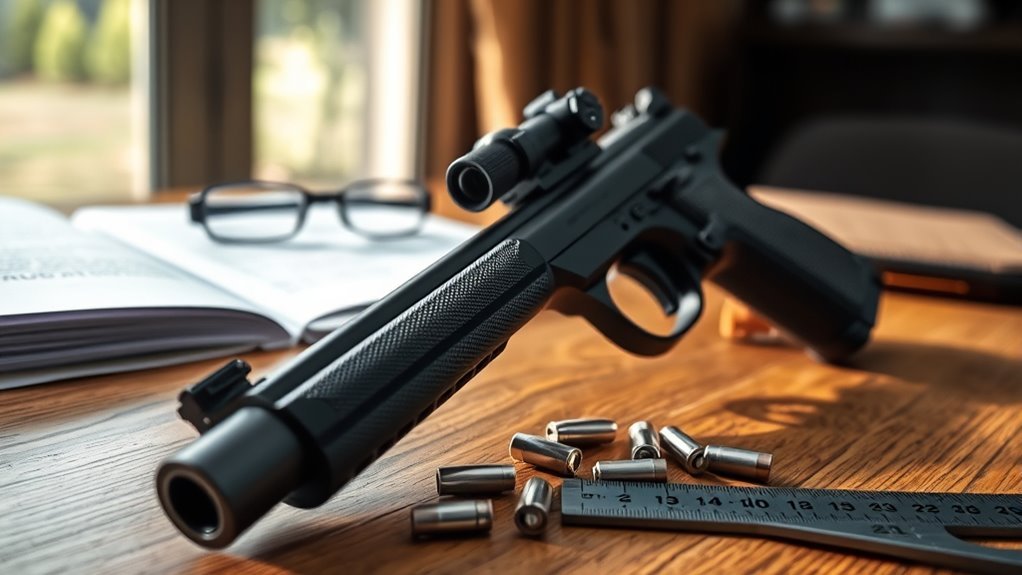
Although pellet guns often resemble toys, the law treats them as deadly weapons if they can cause serious injury or death. You need to take into account factors like muzzle velocity, caliber, and projectile energy to determine if a pellet gun meets the legal definition of a deadly weapon.
Courts look at the injury potential based on the weapon’s muzzle design and its ability to cause penetration, such as tissue or bone damage. If a pellet gun can penetrate protective materials or inflict significant harm, it may be classified similarly to firearms under firearm classification laws.
How State and Local Laws Influence Pellet Gun Classification
Determining whether a pellet gun counts as a firearm doesn’t rely solely on its power or potential to cause harm. State laws and local laws play an essential role in the classification of pellet guns.
Many jurisdictions base their classification on muzzle velocity, caliber, and potential injury, which means a pellet gun with higher muzzle velocity may be legally deemed a firearm. Some states, like Illinois and Michigan, require licensing or registration for high-powered pellet guns.
Local regulations often impose restrictions on sale, possession, or use, especially near schools or public spaces. Age restrictions and specific licensing requirements can further influence classification.
Understanding these regulations is indispensable because they determine whether your pellet gun is subject to firearm laws, impacting your legal responsibilities and permissible use.
Comparing Pellet Gun Regulations: International Perspectives
Because pellet gun regulations vary widely across countries, you’ll need to understand how different nations classify and control these weapons. This is important to guarantee compliance when traveling or importing.
International perspectives on firearms classification often hinge on muzzle energy, caliber, and velocity. These factors lead to varied legal restrictions around the world.
Firearms classifications worldwide depend on muzzle energy, caliber, and velocity, shaping diverse legal restrictions.
Here are three key points to consider about pellet gun regulations worldwide:
- The UK requires an FAC license for airguns over 12 foot-pounds of energy. Lower-powered guns remain unregulated.
- Canada treats airguns exceeding 152.4 m/s and 5.7 Joules as firearms. This means they impose corresponding controls.
- Australia classifies all airguns as firearms. So, they mandate licensing and registration regardless of power.
Understanding these airgun laws helps you navigate international legal frameworks effectively. It’s always good to check the specific rules before you travel or import.
How to Determine If Your Pellet Gun Requires Licensing or Registration
How can you tell if your pellet gun needs licensing or registration? Start by checking the firearm classification in your area, focusing on caliber, muzzle energy, and velocity. Many jurisdictions set legal limits—such as muzzle energy over 150 foot-pounds or velocity exceeding 600 fps—that trigger licensing requirements.
Some places require registration if your pellet gun fires projectiles larger than .177 caliber or surpasses specific power thresholds. Review your pellet gun’s manufacturer specifications to see if it exceeds these legal limits for non-licensed air guns.
Keep in mind, requirements vary widely depending on local, state, or national laws. By understanding these key factors and verifying your pellet gun’s performance against established legal criteria, you’ll know whether licensing or registration is necessary to comply with the law.
Key Factors That Make a Pellet Gun a Firearm
While many pellet guns operate using compressed air or gas, some use gunpowder or explosive propellants. This immediately classifies them as firearms under most laws.
To determine if your pellet gun falls under this classification, focus on these key factors:
- Propellants and Explosive Action: Pellet guns using explosive propellants rather than compressed air are typically classified as firearms. This is because of the combustion involved in firing the projectile.
- Muzzle Energy and Velocity: High muzzle energy or velocities—often above 600 fps—indicate significant power. This increases the likelihood of firearm classification.
- Projectile Impact and Muzzle Features: Rifled barrels or designs that enhance projectile speed and power can influence legal status. Especially if the weapon can cause serious injury.
Understanding these factors helps you identify whether your pellet gun is legally considered a firearm. It’s important to know this so you stay within the law.
Understanding Legal Risks and Compliance for Pellet Gun Owners
Knowing whether your pellet gun qualifies as a firearm is just the start; you also need to understand the legal risks and compliance requirements that come with ownership.
Pellet guns often fall outside federal firearms regulations, but local laws may impose restrictions based on muzzle energy limits, such as 24 Joules or higher. So, it’s important to check the rules in your area.
To stay legal, you must check your area’s specific regulations on velocity, caliber, and licensing. Ownership might require registration or adherence to restrictions on public use and transportation.
Ignoring these rules could lead to legal consequences, especially if your pellet gun exceeds energy thresholds or is used unlawfully. Staying informed and compliant ensures you avoid criminal charges and responsibly enjoy your pellet gun within legal boundaries.
Frequently Asked Questions
Can a Pellet Gun Be Considered a Firearm?
Yes, a pellet gun can be considered a firearm if it exceeds your state’s velocity or energy limits. You should check local laws carefully since rules vary.
Some high-powered pellet guns qualify as firearms where you live. So, it’s really important to know the specific regulations in your area before you buy or use one.
Can a Felon Own a BB Gun or a Pellet Gun?
Imagine holding a pellet gun—whether you can own it as a felon depends on your state’s laws. Some let you keep BB or pellet guns, but others ban them if they’re classified as firearms or deadly weapons.
It really comes down to where you live and how the law views these guns. So, always check the rules in your area before getting one.
Can I Use a Pellet Gun in My Backyard?
You can use a pellet gun in your backyard only if local laws allow it. Always check regulations, maintain safe distances, and use proper backstops.
Make sure no one’s nearby to avoid accidents or legal trouble. It’s better to be safe than sorry, right?
What’s the Difference Between an Air Gun and a Pellet Gun?
You might think all air guns are pellet guns, but they’re not.
Pellet guns specifically shoot metal pellets, while air guns can fire BBs or darts too.
Conclusion
Don’t let your pellet gun turn into a legal ticking time bomb! Knowing if it’s classified as a firearm can save you from courtroom drama that feels like a wild west showdown.
With velocity, energy, and local laws swirling like a storm, you need to stay sharp. One wrong move, and your harmless backyard plinker could become a headline you never wanted.
Stay informed, stay safe, and keep your pellet gun on the right side of the law! Understanding how pellet guns are regulated helps you avoid legal trouble and enjoy your hobby responsibly. Always check your local laws and regulations to determine if your pellet gun is considered a firearm. This knowledge is key to staying compliant and protecting yourself from unexpected legal issues.