How Do You Ship a Gun in 5 Essential Steps
To ship a gun safely and legally, you first need to verify all legal requirements. This includes making sure you have the proper licenses and documentation in order. Without these, you can run into serious trouble.
Next, unload the firearm completely and pack it securely. Use a locked, padded case and make sure there’s no ammunition inside. This keeps everything safe and compliant with shipping regulations.
Then, complete all the necessary forms. Don’t forget to verify the recipient’s license before sending the package. It’s a crucial step that ensures the gun is going to a lawful owner.
When it’s time to choose a carrier, go with an approved service like UPS, FedEx, or USPS. Each has specific rules you need to follow, so double-check their policies carefully.
Finally, track the shipment closely and get delivery confirmation. This helps you keep tabs on your gun until it reaches its destination.
If you want to guarantee a smooth process, there are important details you shouldn’t miss along the way.
Key Takeaways
- Verify all legal requirements and ensure the recipient holds a valid firearms license before shipping a gun.
- Unload the firearm, remove ammunition, and secure the gun in a locked, padded hard case inside a sturdy outer box.
- Complete all necessary ATF forms, verify recipient’s FFL license, and include accurate documentation inside the shipment.
- Choose an approved carrier like UPS, FedEx, or USPS, following their specific firearm shipping policies and service restrictions.
- Track the shipment online, require an adult signature on delivery, and confirm the recipient received the firearm securely.
Verify Legal Requirements for Shipping Firearms
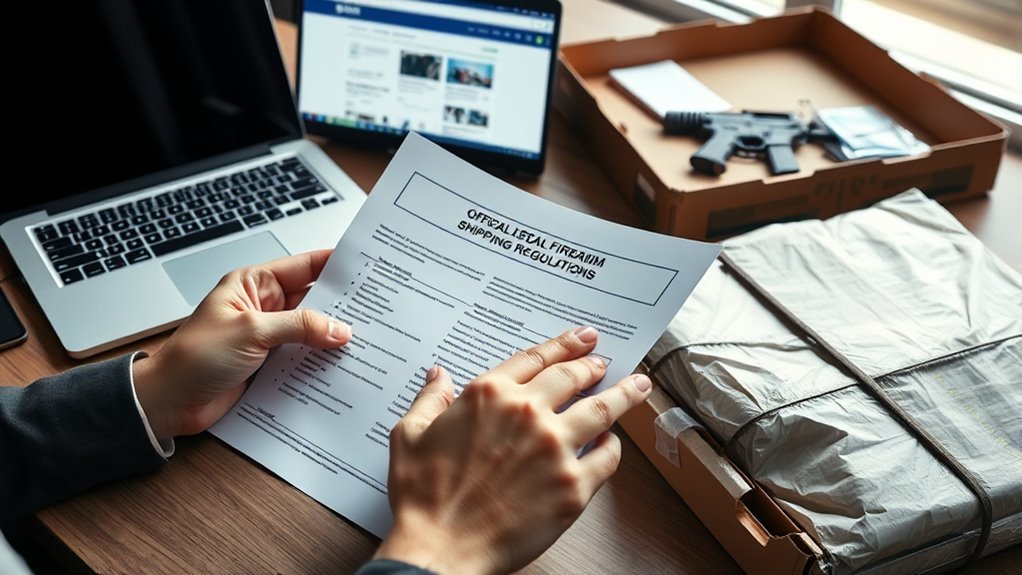
How can you guarantee your firearm shipment stays within the law? First, you must understand and follow all federal law and shipping regulations related to firearm shipment compliance. Confirm the firearm has a serial number that meets legal requirements for proper identification.
Make sure the recipient holds a valid firearms license or is a licensed manufacturer authorized to receive firearms. You’ll need to complete all necessary ATF forms accurately and keep copies for your records.
Ensure the recipient has a valid firearms license and complete all required ATF forms accurately.
Also, verify that the firearm shipment adheres to federal, state, and local legal requirements to avoid violations. By thoroughly checking the recipient’s license and understanding shipping regulations, you ensure your firearm shipment remains lawful and secure throughout the process.
Staying informed and compliant protects both you and the recipient from legal issues. It’s all about being careful and double-checking every step to keep everything above board.
Prepare and Secure the Firearm for Shipment
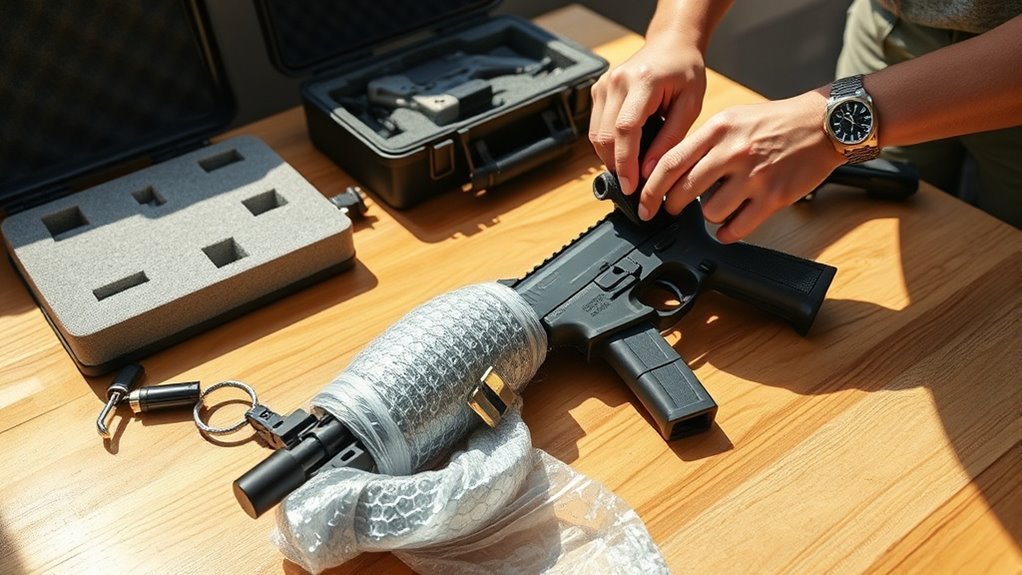
Before shipping your firearm, make sure it’s completely unloaded with the action open or broken down. Also, remove all ammunition to ship separately.
To prepare and secure the firearm for shipping, follow these key steps:
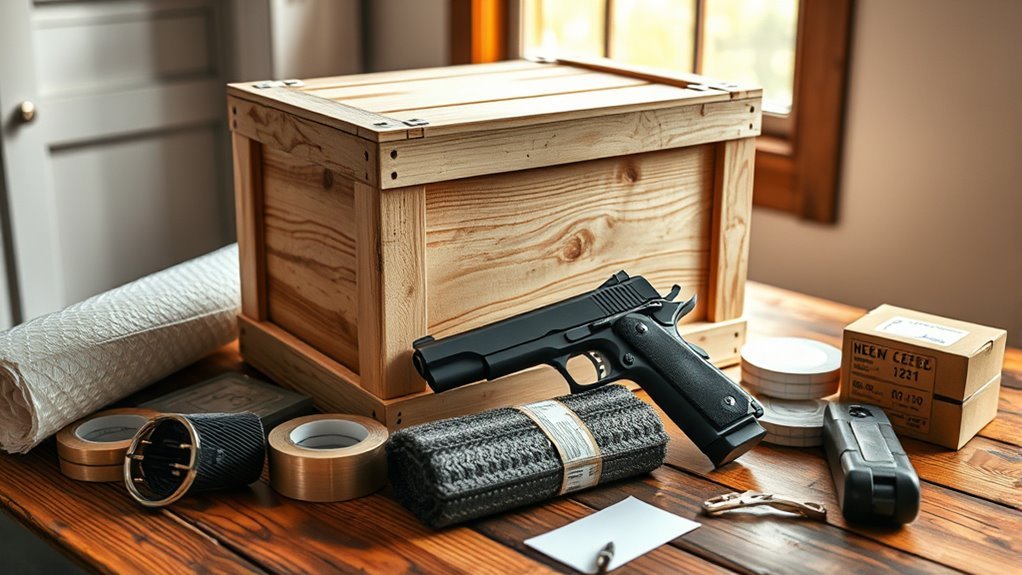
- Place the unloaded firearm in a sturdy, lockable hard case cushioned with foam, bubble wrap, or other padding. This helps prevent movement and damage during transit.
- Lock the hard case securely using non-TSA locks. This helps deter tampering while your package is on the move.
- Put the locked case inside a durable outer box with additional padding. Use non-descriptive, discreet labels that don’t reveal what’s inside.
It’s always better to be safe and cautious when shipping firearms. Taking these steps ensures your firearm arrives safely and securely.
Complete Necessary Documentation and Compliance Checks
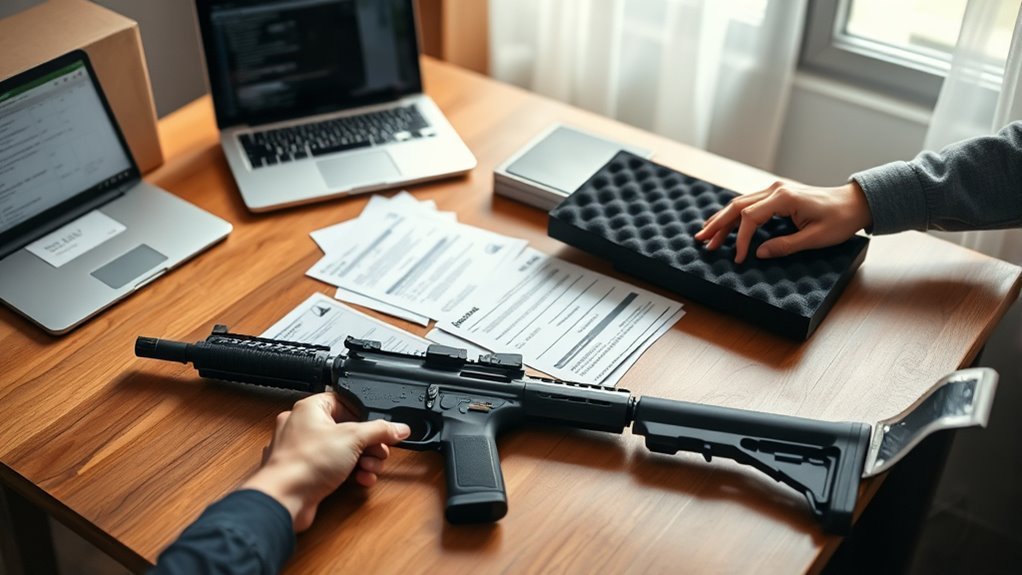
Although securing your firearm properly is essential, completing the necessary documentation and compliance checks guarantees your shipment meets all legal requirements. First, verify the recipient’s FFL license through the ATF’s eZ Check or request a copy for recipient verification.
Include complete firearm documentation inside the package, detailing sender info, firearm specifics, and shipment purpose. When transferring a firearm, fill out and enclose ATF Form 4473 to ensure accurate record-keeping.
Use shipping labels that specify adult signature required to comply with shipping compliance and prevent unauthorized receipt. Avoid marking the package as containing a firearm.
Keep copies of all shipping paperwork, tracking numbers, and correspondence to meet legal requirements. These steps ensure your firearm shipment follows proper firearm transfer laws and maintains full compliance.
Select an Approved Shipping Carrier and Service
Once you’ve completed the necessary documentation and made certain of compliance, the next step is choosing the right carrier and shipping service. Selecting an approved shipping carrier ensures your firearm shipment meets all legal and safety standards.
Remember these key points: Only licensed FFL dealers can ship firearms via carriers like FedEx and UPS, which require a contractual agreement.
USPS allows firearm shipment without contracts but mandates strict firearm packaging, labeling, and adult signature confirmation.
Handguns must be shipped through approved services such as UPS Next Day Air or FedEx Priority Overnight, depending on carrier policies.
Always verify current carrier policies and shipment requirements to comply with federal and state shipping regulations. Secure, non-descriptive packaging is essential to meet both carrier and legal standards.
Track the Shipment and Confirm Delivery
How can you guarantee your firearm shipment reaches its destination safely and on time? Start by using the carrier’s online tracking system to monitor shipment progress at each scanning point. Shipment monitoring helps you stay updated on package status and catch delays early.
Always request signature confirmation, like Adult Signature Required, to ensure delivery verification directly from the recipient. Keep all tracking numbers and delivery confirmation receipts as essential shipping records and proof of delivery.
If the tracking shows missed scans or a package marked delivered but not received, contact the carrier immediately. Finally, confirm with the recipient that they’ve received the firearm in good condition and have signed the delivery receipt if needed.
These steps secure your shipment and provide reliable delivery confirmation. It’s really about staying on top of each part of the process so nothing slips through the cracks.
Frequently Asked Questions
What Are the Requirements to Ship a Gun?
You must guarantee the gun is unloaded and securely packaged without firearm markings.
Include proper documentation like the recipient’s FFL license. Ship via approved carriers with adult signature.
Also, send ammunition separately to meet all legal requirements.
Do I Have to Tell UPS I’m Shipping a Firearm?
Yes, you have to tell UPS you’re shipping a firearm. Declaring it guarantees you follow legal rules, avoid delays, and keep your shipment safe.
Always provide accurate details to comply with UPS policies and federal laws. It’s better to be upfront so everything goes smoothly.
Does the USPS Check Packages for Guns?
USPS doesn’t routinely check packages for guns, yet their x-ray screening can detect them anytime. You should expect inspections if your package seems suspicious.
Can You Ship Firearms via UPS or Fedex?
You can’t ship firearms via UPS or FedEx unless you hold a valid Federal Firearms License and meet their strict requirements.
Without proper licensing, these carriers won’t accept your firearm shipment at all. So, if you’re thinking about sending a gun, make sure you’re fully licensed first. Otherwise, it’s a no-go with these services.
Conclusion
Shipping a gun might feel like launching a rocket to Mars, but with these five essential steps, you’ve got it down to a science. Verify legal requirements, pack it tight, nail the paperwork.
Choose the right carrier, and track that package like it’s a treasure chest.
Follow these steps, and you won’t just ship a gun—you’ll conquer the wild world of firearm shipping like a pro. It’s all about understanding the legal requirements, ensuring safe and secure packaging, completing the necessary paperwork accurately, selecting a reliable shipping carrier, and monitoring your shipment closely. By mastering these key points, shipping a gun becomes straightforward and hassle-free. So, take these steps seriously, and you’ll handle your firearm shipping with confidence and ease. Easy, right?