Are Ghost Guns Illegal?
You can’t just buy or build ghost guns without following federal and state rules anymore. These laws make sure ghost guns have serial numbers and require background checks.
Many states also demand licensing and reporting for these firearms.
Authorities have seized tens of thousands of ghost guns, and the ATF enforces regulations strictly.
Legal battles continue over how far these rules should go.
If you want to understand the full legal landscape and enforcement challenges, keep exploring the topic further.
Key Takeaways
- Ghost guns are untraceable firearms often made from unfinished frames lacking serial numbers.
- Federal law now requires serial numbers and background checks for ghost gun kits and unfinished frames.
- Seventeen states mandate serialization, background checks, and reporting for ghost guns, making possession illegal without compliance.
- Manufacturing or possessing unserialized ghost guns is illegal in many states under new firearm regulations.
- Law enforcement has seized over 92,700 ghost guns since 2017, reflecting increased enforcement and legal restrictions.
Federal and State Regulations on Ghost Guns
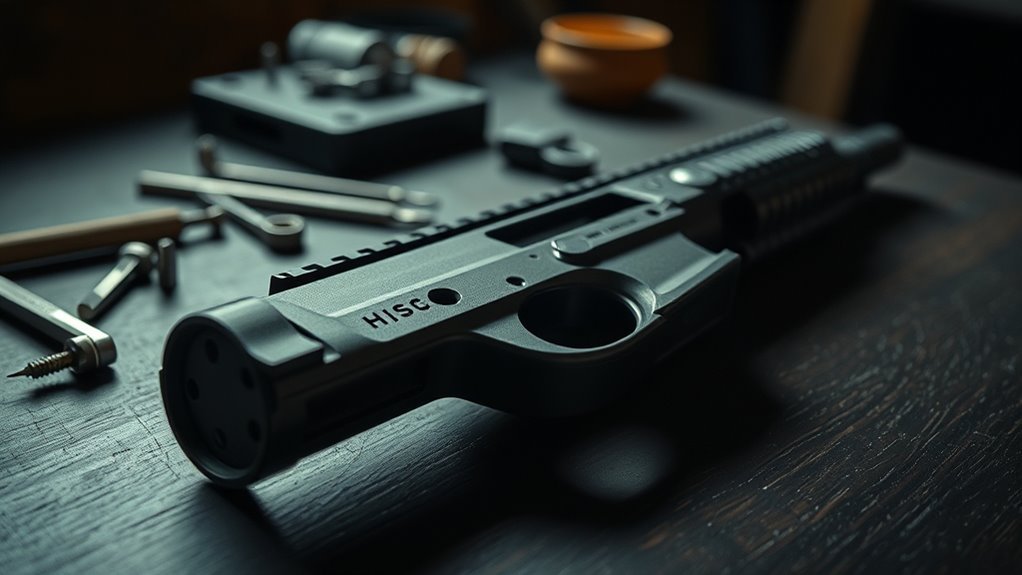
Although federal law has traditionally regulated only serialized firearm frames and receivers, recent ATF rules and state laws have tightened controls on ghost guns. You now face federal regulations that classify ghost gun kits and unfinished frames as firearms. This means they require serial numbers and background checks before purchase.
The 2022 ATF rule aims to close loopholes that allowed unserialized firearms to circulate unchecked. On top of that, state law in seventeen states mandates serial numbers, background checks, and even reporting requirements for ghost guns.
Many states prohibit manufacturing or possessing unserialized firearms. This forces you to license and serialize all firearm components. These ghost gun laws reflect growing efforts to regulate what was once unregulated—unfinished frames and homemade guns. It’s definitely making it harder for you to obtain untraceable firearms legally.
Legal Challenges and Enforcement of Ghost Gun Laws
As ghost guns have become more regulated, legal battles have intensified over how far the government can go in controlling their manufacture and distribution. The ATF enforces federal law requiring serial numbers on firearms, including unfinished frames, but legal challenges question the agency’s reach.
Law enforcement has recovered over 92,700 ghost guns since 2017, which really shows how tricky enforcement can be. Many states now criminalize unserialized firearms, making regulation even more complicated.
| Aspect | Legal Issue | Enforcement Action |
|---|---|---|
| ATF Authority | Regulating unfinished frames | Supreme Court upholds regulation |
| Serial Numbers | Requirement on ghost guns | Mandatory serialization |
| Unserialized Guns | Illegal manufacture & possession | Increased police seizures |
| Federal Law Scope | Disputes over regulation limits | Court rulings vary |
| Law Enforcement | Recoveries & prosecutions | Over 92,700 ghost guns seized |
Frequently Asked Questions
What States Are Ghost Guns Illegal In?
You’ll find ghost guns illegal in states like California, Connecticut, and New York. These states require serial numbers, background checks, and licensing.
Can the Police Track a Ghost Gun?
Tracking a ghost gun is like chasing shadows—you’ll struggle if it lacks serial numbers.
But if parts are marked or recorded, police can connect the dots. That way, invisible weapons become traceable trails for law enforcement.
Can You Get in Trouble for a Ghost Gun?
Yes, you can get in trouble for possessing or making a ghost gun without proper licensing or serial numbers.
Authorities can charge you with illegal possession or manufacturing, leading to fines or even imprisonment depending on your state’s laws.
It really depends on where you live because gun laws vary a lot.
Can You Legally Build a Ghost Gun?
You can legally build a ghost gun federally for personal use, but many states restrict or ban it without proper licensing or serial numbers.
Always check your local laws before assembling to avoid legal trouble. It’s better to be safe and informed!
Conclusion
Finding your way through the world of ghost guns can feel like walking through a foggy forest—uncertain and full of shadows. You might think they’re completely illegal, but federal and state rules twist and turn, creating a complex path.
Enforcement adds another layer, like flickering lanterns guiding your way but never fully lighting the trail. Stay informed and cautious, because understanding these laws helps you avoid getting lost in the mist.
Ghost guns aren’t outright illegal everywhere, but they often fall into gray areas depending on where you live. Knowing the latest rules about ghost guns, including federal and state regulations, is key to staying on the right side of the law. So, before you consider owning or making a ghost gun, get clear on what’s legal in your area to steer clear of trouble.