How to Purchase a Gun in 7 Essential Steps
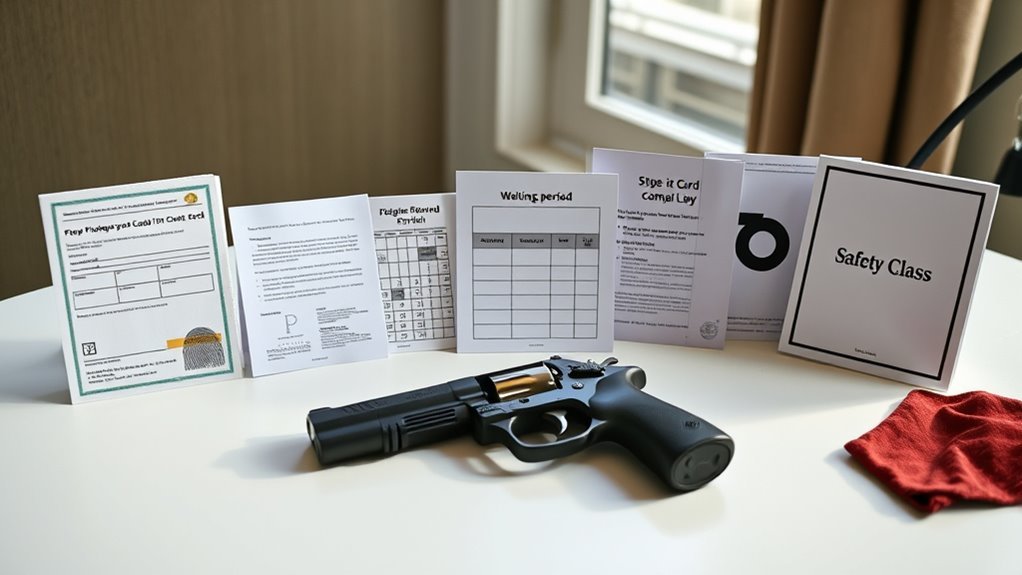
To purchase a gun, first understand federal and state laws to make sure you meet all age and eligibility requirements. It’s important to know the rules before you start so the process goes smoothly and stays legal. Prepare a valid ID and any permits that might be required in your area.
Next, choose a firearm that fits your needs and budget. Whether it’s for personal protection, hunting, or sport shooting, picking the right gun is key. Then, find a licensed dealer, confirm their transfer policies, and if you’re buying online, arrange shipment carefully.
You’ll need to complete the ATF Form 4473 and pass a background check—it’s all part of following the law.
Finally, inspect your firearm, pay for it, and transport it safely back home. Stick with these steps, and your gun purchase will be smooth and legal.
Key Takeaways
– Verify eligibility by meeting federal and state requirements, including age and background checks using ATF Form 4473 and NICS.
It’s important to make sure you qualify before moving forward.
– Research and select a firearm that suits your intended use, considering type, caliber, and ergonomics.
Take your time here to find something that feels right for you.
– Find a licensed Federal Firearms License (FFL) dealer to conduct the transfer and background check.
This step is key to making sure everything is legal and above board.
– Provide valid government-issued photo ID and any required permits or proof of residency to the dealer.
They’ll need to verify your identity and compliance with local laws.
– Complete payment, inspect the firearm at pickup, and follow safe transport and storage guidelines.
Always prioritize safety once you have your new firearm in hand.
Understand Key Federal and State Gun Laws Before You Buy
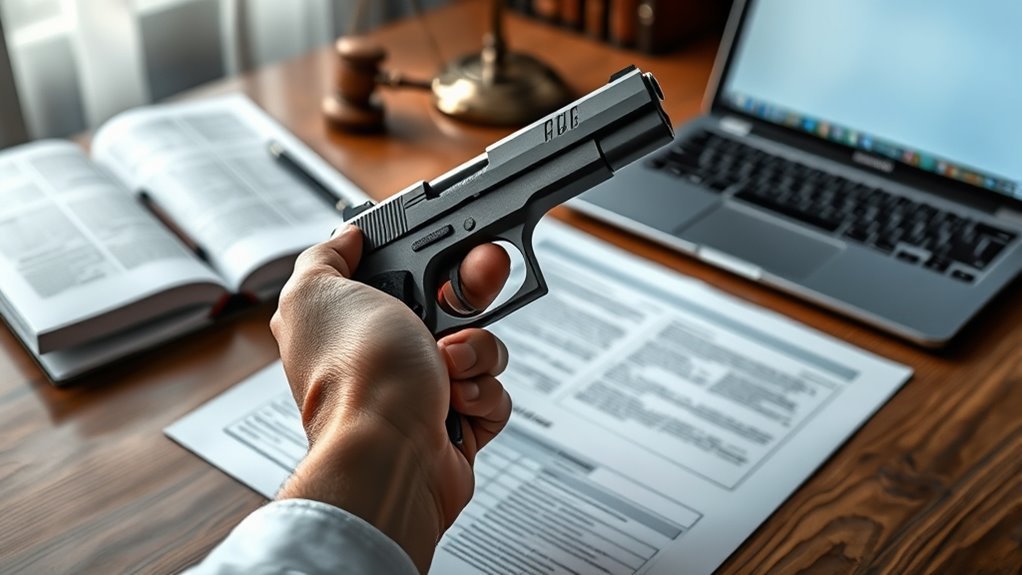
Before you buy a gun, you need to understand both federal and state laws that govern firearm ownership. Federal law bars prohibited persons—like those convicted of felonies or under certain restraining orders—from owning guns.
Understanding federal and state laws is essential before purchasing a firearm to ensure legal ownership and compliance.
To purchase from licensed dealers, you must complete Form 4473 and pass a background check through the NICS system. Lying on this form is a federal felony.
Age requirements vary: federal law sets the minimum at 18 for rifles and shotguns, and 21 for handguns. But state laws often add permits, waiting periods, or additional ID requirements.
Keep in mind, state laws may impose extra restrictions like firearm bans or mandatory registration. So, always check current state laws before you proceed to make sure you’re following the rules and avoid any legal trouble.
Verify Your Gun Purchase Eligibility and Prepare Documents
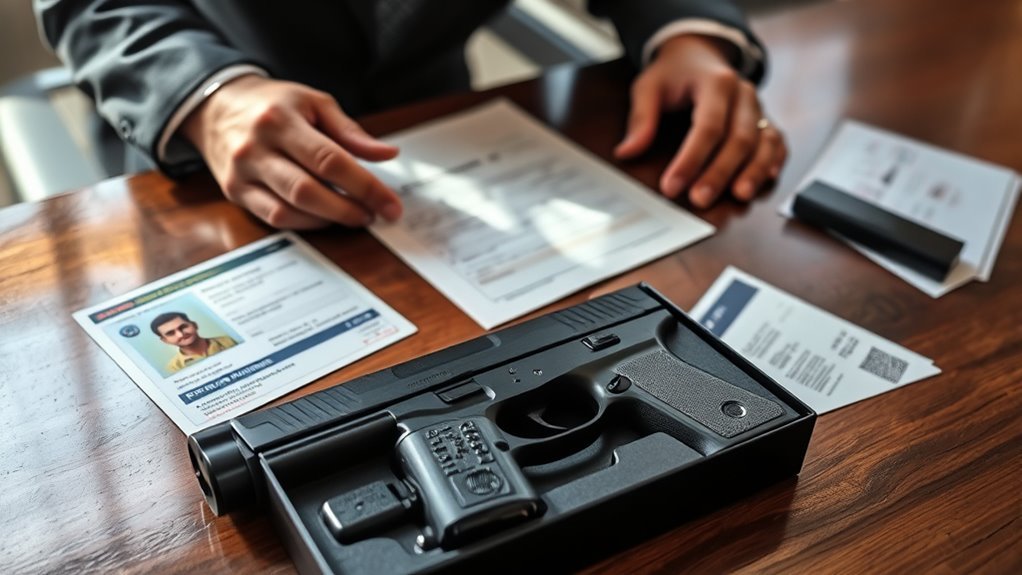
Although federal law outlines who can legally buy a gun, you still need to confirm your eligibility. Make sure you’re a U.S. citizen or lawful resident, have no felony convictions or disqualifying legal issues, and aren’t a prohibited drug user or adjudicated mentally defective.
You also must not be subject to a restraining order or misdemeanor domestic-violence conviction.
Prepare by bringing a valid government-issued photo ID, like a driver’s license, with your current address. If your address differs, bring additional proof of residency.
Also, know any state-specific license or permit requirements before your purchase.
When you buy, you’ll complete the ATF Form 4473 and undergo a Background Check System review.
If you’re purchasing online, arrange shipment to an in-state FFL dealer. They’ll handle the transfer and background check before you pick up your gun.
Choose the Right Type of Gun for Your Needs
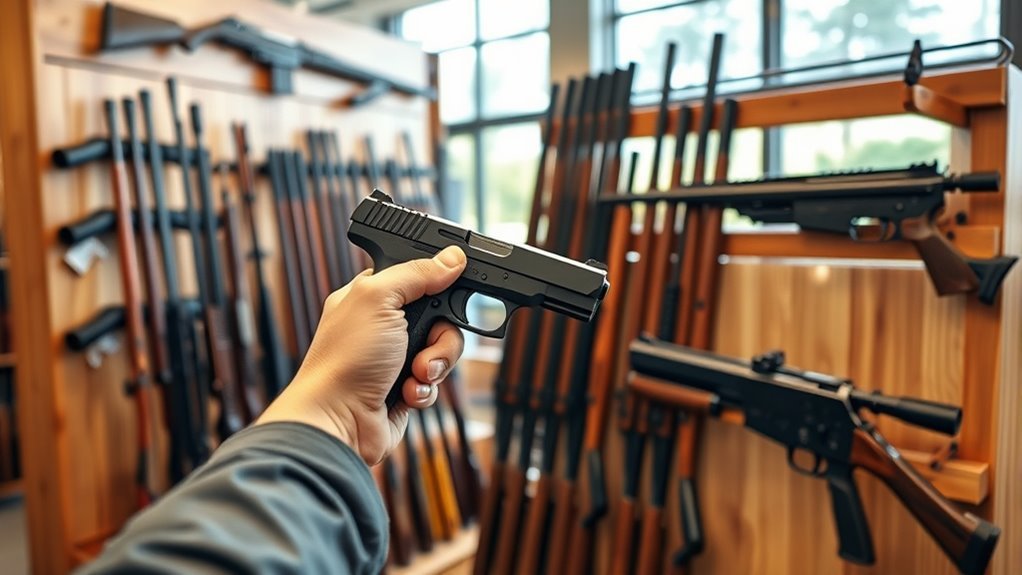
First, figure out what you’ll use the gun for—self-defense, hunting, or sport shooting. Then, compare handguns, rifles, and shotguns to see which fits your needs and preferences best.
Pay attention to how each type performs and feels in your hands before making a choice. It’s important to get a good feel for the gun to know if it’s right for you.
Determine Intended Use
When you decide to purchase a gun, start by identifying its primary purpose. This will guide you toward the right type. Your intended use—whether self-defense, hunting, target shooting, or competition—determines if a handgun, rifle, or shotgun suits you best.
Match the caliber to your needs. Choose smaller calibers like .22LR for practice or larger ones like 9mm or .30-06 for defense or hunting. Consider ergonomics carefully; weight, grip size, and recoil affect how comfortably you handle the firearm and your shooting accuracy.
Don’t overlook legal requirements either. Age limits, permits, and local restrictions vary by firearm type and intended use. By defining your purpose clearly, you’ll find a gun that fits both your practical needs and legal obligations.
Compare Firearm Categories
How do you know which type of gun suits your needs best? It starts by comparing firearms categories: handguns, rifles, and shotguns. Handguns excel for self-defense and carry, offering manageable recoil—especially compact 9mm models.
Rifles, ideal for hunting and precision shooting, vary by caliber depending on game size. Shotguns provide versatility for hunting and close-range defense, with 12- or 20-gauge options popular for beginners.
Consider recoil, weight, and ergonomics carefully. Maintenance and reliability matter too; semi-automatic pistols and pump-action shotguns often suit novices.
Most importantly, try before you buy—rent or borrow different firearms at a range to assess fit, sight picture, and handling. This hands-on experience helps make certain you pick the right type of gun for your specific needs.
Assess Performance Preferences
Although selecting a firearm might seem straightforward, you’ll want to start by pinpointing your intended use—whether that’s concealed carry, hunting, home defense, or competition.
Choose a handgun for ease of carry and quick use, a rifle for precision and long-range, or a shotgun for versatility and close-range power. Pay attention to ergonomics and recoil to guarantee comfort and control.
Caliber matters: smaller calibers reduce recoil, while larger calibers offer more stopping power. Test different models to find what fits you best.
| Firearm Type | Caliber Range | Key Considerations |
|---|---|---|
| Handgun | 9mm, .40, .45 ACP | Concealed carry, recoil |
| Rifle | .22 LR to .30+ | Accuracy, long-range use |
| Shotgun | 12-, 20-gauge | Versatility, choke options |
| Ergonomics | Weight, grip size | Comfort, follow-up shots |
| Recoil | Low to high | Manageability, training |
Find and Coordinate With a Licensed Gun Dealer
Before you buy, make sure to verify the dealer’s Federal Firearms License (FFL) and confirm they accept transfers. Give them a call ahead of time to schedule a purchase appointment.
Also, ask about any specific requirements or fees they might have. This way, you’ll help guarantee a smooth and legal transaction when you pick up your firearm.
Licensed Dealer Verification
A vital step in purchasing a gun online is finding a licensed Federal Firearms Licensee (FFL) in your state who can legally receive and transfer the firearm to you. Start by checking FFL directories or calling your local gun store to confirm they accept FFL transfers and inquire about their transfer fee, usually $25–$75.
Make sure to provide the seller with the FFL’s license copy and confirm shipping details. It’s also a good idea to contact the dealer directly to verify they handle your firearm type, understand the required paperwork, and know their background check or NICS process.
Clear communication helps guarantee smooth coordination during the transfer. That way, you avoid any last-minute surprises or delays.
| Task | What to Check |
|---|---|
| Locate FFL | Directory, local gun store |
| Confirm Transfer Fee | Typically $25–$75 |
| Verify Background Check | NICS, state permits, CCW accepted |
| Confirm Firearm Type | Handgun vs long gun processing |
Scheduling Purchase Appointment
Once you’ve verified a licensed dealer who can handle your gun transfer, the next step is to schedule an appointment with them. Contact local FFL dealers to confirm they accept transfers, their fees, payment methods, and any required ID or state-specific documents.
Arrange an in-person pickup appointment so staff can prepare for the firearm’s arrival and allocate time for you to complete Form 4473 and the NICS/background check. Provide the seller with the FFL’s full name, address, phone number, and license copy to make certain direct shipment.
Before your appointment, ask about holding policies, inspection procedures, and timelines. When you arrive, bring two valid identification cards—one with your current address—and any permits needed to avoid delays during the transfer process.
Arrange and Track Your Gun Transfer
To get your gun transfer underway smoothly, start by finding an in-state Federal Firearms License (FFL) dealer who’s willing to accept your firearm shipment. Make sure you confirm their transfer fee and any holding-period policies.
Then, give the seller the receiving dealer’s full contact info and a copy of their FFL license for shipment. Once the firearm is shipped, ask the retailer for the carrier and tracking number. Share that info with your FFL so you can keep an eye on the transfer.
Here’s what to do next:
- Coordinate the FFL transfer by making sure the dealer receives and inspects the firearm.
- When you get notified the firearm is in, bring a valid ID and complete ATF Form 4473.
- Pass the background check before taking possession.
Keeping track of this process helps make sure your purchase stays compliant and happens on time.
Complete Gun Purchase Background Checks and Forms
You’ll typically complete ATF Form 4473 when purchasing a firearm from a Federal Firearms Licensee (FFL). On this form, you provide your identity and answer eligibility questions.
This form helps determine if you meet federal requirements, including age minimums—18 for rifles or shotguns and 21 for handguns. It also checks restrictions under 18 U.S.C. § 922(g), which bars certain individuals from owning guns.
After you submit Form 4473, the FFL runs a background check through the National Instant Criminal Background Check System (NICS) or a state system. The results come back as approved, denied, or delayed, but dealers won’t see specific denial reasons.
Keep in mind private-party transfers follow different rules. So, always verify state laws and procedures before proceeding with any private-party transfer or online purchase requiring FFL involvement.
Finish Your Purchase and Take Your Gun Home Safely
Before the dealer can hand over your firearm, bring a valid, unexpired government photo ID showing your current address. You’ll also need to complete ATF Form 4473 and pass the required NICS background check.
Bring a valid photo ID, complete ATF Form 4473, and pass the NICS background check before receiving your firearm.
Depending on where you live, you might need to provide proof of state residency or other permits. It’s always a good idea to check local requirements ahead of time.
To finish your purchase and take your gun home safely:
- Pay any fees and inspect the firearm at the counter. Make sure it matches the model, serial number, and condition you expect. Don’t forget to check that the action is open and the gun is unloaded.
- Transport the firearm unloaded and encased—ideally in a locked hard case. Keep any ammunition stored separately, and be sure to follow your state’s transit laws.
- Once you get home, place the firearm in secure storage like a gun safe or lockbox right away. Also, complete any required registration or reporting within your state’s timeframe.
Frequently Asked Questions
What Are the Seven Gun Rules?
You follow seven gun rules: always treat guns as loaded, never point at anything unwanted, keep your finger off the trigger.
Be sure of your target, store firearms securely, know the law, and handle guns responsibly every time.
These rules help keep everyone safe, so it’s important to remember them every time you’re around guns.
What Does “Mexican Carry” Mean?
“Mexican carry” means you’re tucking your gun loose, like a wild card in your waistband, without a holster.
You’re risking accidental pulls and snags, so it’s best to use a proper holster instead.
What Should Every Gun Owner Have?
You should have a valid ID and proper permits. A secure storage solution is a must for safety.
Also, keep your training up-to-date and always use safety gear. It’s important to keep ammo separate from your firearm.
Don’t forget to maintain your gun regularly with a cleaning kit. Having the owner’s manual handy helps ensure responsible ownership.
What Are the Five Gun Rules?
Did you know over 60% of gun accidents happen from ignoring safety rules? You must treat every firearm as loaded, never point it carelessly, and keep your finger off the trigger.
Also, always identify your target before shooting. And don’t forget to store guns securely when you’re done. Safety first, right?
Conclusion
So, you’ve navigated the labyrinth of laws, background checks, and paperwork—congratulations, you’re basically a gun-buying ninja now. Just remember, this isn’t like grabbing a candy bar; it’s serious stuff with serious rules.
Follow these steps, keep your paperwork handy, and don’t try to skip the process unless you want a date with the law.
Now, go ahead—buy smart, stay safe, and maybe keep a coffee nearby for all the waiting!
Purchasing a gun requires patience, attention to detail, and respect for the legal process. By understanding the essential steps, you ensure a smooth transaction while staying compliant with all regulations. Always prioritize safety and responsible ownership throughout your gun-buying journey. Stick to the rules, complete your background checks, and keep your documentation organized. That way, you’ll enjoy your new firearm confidently and responsibly.