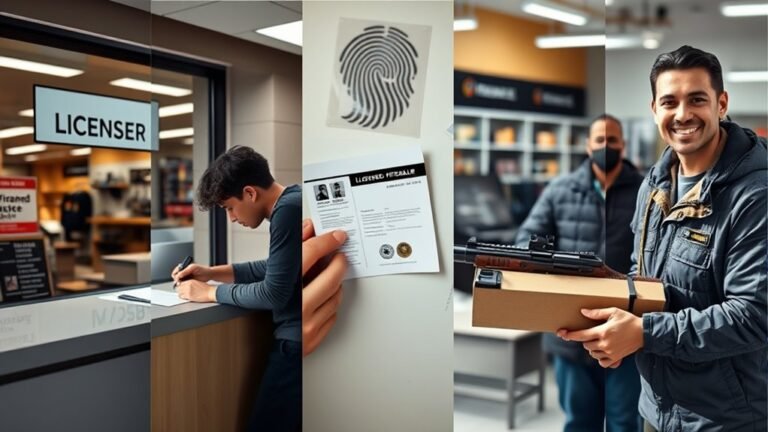

How to Purchase a Firearm in 10 Essential Steps
To purchase a firearm, first confirm you’re legally eligible by meeting age, citizenship, and background requirements. It’s important to understand these basics before moving forward. This helps ensure you’re following all the necessary laws and guidelines.
Next, decide whether to buy in person or online. Then choose a firearm that suits your needs and preferences. Taking time to research will help you make the best choice.
Make sure to research federal and local laws too. Find a licensed dealer or transfer partner who can legally sell or transfer the firearm to you. This step is crucial for a smooth process.
You’ll need to complete Form 4473 and pass the background check. Be prepared to pay any fees and observe any waiting periods that apply in your area.
Finally, pick up your firearm, finalize the purchase, and practice safe handling. Staying informed about each step will help you buy your firearm responsibly and legally. Keep going to uncover essential details for each step.
Key Takeaways
- Verify federal eligibility by meeting age, citizenship, and prohibited person requirements before purchasing a firearm.
- Choose a licensed dealer (FFL) and complete ATF Form 4473 with accurate, truthful information.
- Undergo a NICS background check initiated by the dealer during the purchase process.
- Pay all applicable fees, including transfer fees, sales tax, and the firearm purchase price.
- Follow state-specific laws on waiting periods, permits, and residency requirements before finalizing the transaction.
It’s important to take these steps seriously to ensure everything goes smoothly.
If you have questions along the way, don’t hesitate to ask the dealer for help!
Confirm Your Legal Eligibility to Buy a Firearm

Before you purchase a firearm, make sure you meet all legal requirements. You need to be at least 18 to purchase rifles or shotguns and 21 for pistols from a licensed dealer.
Ensure you meet legal age requirements: 18 for rifles or shotguns, 21 for pistols from licensed dealers.
Federal law requires you to be a U.S. citizen or lawful permanent resident and not fall into prohibited categories like convicted felons, fugitives, illegal drug users, or those adjudicated mentally incompetent.
Domestic-related prohibitions, such as misdemeanor domestic violence convictions or active restraining orders, also disqualify you. Nonimmigrant visa holders, dishonorably discharged veterans, and those who renounced citizenship are generally barred unless exceptions apply.
When you purchase, you’ll undergo background checks to confirm eligibility. Remember, state and local laws can impose stricter age limits or additional restrictions, so always verify those before proceeding.
Decide Where and How to Buy Your Firearm
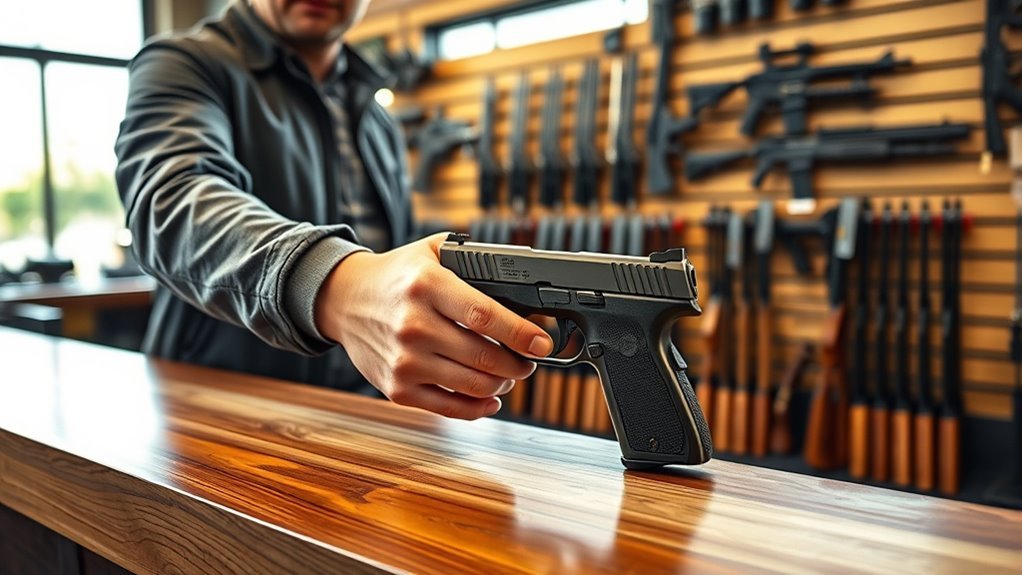
Once you’ve confirmed you meet all legal requirements, the next step is to choose where and how to buy your firearm. You can buy in-person from a local FFL, where you’ll complete Form 4473 and undergo an immediate NICS check.
Alternatively, you might buy online, but that means the firearm has to be shipped to a receiving FFL for an online transfer and pickup. If you’re purchasing in Texas, keep in mind that handgun sales typically require Texas residency or qualifying military status. Long guns, however, may be sold to out-of-state buyers following their laws.
Before you go through with an online transfer, make sure to check the receiving FFL’s transfer fee and policies. For private sales, both parties should be Texas residents, and you need to avoid illegal straw purchases.
Always follow state and federal rules to guarantee a lawful transaction. It’s better to be safe and informed!
How to Choose the Right Firearm to Buy

Choosing the right firearm starts with matching the type to your intended use—handguns suit concealed carry and short-range defense, rifles excel at long-range hunting, and shotguns work well for home protection and versatile hunting.
When you buy a gun, especially your First Gun, consider these factors:
- Ergonomics: Handle or test-fire the model to guarantee comfort in grip size, weight, and trigger reach.
- Caliber: Choose a caliber that balances recoil, ammo availability, and cost—9mm is a common, affordable choice for handguns.
- Purpose: Align barrel length, platform, and accessories with your specific needs like daily carry, hunting, or home defense.
Also, keep budget and ammo costs in mind. This way, you can find a reliable firearm that fits your lifestyle and shooting goals.
Research Local and Federal Gun Laws Before Buying
Before you buy a firearm, make sure you understand both federal and local laws that apply to you. Check your eligibility, including age and background restrictions, and review any state-specific rules like waiting periods or permits.
Staying informed helps you avoid legal issues and guarantees a smooth purchase process. It’s always better to be safe than sorry when it comes to gun laws.
Federal Gun Law Overview
Although federal gun laws set essential requirements for firearm purchases, you also need to understand how they work alongside local regulations.
When buying from a Federal Firearms Licensee (FFL), you’ll complete an ATF Form 4473 and go through a NICS check. That’s a vital background check to make sure you’re eligible.
Here are three key federal rules to keep in mind:
- You have to be at least 18 to buy rifles or shotguns, and 21 for handguns when purchasing from an FFL.
- Certain people, like convicted felons or those judged mentally incompetent, aren’t allowed to possess firearms.
- If you buy a firearm online, it will ship to an FFL. You’ll then complete the necessary paperwork and background check before you can pick it up.
Knowing these federal steps helps make sure your purchase follows the law and keeps you out of serious trouble.
State And Local Regulations
Federal gun laws provide a foundation for firearm purchases, but your state and local regulations often add layers of requirements you need to follow. Before buying, check for any waiting period, permit-to-purchase rules, or residency requirements specific to your area.
Some states require background checks and Form 4473 completion even for private sales, gun-show purchases, or online orders. You might also need an FFL transfer to legally receive your firearm, so confirm the transfer fees and policies in advance.
Local laws may restrict certain firearm types or magazine capacities, so research these carefully. Understanding these overlapping rules helps you avoid legal issues and guarantees your purchase complies with all applicable laws.
Always verify your jurisdiction’s regulations before proceeding with any firearm transaction. It’s better to be safe and informed than to run into trouble later.
Compliance And Eligibility Checks
Since gun laws vary widely across jurisdictions, you need to verify your eligibility under both federal and local regulations before purchasing a firearm. To buy legally, you must be a U.S. citizen or lawful permanent resident, meet age requirements, and not be prohibited due to criminal history or other restrictions.
Also, check local rules for waiting periods, permits, and storage mandates.
- Confirm federal eligibility, including background checks through NICS.
- Research state-specific laws like waiting periods or permit requirements.
- Avoid straw purchases—never buy a firearm for someone prohibited or circumvent transfers.
If you’re buying out-of-state or online, make sure you comply with both your home state and the seller’s policies. Have the firearm shipped to a licensed dealer.
And don’t forget to prepare your ID and documents ahead of time to make the purchase go smoothly.
Find a Licensed Firearms Dealer or Transfer Partner
Before you make any firearm purchase, you’ll want to track down a licensed firearms dealer or transfer partner to handle the transaction legally. Confirm the seller is an FFL by verifying their license number or using the ATF FFL eZ Check.
If you’re buying online, pick a local gun shop that accepts transfers and ask about their transfer fees, which usually run between $20 and $40. Make sure the FFL accepts shipments from your seller and follows proper pickup procedures.
When you go to pick up the firearm, you’ll need to complete Form 4473 and undergo a NICS check. So, check the FFL’s requirements for ID and documents ahead of time.
Also, be sure to clarify their policies on pre-filled forms and delayed NICS responses. That way, you can avoid any surprises during the transfer process.
Gather Your ID and Documents for Purchase
When you head to an FFL to complete your firearm purchase, you’ll need to bring a valid government-issued photo ID that clearly shows your full legal name, date of birth, and current address to match the information on ATF Form 4473. This guarantees your identity and residency align with legal requirements.
Make sure you have:
- A government-issued photo ID (like a driver’s license or passport) reflecting your current address for Form 4473.
- Your Green Card if you’re a lawful permanent resident; nonimmigrant visa holders must bring proper documentation.
- Proof of state residency, such as a state driver’s license or military orders, especially when purchasing a handgun in certain states.
Gather these documents beforehand to avoid delays during your firearm purchase. It’s always better to be prepared so the process goes smoothly.
Complete Form 4473 and Pass Your Background Check
Although the process may seem straightforward, completing ATF Form 4473 accurately is essential to avoid legal trouble. You’ll need to provide truthful answers and make certain your government-issued photo ID matches the form.
After signing, the dealer submits your info for a NICS background check. This usually takes seconds but can sometimes cause delays.
| Step | What You Need to Know |
|---|---|
| Provide personal info | Name, address, DOB, SSN if requested |
| Answer eligibility questions | Be honest—falsification is a felony |
| Show government-issued photo ID | Must match Form 4473 details |
| Submit Form 4473 | Dealer sends info for NICS background check |
| Corrections | Minor fixes allowed with initials and date |
Pay Fees and Navigate Waiting Periods
You’ll need to pay transfer and processing fees, which usually range from $20 to $40, plus any sales tax and the firearm’s price.
After your background check, some states require mandatory waiting periods before you can take possession. Make sure to understand your state’s rules so you can plan accordingly.
Background Check Fees
Background check fees are a standard part of purchasing a firearm from an FFL dealer, usually ranging between $20 and $40. When you buy a gun, the dealer runs a NICS background check and charges a background-check/transfer fee.
This process typically takes a few minutes but can be delayed, especially if the FBI needs more time. Some states require a waiting period even after a successful NICS check, so be sure to verify local laws.
Here’s what to expect:
- Complete ATF Form 4473 and present valid ID at the FFL dealer.
- Pay the background-check/transfer fee plus any sales tax.
- Wait for the NICS result and observe any applicable waiting period before taking possession.
Being prepared helps you avoid surprises during the purchase.
State Waiting Periods
After paying the necessary fees and completing the background check, you may need to wait before taking possession of your firearm. Some states enforce a mandatory waiting period under state law, ranging from a few days to 10 days or more.
Waiting periods may apply to all firearms or only handguns. Even if there’s no statutory waiting period, the NICS background check can still delay your purchase until you are cleared.
| State | Waiting Period |
|---|---|
| California | 10 days (mandatory) |
| Texas | No mandatory waiting |
| Florida | 3 days (handguns) |
Be sure to check your local rules carefully. Waiting periods affect when you can pick up your firearm after purchase and background clearance.
Transfer and Processing
Although completing a NICS background check is essential, you must also pay any dealer-imposed transfer fees—typically between $20 and $40—along with applicable sales tax and the firearm’s purchase price when finalizing the transfer at the receiving dealer.
To complete the FFL transfer, you’ll fill out ATF Form 4473 and have the dealer initiate the NICS background check. If the check returns “Proceed,” you can usually take possession immediately. However, you might encounter:
- A “Delay” status requiring the dealer to hold the firearm until clearance or default-proceed time.
- State-mandated waiting periods that require withholding the firearm even after approval.
- Additional verification if your ID or paperwork doesn’t match Form 4473 details.
Stay prepared to navigate these steps smoothly.
Pick Up Your Firearm and Finalize Purchase
When you arrive to pick up your firearm at the dealer, bring the same government-issued photo ID you used on ATF Form 4473, along with any residency or name-change documents the dealer requested. The ATF regulates firearm transfers, so you’ll need to complete and sign Form 4473 again at the receiving dealer.
The dealer will then run the NICS background check to verify you’re eligible. If the NICS returns “proceed,” you can usually take possession the same day.
Be ready to pay the agreed purchase price, sales tax, and a transfer fee, which is typically $20–$40. Make sure to inspect the firearm and its serial number against your receipt before you leave.
If the background check is delayed, the dealer will hold the firearm until approval or follow their local default-proceed policy. So, just be patient and stay in touch with the dealer if needed.
Learn Safe Handling and Plan Ammunition and Accessories
Before you handle your firearm, make sure you master the four key safety rules to keep yourself and others safe.
Plan your ammunition purchases carefully, matching the caliber to your gun and choosing reliable brands for both practice and defense.
Don’t forget to invest in proper eye and ear protection, as well as the right accessories like holsters and secure storage.
Safe Firearm Handling
Handling a firearm safely starts with treating every gun as if it’s loaded. Always keep the muzzle pointed in a safe direction, and never place your finger on the trigger until you’re ready to shoot.
You should always treat every firearm as if it is loaded to prevent accidents. Before handling or cleaning, remove the magazine, open the action, and visually and physically inspect the chamber to confirm it’s empty.
Here’s what you should do:
- Keep the muzzle pointed in a safe direction at all times.
- Keep your finger off the trigger until you’re ready to shoot.
- Visually and physically inspect the chamber and magazine well before handling.
Planning Ammunition Accessories
Although purchasing a firearm is a significant step, you’ll also need to plan carefully for ammunition and accessories to guarantee safe, effective use. Start by budgeting for the right ammo—always match the caliber stamped on your firearm’s barrel or receiver, such as 9mm or .223.
Never substitute mismatched ammo, as it can be dangerous. Invest in a quality holster and gun belt suited to your carrying style, whether IWB, OWB, or pocket.
Don’t forget essential safety gear like eye and ear protection and a basic cleaning kit. Plan for spare magazines and extra ammo within legal capacity limits.
Finally, secure your firearm and accessories in a gun safe or lockbox that complies with local laws. This ensures safe storage and gives you peace of mind.
Frequently Asked Questions
Do You Have to Be a Texas Resident to Buy a Gun?
Yes, you have to be a Texas resident to buy a handgun from a Texas FFL, unless you provide qualifying military documentation.
For rifles or shotguns, out-of-state buyers must comply with both Texas and their home-state laws. It’s important to know the rules in both places before making a purchase.
What Does “Mexican Carry” Mean?
“Mexican carry” means you’re carrying a handgun without a holster, usually tucked in your waistband or pocket. It’s risky because there’s no trigger protection, increasing chances of accidental discharge and legal issues.
Honestly, it’s best to avoid it. Using a proper holster keeps things safer and way more secure.
What Are the Four Rules of Gun Ownership?
You follow four rules: always treat guns as loaded, keep the muzzle pointed safely, know your target and surroundings, and keep your finger off the trigger until ready.
These keep you and others safe every time you handle firearms. It’s simple but super important to stick to these every time.
What Is a First Time Gun to Buy?
Choosing your first gun is like picking your first bike—go for something reliable and easy to handle.
A compact 9mm pistol or a .22LR rifle fits well, helping you build confidence and skills safely.
It’s all about feeling comfortable and staying safe while you learn. Take your time and enjoy the process!
Conclusion
Buying a firearm isn’t just a transaction—it’s a responsibility that demands respect and care. By following these steps, you’re not only ensuring a legal purchase but also prioritizing safety for yourself and those around you.
Remember, a firearm in your hands is more than metal; it’s a commitment to knowledge, caution, and respect. So, take this journey seriously, and you’ll be well-prepared for every step ahead.
When you choose to purchase a firearm, you’re making a decision that involves more than just buying a product. It’s about understanding the laws, practicing safety, and respecting the power you now hold. By following these essential steps, you can confidently navigate the process, ensuring a responsible and legal firearm purchase. Staying informed and cautious helps protect you, your loved ones, and your community. So, take your time, learn everything you can, and approach this opportunity with the seriousness it deserves.