What Does a Gun Sound Like When Fired?
When a gun fires, you’ll hear a sharp, powerful crack or boom that changes depending on the firearm type. Handguns usually sound crisp and high-pitched. Rifles have a deeper, resonant tone. Shotguns produce booming echoes.
The environment plays a big role too. Echoes and background noise can change how clearly you hear the gunshot.
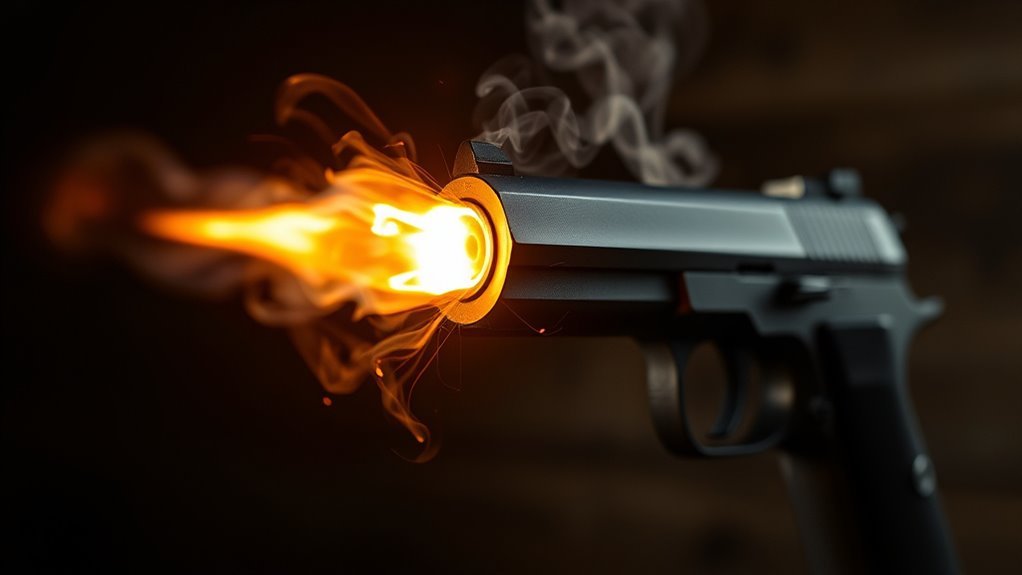
Muzzle flash and recoil also affect the sharpness and timing of the sound.
It’s pretty interesting how all these factors come together to shape the full gunshot experience. Keep exploring to understand these details and clear up common confusions about what a gun sounds like when fired.
Key Takeaways
- Gunshots produce sharp, loud cracks or blasts that vary by firearm type. You might hear high-pitched sounds from handguns or deep, booming noises from shotguns.
- The environment plays a big role too. Whether you’re in an open field, an urban area, or dealing with different weather conditions, it all changes how gunfire sounds and travels.
- Things like muzzle flash and recoil also affect how intense and sharp the gunshot sounds to you.
- Usually, gunshot sounds are singular and irregular. They’re quite different from the overlapping, rhythmic bursts you hear with fireworks.
- Having realistic gunshot sounds really helps in training and entertainment. It makes the experience more immersive and boosts situational awareness.
What Does a Gunshot Sound Like Across Different Firearms?
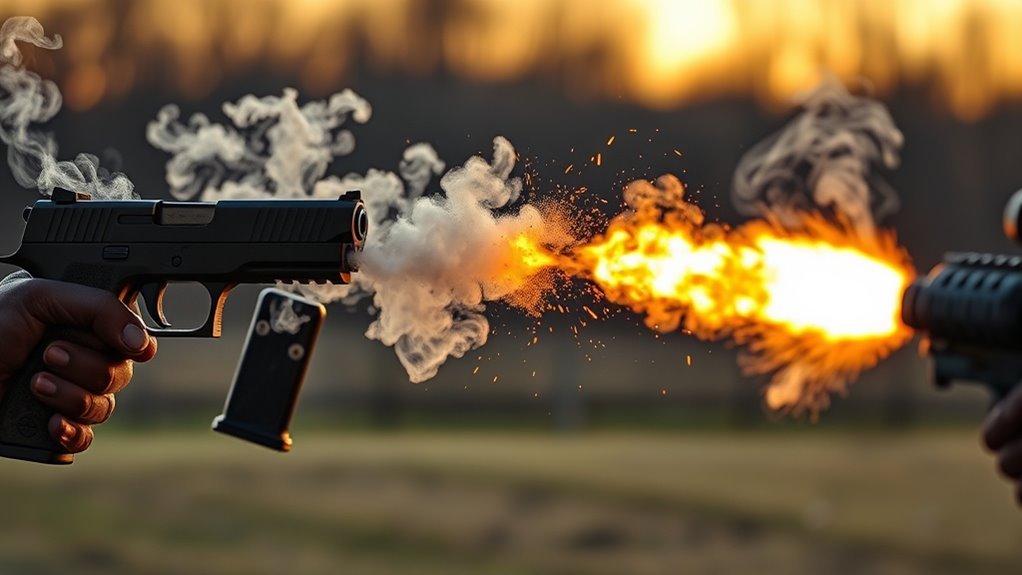
How does a gunshot sound vary across different firearms? When you listen closely, gunshot sounds differ markedly based on firearm acoustics and weapon types.
For example, handguns like the Desert Eagle produce sharp, high-pitched reports, while rifles such as the AK-47 deliver deeper, more resonant blasts. Shotguns create loud, echoing booms that contrast with the rapid, crisp cracks of smaller caliber guns.
Barrel length, caliber, and firing mode all contribute to these sound variations, giving each weapon a unique auditory signature. Suppressed guns further alter gunshot sounds, muffling the blast and reducing its impact.
How Does Environment Affect Gunshot Sound?
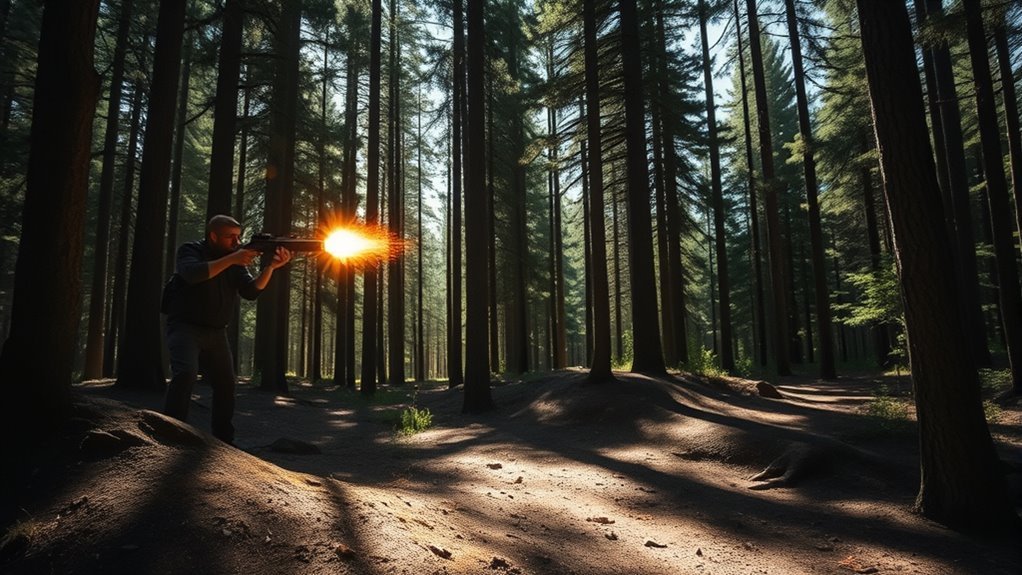
You’ll notice that gunshot sounds change depending on where you are—open fields, city streets, or indoors all shape what you hear. Weather like rain or wind can soften or carry the sound, making it harder to pinpoint.
Let’s explore how these environmental factors impact the way gunfire reaches your ears. It’s pretty interesting once you start paying attention!
Environmental Sound Variations
Where a gun is fired dramatically changes how its sound reaches your ears. In enclosed spaces like rooms or tunnels, sound waves bounce off surfaces, creating echoes and reflections that make gunfire seem louder and more intense.
Outdoors, the sound’s propagation can vary widely. Open fields allow the noise to travel farther, but natural elements or surrounding noises may muffle or distort the gunshot.
Background sounds, like traffic or birds, also influence how clearly you hear the shot. Environmental factors such as humidity and temperature subtly affect the pitch and distance the sound carries.
Weather Impact On Acoustics
Ever wondered why gunshots sound different on rainy days compared to windy afternoons? Weather plays a big role in how you perceive gunfire.
Wind affects the propagation of sound waves, carrying them farther in some directions while muffling them in others. Rain and snow increase absorption, dampening the sound and reducing echoes, so gunshots seem quieter.
High humidity or thunderstorms boost reverberation, making the shot sound louder and more echoing. When you’re in an open field, sound travels farther, but in dense forests, trees absorb and scatter the noise, changing how you hear it.
What Are Common Mistakes When Identifying Gunshots vs. Fireworks?
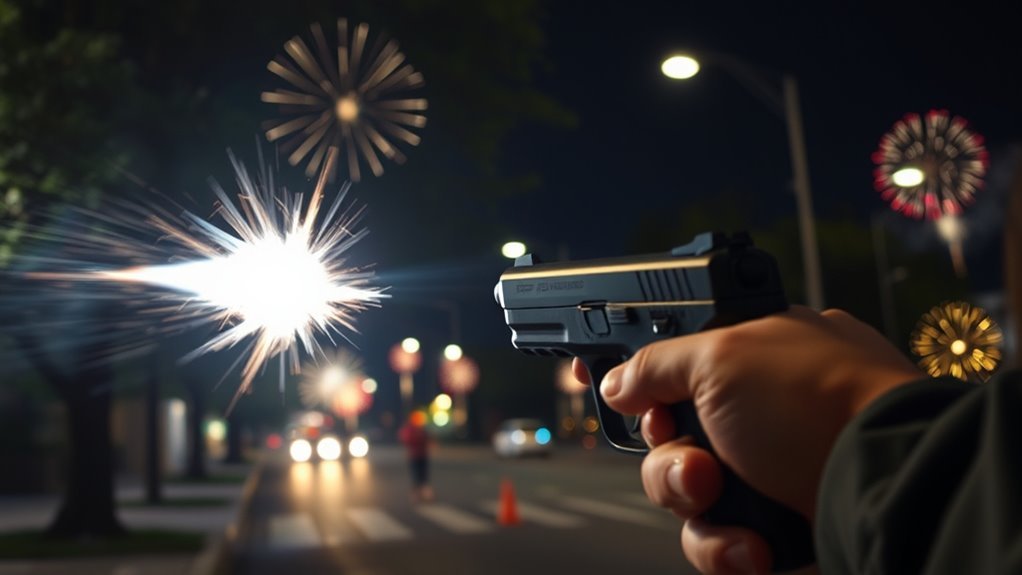
Although gunshots and fireworks can produce similar loud noises, many people mistakenly confuse the two because they don’t recognize the distinct sound patterns each creates. Sound identification relies heavily on understanding these differences and the acoustic environment.
For instance, fireworks often have overlapping bursts, while gunshots deliver a singular sharp crack. Mistaking echoes or reverberations for multiple shots is common, leading to confusion.
| Common Mistake | Explanation |
|---|---|
| Multiple sounds | Fireworks produce overlapping pops; gunshots usually don’t. |
| Timing assumptions | Fireworks happen predictably; gunfire is often random. |
| Echo misinterpretation | Urban echoes can exaggerate gunshots, causing errors. |
Knowing these helps you correctly differentiate gunshots from fireworks. It’s all about paying attention to the details and context.
How Do Muzzle Flash and Recoil Change How We Hear Gunshots?
When you hear a gunshot, the muzzle flash and recoil both shape how the sound reaches your ears. The muzzle flash creates a brief visual and auditory effect that can make the gunshot sound sharper or louder, while recoil alters how you perceive the sound by shifting the shooter’s position.
Here’s how these factors impact your auditory perception of gunshot sound:
- Muzzle flash produces a popping or crackling noise that blends with the gunshot.
- Recoil causes the shooter’s movement, changing sound timing and intensity.
- The acoustic environment shifts due to recoil, affecting sound clarity.
- Recoil can cause slight delays or variations in the perceived sound.
Together, muzzle flash and recoil shape your overall experience of gunfire sounds. It’s pretty interesting how much these elements influence what you actually hear.
How Do Gun Sound Simulators Recreate Real Firearm Sounds?
To recreate the authentic sound of firearms, gun sound simulators rely on high-quality recordings captured with professional microphones. You’ll find that these recordings form the foundation of realistic gun sound effects.
Then, sound design techniques like equalization, compression, and layering come into play. They help you hear the intricate acoustic details of each gunshot.
To boost audio realism, simulators often use 3D audio technology, which places sounds in a spatial environment. This makes you feel like you’re really there.
Environmental effects such as echoes and reverberations further mimic real-world shooting conditions. And when these sounds sync up with visual cues like muzzle flashes and recoil, simulators deliver an immersive experience.
It’s all designed to closely match how firearms truly sound when fired. Pretty cool, right?
Why Do Gun Sound Designers Emphasize Bass and Echo?
When you hear a gunshot with heavy bass, it feels more powerful and impactful. Echo adds a sense of space, making the sound seem realistic and alive.
Together, bass and echo shape how you experience each shot’s intensity and environment. It’s like they bring the whole scene to life, making every shot hit harder and feel more real.
Bass Enhances Perceived Impact
Although actual gunshots don’t always carry deep bass or prolonged echoes, sound designers emphasize these elements to make the shots feel more powerful and dramatic. You’ll notice that bass and echo play a vital role in amplifying the perceived impact of a gunshot.
Here’s why sound design focuses on these aspects:
- Bass adds weight, making the shot feel heavier and more forceful.
- Echo simulates environmental reverberation, enhancing spatial awareness.
- Combining bass and echo creates a more immersive auditory experience.
- These choices prioritize emotional impact over strict realism, heightening intensity.
Echo Creates Realism Illusion
Bass and echo don’t just make gunshots sound powerful—they also trick your brain into sensing a realistic environment. In sound design, echo mimics how gunfire bounces off walls and surfaces, creating a spatial depth that convinces you the shot occurs in a real space.
This realism illusion makes the sound feel immersive and authentic. Meanwhile, bass amps up the gunshot’s perceived force, reinforcing the impact you expect from a powerful weapon.
Together, bass and echo shape your emotional response, pulling you deeper into the experience. Sound designers carefully balance these elements to simulate different environments, whether it’s an open field or a closed room.
That way, every gunshot not only sounds loud but also believable. You hear more than noise—you actually feel the environment.
What Are the Differences Between Handgun, Rifle, and Shotgun Gunshot Sounds?
Because each type of firearm has unique physical characteristics, you’ll notice distinct differences in their gunshot sounds. When you listen closely, the handgun, rifle, and shotgun each produce unique audio signatures shaped by their caliber, barrel length, and ammunition.
Handgun gunshot sounds are sharp, quick, and high-pitched, with a brief crack followed by a muzzle blast. They tend to be more immediate and crisp.
Rifle shots tend to be deeper, louder, and longer-lasting, creating a more resonant echo due to larger calibers and longer barrels. You can almost feel the power behind each shot.
Shotgun blasts deliver a deep, booming noise with broad reverberation caused by pellet spread and larger shells. It’s a sound that really fills the space around you.
In recordings, handguns sound crisper, while rifles and shotguns come across as thunderous and resonant. Knowing these differences helps you identify which firearm fired just by sound.
How Do Gun Sound Variations Impact Training and Entertainment?
When you hear realistic gun sounds during training or entertainment, your experience becomes far more immersive and effective. Variations in gun sounds influence your perception of recoil and impact, improving the realism in training simulations.
This sharpens your situational awareness and helps you identify weapon types. In entertainment, authentic sounds boost user engagement, making gameplay or pranks feel genuine.
However, exaggerated or inaccurate sounds can mislead you, reducing training effectiveness.
| Aspect | Impact on Training Simulation | Impact on Entertainment |
|---|---|---|
| Loudness | Affects recoil perception | Enhances immersion |
| Tone | Identifies weapon type | Influences user engagement |
| Bass presence | Improves situational awareness | Adds realism |
| Accuracy | Prevents misconceptions | Maintains authenticity |
| Sound design style | Shapes expectations | Affects satisfaction |
Frequently Asked Questions
How Do I Know if I Just Heard Gunshots?
You’ll know you heard gunshots by the sharp, loud bangs, often in quick bursts. The sound is distinct from fireworks or cars, with echoes or cracking noises, especially in open areas.
Trust your instincts. If it sounds off or makes you uneasy, it’s better to be cautious and stay alert.
How Can I Describe the Sound of a Gun Firing in Words?
You’d describe a gun firing as a sharp, loud crack or bang, explosive and sudden. It’s often high-pitched with a metallic edge, followed by echoes or reverberations that make the noise linger sharply in the air.
It’s kind of like the sound just snaps through the silence, you know? And then the echoes hang around for a bit, giving you that sense of space and distance.
How to Tell if a Sound Is a Gun Shot?
How can you tell if that sharp bang is a gunshot? You’ll hear a sudden, loud crack with possible echoes and feel a quick vibration.
If it’s metallic or bass-heavy, that’s a strong clue it’s a gunshot. Sounds like that usually stand out from everyday noises.
What Sounds Can Be Mistaken for Gunshots?
You might mistake fireworks, car backfires, construction bangs, firecrackers, or sonic booms for gunshots. These loud, sharp noises can easily confuse you, especially when they happen suddenly or in quick bursts nearby.
It’s totally normal to get thrown off by these sounds. They can catch you off guard and make you think something more serious is happening. Just remember to stay calm and listen carefully if you’re unsure.
Conclusion
So, next time you hear that sharp *bang*, don’t just assume it’s a firework or your neighbor’s questionable taste in lawn art. Guns have their own symphony—bass-heavy, echo-laden, and with just enough recoil to remind you it’s serious business.
Whether you’re training, gaming, or just eavesdropping, remember: gunshots aren’t your friendly neighborhood pop—unless you enjoy bass drops and a side of adrenaline.
Welcome to the loud, unpredictable concert of firearm sounds! Understanding what a gun sounds like when fired helps you recognize its unique audio signature, whether in real life or in media. So, next time you hear that distinctive blast, you’ll know it’s more than just noise—it’s a powerful sound with a story behind it.