
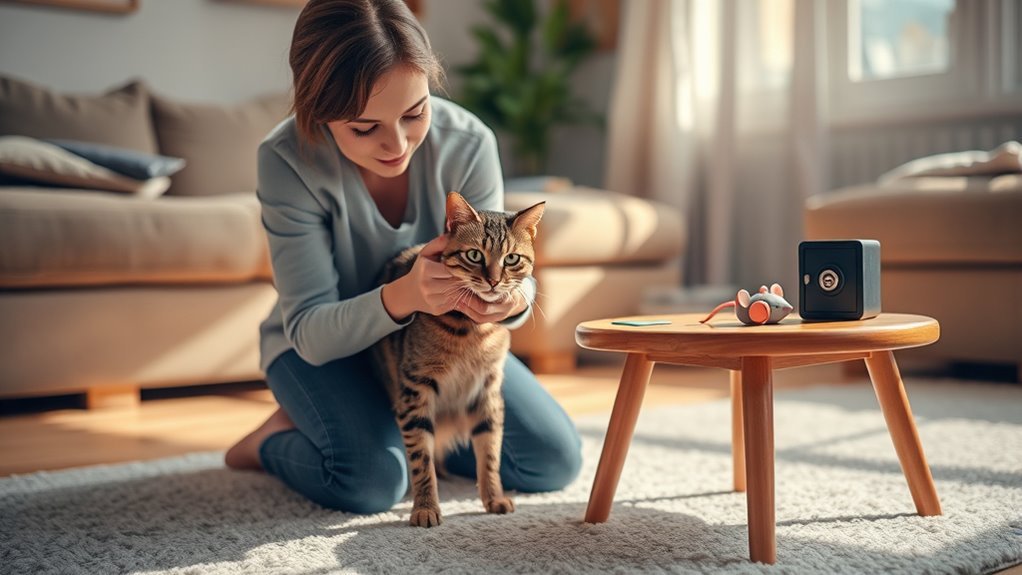
How to Talk to Your Cat About Gun Safety With 3 Simple Tips
To keep your cat safe around firearms, start by observing their behavior to spot risky spots near your gun storage. It’s important to understand where your cat likes to hang out and what might attract their curiosity around these areas. This way, you can prevent any accidental encounters with firearms.
Set clear boundaries using a consistent cue like “Stay” paired with a hand signal. Make sure to back it up with physical barriers so your cat knows exactly where they aren’t allowed to go. Consistency is key here, so keep it simple and clear.
Then, reinforce calm habits with short, positive training sessions close to storage areas. Use treats and gentle sounds to ease any stress your cat might feel. These steps help build safety and calmness around firearms.
Give it a try, and explore how to strengthen these habits effectively.
Key Takeaways
- Use a consistent verbal cue like “Stay” paired with a hand signal near firearm storage areas to set clear boundaries.
- Reinforce safe behavior immediately with high-value treats or affection to encourage avoidance of restricted zones.
- Monitor and limit your cat’s access to firearm storage locations by using physical barriers such as locked cabinets or baby gates.
- Gradually desensitize your cat to noises near storage areas with low-volume mechanical sounds paired with positive reinforcement.
- Keep training sessions short, frequent, and calm. Pause if the cat shows stress to maintain a relaxed learning environment.
Observe Your Cat’s Behavior to Assess Gun Safety Risks
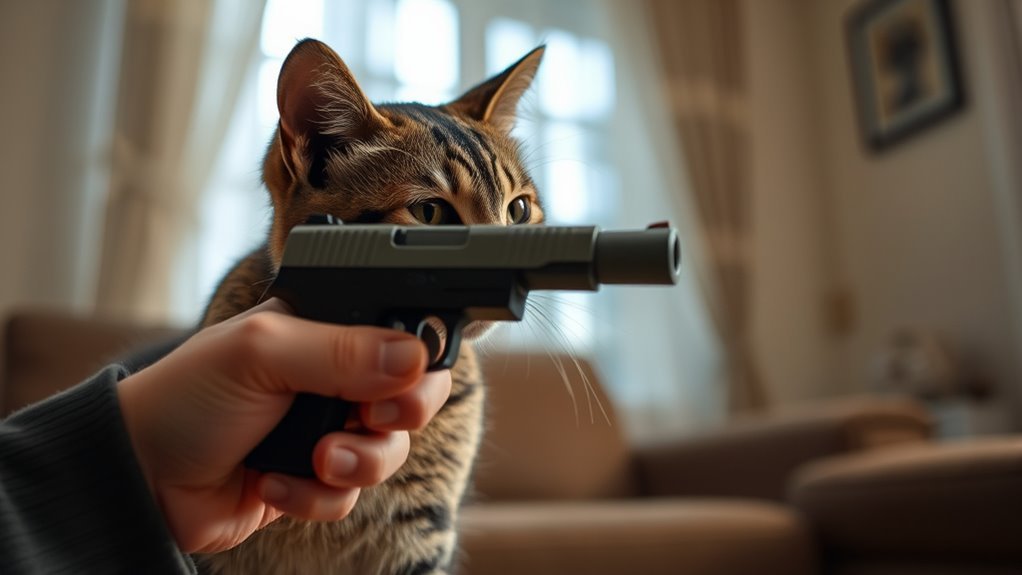
Regularly observing your cat’s behavior helps you spot potential gun safety risks before they become problems. You should monitor locations where your cat spends most time—like sunny windowsills or under beds—and compare those with firearm storage spots to identify access risks.
Watch for investigative behaviors such as poking paws into gaps or climbing shelves, which signal a need for more secure storage. Pay attention to your cat’s reactions to loud noises or new smells, as these can cause panic and lead to accidents.
Track activity patterns too, especially during crepuscular hours at dawn and dusk, when your cat is most curious and active. Finally, record any prior incidents of your cat manipulating objects or entering restricted areas to prioritize safety improvements effectively.
Set Clear Boundaries With Consistent Cues
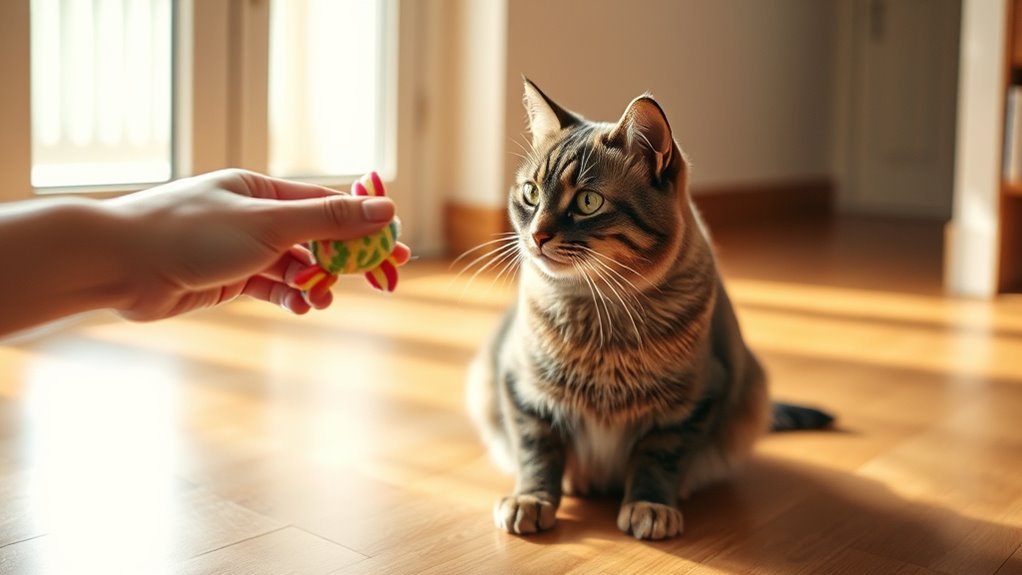
Although it might take some patience, setting clear boundaries with consistent cues helps your cat understand where it’s not allowed to go—especially near firearm storage. Use a single boundary cue like the word “Stay” paired with a hand signal every time your cat approaches restricted areas.
Setting clear, consistent boundaries with a cue like “Stay” helps your cat avoid restricted firearm areas.
Combine this with physical barriers such as baby gates or locked cabinets to reinforce the boundary.
Focus on these steps for effective cat safety and gun safety:
- Use short training sessions (3–5 minutes, 2–3 times daily) to establish the consistent cue.
- Practice household consistency by ensuring everyone uses the same cue and reward timing.
- Apply positive reinforcement immediately after your cat obeys to strengthen the behavior.
This method helps your cat quickly learn safe limits and respects gun safety boundaries. It’s all about clear communication and steady practice!
Reinforce Gun Safety Habits to Keep Your Cat Calm
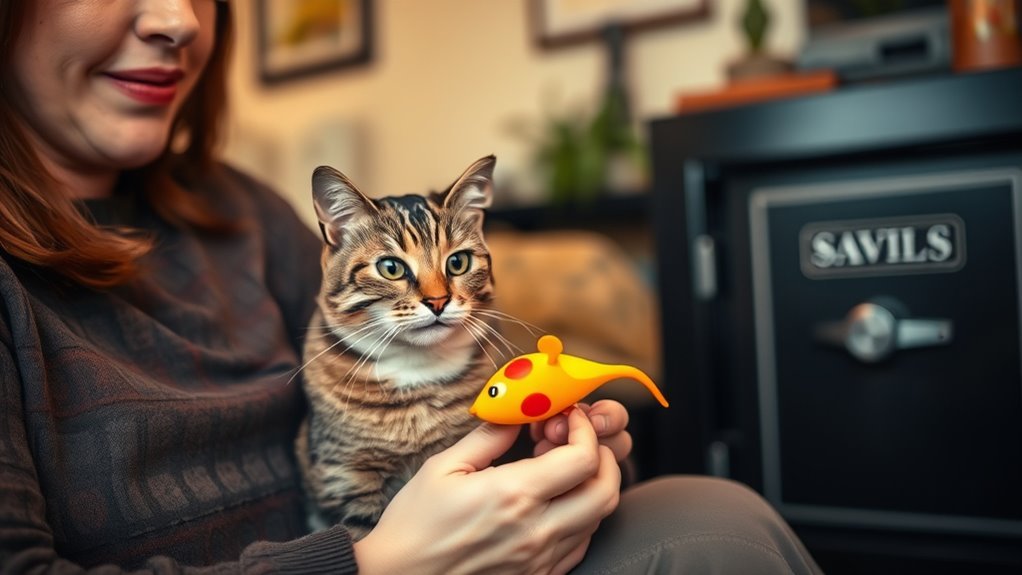
When you reinforce gun safety habits, you help keep your cat calm by creating positive, low-stress associations near firearm storage areas. Establish a calm routine with brief daily sessions close to, but not at, storage spots so your cat links the area to relaxation.
Use low-volume desensitization by playing gentle mechanical sounds while offering treats. This helps ease your cat’s fear of unfamiliar noises.
Always store unloaded guns in a locked safe, separating ammunition to maintain a stress-free environment. Reward your cat’s avoidance of no-go zones with high-value treats or affection to reinforce safe behavior.
Keep an eye out for stress cues like wide pupils or hiding. If your cat seems stressed, pause and only resume when they appear relaxed.
These steps not only strengthen gun safety but also keep your cat calm. It’s all about creating a safe, peaceful space for everyone.
Frequently Asked Questions
What Is a Silent Killer for Cats?
A silent killer for cats is secondhand smoke from cigarettes and vaping. You might not notice it, but your cat grooms smoke residues, ingesting carcinogens that increase lymphoma and respiratory disease risks over time.
The scary part? This happens without obvious signs. So, even if your cat seems fine, the damage could be happening quietly in the background.
What Are the 5 Basic Gun Safety Rules?
Did you know 60% of accidental shootings happen at home? Always treat every gun as loaded, and keep your finger off the trigger.
Point the muzzle safely, know your target, and securely store firearms and ammo separately to stay safe. Following these simple rules really makes a difference!
How to Make a Cat Feel Safe?
You make your cat feel safe by providing quiet, elevated spaces and consistent routines. Use pheromone diffusers to help them relax.
Try to minimize loud noises around the house. Also, offer vertical territory like cat trees or shelves.
Introduce any changes slowly so your cat doesn’t get stressed. These small steps help your cat stay calm and secure.
Is There a Way I Can Talk to My Cat?
You can talk to your cat using short, calm cues—they recognize about 20 to 30 words with training.
Use gentle tones, consistent signals, and rewards to help your cat understand and respond to your voice effectively.
It’s all about being patient and keeping things simple. Your cat will start picking up on what you mean before you know it!
Conclusion
Talking to your cat about gun safety might feel like teaching a fish to climb a tree, but with patience, you’ll see progress. By observing their behavior, setting clear boundaries, and reinforcing safe habits, you turn chaos into calm.
Imagine your home as a peaceful garden where both you and your cat bloom safely. Keep these tips close, and watch your furry friend become a quiet guardian of safety, one gentle paw at a time.
When you focus on gun safety with your cat, it’s all about creating a calm environment. Cats respond best to consistency and gentle guidance. So, by paying attention to their behavior and setting firm boundaries, you’re helping to keep everyone safe.
Remember, turning your home into a safe space means you and your cat can enjoy worry-free moments together. With these simple tips, your feline friend becomes more than a pet—they become a quiet guardian of safety, helping you maintain peace of mind in your home.





2 Comments