
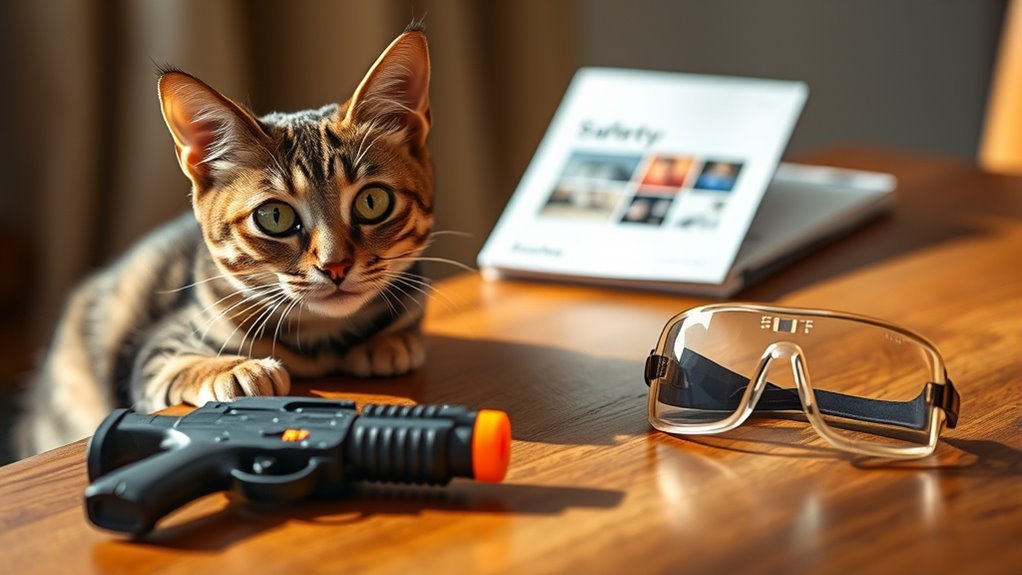
10 Tips to Teach Your Cat Gun Safety
Create a quiet, safe space where only you and your cat enter, using signs to limit access. This helps your cat feel secure and focused during gun safety training. Starting in a calm environment sets the stage for success.
Start training slowly with toy guns and reward calm behavior immediately with treats and gentle cues. Positive reinforcement is key to helping your cat understand what you expect. Keep sessions short and fun to hold your cat’s attention.
Mark off-limits areas clearly and use consistent verbal rules like “no” or “stay.” It’s important to be clear and consistent so your cat learns boundaries quickly. Always supervise your cat near firearms to keep everyone safe.
Secure guns and ammo separately, and watch for stress signals to pause training when needed. If your cat seems anxious, give them a break and try again later. Gradually increase challenges as your cat stays relaxed and safe—more helpful tips follow.
Key Takeaways
– Create a quiet, enclosed safe space with no distractions for training sessions limited to 3–5 minutes.
Keep the environment calm so your cat can focus without getting overwhelmed.
– Use inert replica guns and reward calm, non-reactive behavior with high-value treats immediately.
This helps your cat associate the training with something positive right away.
– Gradually desensitize your cat by introducing training props from a distance, slowly decreasing proximity over sessions.
Take it slow and let your cat get comfortable at their own pace.
– Secure firearms locked and unloaded, store ammo separately, and supervise your cat whenever guns are accessible.
Safety first! Never leave your cat alone around real guns.
– Watch for stress signals like pupil dilation; pause training if signs of distress appear to ensure your cat’s comfort.
It’s important to keep your cat happy and relaxed throughout the process.
Set Up a Safe Space for Gun Safety
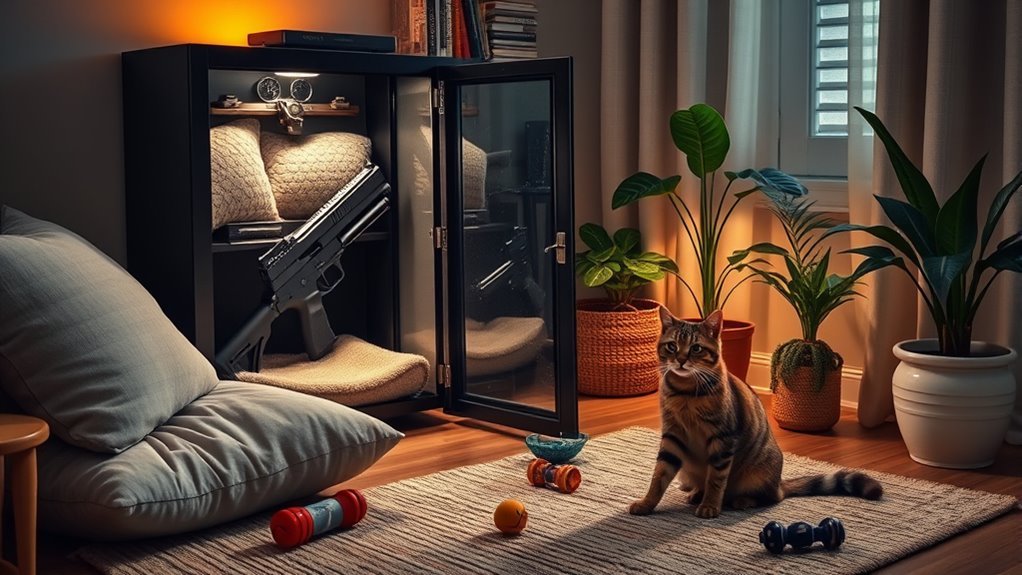
When setting up a safe space for gun safety training, choose a quiet, enclosed room at least 8×8 feet where only you and your cat enter. This training room should be free of windows and clutter to minimize distractions.
Keep all firearms unloaded, with actions open and magazines removed, locked securely outside the room. Use a visibly inert training prop, like a plastic or replica gun, for all demonstrations inside the safe space.
Provide comfortable elevated perches and soft bedding to help your cat feel relaxed. Limit sessions to 3–5 minutes and watch for stress signals like flattened ears or a lashing tail.
Make sure to maintain safety by keeping ammunition and cleaning solvents outside, and post a clear sign on the door stating “Training in progress: No firearms in room.” This way, everyone stays safe and your cat stays calm.
Use Positive Reinforcement to Teach Gun Safety Habits
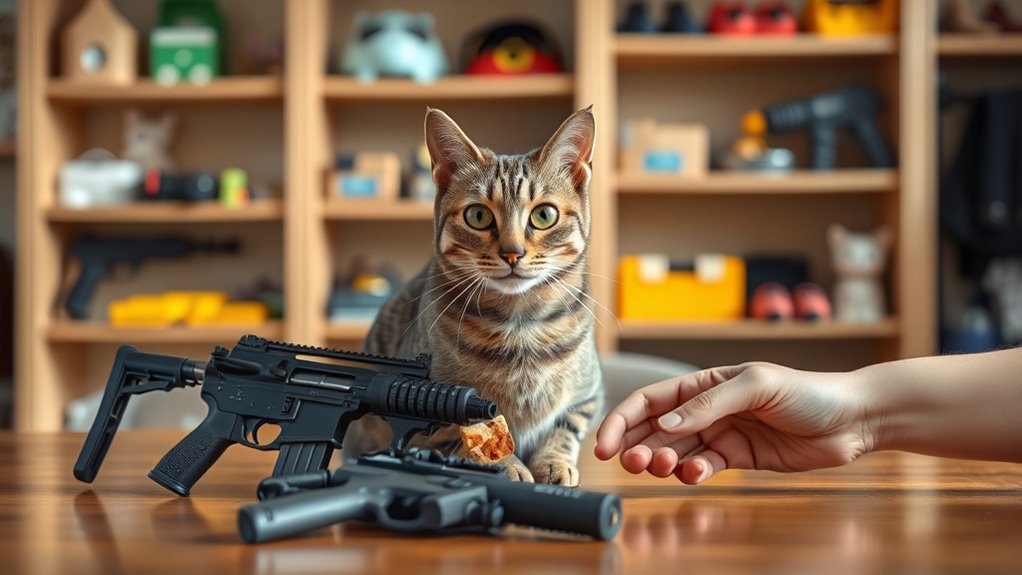
Consistently rewarding your cat’s calm behavior around unloaded, clearly disabled training firearms helps build safe habits. Use high-value treats to reward calm, stationary behavior immediately after just a second or two of stillness.
Pair these rewards with a soft verbal cue or quiet clicker during short 2–5 minute sessions. Gradually increase the time your cat remains relaxed.
To desensitize, introduce inert, nonfunctional gun replicas from a distance and slowly decrease it over sessions. Reward your cat’s relaxed posture and lack of fixation.
Teach your cat to look away or leave it on cue. But always prioritize secure storage with locked cabinets or trigger locks.
Watch for stress signals like dilated pupils or rapid tail flicks. Pause training if needed, then resume later with gentler sessions to keep positive associations going.
Teach Your Cat to Recognize Off-Limits Areas and Objects
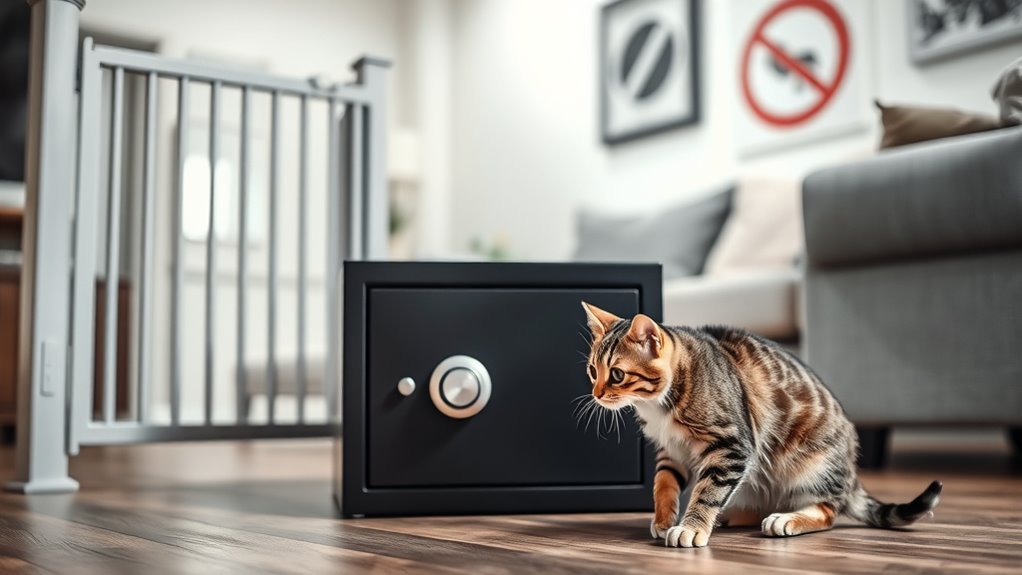
Building on calm behavior around training firearms, you’ll want to teach your cat which areas and objects are completely off-limits. Use consistent, highly visible markers like brightly colored tape or mats to designate these zones.
Pair this with physical barriers such as baby gates or closed doors. Always store all firearms unloaded, locked, and out of your cat’s reach.
Since cats rely on smell, keep off-limits objects covered and sealed. Reward your cat with playtime—like when you play with yarn—when it respects these boundaries.
| Strategy | Purpose |
|---|---|
| Visible markers | Help cat recognize off-limits |
| Physical barriers | Block access to restricted areas |
| Secure storage | Keep firearms unloaded and safe |
Set Simple Rules Your Cat Can Follow
You’ll want to set clear boundaries your cat can easily understand, like keeping them out of gun storage rooms. Be consistent with your expectations and use simple commands paired with redirection to guide their behavior.
Reward your cat immediately when they follow the rules to reinforce positive habits. This way, your kitty knows exactly what you expect and what gets them a treat. It makes training smoother for both of you!
Clear Boundaries For Cats
Although cats can’t understand dangers like humans do, you can set clear, simple rules to keep them safe around firearms. Start by establishing clear boundaries, such as a no-go zone where firearms are stored.
Use physical barriers like closed doors and deterrents—double-sided tape or scent repellents work well—to make this area off-limits. Pair these boundaries with short, consistent verbal cues like “no” or “stay” whenever your cat approaches the no-go zone.
Immediately redirect their attention with a toy or treat to reinforce the rule positively. Keeping these cues consistent helps your cat learn what’s allowed and what isn’t.
Consistent Behavior Expectations
Consistently setting simple rules helps your cat understand exactly what behaviors are expected around firearms. Establish clear commands like “no touching firearms” and “stay off the shooting table.” Repeat them with the same short verbal cue and tone to build consistent associations.
Use environmental controls—keep firearms locked, unloaded, and inaccessible—to reinforce these rules even when you’re not watching. This consistency helps your cat recognize boundaries clearly.
When your cat follows the rules, immediately use positive reinforcement like treats or toys to strengthen the desired behavior. Keep training sessions brief and frequent, around 3–5 minutes twice daily.
That way, your cat builds strong habits without getting overwhelmed. By setting simple, consistent expectations, you create a safe environment where your cat knows exactly what’s allowed. This reduces risks and confusion around firearms.
Reward Positive Compliance
Rewarding your cat immediately after they follow a simple rule strengthens the connection between their behavior and positive outcomes. To reward positive compliance effectively, use high-value treats like freeze-dried chicken or small pieces of cooked fish, delivering them within one second of success.
Keep rules simple and measurable, such as “all four paws off the counter,” and aim for 3–5 successful repetitions per 5–10 minute session. Pair a consistent verbal cue with a short, unique clicker sound before giving treats, so your cat learns to associate the cue with the desired action.
Gradually shape behavior by rewarding approximations, then phase out treats to intermittent schedules once the rule is solid. This method guarantees your cat understands and reliably follows safety guidelines. It’s all about making learning clear and fun for your furry friend!
Teach Calm Cues to Signal Gun Safety Rules
Teaching your cat calm cues helps signal important gun safety rules clearly and effectively. Use a consistent, low-volume verbal cue like “safe” paired with a calm hand signal during short training sessions.
Your cat will quickly learn to associate this cue with staying calm and still. Always reward this behavior immediately with a high-value treat or gentle praise to reinforce it positively.
Gradually increase distractions to help your cat generalize the calm response in different environments.
- Keep sessions brief (3–5 minutes) to maintain focus and avoid stress.
- Monitor your cat’s body language for signs of stress and adjust accordingly.
- Practice multiple times daily, slowly increasing difficulty to build safe, calm behavior.
This approach makes training safe, effective, and stress-free for your cat.
Supervise Your Cat to Prevent Accidents
You need to keep a close eye on your cat whenever firearms are nearby to prevent curious paws from causing accidents.
Always secure guns in locked safes or cabinets, out of your cat’s reach, and store ammunition separately.
Monitor Cat Activity
Regularly supervising your cat around firearms is essential to prevent accidents. To effectively monitor cat activity, you need to stay vigilant and take proactive steps.
Always supervise your cat in rooms where firearms are present, and keep firearms locked in a secure, childproof safe. Pay attention to your cat’s behavior—if they show stress or unusual curiosity, remove them immediately.
Here’s how to keep your cat safe:
- Supervise your cat by closing doors or using barriers to restrict access to firearm areas.
- Keep firearms locked with trigger or cable locks and store them unloaded with actions open.
- Store ammunition and related items in sealed containers on high shelves or locked drawers.
Secure Firearm Storage
Securing your firearms properly is the most effective way to keep your cat safe from accidents. Use secure firearm storage like a steel gun safe with a reliable lock to prevent your cat from accessing any weapons.
Add a trigger lock to each firearm as an extra barrier, so even if the storage isn’t fully closed, curious paws won’t cause trouble. Always supervise cleaning or maintenance by keeping firearms on a stable work surface and never leaving them unattended.
This helps prevent your cat from jumping up and interfering. Store ammunition separately in a locked container, ideally in another room.
Make it a habit to regularly check your storage setup. Also, make sure everyone in your household understands these rules.
This consistent vigilance stops your cat’s curiosity from creating dangerous situations.
Increase Gun Safety Challenges Gradually
When teaching your cat gun safety, start with low-stakes, non-trigger stimuli like toy pistols or clicker sounds. Only move forward once your cat stays calm for 10–15 consecutive exposures.
You’ll want to increase the challenge carefully, keeping an eye on stress signals such as pupil dilation or tail flicking. If your cat shows signs of distress, pause and wait for their behavior to return to baseline.
To progress safely, follow these steps: gradually change context by practicing in different rooms over several weeks. Introduce novel elements one at a time, and require two successful sessions before moving on.
Also, try shortening reward intervals and adding mild distractions like ambient noise or another person’s presence. This way, your cat can build confidence and handle new challenges bit by bit.
Reward Your Cat’s Safe Behavior
Consistently rewarding your cat’s calm and safe behavior helps reinforce positive associations with gun-related stimuli. Use high-value treats like cooked chicken, delivered within seconds of the behavior, to strengthen the reward link.
Start by rewarding calm behavior at a distance (10+ feet), then gradually decrease proximity only when your cat remains relaxed. Pair rewards with a clicker or verbal cue, initially on every success, then on a variable schedule to maintain interest.
Keep training sessions short and frequent, tracking progress to guarantee steady improvement. It’s all about making the experience positive and stress-free for your cat.
| Distance (ft) | Behavior Rewarded |
|---|---|
| 10+ | Calm, non-reactive state |
| 6-8 | Sitting or ignoring item |
| 3-4 | Relaxed near firearm |
| Variable | Alternative safe actions |
Frequently Asked Questions
What Is the Proper Way to Restrain a Cat?
You restrain a cat by using a snug harness with a leash or wrapping it gently in a thick towel, leaving its head exposed.
Always avoid scruffing unless you’re trained to do so. And if the cat is fractious, make sure to wear protective gloves.
What Are the 10 Basic Gun Safety Rules?
Imagine juggling knives—you’d always focus, right? You must treat every gun as loaded, never point it carelessly, and keep your finger off the trigger.
Also, know your target and what’s beyond it. Always store firearms securely to prevent accidents or unauthorized use.
How Do I Say “Hi” in a Cat?
To say “hi” to a cat, slow-blink at them, offer your hand at their level, speak softly, and let them rub against you.
Avoid staring or sudden movements to keep the greeting friendly and relaxed.
Cats appreciate calm vibes, so just take it easy and let them come to you. It’s all about making them feel safe and comfy.
What Is a Silent Killer for Cats?
A silent killer for cats is lilies; you might think they’re harmless, but even a tiny nibble can cause fatal kidney failure.
You don’t expect beauty to be deadly, but with cats, it often is. It’s pretty surprising, right? Just a little taste can be so dangerous.
Conclusion
By creating a calm, safe space and guiding your cat with gentle cues, you’re building a peaceful routine where everyone feels secure. Imagine your feline friend calmly avoiding off-limits areas, eyes bright with understanding as you reward their safe choices.
With patience and positive reinforcement, you’ll see your cat confidently navigate gun safety, turning what once seemed impossible into a harmonious dance of trust and care. Your bond will grow stronger, and safety will become second nature.
Teaching your cat gun safety may sound unusual, but it’s all about creating boundaries and promoting a safe environment. With consistent training and gentle encouragement, your cat will learn to stay clear of dangerous areas, making your home safer for everyone. Remember, the key is patience and positive reinforcement—these help your cat understand and respect the rules you set. In time, gun safety won’t just be a rule—it’ll be part of your cat’s everyday routine, ensuring both their safety and your peace of mind.


4 Comments