What Does the Switch Do on a Gun?
The switch on a gun controls how it fires, affecting whether the firearm is set to safe, semi-automatic, or fully automatic modes. This small but important part changes the trigger mechanism, influencing how the gun operates with each pull of the trigger.
Understanding what the switch does is key to grasping firearm safety and the regulations around gun use.
Sometimes, the switch allows continuous fire by bypassing the usual trigger resets. For example, a Glock switch can convert a semi-automatic pistol into a fully automatic weapon.
This means the gun can fire rapidly until the magazine empties.
Because these switches impact both safety and legality, knowing how they function is crucial. It helps you understand why certain firearms are regulated differently and why enforcement is so strict.
Key Takeaways
- A gun switch controls the firearm’s firing mode, such as safe, semi-automatic, or fully automatic fire. It basically decides how the gun shoots.
- It can convert a semi-automatic gun into a fully automatic weapon by changing the trigger mechanism. So, instead of one shot per trigger pull, you get continuous fire.
- Some switches, like Glock switches, replace parts to enable continuous firing until the magazine is empty. This means the gun keeps firing without stopping until it runs out of bullets.
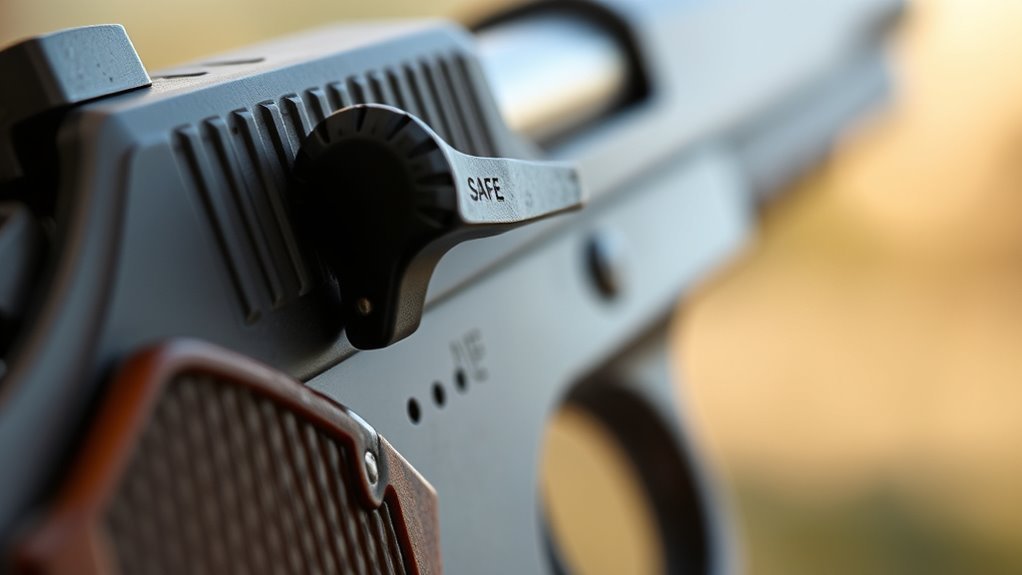
- Safety switches prevent the firearm from firing, while selector switches allow changing between firing modes. They help control how and when the gun shoots.
- Gun switches have a big impact on how a firearm operates. Because they change firing capabilities, they’re often illegal.
What Is a Gun Switch? Understanding Its Purpose and Types

What exactly is a gun switch, and why does it matter? A gun switch is a small device or lever that controls a firearm’s firing state or mode. It can change a gun from safe to fire or enable automatic fire, which means the gun fires continuously with one trigger pull.
You’ll find different types of gun switches, including safety switches, selector switches, and specialized conversion devices like auto sears. Some firearms come with built-in switches allowing you to toggle between semi-automatic and fully automatic modes, but the ATF strictly regulates these.
However, illegal gun switches—such as Glock switches—are designed to convert semi-automatic guns into fully automatic weapons, often using small, easily concealed devices. Understanding gun switches helps you grasp how firearms operate and the legal issues involved.
How Gun Switches Change a Firearm’s Firing Mode

When you attach a gun switch, it can change your firearm from semi-automatic to fully automatic by altering the trigger mechanism. This modification stops the trigger from resetting, letting the gun fire continuously as long as you hold the trigger.
It’s pretty interesting how just a small change can have such a big impact. Understanding this helps you see exactly how these switches affect the weapon’s firing mode.
Semi-Auto To Full-Auto
Although semi-automatic firearms are designed to fire one round per trigger pull, a gun switch can override this limitation and let you fire continuously as long as you hold the trigger.
A Glock switch, for example, converts a semi-auto into a fully automatic weapon by interfering with the trigger bar, bypassing its single-shot restriction. This lets you unleash rapid fire without repeatedly pulling the trigger.
However, using such a switch is illegal because it transforms a legal firearm into a prohibited machine gun. Here’s what this change feels like:
| Emotion | Action | Consequence |
|---|---|---|
| Excitement | Continuous fire | Increased risk |
| Power | Full-auto mode | Legal trouble |
| Control | Trigger override | Safety concerns |
You should understand these risks before considering such a modification.
Trigger Mechanism Modification
Because gun switches alter how the trigger mechanism functions, they let your firearm fire continuously instead of one shot per pull. This trigger modification often involves installing an auto sear, a vital firearm part that holds the firing pin or trigger in place, preventing the trigger bar from resetting.
In semi-automatic guns, this bypasses the normal limiting function, enabling rapid, repeated firing without releasing the trigger. Essentially, the auto sear changes the firing cycle by interfering with internal safety mechanisms.
How the Glock Switch Converts a Semi-Automatic to Full Auto

How does the Glock switch transform a standard semi-automatic pistol into a fully automatic weapon? The Glock switch acts as an auto sear, a small conversion device roughly the size of a U.S. quarter, installed at the rear of the slide. It replaces the slide cover plate and adds a selective fire switch that enables automatic firing.
By applying force to the trigger bar, the Glock switch disables the semi-automatic’s single-round limitation. When activated, it prevents the trigger bar from catching the firing pin after each shot, allowing the pistol to fire continuously until the magazine is empty.
This modification quickly converts a semi-automatic Glock into a fully automatic weapon, drastically changing how the gun operates with each trigger pull. It’s a simple yet significant change that makes a big difference in how the gun fires.
Why Gun Switches Like the Glock Switch Are Illegal
You need to know that gun switches like the Glock switch are classified as machine guns under federal law, making them illegal without special approval. Using or possessing one can land you heavy fines and up to 10 years in prison.
Law enforcement is cracking down hard to stop their spread and keep everyone safer. So, it’s really not worth the risk to mess with them. Stay informed and stay safe!
Federal Legal Classification
Why are gun switches like the Glock switch illegal under federal law? The ATF classifies these devices as machine gun conversion devices because they modify semi-automatic firearms to fire fully automatically.
Federal law defines any weapon that fires more than one round per trigger pull as a machine gun, making these switches illegal without proper authorization.
The Firearms Owners’ Protection Act of 1986 prohibits civilians from owning machine guns manufactured after May 19, 1986, which includes conversion devices like gun switches.
Possessing or manufacturing such devices without ATF approval violates federal law and is strictly prohibited.
So, if you’re thinking about using or acquiring a Glock switch, understand that federal regulations clearly classify it as an illegal machine gun conversion device.
That puts you at serious legal risk.
Penalties And Enforcement
What happens if you possess a Glock switch or similar device? Since these switches convert a semi-automatic firearm into a fully automatic machine gun, they’re illegal under federal law. The penalties are severe: you could face up to 10 years in prison and fines reaching $250,000.
The ATF actively enforces these laws and has been recovering thousands of these devices. In fact, there was a 784% increase in auto sear recoveries from 2019 to 2023.
- Possession of these switches is strictly illegal.
- The ATF leads enforcement efforts nationwide.
- Severe penalties include long prison terms and hefty fines.
- These devices are small, concealed, and often sold online.
- Manufacturing or distributing them results in criminal charges.
You should avoid these illegal firearm modifications to steer clear of serious legal trouble. It’s just not worth the risk.
Gun Switches and Their Impact on Firearm Safety
Although gun switches serve various functions, they substantially impact firearm safety by altering how a weapon operates. You’ll find gun switches that toggle between safe, semi-automatic, and full-automatic firing modes.
While safety switches prevent the gun from firing, selector switches change how it shoots without compromising safety. However, illegal modifications like Glock switches convert semi-automatic pistols into full-automatic weapons, enabling continuous firing.
Safety switches block firing, selector switches adjust firing modes, but illegal Glock switches enable full-automatic continuous shooting.
These illegal gun switches, often small and easy to conceal, increase the risk of unintentional or rapid-fire shootings, posing serious safety threats. Understanding gun switches helps you recognize potential illegal modifications and maintain responsible firearm safety.
Being aware of how these switches work is essential for preventing accidents and ensuring the weapon is used as intended.
Laws Regulating Gun Switch Ownership and Use
Understanding how gun switches work naturally leads to recognizing the strict laws surrounding their ownership and use. Federal law classifies devices like Glock switches and auto sears as illegal machine guns, making their possession unlawful.
You can face severe penalties, including up to 10 years in prison, if caught owning or manufacturing these without proper authorization. Since 1986, civilians can’t legally own machine guns made after that date, covering most gun switches.
Here’s what you need to know about laws regulating gun switches:
- Possession of illegal machine guns, including switches, violates federal law
- Glock switches are classified as machine guns by the ATF
- Auto sears fall under the same legal restrictions
- Manufacturing or selling such devices is prohibited
- Law enforcement actively prosecutes illegal possession cases
How Law Enforcement Detects and Handles Illegal Gun Switches
When law enforcement officials investigate firearms, they carefully inspect for modifications like gun switches, especially on Glock slides, to detect illegal devices. You’ll find that officers use ballistics testing and microscopic examination to differentiate between legal parts and illegal auto sear modifications.
They analyze the firearm’s internal mechanisms, comparing them to factory standards to spot unauthorized changes. Recovered switches are often small and discreet, requiring forensic analysis and serial number checks to confirm their status.
Agencies work closely with the ATF, leveraging intelligence from online marketplaces and informant tips to track and confiscate illegal switches. By thoroughly examining firearms and their components, law enforcement effectively identifies and handles modifications that convert standard guns into illegal automatic weapons.
Preventing Illegal Gun Switch Modifications: Industry and Legal Responses
Because illegal gun switches pose serious risks, both the firearms industry and lawmakers have stepped up to block their use. You’ll see efforts like Glock’s redesigns in their V series, which prevent installing illegal Glock switches and auto sears.
Firearm regulations have tightened to restrict access to 3D-printed parts that enable illegal modifications. The ATF enforcement has intensified, confiscating thousands of banned devices. Law enforcement teams also cooperate with manufacturers to stop distribution.
Key measures include:
- Redesigning firearms to reject illegal switches and auto sears
- Strengthening firearm regulations targeting illegal modifications
- ATF enforcement actions against possession and distribution
- Limiting availability of 3D-printed and modifiable components
- Industry-law enforcement partnerships to prevent illegal conversions
Frequently Asked Questions
How Does a Switch on a Gun Work?
A switch on a gun works by physically moving a lever or button, changing the internal firing mechanism. You’ll either enable safe mode, allow single shots, or—if illegal—activate continuous automatic fire.
It’s kind of like flipping a light switch, but for how the gun shoots. When you move the switch, you’re basically telling the gun what you want it to do next. Simple, right?
Is a Switch for a Gun Illegal?
You wouldn’t want a horse-drawn carriage on the highway—right?
Similarly, a gun switch is illegal because it turns a semi-auto into a fully automatic weapon.
Possessing one can land you in serious legal trouble with the ATF.
Is a Switch Only for a Glock?
No, a switch isn’t only for a Glock, but the term mostly refers to Glock conversions.
Other guns use different auto-sear devices or selectors, but those usually aren’t called “switches” like with Glock pistols.
How Many Bullets Does a Switch Shoot per Second?
A switch on a gun shoots about 3 to 4 bullets per second during sustained automatic fire. But with a Glock switch, it can reach around 20 rounds per second.
That’s a huge jump in firing speed when you hold the trigger. It really changes how fast the gun shoots.
Conclusion
Now that you know what a gun switch does—turning semi-automatic firearms into full-auto weapons—ask yourself: is it worth the risk? These devices aren’t just illegal; they seriously compromise safety for everyone.
Law enforcement is cracking down hard, and penalties are severe. Staying informed and following the law helps protect you and your community.
So, why gamble with your future over a dangerous and unlawful modification? Choosing safety means avoiding illegal gun switches and the serious consequences that come with them. Remember, using a gun switch can lead to harsh legal trouble and endanger lives. Always prioritize safety and obey the law to keep yourself and others safe.