10 Easy Steps to Clean Rust Off a Gun
First, make sure your gun is completely unloaded and safe to handle. This is the most important step before you start cleaning rust off a gun.
Gather your supplies like 0000 steel wool, gun oil, and a soft cloth to make the process easier and more effective.
Remove dirt gently before applying oil to loosen rust. You want to be careful here so you don’t damage the metal.
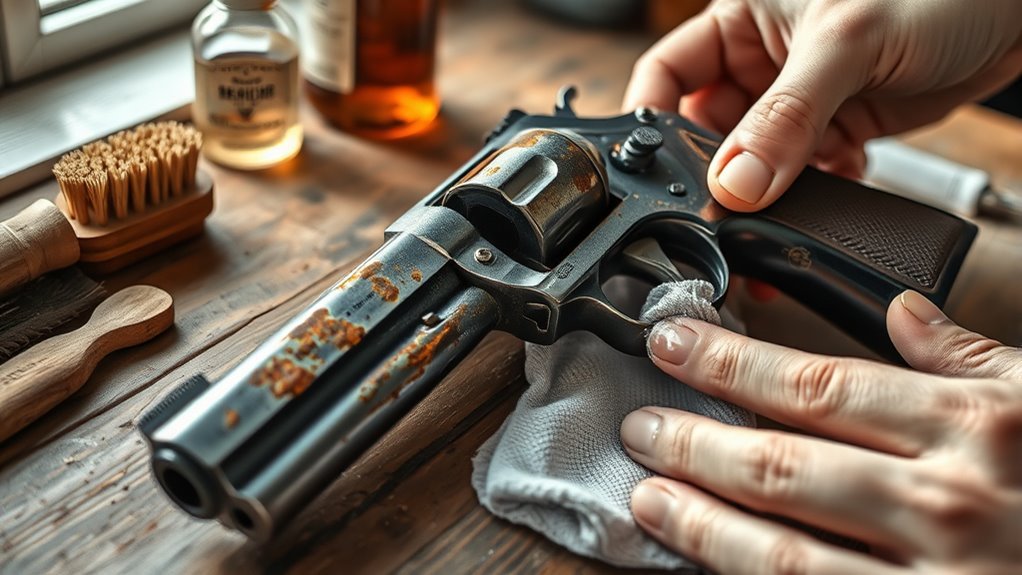
Then, rub rust spots lightly with steel wool, wipe away residue, and apply more oil as needed.
Next, touch up the finish with cold blue and polish to restore that shiny look.
Finally, store your firearm in a dry place to prevent rust from coming back.
Follow these easy steps closely, and you’ll discover even more effective tips to keep your gun in great condition.
Key Takeaways
- Confirm the firearm is unloaded and remove all ammunition before starting rust removal.
- Apply gun oil generously on rust spots and let it sit to loosen rust before scrubbing.
- Use fine 0000 steel wool or copper pads with light pressure to gently remove rust.
- Wipe off rust residues and debris thoroughly, then dry the surface before reapplying oil.
- Finish by applying a thin, even coat of gun oil to protect metal and prevent future rust.
Make Sure Your Gun Is Unloaded and Safe
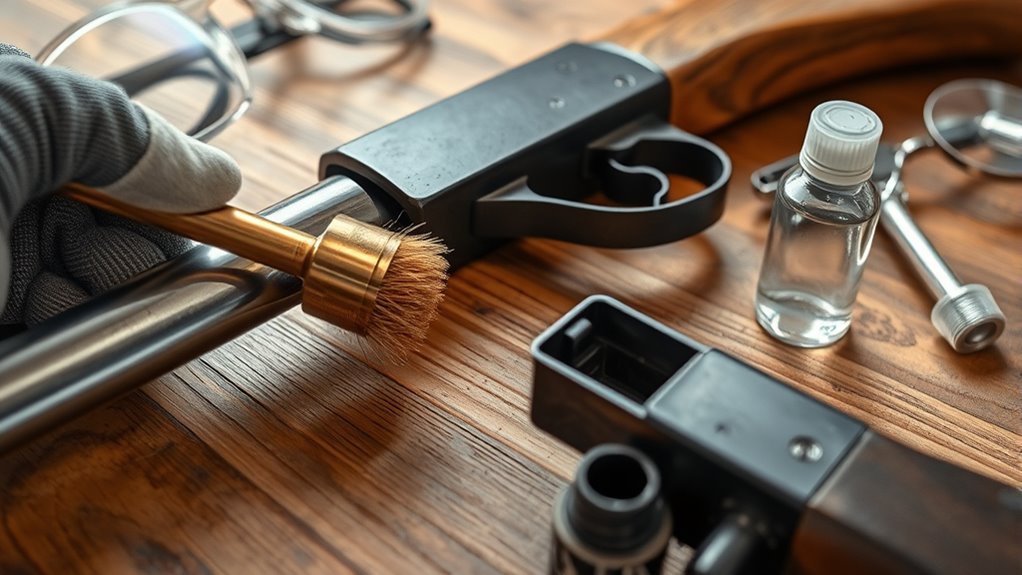
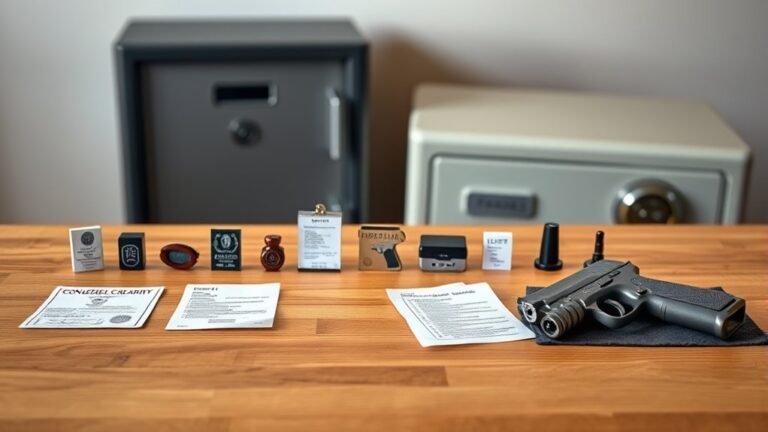
How can you confirm your gun is safe to clean? First, always verify the firearm is completely unloaded. Check the chamber, magazine, and any other accessible areas carefully.
Always confirm your firearm is completely unloaded by thoroughly checking the chamber, magazine, and all accessible areas.
Don’t just assume—it’s crucial to be certain. Remove all ammunition from your cleaning area to avoid any accidental loading or discharge.
Next, make sure the gun isn’t cocked or set to a firing mode before you start handling it. This step keeps you safe throughout the process.
Also, wash and dry your hands thoroughly to prevent moisture or dirt from causing more rust.
Once you finish cleaning, store your gun in a safe, dry place to maintain safety and prevent rust from returning. Taking these precautions ensures your cleaning session is both safe and effective.
Get the Rust Removal Supplies You Need
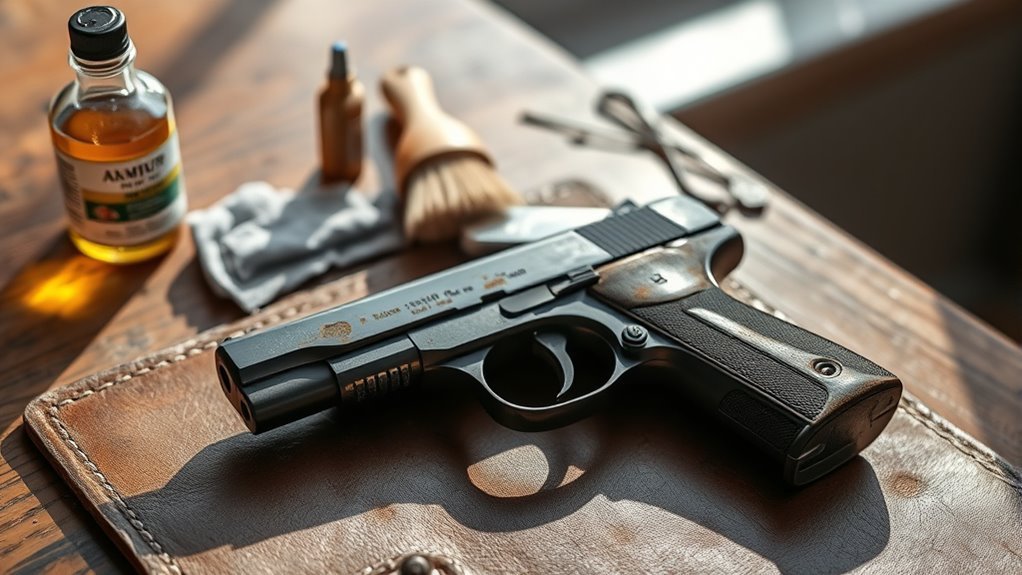
Before you start cleaning, gather all the necessary rust removal supplies to make the process smooth and effective. You’ll need 0000 steel wool, gun oil, distilled water, and a soft cloth to handle rust removal gently but thoroughly.
Pick up rust erasers or specialty gun cleaning pads designed specifically for firearm surfaces to avoid damage. It’s a good idea to prepare a container with distilled vinegar or a rust remover solution to soak small parts and loosen rust buildup.
Don’t forget protective gloves and eye protection to handle chemicals safely. Also, stock up on cleaning brushes, cotton swabs, and polishing cloths for detailed cleaning and finishing touches.
Having all these supplies ready guarantees you can tackle rust removal efficiently and protect your gun during the process. It just makes everything easier and safer!
Remove Loose Dirt and Debris Before Rust Removal
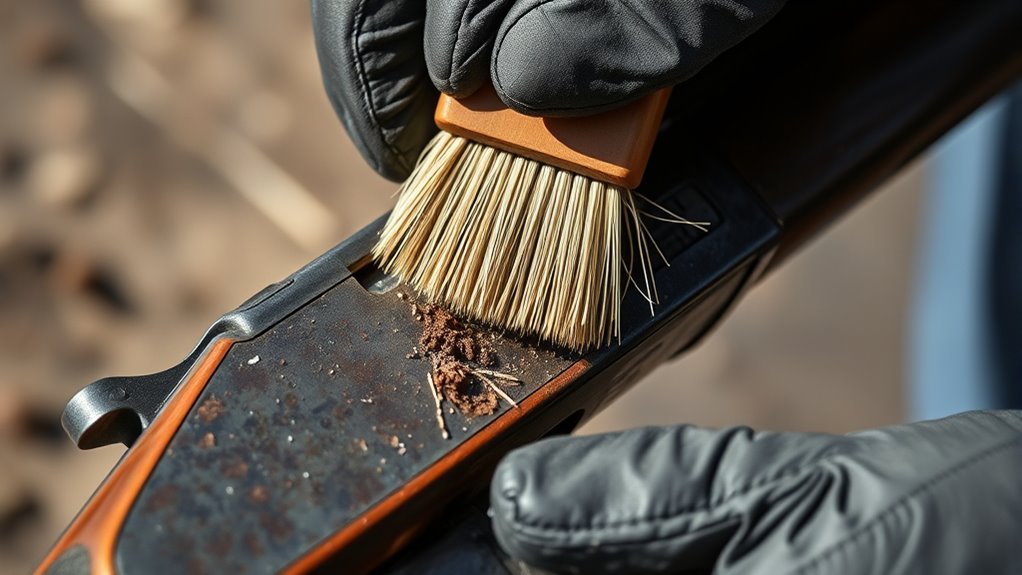
With your rust removal supplies ready, the next step is to clear away any loose dirt and debris from your gun. Start by wiping the firearm thoroughly with a clean, dry cloth to remove surface dirt that could scratch the metal during cleaning.
Use a soft brush or compressed air to gently dislodge dust and particles from hard-to-reach crevices and mechanisms. Check joints and moving parts carefully, removing any accumulated debris with the right tools.
Avoid applying rust removal solutions directly onto dirt, as this can trap grime and cause abrasion. Properly removing loose dirt guarantees your rust removal methods focus solely on rust, protecting the gun’s finish and preventing further damage during the cleaning process.
Apply Oil to Help Loosen Rust
You’ll want to apply a generous coat of oil, like gun oil or synthetic motor oil, to the rusted areas to help loosen the rust. Let it sit for several minutes so it can penetrate and soften the rust, making removal easier.
Remember to reapply oil as needed to keep the metal lubricated and protect it from further damage during cleaning. This way, you’ll have an easier time getting that rust off without causing more harm.
Benefits Of Oil
Applying oil to rusted areas offers several key benefits that make the cleaning process much easier and safer for your firearm. When you use gun oil, it creates a lubricating film that loosens rust particles from the metal surface, allowing you to remove them more effectively.
The oil penetrates deep into rust crevices, reducing friction and making scrubbing with steel wool or brushes less abrasive. It also acts as a protective barrier, preventing further oxidation and damage to your gun’s finish.
Plus, the oil suspends rust debris, lifting it away from the surface during cleaning. Regularly applying oil not only improves rust removal but also helps preserve the underlying bluing or finish, ensuring your firearm stays in top condition.
Application Techniques
Before you start scrubbing, make sure to coat the rusted areas generously with gun oil or synthetic motor oil. This helps lubricate the surface and loosens rust particles, making them easier to remove.
Let the oil sit for several minutes so it can penetrate and soften the corrosion. As you work, reapply gun oil frequently to keep things slick and protect the metal from scratching when you rub with steel wool or a brush.
Using the right amount of gun oil is key. Too little won’t loosen the rust effectively, while too much can create a mess and make cleaning harder.
Applying gun oil properly ensures a smoother, safer rust removal process. Plus, it helps prevent more rust from forming on your firearm.
Gently Rub Rust Spots Using 0000 Steel Wool
You’ll want to use very fine 0000 steel wool to avoid damaging your gun’s finish while removing rust. Apply a bit of gun oil to the wool before gently rubbing the rust spots in a light, controlled motion.
Keep wiping the area clean as you go, and stop once the rust is gone. It’s pretty straightforward, just take your time and be gentle.
Choosing The Right Steel Wool
Selecting the right steel wool is essential for safely removing rust from your gun without damaging its finish. You want to choose fine 0000 (four-zero) steel wool because it’s soft enough to minimize scratches on the blued surface.
When picking your steel wool, keep these tips in mind: Always use clean, debris-free steel wool; replace it if clogged or worn. Apply oil or lubricant to the steel wool before rubbing to reduce abrasion.
Choose 0000 steel wool specifically for its gentle yet effective texture. And be sure to avoid coarser grades, as they can damage the gun’s protective finish.
Proper Rust Removal Technique
When you gently rub rust spots with 0000 steel wool, applying light pressure is key to protecting your gun’s finish. To remove surface rust, soak the steel wool in gun oil first—this suspends rust particles and prevents damage to the black oxide or cold blue finish.
Focus on minor rust areas, moving the steel wool back and forth consistently. Whether you’re cleaning a Lever Action or an old gun like the Big 45 Frontier, avoid pressing hard to preserve the serial number and original bluing.
For controlled rust removal, reapply oil often and let it sit if needed. After rust was removed, wipe off residues and coat with oil to guard against future rust.
Remove Stubborn Rust Using Copper Scrubbing Pads
Although stubborn rust can be tough to remove, copper scrubbing pads like Chore Boy offer an effective solution that won’t damage your gun’s bluing or finish. Before scrubbing, soak the rusted area in light oil to loosen rust particles.
Copper scrubbing pads and light oil effectively remove rust without harming your gun’s finish.
Then, use gentle, circular motions with the copper pad to lift rust gradually without scratching. Copper pads are softer than steel wool, so they reduce the risk of harming the metal surface.
Keep in mind:
- Use light oil to suspend rust for easier removal
- Scrub gently in circular motions with the copper pad
- Copper residue left behind can be wiped or polished off
- Avoid harsh pressure to protect the gun’s finish
This method guarantees stubborn rust comes off while preserving your gun’s integrity.
Wipe Away Residue and Reapply Oil
After scrubbing away rust, wipe your gun with a clean, soft cloth to remove any leftover particles or oil. Make sure it’s completely dry before you apply a fresh, light coat of gun oil to keep moisture at bay.
This protective layer helps prevent new rust from forming and keeps your firearm in top shape. Just a little oil goes a long way!
Removing Residual Particles
Once you’ve removed the rust, grab a clean, soft cloth or microfiber towel to wipe away any leftover particles and debris from your gun’s surface. This step is vital to guarantee no residual rust or dirt remains that could damage the finish.
When wiping, follow these tips: use gentle, consistent motions to avoid scratching the metal. Make sure to check thoroughly for any dust or loosened rust that might still cling.
After cleaning, apply a light coat of gun oil or lubricant to the affected areas. Then, buff the surface lightly with a dry cloth to spread the oil evenly and remove any excess.
Taking these steps helps keep your firearm clean and ready. Plus, it prevents rust from returning and maintains its condition.
Maintaining Protective Oil Layer
To keep your gun protected from rust, you’ll want to thoroughly wipe away any leftover residue with a clean, lint-free cloth before applying a fresh layer of protective oil. Use a soft cloth or cotton swab to spread a thin, even coat of gun oil or CLP over all metal surfaces.
Make sure to remove any excess oil to avoid pooling, which can attract dirt or moisture. Reapply oil regularly, especially after cleaning or exposure to moisture, to maintain a strong protective barrier.
Consistent inspection and oiling ensure your firearm stays rust-free and functional.
| Step | Action |
|---|---|
| 1 | Wipe away residue with lint-free cloth |
| 2 | Apply thin oil layer evenly |
| 3 | Remove excess oil |
| 4 | Reapply oil periodically |
| 5 | Inspect and maintain oil layer |
Touch Up Gun Finish With Cold Blue
When you notice small spots where rust has dulled your gun’s finish, cold blue offers a simple way to restore the appearance by creating a thin, protective oxide layer. To touch up your gun with cold blue, follow these steps:
First, clean and lightly abrade the affected area to guarantee the cold blue adheres properly. Then, apply the cold blue solution with a swab or brush, focusing on small spots.
Allow each coat to develop, wiping gently, and apply multiple layers for a darker, more even finish. You’ll want to be patient here to get the best results.
Finally, rinse the area with water or a neutralizer, then lightly oil to protect the new finish. This method is perfect for small repairs but may not match factory bluing on larger areas.
Polish Gun Metal With a Soft Cloth to Restore Shine
Although removing rust is essential, polishing your gun metal with a soft cloth really helps bring back its original shine. Plus, it adds a protective layer to the surface.
Use a clean, soft cotton or microfiber cloth to gently polish the metal. Just make sure to avoid any abrasive materials that might scratch the finish.
Use a soft cotton or microfiber cloth to gently polish without scratching the metal finish.
Apply a small amount of gun oil or metal polish to the cloth before you start buffing. Move in circular motions—that technique smooths the metal and makes it more reflective.
Remember to regularly fold or change the cloth to avoid putting dirt or rust particles back onto the metal. Once you’re done polishing, wipe the gun with a dry cloth to get rid of any leftover oil or polish.
Doing this guarantees your firearm has a clean, shiny finish. It not only restores its appearance but also helps protect it from future damage.
Store Your Gun Properly to Prevent Future Rust
Polishing your gun not only restores its shine but also helps protect it from rust. To keep your firearm rust-free, storing it properly is essential. You want to create an environment that discourages moisture buildup and corrosion.
Here are some key tips:
- Store your gun in a dry, climate-controlled space with humidity below 50%.
- Use a gun safe with a built-in dehumidifier or add silica gel packs to absorb moisture.
- Avoid leather cases or foam-lined containers that trap moisture and encourage rust.
- Always dry and apply a light coat of oil to metal parts before long-term storage.
Taking these simple steps really makes a difference in keeping your gun in top shape. It’s all about keeping moisture away and giving your firearm the care it deserves.
Frequently Asked Questions
How Do I Get Rust off My Gun at Home?
You’ll want to soak small parts in vinegar, then scrub gently with steel wool or a soft brush. Rinse thoroughly, dry completely, and apply gun oil to prevent rust from coming back.
Make sure to disassemble the gun first for better access. It just makes the whole process easier and more effective.
How to Get the Rust off of a Gun?
You’ll want to gently scrub rust with fine steel wool and gun oil. Apply rust remover for stubborn spots.
If needed, soak parts in vinegar, then dry thoroughly.
Finish by oiling to protect your gun from future rust. This way, you’ll keep your gun in great shape!
Can You Use WD-40 to Remove Rust on a Gun Barrel?
You can use WD-40 to loosen light rust on a gun barrel, but it won’t remove heavy corrosion.
For best results, combine it with fine steel wool or dedicated rust removers. Always clean thoroughly afterward to keep your barrel in great shape.
What Is the Easiest Way to Remove Rust Quickly?
Like peeling off old wallpaper, the easiest way to remove rust quickly is soaking the metal in distilled white vinegar for 15-30 minutes.
Then, scrub gently and apply oil to protect the surface from future rust. It’s a simple trick that really works!
Conclusion
Just like a gardener tending to a prized rose, you’ve carefully nurtured your gun back to health by removing rust and restoring its shine. It takes patience and care, but the results are worth it.
Remember, 85% of rust issues come from improper storage. So keeping your gun dry and oiled is like watering that rose regularly.
By following these easy steps, you’re not just cleaning a firearm—you’re preserving a legacy. Proper maintenance ensures your gun stays reliable and beautiful for years to come.
Cleaning rust off a gun isn’t just about appearance; it’s about safety and longevity. With the right care, your firearm will perform when you need it most. So keep it clean, keep it protected, and enjoy the peace of mind that comes with a well-maintained gun.