How to Clean a Gun in 3 Simple Steps
To clean your gun in three simple steps, start by setting up a clean, well-lit workspace. Make sure your firearm is completely unloaded before you safely disassemble it. This is an essential part of gun cleaning to ensure safety and proper maintenance.
Next, grab some solvent and brushes to clean the barrel, chamber, and action thoroughly. You want to remove all residue and buildup so your gun stays in good working condition.
Finally, lubricate the key parts to keep everything running smoothly. Carefully reassemble your gun and store it securely in a dry place. Keep following these steps regularly to maintain your firearm’s performance and safety.
Key Takeaways
- Ensure the firearm is unloaded and remove the magazine before starting the cleaning process. Safety first, always double-check this step.
- Use a bore brush with solvent to clean the barrel, followed by patches until debris is removed. It might take a few passes, but keep going until it’s clean.
- Clean the chamber and action with appropriate brushes and wipe down internal parts with a dry cloth. This helps keep everything running smoothly.
- Apply a small amount of lubricant to key contact points like slide rails and barrel lugs. Don’t overdo it—just enough to keep things moving.
- Reassemble the firearm carefully, perform a function check, and wipe the exterior to remove fingerprints and excess oil. And that’s it, you’re good to go!
Step 1: Prepare Your Workspace and Safely Disassemble Your Gun
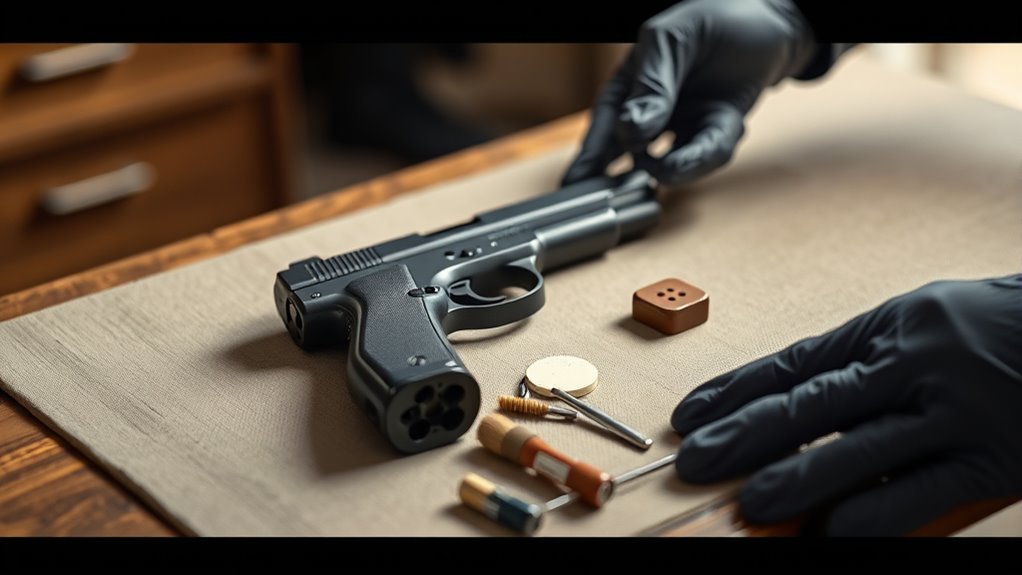
Before you start cleaning your gun, make sure you choose a clean, well-lit area with good ventilation—ideally outdoors or in a garage. First, verify your firearm is unloaded by removing the magazine and performing multiple chamber checks.
Choose a clean, well-lit space and always confirm your firearm is unloaded before cleaning.
Wearing safety gloves protects you from chemicals during disassembly. Gather all necessary tools like screwdrivers and cleaning supplies before you begin.
Follow the manufacturer’s manual carefully to disassemble your gun, paying close attention to small parts such as springs and pins. Keeping these parts organized prevents loss and ensures smooth reassembly.
Working in a well-lit area helps you see everything clearly, reducing mistakes. Taking these steps ensures your safety and makes the cleaning process efficient and effective.
Step 2: Thoroughly Clean Your Gun’s Barrel, Chamber, and Action
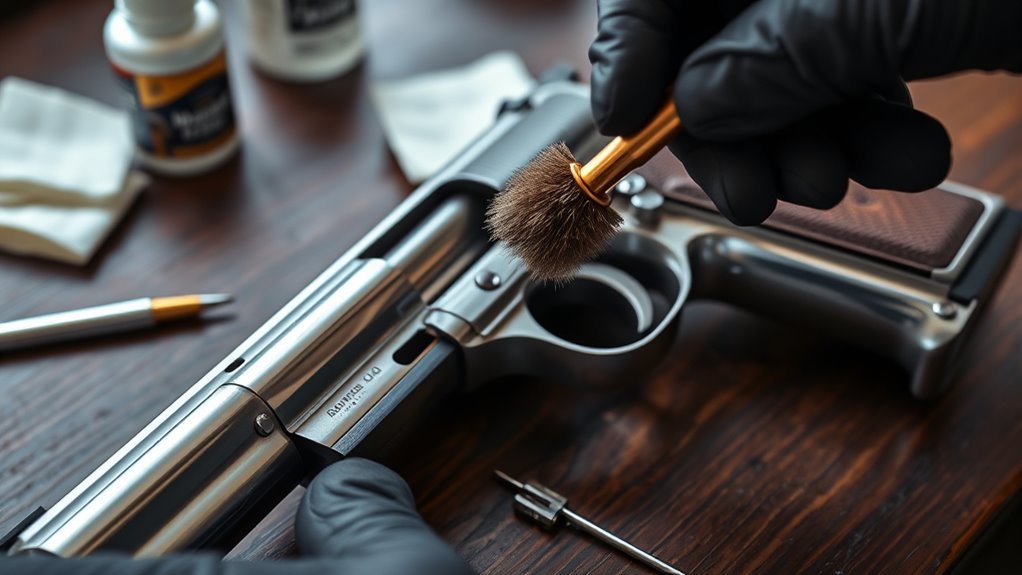
Once your gun is safely disassembled and your workspace is ready, focus on cleaning the barrel, chamber, and action thoroughly. Apply solvent to a bore brush and run it through the barrel from chamber to muzzle in one smooth direction to loosen fouling.
Let the solvent sit for 10-15 minutes to dissolve carbon deposits inside. Next, use a cleaning patch on a rod, running it through the barrel repeatedly until it comes out clean and free of debris.
Clean the chamber with a chamber brush and patches to remove buildup around the feed ramp and chamber walls. Finally, wipe down the action, bolt face, and other internal parts with a dry cloth or cotton swab to remove any remaining dirt and solvent.
This way, you’ll ensure a thorough cleaning inside your firearm.
Step 3: Lubricate, Reassemble, and Properly Store Your Firearm
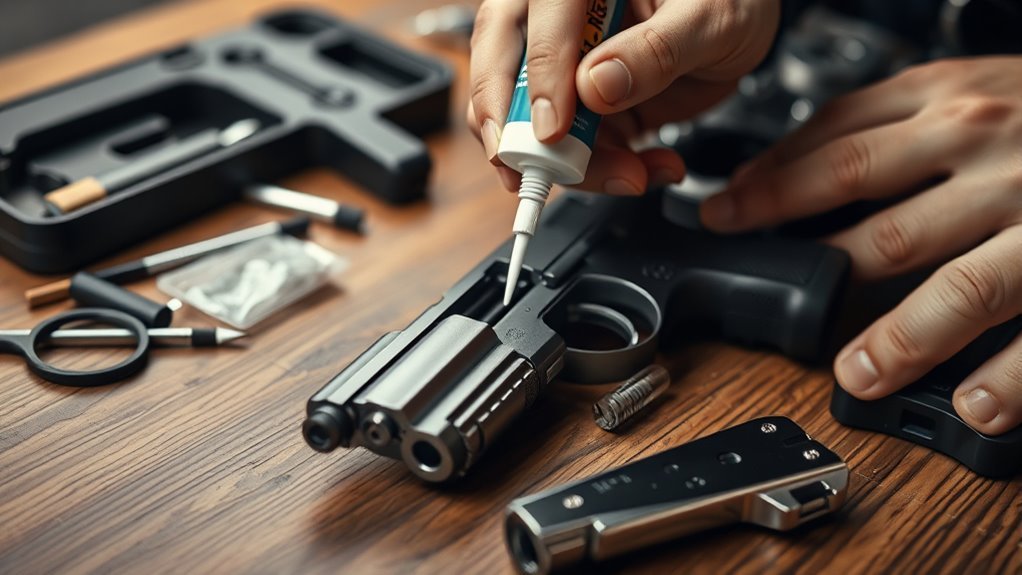
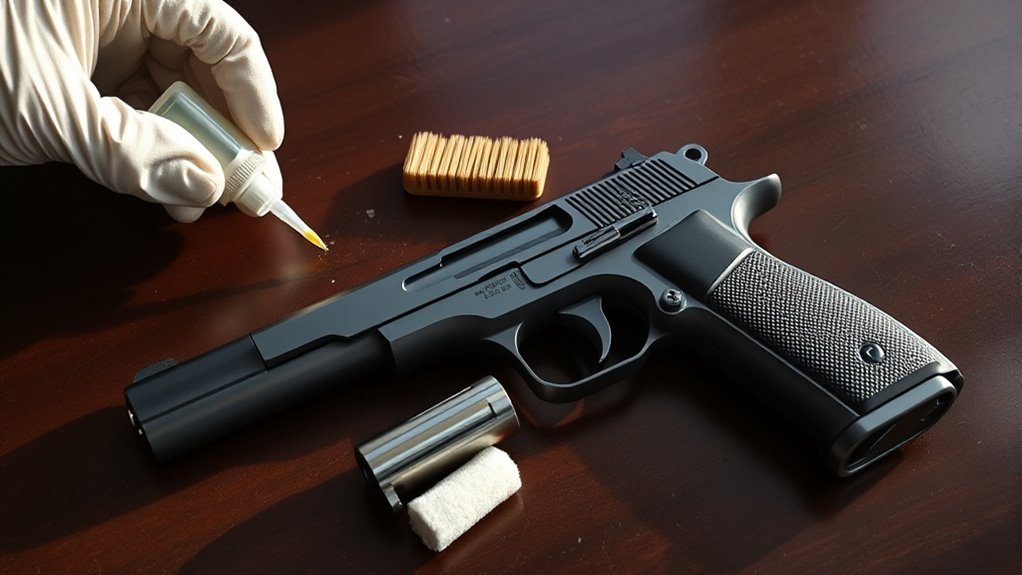
Although cleaning removes dirt and fouling, you’ll need to lubricate key contact points like slide rails, recoil spring, and barrel lugs to guarantee smooth operation and prevent wear. Use a precision oiler or cotton swab to apply a small amount of gun oil exactly where needed.
Next, carefully reassemble your firearm, making sure each part aligns and fits securely according to the manufacturer’s instructions. After assembly, perform a function check by cycling the action, dry firing, and testing safety mechanisms to confirm everything works properly.
Finally, wipe down the exterior with a microfiber cloth to remove excess oil or fingerprints. Store your firearm in a dry, secure case or safe, ideally with moisture-absorbing products to protect against rust and environmental damage. Proper lubrication and storage ensure your firearm stays reliable and safe.
Frequently Asked Questions
What Are the Basic Steps for Gun Cleaning?
First, make certain your gun’s unloaded. Then disassemble it, clean the barrel and parts with solvent and brushes.
Wipe everything down, lubricate moving parts, and reassemble carefully.
Finally, perform a function check to guarantee everything works smoothly. Easy, right? Just take your time and be thorough.
What Is the Best Way to Clean a Gun?
You might think cleaning a gun is quick, but the best way is careful: disassemble, clean each part with solvent and brushes, then lubricate precisely.
This method keeps your firearm reliable and safe every time you use it. It’s worth taking the time to do it right.
How Do I Clean My Firearm?
You clean your firearm by first ensuring it’s unloaded, then disassembling it carefully. Use solvent and a bore brush on the barrel.
Wipe all parts clean, apply lubricant, reassemble, and perform a function check before storing. It’s important to take your time and be thorough.
How to Properly Clean a New Gun?
You’ll want to start carefully, disassembling your new gun exactly as the manual says. Then, strip away oils with quality solvents.
Clean the barrel until spotless, and finally, reassemble and lightly lubricate for flawless function.
Taking it step by step like this makes the whole process way easier and helps keep your gun in great shape.
Conclusion
Now that you’ve cleaned and lubricated your gun, isn’t it satisfying to know it’s ready and reliable? Keeping your firearm in top shape not only guarantees safety but also extends its lifespan.
By following these simple steps every time, you’re taking responsibility for your gear and your safety. So, why skip this essential routine?
Make cleaning your gun a habit, and you’ll always be prepared when it counts. Regular gun cleaning ensures your firearm functions smoothly, prevents malfunctions, and maintains accuracy. Plus, it helps protect your investment by preventing rust and wear.
Remember, a clean gun is a safe gun. Stick to these cleaning steps and enjoy peace of mind knowing your firearm is dependable whenever you need it.