
How to Buy a Gun in 10 Essential Steps
To buy a gun in 10 essential steps, start by identifying your purpose and choosing the right firearm for your needs. It’s important to understand the type of gun that fits what you’re looking for, whether it’s for self-defense, hunting, or sport shooting.
Next, take some time to learn about federal and local laws that apply to gun ownership. These rules can vary a lot depending on where you live, so getting familiar with them early is key.
You’ll also need to complete any required safety training and pass a background check before moving forward.
Once you’re ready, visit a licensed dealer and fill out the necessary paperwork. There might be a waiting period while your license gets approved, so be patient during this time.
After you finalize your purchase, don’t forget to register your firearm if your state requires it.
Lastly, practice safe storage and maintenance to ensure responsible ownership. Following these steps will help you become a knowledgeable and responsible gun owner.
Key Takeaways
– Identify your purpose and choose a firearm that fits your needs, skill level, and comfort.
This step is really important because the right gun for hunting might not be the best for home defense. So, think about what you want it for before you buy.
– Learn and comply with federal, state, and local gun laws, including completing required safety training.
Laws can vary a lot depending on where you live, so make sure you know the rules. Also, getting some safety training is a smart move to handle your firearm responsibly.
– Visit a licensed dealer with necessary documents to inspect firearms and complete the purchase application.
Bring all your paperwork and take your time checking out different models. Don’t rush this part—you want to be sure you’re comfortable with your choice.
– Submit your application, wait for license approval, and finalize the purchase with proper registration if required.
There’s usually a waiting period, so be patient. Once approved, you can complete the purchase and register your firearm if the law asks for it.
– Store your firearm securely, practice ongoing safety, and maintain it regularly to ensure safe ownership.
Keeping your gun locked up and practicing safe habits is key. Also, regular maintenance helps your firearm work properly and last longer.
Identify Your Gun Purchase Purpose

Why do you want to buy a gun? Knowing your primary purpose is critical before you make any firearm purchase. Are you looking for self-defense, hunting, target shooting, or collection?
Understanding your main reason for buying a gun is essential before making a purchase decision.
This decision influences the type and features of the firearm you should consider. Also, think about how often you’ll use it; frequent use might call for a lightweight, compact pistol. While occasional use could mean a larger, durable rifle suits you better.
You need to know your skill level and comfort to pick a firearm that matches your experience. Research popular models and calibers appropriate for your purpose, like 9mm pistols for concealed carry or shotguns for home defense.
Clearly defining your purpose helps guarantee you buy a firearm that fits your needs safely and effectively. It just makes the whole process easier and more satisfying.
Understand Federal and Local Gun Ownership Laws

Although buying a gun can be straightforward, you must understand federal and local laws to guarantee you comply with all regulations.
Federal law mandates background checks through licensed dealers for most purchases, but state laws may add extra legal requirements. Age limits typically range from 18 to 21, depending on the firearm type.
Certain people, like felons, cannot own guns under federal law. Local rules vary widely, influencing firearm types, magazine limits, and storage rules.
| Aspect | Typical Requirement |
|---|---|
| Age Restriction | 18 for rifles/shotguns, 21 handguns |
| Background Checks | Required through licensed dealers |
| Prohibited Owners | Felons, undocumented immigrants |
Knowing your state’s laws helps you stay compliant and avoid legal issues. So, it’s really worth taking the time to check what applies where you live.
Complete Required Safety Training and Background Checks

Before you can buy a gun, you’ll need to complete any mandatory safety training required by your state. You’ll also go through a background check process, which includes filling out the ATF Form 4473 to verify your eligibility.
Make sure you keep proof of your training certification. Some states require it to issue your firearm license or permit.
Mandatory Safety Training
Since responsible gun ownership starts with knowledge, completing mandatory safety training is vital in many states before you can purchase a firearm. These safety courses teach you how to handle, store, and use firearms properly, emphasizing legal responsibilities to prevent accidents.
If you’re a first-time buyer, you’ll likely need to attend a certified class. This might be offered online or in-person depending on your state’s requirements.
This mandatory safety training guarantees you understand the risks and responsibilities that come with owning a gun. Completing these courses is often a prerequisite for obtaining a firearm license or permit, which you’ll need for a legal firearm purchase.
Background Check Process
Completing your safety training sets the foundation for moving forward with the background check process required to buy a gun. When you purchase from a licensed dealer, you’ll need to fill out ATF Form 4473, which triggers an instant criminal background check processed by the FBI.
This check usually takes about 30 days. If it clears, you can complete your purchase. If the check is delayed beyond that period, you’ll have to restart the process.
Keep in mind, many states mandate safety training courses before you can buy certain firearms, like semi-automatic rifles. The background check results are valid for 30 days, so timing is vital.
Following these steps guarantees you meet legal requirements for responsible gun ownership.
Training Certification Requirements
Although requirements vary by state, you’ll often need to finish a certified firearm safety training course before buying a gun. This training guarantees you understand safe handling, laws, and responsible ownership.
Once you complete your certification, you must pass a background check by submitting ATF Form 4473. Approval is required before you can pick up your firearm.
| Step | Requirement | Notes |
|---|---|---|
| 1 | Complete safety training | Often free/low-cost, online/in-person |
| 2 | Obtain certification | Proof needed for license/permit |
| 3 | Submit ATF Form 4473 | Required for background check |
| 4 | Pass background check | Takes several days |
| 5 | Receive approval | Must have before gun pickup |
Choose the Right Firearm for Your Needs and Comfort
Choosing the right firearm means matching the type to your main purpose, whether it’s self-defense, hunting, or target shooting.
You’ll want something that feels comfortable in your hand and is easy to control based on your size and strength.
Try handling different models to find one that fits you well and feels natural to use.
Firearm Types Overview
When selecting a firearm, understanding the different types and their intended uses will help you find the best fit for your needs and comfort. Firearm types generally fall into three categories: handguns, rifles, and shotguns.
Handguns are compact and great for concealed carry or home defense. Rifles excel in hunting and precision shooting, while shotguns offer versatility for bird hunting, home protection, and sport shooting with varied barrel lengths and gauges.
When buying a gun, consider not only the firearm types but also the caliber and size to guarantee it suits your strength and skill level. It’s important to evaluate your primary purpose alongside the operational differences between these types. This will guide you in choosing the right firearm for your specific needs.
Comfort and Handling
Because comfort and handling directly affect your accuracy and enjoyment, you should prioritize selecting a firearm that fits your hand size, strength, and natural grip. Choose a model with ergonomic features that make controls like the magazine release, slide lock, and trigger easily accessible and operable.
When you handle different firearms, pay attention to the weight, balance, and recoil to find what feels most natural and manageable. The handle should offer a secure, comfortable grip without causing strain or awkward positioning.
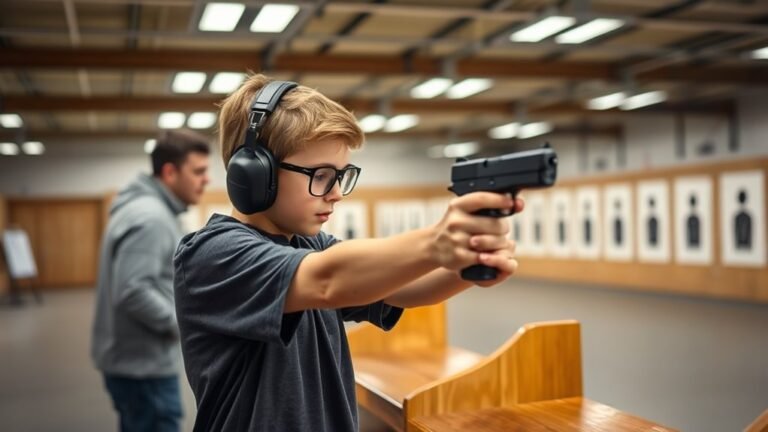
Testing various models during rental sessions or with a trainer helps you assess comfort and ease of use before buying. Prioritizing these aspects guarantees you pick a firearm you can confidently and quickly operate, enhancing both your safety and shooting experience.
Visit a Licensed Gun Dealer for Firearm Purchase Advice
Although buying a firearm can feel overwhelming, visiting a licensed gun dealer simplifies the process and guarantees you adhere to all legal requirements. When you visit a licensed gun dealer, you gain access to knowledgeable staff who can offer personalized advice tailored to your experience and intended use.
They help you handle and inspect different firearms to find the right fit and comfort before your firearm purchase. Licensed dealers ensure compliance with federal and state laws, including conducting mandatory background checks through ATF Form 4473.
They also guide you through the legal transfer of ownership and necessary paperwork. Plus, you can ask questions about firearm maintenance, safety, and regulations, helping you become a responsible and informed gun owner.
Gather Required Identification and Documents for Purchase
Before you buy a gun, make sure you have a valid government-issued photo ID with your current address.
Depending on your state, you might also need proof of residency, background check forms, or specific permits.
Keep all documents and receipts organized to complete the purchase smoothly and stay compliant with local laws.
It’s always a good idea to double-check what’s required in your area before you head out. That way, you won’t run into any surprises.
Identification Requirements
What identification do you need to buy a gun? You’ll need a valid government-issued photo ID, like a driver’s license, to prove your identity and age. Make certain your identification reflects your current address, as some states require proof of residency to meet legal purchase requirements.
When you’re ready to buy, you’ll also have to consent to a background check, which is typically completed at the point of sale. It’s a good idea to keep multiple copies of your identification and any related documents handy, since they might be needed for licensing or registration later.
Essential Documentation Needed
Once you have your identification ready, it’s important to gather all other necessary documents to complete your purchase smoothly. You’ll need a valid government-issued ID, like a driver’s license, as it’s required for the process.
Depending on your state, proof of residency—such as a utility bill or lease agreement—may also be necessary. During the purchase, you’ll complete a background check, which involves signing consent forms like ATF Form 4473.
If you’re buying certain firearms, such as semi-automatic rifles, you might need to provide certificates from firearm safety training courses. Keep all related documents, including receipts, registration papers, and safety training certificates, for your records.
Having these ready assures the transaction goes without delays or complications. It really helps to be prepared so everything goes smoothly!
Fill Out and Submit Your Firearm Purchase Application
Although obtaining your firearm is exciting, you’ll need to carefully fill out the purchase application to move forward. Start by getting the firearm license application from your gun shop or the local DFO.
Complete the form accurately, providing personal details and firearm information. Attach all supporting documents, such as ID, receipts, and permits.
Then, submit everything to the local DFO for processing. Always keep copies of your forms and receipts for your records.
| Step | What to Do | Where to Get Help |
|---|---|---|
| 1. Get Application | Obtain form from gun shop or DFO | Gun shop, Local DFO |
| 2. Fill Form | Provide accurate personal details | Follow form instructions |
| 3. Attach Documents | ID, receipts, permits | Check checklist |
| 4. Submit Application | Send to local DFO | Local DFO office |
| 5. Keep Copies | Save copies for records | Personal files |
Wait for License Approval and Complete Final Payment
While waiting for your firearm license approval, stay in touch with your local Divisional Firearms Officer (DFO) to check on the progress. The process can take several weeks, so regular follow-ups help you stay informed.
Maintain regular contact with your local Divisional Firearms Officer to stay updated on your license approval progress.
Once your license approval is confirmed, the dealer will contact you to arrange the final payment and firearm collection. When you’re ready:
- Confirm your appointment with the dealer for the firearm collection.
- Bring your valid license and identification for verification.
- Complete the final payment at the time of pickup.
This guarantees all legal requirements are met before you take possession of your firearm. Staying proactive during this stage makes the process smooth and timely.
Register Your Firearm and Follow Safe Storage Rules
After completing your firearm purchase and picking up your weapon, you’ll need to register it with local authorities if your area requires it. Registering your firearm promptly keeps you compliant with the law and helps maintain accurate records.
Be sure to keep copies of your registration and purchase receipts safe for future reference or transfers. It’s a good idea to have these documents handy just in case.
Next, focus on safe storage to protect your firearm and those around you. Use a gun safe or lock box to prevent unauthorized access, especially by children.
Many states require firearms to be stored unloaded and separated from ammunition when not in use. Following these safe storage rules reduces the risk of accidents, theft, and injury.
Maintain Your Firearm Safely and Practice Ongoing Safety
Maintaining your firearm properly and practicing ongoing safety are essential to guarantee it functions reliably and prevents accidents. To uphold firearm safety, you need to commit to safe handling habits and continuous learning.
First, store your firearm unloaded in a secure gun safe or lockbox. Keep it out of reach from children and unauthorized persons.
Regularly inspect and clean your firearm following the manufacturer’s instructions. This helps assure safe and reliable operation.
Also, engage in ongoing safety training and refresher courses. This way, you stay updated on best practices and legal requirements. It’s really important to keep learning and stay sharp!
Frequently Asked Questions
What Are the Steps Involved in Buying a Gun?
You start by getting a competency certificate, choose your firearm, pay a deposit, then apply for a license with all documents.
After approval, you finalize payment, collect the gun, register it, and follow safety rules.
It’s pretty straightforward once you know the steps! Just make sure you keep everything in order.
What Is a Good First Time Gun to Buy?
You want reliability, ease, and safety; you want manageable recoil, simple controls, and comfort.
That’s why a 9mm pistol like the Glock 19 or Sig Sauer P365 fits perfectly as your first firearm choice.
What Steps Do I Need to Take to Buy a Gun in Florida?
You’ll need to be 21 or older and complete any required safety courses first. After that, you’ll have to pass a background check through FDLE.
Once you get approval, you can finalize the purchase by submitting the necessary paperwork. Then, just pay for the firearm legally in Florida, and you’re all set.
What Do I Need to Do Before Buying a Gun in Texas?
You’ll need a valid Texas ID showing your current address and pass a DPS background check.
You also have to be the right age—18 for long guns and 21 for handguns. If you’re buying a semi-automatic rifle, completing safety training is a must.
Plus, you’ll need to confirm that you’re legally allowed to own firearms. It’s pretty straightforward once you know the steps!
Conclusion
By following these steps, you’ll be stepping into a world where responsibility meets readiness. Think of your new firearm as a trusted companion, one that requires care, respect, and attention.
As you navigate the process, you’re not just buying a tool—you’re embracing a commitment to safety and awareness. Keep your knowledge sharp and your practices steady. This approach ensures your peace of mind blooms like a well-tended garden in every moment you hold that power responsibly.
Buying a gun involves more than just the purchase; it’s about understanding firearm safety, handling, and storage. Staying informed helps you maintain responsible ownership. So, as you move forward, remember that each step you take builds your confidence and readiness. This way, you honor the responsibility that comes with owning a firearm and protect yourself and others effectively.