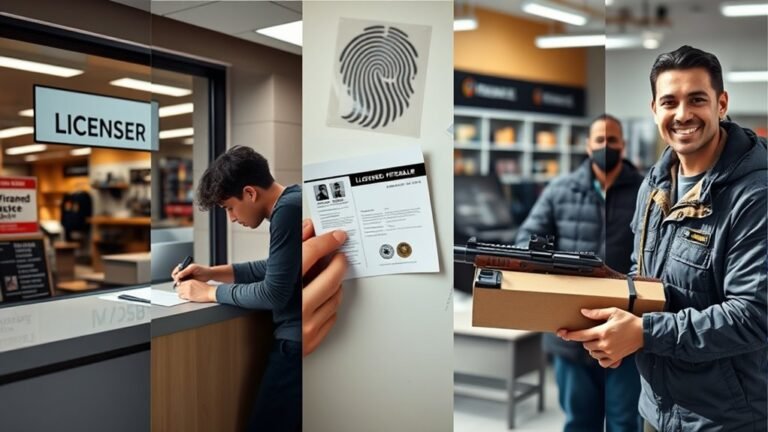
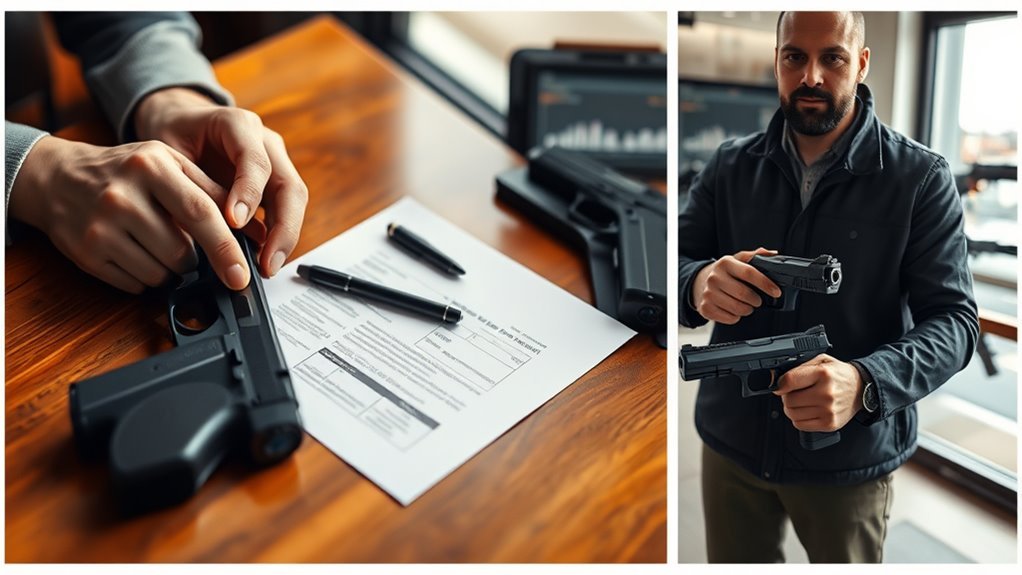
How to Buy a Handgun in 3 Simple Steps
To buy a handgun, first make sure you meet all the legal requirements. This includes being of the right age and passing any necessary background checks. Knowing these basics upfront helps make the process smoother and keeps you compliant with the law.
Next, you’ll need to complete the purchase paperwork. This means filling out Form 4473 and passing the NICS background check at the dealer. It might sound like a lot, but the dealer will guide you through these steps.
Finally, you’ll finalize your payment and provide a valid ID.
After that, it’s important to plan for responsible ownership. That means securely storing your firearm and following all applicable laws.
If you want a deeper understanding of each step and your responsibilities, there’s more to explore beyond this quick guide.
Key Takeaways
- Verify you meet age and legal eligibility requirements, including no felony or disqualifying records.
- Complete and accurately fill out ATF Form 4473 and present valid ID to the dealer.
- Undergo and pass a background check through the National Instant Criminal Background Check System (NICS).
- Pay for the handgun and submit any required permits before finalizing the purchase.
- Store the handgun securely and follow all local, state, and federal firearm laws post-purchase.
Confirm Your Eligibility to Buy a Handgun
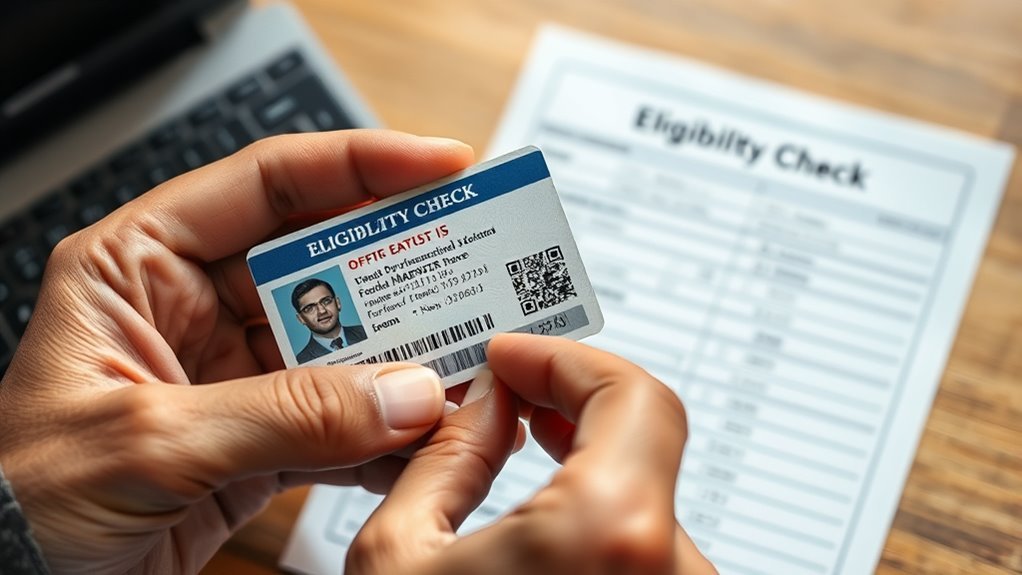
Before you buy a handgun, you need to verify that you’re legally eligible to do so. First, make sure you meet the age restriction—typically at least 21 years old in most states, including Texas.
Verify you meet legal age requirements—usually 21 or older—before purchasing a handgun.
Federal laws prohibit firearm purchase if you have a felony criminal record or domestic violence misdemeanor. You’ll also need a valid government-issued ID to verify your identity and age.
Mental health disqualifying factors, such as certain adjudications or restraining orders, can also bar you from owning a handgun. The National Instant Criminal Background Check System (NICS) conducts a background check to confirm eligibility.
This eligibility verification ensures you comply with federal laws before completing the firearm purchase. Confirming these details ahead of time saves you from delays or legal issues during your handgun acquisition.
Complete Handgun Purchase Paperwork and Background Check

When you’re ready to buy a handgun, you’ll need to complete the federal ATF Form 4473. This means providing accurate personal details and information about the firearm purchase.
You’ll also need to present a valid government-issued ID to the firearm dealer. This helps verify your identity and legal eligibility.
Next, the dealer will run a background check through the National Instant Criminal Background Check System (NICS). This usually happens right there on-site.
The background check typically clears within minutes, but sometimes there’s a waiting period if more review is needed.
Once you’re approved, you can finish the transaction by paying for your purchase and receiving ownership transfer.
Just remember, this process ensures you meet all legal requirements before you take possession of your handgun.
Finish Your Purchase and Plan for Safe Handgun Ownership
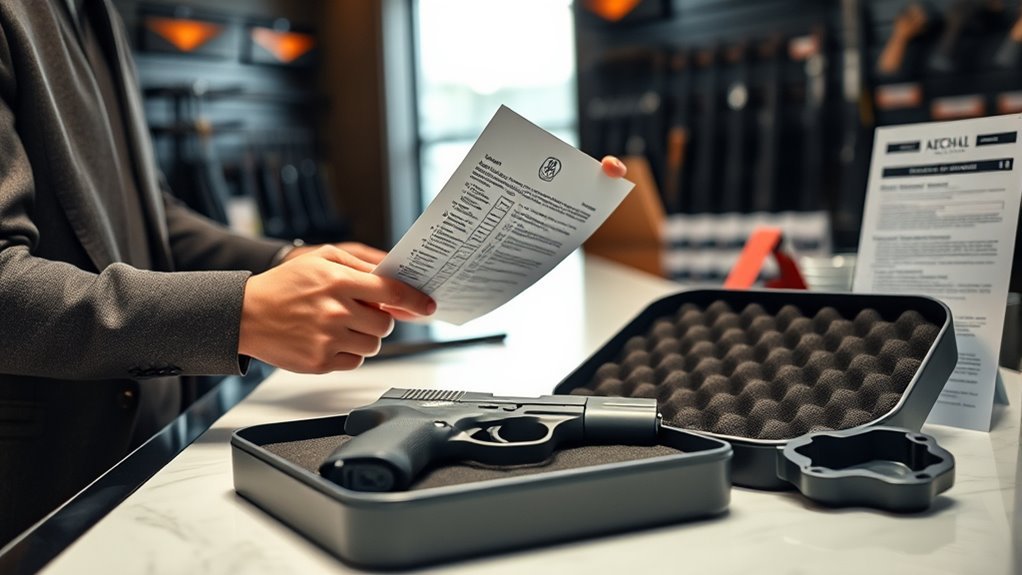
After completing the necessary paperwork and passing the background check, you’ll finalize your purchase by providing any required permits and paying for your handgun. Make sure you submit a valid government-issued ID and accurately complete Form 4473 to guarantee legal compliance.
Complete paperwork, pass background check, provide permits, pay, and submit valid ID with Form 4473 for legal compliance.
Once you own your firearm, plan for responsible ownership by following firearm laws and legal requirements. Prioritize safe storage and firearm safety to protect yourself and others.
- Keep your handgun in a locked safe or use a safety lock.
- Understand local and federal firearm laws.
- Regularly practice safe handling and maintenance.
- Stay updated on legal requirements for ownership and registration.
Frequently Asked Questions
What Are the Steps Involved in Buying a Gun?
You visit a licensed dealer, show ID, complete ATF Form 4473, and undergo a background check. After approval, you pay, finish paperwork, and receive your handgun.
The process varies depending on response times. Sometimes it’s quick, other times it might take a bit longer. But that’s basically how it goes!
What Is a First Time Gun to Buy?
A first-time gun to buy is usually a handgun like a Glock 19 or Smith & Wesson M&P Shield. They’re compact, easy to handle, and great for self-defense.
You should get proper training before buying one. It’s really important to know how to use it safely and confidently.
How to Operate a Handgun for Beginners?
You might think operating a handgun is complicated, but it’s straightforward once you learn controls like the trigger, safety, and slide. Always keep it pointed safely, grip firmly, and align sights.
Then, practice steady trigger pressure consistently. It’s all about getting comfortable with the basics, step by step. You’ll get the hang of it before you know it!
How Long Does the Process of Buying a Firearm Take?
The process usually takes minutes to a few hours, but sometimes up to 24 hours. If there’s a name issue or extra review, expect delays.
You can’t pick up the firearm until approval’s complete. So, hang tight and wait for the green light before heading back.
Conclusion
Buying a handgun isn’t just a simple errand—it’s your gateway to ultimate responsibility and empowerment. By confirming your eligibility, completing the necessary paperwork, and planning for safe ownership, you’re not just buying a tool—you’re stepping into a legacy of safety and respect.
Don’t rush; each step is a vital chapter in your journey. Master this process, and you’ll handle your new handgun with the precision of a seasoned expert. Remember, buying a handgun involves understanding legal requirements, ensuring proper documentation, and prioritizing safety at every turn.
Taking these steps seriously helps you become a responsible gun owner. So, stay informed, follow the rules, and embrace the commitment that comes with handgun ownership. This approach ensures you’re not just purchasing a firearm—you’re investing in safety, respect, and lifelong responsibility.