Blog

  • What Does ARP Stand for in Guns?

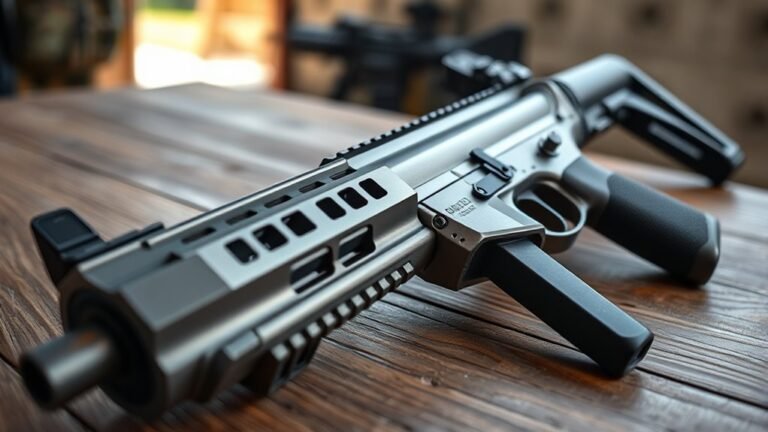
    In Palmetto State Armory guns, ARP stands for Advanced Rifle Platform, not Armalite Rifle Platform. You’ll find ARP highlights modular designs focused on versatility and performance, letting you easily customize calibers like .300 Blackout or 5.56 NATO.

    Its drop-in components simplify upgrades and guarantee reliable, safe handling with enhanced safety features. If you want to explore how these innovations set ARP apart and how to upgrade your rifle, there’s plenty more to uncover.
  • What Does AR Stand for in Guns?

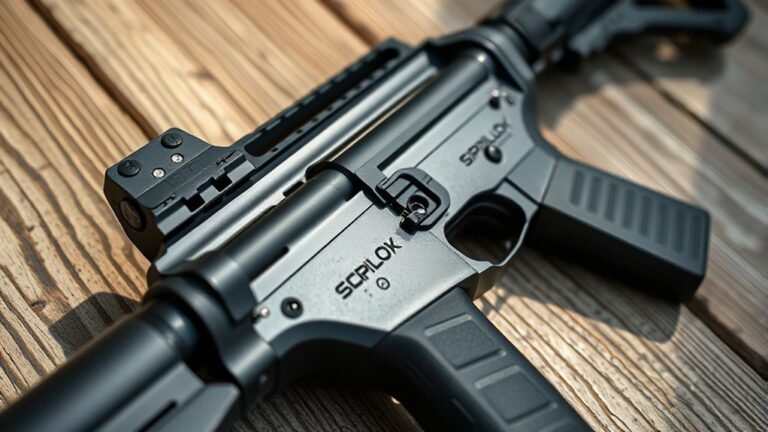
    When you see “AR” in guns, it stands for **Armalite Rifle**, named after the company that designed the original platform in the 1950s. It doesn’t mean “assault rifle” or “automatic,” which many people mistakenly think.

    The popular AR-15, for example, is a semi-automatic rifle, firing one round per trigger pull. Knowing this helps clear up common misconceptions. There’s actually more to discover about its history and unique features if you want to understand its true significance.

  • What Does the Switch Do on a Gun?

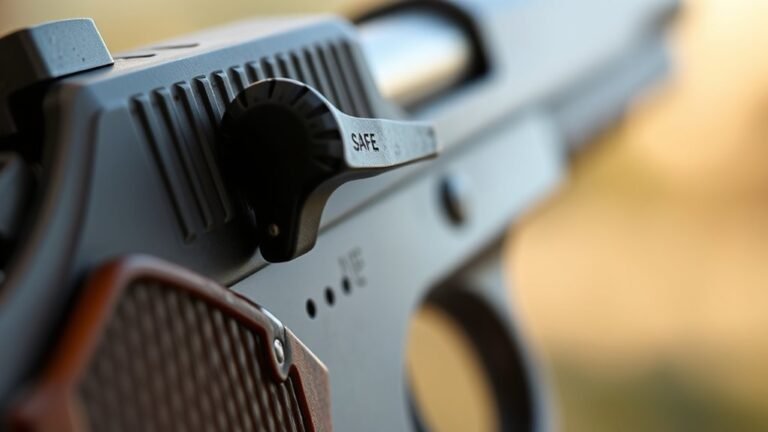
    The switch on a gun controls how it fires—you can set it to safe, semi-automatic, or fully automatic modes depending on the firearm. It changes the trigger mechanism, sometimes allowing continuous fire by bypassing normal trigger resets.

    For example, a Glock switch turns a semi-automatic into a fully automatic weapon, enabling rapid shots until the magazine empties. These switches impact safety and legality profoundly, and understanding their function is key to grasping firearm regulations and enforcement.

  • What Does a Massage Gun Do for Muscle Recovery?

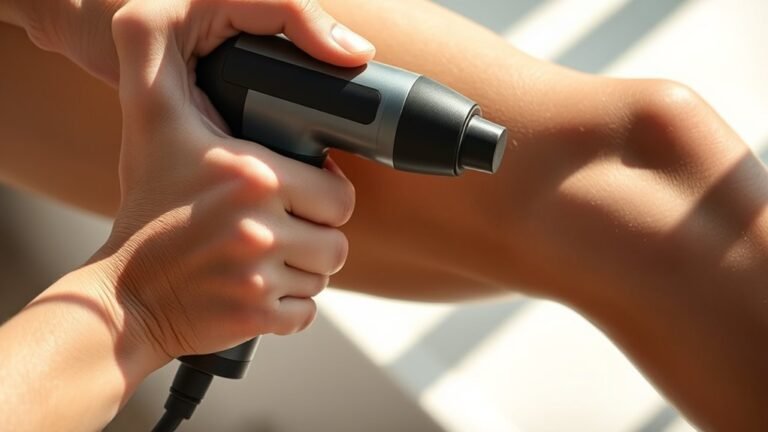
    A massage gun speeds up your muscle recovery by delivering targeted pulses that boost blood flow and reduce soreness. It breaks down tension, breaks up scar tissue, and eases muscle stiffness to help you heal faster and improve flexibility.

    You can use it before or after workouts for quicker relief and enhanced mobility. If you want to know how to use it safely and get the most from its benefits, there’s plenty more to explore.

  • What Does a Gun Sound Like When Fired?

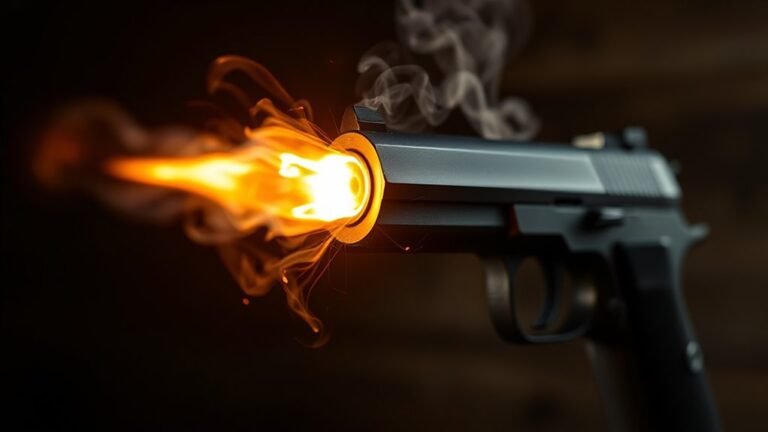
    When a gun fires, you’ll hear a sharp, powerful crack or boom that varies with the firearm type—handguns sound crisp and high-pitched, rifles deeper and resonant, and shotguns produce booming echoes.

    The environment affects this sound too, with echoes and background noise changing how clearly you hear it. Muzzle flash and recoil also tweak the sound’s sharpness and timing.

    Keep exploring to understand how these factors shape the full gunshot experience and common confusions.

  • 7 Steps You Need to Do to Purchase a Gun Legally

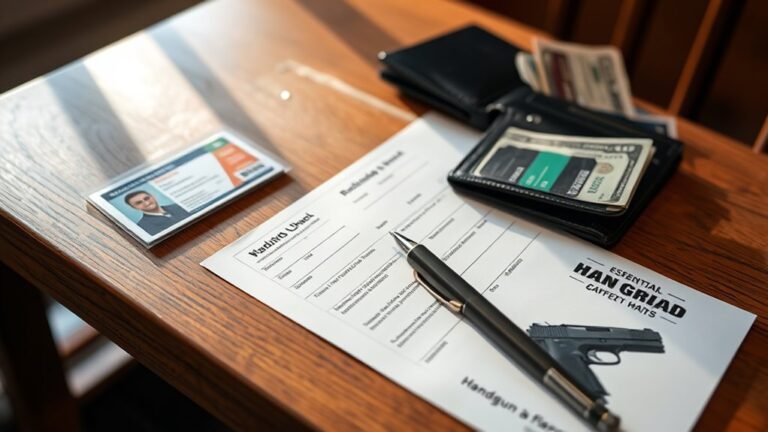
    To purchase a gun legally, first understand your state and local laws, including restrictions and permits. Confirm you meet age and eligibility requirements, then complete any required safety training.

    Next, undergo background checks and fingerprinting. Apply for necessary permits or licenses, and choose a licensed firearm dealer.

    Finish the purchase by completing all transfer and registration steps, ensuring you follow storage and transportation rules. Keep these key steps in mind for a smoother, legal process ahead.

  • 7 Steps You Need to Do to Buy a Gun Legally

    To buy a gun legally, first confirm you meet age and legal requirements, then gather your ID and proof of residency.

    Next, get any needed permits or safety certifications and choose a licensed dealer or legitimate private seller.

    Complete background checks and all necessary paperwork, and know the waiting periods and transfer rules in your state.

    Finally, store your firearm securely and handle it responsibly.

    Keep following these guidelines closely to navigate the entire process smoothly.

  • What Do You Have to Do to Buy a Gun?

    To buy a gun, you need to meet age and residency requirements—usually 18 or 21 and proof of local residence. You’ll verify your identity with valid ID and pass a background check that reviews criminal and mental health records.

    You’ll submit the proper paperwork, pay fees, and observe a mandatory waiting period. Private sales require transfers through licensed dealers.

    Understanding these steps helps guarantee a smooth, legal purchase. There’s more to know about permits, restrictions, and transfer rules.

  • What Do I Need to Buy a Gun?

    To buy a gun, you’ll need a valid government-issued ID showing your current address and proof of residency, like a utility bill or vehicle registration.

    You must pass a federal background check through the FBI’s system and meet age requirements—18 for rifles and shotguns, 21 for handguns.

    For handguns, you’ll also need a Firearm Safety Certificate and may face a waiting period.

    Keep going to understand all the important steps and rules involved.

  • What Do Airsoft Guns Shoot?

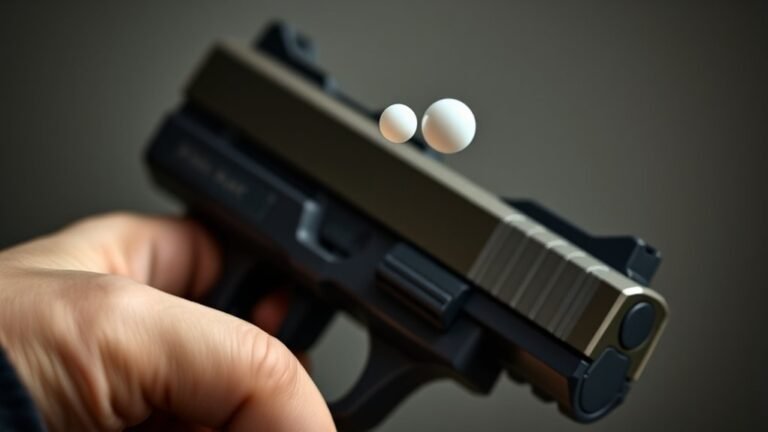
    Airsoft guns shoot small plastic BBs, usually 6mm in size, made from materials like polystyrene or biodegradable plastic. These BBs come in various weights, with 0.20 grams being common for balanced performance.

    Heavier or specialty BBs can boost accuracy and range. Your choice affects how well your gun operates and plays.

    You’ll also want to pick the right BB type and weight to match your airsoft gun’s power for the best experience and safety. There’s plenty more to evaluate when selecting your BBs.