
What Is the Oldest Age to Purchase a Gun?
You can generally buy most guns starting at 18, but federal law requires you to be 21 to purchase a handgun from a licensed dealer. This means if you’re looking to buy a handgun, the minimum age is higher than for other types of firearms.
Some states have stricter rules, setting 21 as the minimum age for all firearms, while others follow federal standards. So, depending on where you live, the age requirements might be different.
Age limits differ for handguns and long guns, with additional rules on possession and supervision.
If you want to understand how these laws affect safety and legal risks, keep exploring further details.
Key Takeaways
- There is no federally mandated maximum age limit for purchasing firearms in the United States. Gun purchase restrictions mainly focus on minimum age requirements, not maximum age limits.
- Some states might have laws about firearm possession or purchase by elderly folks, usually based on mental competency. But age-related restrictions beyond the minimum age are pretty rare and generally involve health or legal capacity checks.
- So, the oldest age to buy a gun really depends on the specific state laws and individual eligibility criteria. It’s not a one-size-fits-all kind of rule.
What Is the Federal Minimum Age to Purchase a Gun?

Although the federal government sets minimum ages for gun purchases, these vary depending on the type of firearm. The federal minimum age to purchase a handgun from a licensed dealer is 21 years old. For long guns, like rifles and shotguns, the purchase age is lower—18 years old.
Federal law sets the minimum handgun purchase age at 21 and long guns at 18.
Federal law also prohibits unlicensed sellers from transferring handguns to anyone under 18, ensuring some baseline protection. When you buy a gun from a licensed dealer, you must meet these federal purchase age requirements.
While the federal law establishes these minimum ages, it’s important to know that states can enforce stricter rules. Generally, minors can’t purchase firearms unless exceptions apply, such as for hunting or training purposes.
Understanding these federal minimum ages helps you navigate the gun purchase process legally. It’s always a good idea to check both federal and state laws before making a purchase.
How Do State Gun Purchase Age Laws Differ?
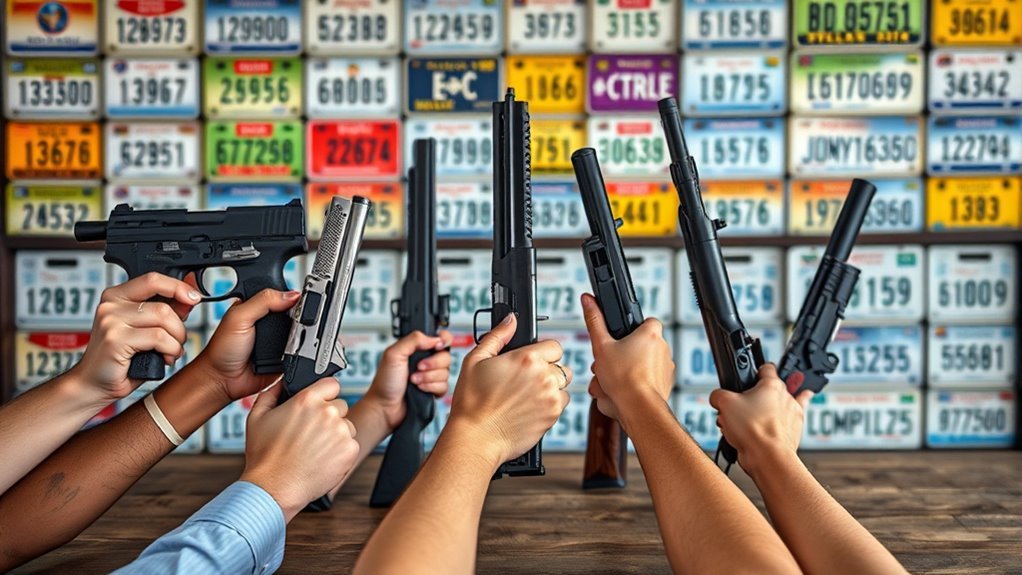
While federal law sets baseline age requirements for gun purchases, states have the authority to enforce their own rules, which can differ markedly. You’ll find that state laws on firearm purchases vary, especially regarding the minimum age and types of guns.
Some states, like Arizona and Alaska, don’t require a minimum age for long guns, easing purchase age restrictions. Others, including California and New York, demand buyers be 21 for all firearms.
States such as Illinois and Ohio set 18 as the minimum age for rifles and shotguns but 21 for handguns. Background checks and permits also differ, with some states enforcing stricter regulations than federal standards.
Knowing these state regulations helps you navigate age restrictions and purchase requirements confidently. It’s always a good idea to check what your specific state requires before making any gun purchase.
Which States Require Buyers to Be 21 for Handgun Purchases?

If you’re buying a handgun, you’ll need to be at least 21 in thirteen states plus the District of Columbia. These states have set their age policies to match or exceed the federal minimum for handgun purchases.
Let’s take a closer look at which states require you to be 21 before you can buy a handgun. It’s important to know the rules so you don’t run into any surprises.
States With Age 21
Which states require you to be 21 to buy a handgun from a licensed dealer? Thirteen states plus the District of Columbia set this minimum age, going beyond the federal law’s 18-year minimum for long guns. These state laws impose an age restriction specifically for handgun purchases to enhance safety.
Here are some key points about states with age 21 requirements:
- California, New York, and Florida are among the states enforcing this rule.
- The age restriction applies only to handguns sold by licensed dealers.
- Some states also regulate other firearms, like assault weapons, with specific age rules.
These firearm laws aim to reduce gun violence by limiting access to younger buyers. Knowing these states with age 21 requirements helps you navigate handgun purchase laws effectively.
Handgun Purchase Age
Because federal law sets the minimum age to buy a handgun from a licensed dealer at 21, you’ll find that thirteen states plus the District of Columbia have adopted this standard for handgun purchases. States like California, Colorado, Massachusetts, Illinois, New Jersey, and New York require you to be at least 21 to complete a handgun purchase.
These state laws often include additional measures, such as licensing or registration, to promote firearm safety and regulate firearm possession. So, if you’re planning to buy a handgun, understanding both federal law and specific state laws is essential since gun laws can vary widely.
Meeting the minimum age and complying with state-specific requirements guarantees you stay within legal boundaries and support responsible firearm ownership. It’s always a good idea to double-check the rules before you make a purchase.
Age Policies Overview
Although federal law sets the minimum age to buy a handgun from a licensed dealer at 21, several states have adopted or maintain their own specific age requirements. You should know that while federal law sets a baseline, some states enforce stricter age restrictions for firearm purchases.
Thirteen states plus the District of Columbia require buyers to be at least 21 to purchase a handgun from licensed dealers. These states include:
- California, Colorado, Delaware, Florida, Hawaii, Massachusetts
- Montana, Nevada, New Jersey, New Mexico, New York
- Rhode Island, Vermont, Virginia
Additionally, states like Illinois, Nebraska, and Oregon align with this 21-year purchase age, while others such as Arizona and Alaska allow handgun purchases at 18. So, it really pays to check your state’s law to understand the specific age restriction.
What Are the Age Limits for Handguns vs. Long Guns?
When you’re looking to buy a firearm, it’s important to know that the federal government sets different minimum ages for handguns and long guns. Under federal law, the minimum age to purchase handguns from licensed dealers is 21, while for long guns, it’s 18.
However, state regulations can raise the purchase age for all firearms to 21, depending on local firearms laws. Licensed dealers must follow these age limits during gun sales, but unlicensed sales of long guns often don’t have federal minimum age restrictions.
When Can Minors Legally Possess Guns?
You can’t just let minors handle guns anytime, but there are specific exceptions where it’s legal.
Often, minors can possess firearms under adult supervision for activities like hunting or safety training.
Let’s look at the rules that allow these exceptions and the conditions that come with supervised use.
Legal Possession Exceptions
Ever wondered under what circumstances minors can legally possess guns? While federal law sets a minimum age of 18 to possess handguns and ammunition, there are some important exceptions that let minors legally have firearms under specific conditions.
Here are a few key legal possession exceptions to keep in mind:
Minors may possess guns for hunting, target shooting, or safety training, but usually with adult supervision or parental consent. It’s all about making sure they’re guided properly.
Also, if they’re in the armed forces or National Guard, they can possess firearms in the line of duty, no matter their age. That’s one of those special cases you might not expect.
Some state laws even allow minors to have firearms for self-defense, but only within their own home. Outside of that, the rules get stricter.
Generally, transferring guns to minors is prohibited. But there are exceptions like inheritance or temporary transfers for lawful activities. So, it’s not always a clear-cut no.
Understanding these exceptions helps you navigate the complex rules around gun possession for minors. It’s definitely worth knowing the details!
Supervised Use Rules
Although minors generally can’t purchase guns until they meet the legal age, they can possess firearms under supervision for specific activities like hunting, target shooting, or safety training. Youth firearm laws allow possession of a firearm by minors during supervised use, often requiring adult supervision by a parent, guardian, or qualified instructor.
Federal and state hunting regulations permit minors to engage in hunting or target practice under these conditions, despite firearms restrictions for unsupervised possession. Firearm safety training is typically mandatory to guarantee responsible handling.
The minimum age for unsupervised possession varies, but supervised use rules provide exceptions so you can legally handle guns early when following proper guidelines. Always check local youth firearm laws to stay compliant with possession and supervised use requirements.
How Do Minimum Age Laws Affect Youth Gun Violence and Suicide?
Because firearm-related deaths, including suicides, are the leading cause of death among youth aged 18-20, raising the minimum age for gun purchases to 21 can make a big difference.
It helps reduce these tragedies by delaying access to guns during those critical years. This can lower impulsive acts that might otherwise lead to harm.
Studies show there’s about a 12% drop in firearm suicides among 18-20-year-olds where age restrictions are in place. So, limiting firearm purchases is an effective way to curb youth gun violence and reduce firearm-related deaths.
Key impacts of minimum age laws include:
- Reducing firearm suicides by restricting gun ownership during adolescence
- Preventing impulsive firearm use by delaying access
- Lowering youth gun violence through tighter firearm laws
- Decreasing overall firearm-related deaths among young people
What Are the Legal Consequences of Buying a Gun Underage?
Limiting gun access by age helps reduce youth firearm deaths, but it also comes with strict legal rules you need to know. The minimum age to buy a handgun from licensed dealers is 21 under federal firearm laws.
If you attempt an illegal purchase of an underage firearm, you risk serious criminal charges that vary from misdemeanors to felonies depending on your state. Violating age restrictions can lead to penalties such as fines, firearm confiscation, and even imprisonment.
Some states impose civil penalties or revoke your firearm rights for underage transactions. Besides legal trouble, these offenses can worsen your criminal record, affecting your future employment and legal standing.
Could Court Rulings Change Gun Age Laws?
If court rulings shift, you could see changes in the minimum age required to buy a handgun. Judicial decisions interpreting the Second Amendment play a vital role in shaping the legal age to purchase firearms.
Current legal challenges, especially those involving 18-20-year-olds contesting the federal minimum age for gun purchases, could redefine these age restrictions. Courts weigh constitutional rights against public safety when deciding to uphold or lower the minimum age for gun ownership.
Key points to consider:
- Court rulings may alter the age for purchase nationwide or state-by-state.
- Laws contain age limits that reflect judicial interpretations of the Second Amendment.
- Legal challenges test whether the minimum age for gun laws is constitutional.
- Outcomes influence who qualifies for firearm purchases and under what conditions.
Frequently Asked Questions
What Guns Can a 14-Year-Old Own?
You can only legally own guns at 14 if they’re gifted, inherited, or used under adult supervision for activities like hunting or shooting.
You can’t legally buy firearms yourself at that age under federal law. It’s kind of a way to keep things safe until you’re older.
What Age Can I Buy an AK-47?
Picture holding that iconic AK-47—you can buy one once you’re 18 federally. Some states might set the limit at 21, so check local laws before you step into the dealer’s store or private sale.
It’s pretty important to know the rules in your area because they can really change. So, don’t just assume the federal age applies everywhere. Always double-check before making a purchase.
Can a Parent Gift a Handgun to an 18 Year Old?
Yes, you can receive a handgun as a gift from a parent if you’re 18, as long as your state doesn’t have specific restrictions on private transfers.
Always check local laws to be sure you’re compliant. It’s better to be safe and know the rules before making any transfers.
How Old Is the Age to Buy a Gun?
You need to be at least 18 for long guns and 21 for handguns in most places. Some states raise the bar, so always check local rules before you decide to buy your firearm.
It’s a good idea to double-check because laws can change and vary a lot depending on where you live. Better safe than sorry, right?
Conclusion
You might think buying a gun is simple, but the age laws are anything but. While the federal minimum age sets a baseline, states often raise the bar, especially for handguns.
Remember, just like knights once needed a license to wield a sword, today you need to meet specific age requirements to purchase firearms legally.
Stay informed, because these laws impact safety, responsibility, and even your future rights in ways you can’t ignore. Knowing the oldest age to purchase a gun is just as important as the minimum age since some states have unique rules.
Understanding these age restrictions helps ensure you follow the law and promotes responsible gun ownership. So, always check your local and federal regulations before making a purchase. Staying aware keeps you safe and protects your rights in the long run.