How to Legally Own Guns in France Step by Step
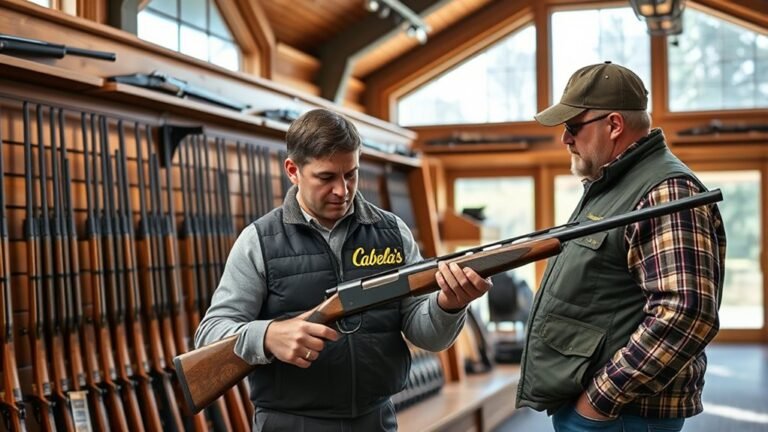
To legally own guns in France, you need to follow a clear and regulated process. First, join a licensed shooting range or hunting club. This is essential because it allows you to complete at least six months of training, which is mandatory.
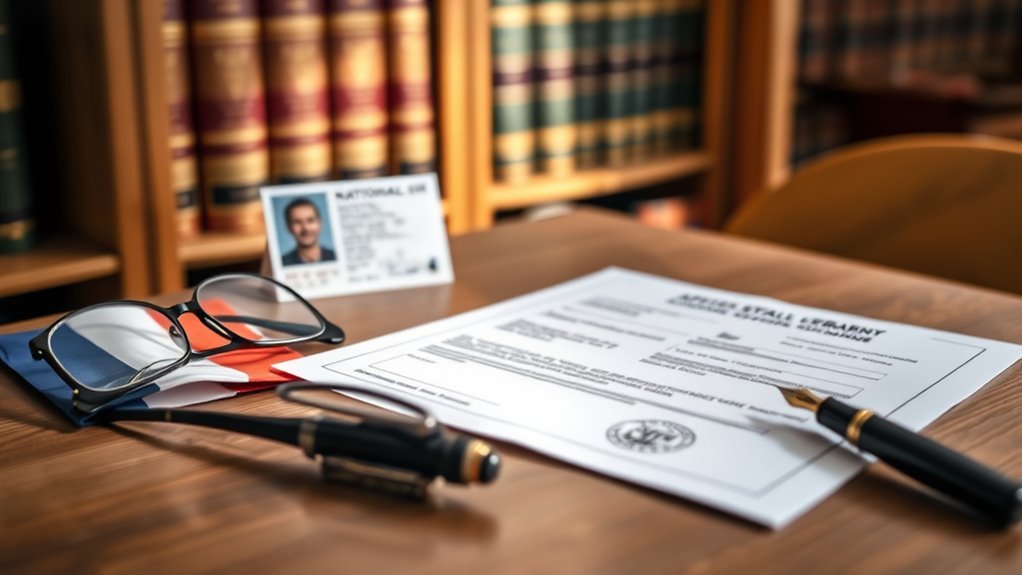
Alongside your training, you must obtain a medical fitness certificate to prove you are physically and mentally fit to handle firearms. Registering your firearms with the Système d’Information sur les Armes (S.I.A.) is also required.
Understanding the different firearm categories is important since the rules and licenses vary depending on the type of gun you want to own. Make sure to follow strict storage guidelines—certain guns must be kept in safes or locked rooms.
When transporting firearms, always carry them unloaded and have valid reasons like hunting or shooting practice.
Stick closely to these steps, and you’ll stay fully compliant with French gun ownership laws.
Key Takeaways
– Join a licensed shooting range or hunting club and complete at least six months of supervised training sessions.
This step is crucial because it not only teaches you how to handle firearms safely but also fulfills part of the legal requirements.
– Obtain a medical certificate confirming fitness to handle firearms before applying for a license.
You’ll need this to prove that you are physically and mentally capable of owning a gun, which the authorities take very seriously.
– Register with the French firearms database (S.I.A.) and submit all required documents including training proof and medical certification.
It’s important to keep everything official and above board to avoid any legal issues later on.
– Understand firearm categories and comply with storage requirements, especially for categories A and B which require secure gun safes.
Proper storage is key to safety and legal compliance, so make sure you have a secure place to keep your firearms.
– Transport firearms unloaded with valid reasons such as hunting or club visits, adhering to legal safety and documentation rules.
Remember, always follow the rules when moving your guns around to stay within the law and keep everyone safe.
Licensing and Qualification Requirements

Before you can legally own a gun in France, you need to meet specific licensing and qualification requirements. First, you must affiliate with a licensed shooting range or hunting club for at least six months.
To legally own a gun in France, you first need six months with a licensed shooting range or hunting club.
During this time, you’ll attend a minimum of three instructor-led training sessions spaced at least two months apart. This setup guarantees you complete at least 12 months of active range participation.
You’ll also need to obtain a medical certificate confirming your fitness to handle firearms. After completing the required training and adhering to safety protocols, you must secure a formal endorsement from your club or federation.
Additionally, you’ll open an account with the French firearms database, S.I.A., to handle firearms registration. Meeting these steps ensures your licence application aligns with legal compliance and prepares you for understanding firearm categories.
Firearm Categories, Storage, and Transportation Rules
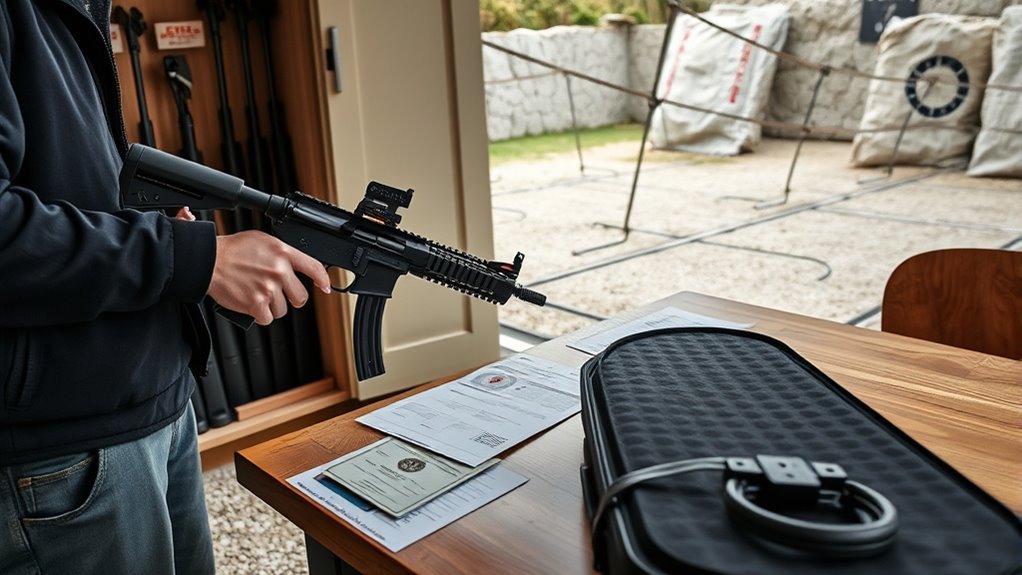
Once you’ve met the licensing and qualification requirements, understanding how firearms are categorized in France becomes key to legal ownership. Firearm categories A, B, C, and D each have specific storage and transportation rules.
Categories A and B require you to secure your guns in a gun safe or locked room. Transporting firearms must be unloaded, and you should have a valid reason like hunting or visiting a shooting club.
Ammunition storage is also regulated, with limits and separate storage mandates.
| Category | Storage Requirement |
|---|---|
| A & B | Gun safe or locked room |
| C | Standard locked storage |
| D | Basic secure storage |
Make sure to follow these regulations diligently to stay compliant.
Frequently Asked Questions
What Are the Requirements for Owning a Gun in France?
You need to be at least 18 and pass background and mental health checks. Plus, you have to hold a hunting or sport shooting license.
You’ll also need to submit medical certificates and proof of purchase. And don’t forget, your firearm must be stored securely in approved safes to legally own guns in France.
What Are the Requirements to Obtain a Firearms License in France?
Getting a firearms license in France isn’t a walk in the park; you’ll need to be 18+ and pass a medical exam.
You also have to prove a valid reason, like sport shooting. Completing training is a must, too.
On top of that, you have to show safe storage for the firearm and maintain a clean record.
Can You Own an AR-15 in France?
You can’t legally own a new AR-15 in France since 2018. Existing owners must register or surrender theirs.
Without a special permit and strict compliance, owning one today is practically impossible for civilians. It’s really tough to get approval if you’re not already authorized.
What Country in Europe Has the Loosest Gun Laws?
While some European countries tightly control firearms, Switzerland stands out with the loosest gun laws. You can own many guns with minimal restrictions there, unlike stricter nations like the Netherlands, where ownership demands thorough checks and licenses.
It’s pretty unique in Europe for that reason. So if you’re looking at gun laws across the continent, Switzerland definitely catches the eye.
Conclusion
Now that you know the steps to legally own guns in France, remember that “slow and steady wins the race.” Taking the time to meet licensing requirements and understand firearm categories is crucial.
You also need to follow the storage and transportation rules carefully. This way, you guarantee staying safe and compliant with the law.
By being responsible and patient throughout the process, you’ll enjoy your rights without risking legal trouble. Stay informed and always follow the law.
Handle your firearms with care to ensure safety for yourself and others. Legal gun ownership in France demands respect for the rules, but it’s worth it for peace of mind and security.