Did Samurai Use Guns?
Yes, samurai did use guns, adapting them quickly after firearms were introduced to Japan in 1543. When these matchlock guns arrived, samurai didn’t just stick to their swords; they started combining traditional swordsmanship with these new weapons.
This mix really changed how battles were fought. They even developed tactics like volley fire to make the most out of their firearms.
Over time, guns became more than just practical weapons—they turned into status symbols as well.
This shift had a big impact on samurai culture and warfare. Keep exploring, and you’ll see how these changes reshaped Japan’s warrior traditions and society in fascinating ways.
Key Takeaways
- Samurai adopted matchlock guns introduced by the Portuguese in 1543, integrating them during the Sengoku period. They quickly saw how these new weapons could change the game in battle.
- They developed new tactics like volley fire, which really shook up samurai warfare strategies. It was a smart way to make the most out of the guns’ capabilities.
- Firearms were used extensively in key battles, notably the Battle of Nagashino in 1575. That battle showed just how effective guns had become on the battlefield.
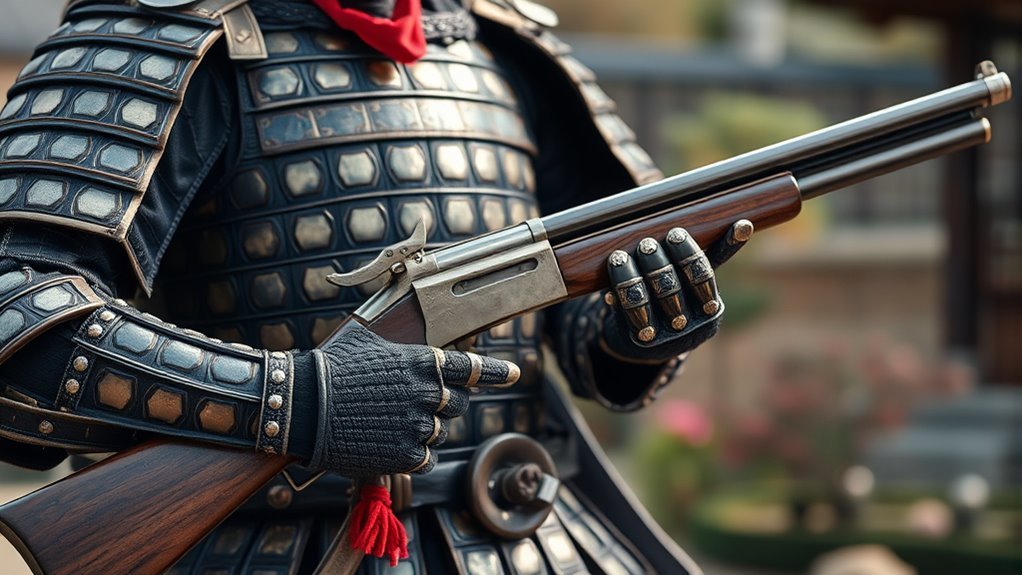
- High-ranking samurai customized ornate firearms called samurai-zutsu, blending tradition with innovation. These guns weren’t just weapons; they were works of art.
- Guns became important status symbols and remained culturally significant even during the peaceful Edo period. So, even when fighting died down, the guns kept their special place in samurai culture.
The Arrival and Adoption of Firearms by Samurai
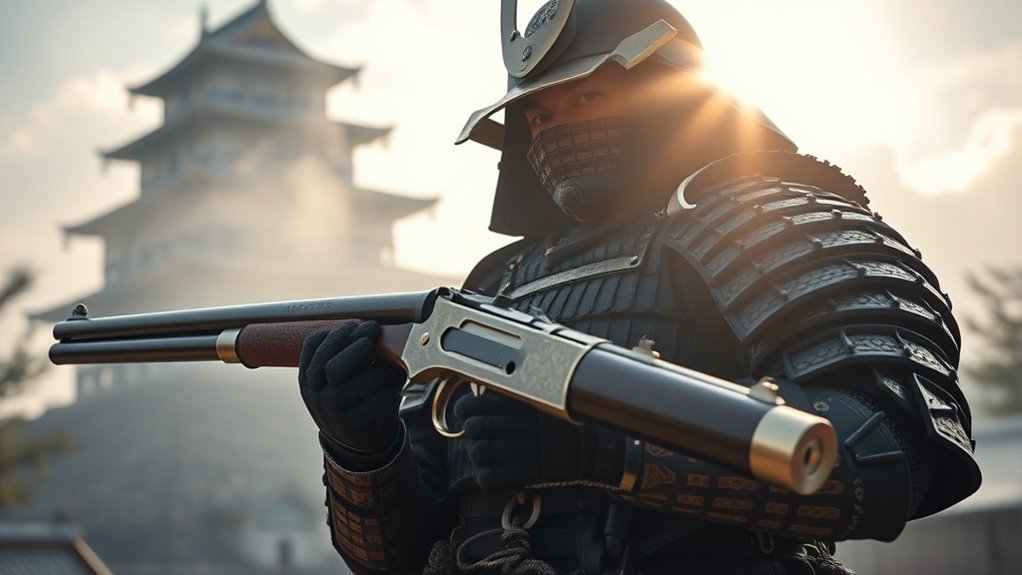
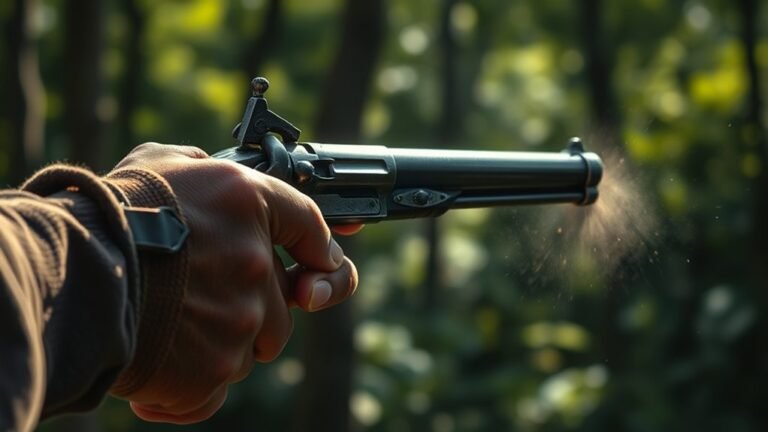
When the Portuguese shipwrecked on Tanegashima in 1543, they introduced firearms that quickly caught the attention of Japanese samurai and foot soldiers. During the Sengoku period, samurai embraced these matchlock guns, recognizing their potential to change Japanese warfare.
The 1543 arrival of Portuguese firearms on Tanegashima revolutionized samurai warfare during Japan’s Sengoku era.
Feudal lords like Oda Nobunaga saw the strategic value and purchased hundreds of firearms by 1549. This adoption of guns allowed samurai to develop new tactics such as volley fire, enhancing battlefield effectiveness.
By the time of the Battle of Nagashino in 1575, samurai were using firearms extensively, marking a turning point in Japanese history. High-ranking samurai even crafted ornate matchlock guns, known as samurai-zutsu, to display status while wielding cutting-edge technology.
Firearms had firmly woven themselves into the fabric of samurai warfare. It was a game-changer, blending tradition with innovation in a way Japan hadn’t seen before.
Impact of Firearms on Samurai Warfare and Society
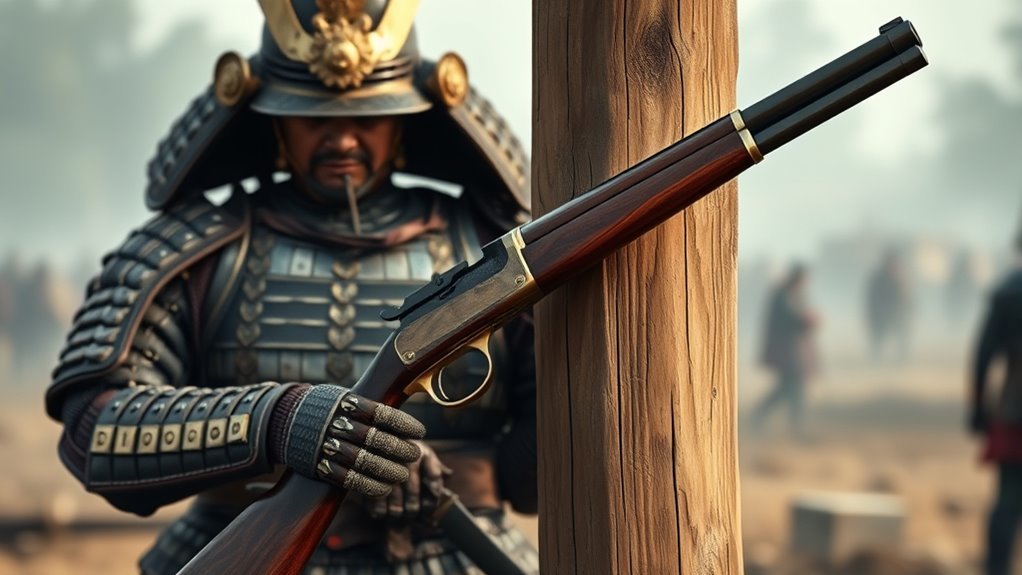
Although samurai traditionally prized their swords, they quickly embraced firearms like matchlock muskets to gain an edge in battle. The Battle of Nagashino showcased this firearms adoption, where coordinated volleys by teppogumi units marked a major tactical shift in samurai warfare strategies.
You’d notice that samurai integrated matchlock guns into their arsenals, often customizing weapons to reflect status and enhance effectiveness. These firearms changed how battles were fought, moving from individual sword combat to coordinated gunfire and mass volleys.
Even though the Edo period brought peace and reduced battlefield use of guns, firearms remained a significant part of samurai military culture. Their impact reshaped warfare strategies and samurai society, proving that firearms were more than just tools—they were key to evolving Japan’s warrior traditions.
Frequently Asked Questions
Could Samurai Armor Stop a Bullet?
Samurai armor couldn’t reliably stop bullets since it was designed for arrows and swords. You’d find that high-velocity lead balls from early guns easily penetrated it, making traditional armor less effective against firearms over time.
Basically, the armor was great for its original purpose, but bullets were a whole different challenge. As firearms became more common, samurai had to adapt or find new ways to protect themselves.
What Did Samurai Smell Like?
You’d smell samurai like a mix of sweat trapped in lacquered armor, herbal incense, and maybe a hint of stubborn old socks—thanks to their intense battles and occasional baths masking odors with fragrant powders and oils.
They didn’t bathe all the time, you know. So, the scent was kind of a unique combo of warrior grit and some surprisingly pleasant smells.
Why Did Japan Ban Samurai?
Japan banned samurai to maintain peace and social order during the Edo period. You’d see the government limiting their weapons, reducing their military role, and promoting a centralized, bureaucratic society.
This was all about modernizing and stabilizing the country. So, they moved away from samurai power to create a more controlled and peaceful society.
Did Japan Allow Female Samurai?
You might think Japan banned female samurai, but it didn’t. While society limited their roles, you’d find onna-bugeisha trained in combat, defending homes and honor.
They might not have fought like male warriors did, but their skills were respected and essential in many situations. So, yeah, female samurai were definitely a thing!
Conclusion
You saw how samurai didn’t just resist change—they embraced it. You witnessed how they adopted guns, adapted their tactics, and altered their armor.
You recognize how firearms transformed samurai warfare, shifted power dynamics, and reshaped society itself. Just like the samurai, you can learn to accept new tools, adjust your strategies, and evolve with the times.
Change isn’t an enemy; it’s an opportunity to grow, to fight smarter, and to lead stronger. Embracing new technology, like the samurai did with guns, shows the power of being flexible. When you adapt, you stay relevant and ready for whatever challenges come your way. So, take a page from the samurai’s book: welcome change, use new tools wisely, and keep evolving to lead with strength and confidence.