
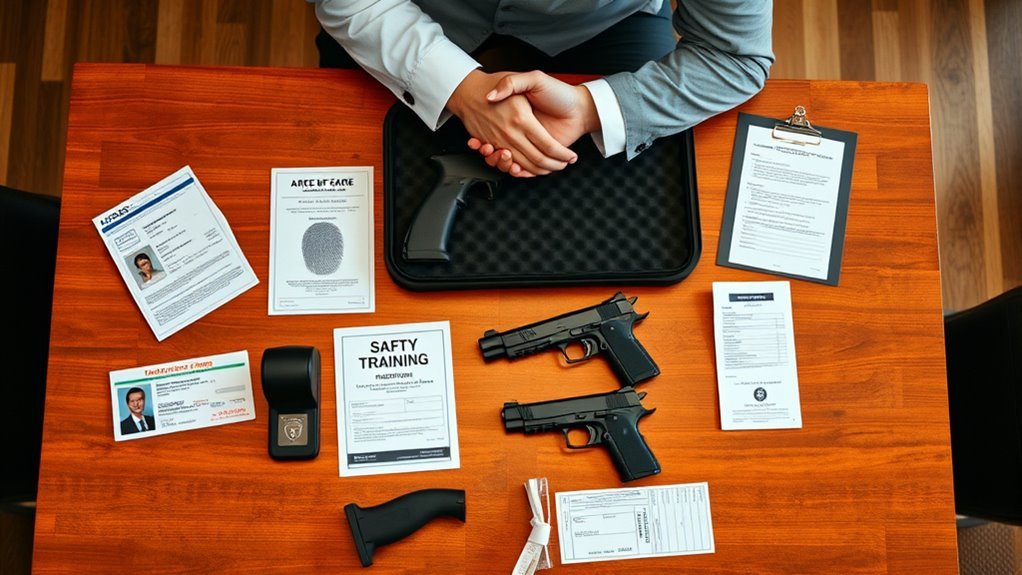
7 Steps You Need to Do to Purchase a Gun Legally
To purchase a gun legally, you first need to understand your state and local laws. These include restrictions and permits that might apply to you. Knowing this upfront can save you a lot of hassle later.
Make sure you meet all age and eligibility requirements before moving forward. Completing any required safety training is also a crucial step. It’s not just about following the rules—it’s about staying safe too.
Next, you’ll need to undergo background checks and fingerprinting. These help ensure you’re eligible to own a firearm.
After that, apply for any necessary permits or licenses.
Then, choose a licensed firearm dealer to make your purchase from.
Finally, complete all transfer and registration steps. Don’t forget to follow storage and transportation rules. Keep these key steps in mind for a smoother, legal process ahead.
Key Takeaways
– Research and understand your state and local gun laws, including purchase restrictions and permit requirements.
It’s important to know what’s allowed where you live before you start the process.
– Complete a state-approved gun safety training course and obtain any required permits or licenses.
This step ensures you’re familiar with safe handling and the legal requirements for owning a gun.
– Submit fingerprints and complete a background check through authorized agencies before purchase.
These checks are mandatory to make sure you’re eligible to own a firearm.
– Buy from a licensed dealer who will process paperwork, conduct background checks, and handle legal transfers.
Buying from a licensed dealer helps keep everything above board and legal.
– Keep all registration documents, permits, and comply with storage and transportation laws to maintain legal ownership.
Staying organized and following the rules helps you avoid trouble down the road.
Understand Your State and Local Gun Laws Before Buying

Before you buy a gun, you need to understand your state and local gun laws thoroughly. Start by researching your state’s specific regulations, including purchase restrictions, licensing requirements, and storage rules.
Some states require a background check or a firearm safety course before you can buy. Don’t forget to check if your local jurisdiction imposes additional limits, like waiting periods, magazine capacity caps, or handgun registration.
It’s essential to know who’s legally prohibited from owning a firearm, such as those with certain criminal convictions or protective orders. To stay compliant, consult official government sources or legal experts regularly, since gun laws can change.
Being informed helps you avoid legal issues and guarantees a smooth, lawful purchase process. So, take your time and make sure you’re fully up to speed before making any decisions.
Confirm Your Age and Eligibility to Buy a Gun
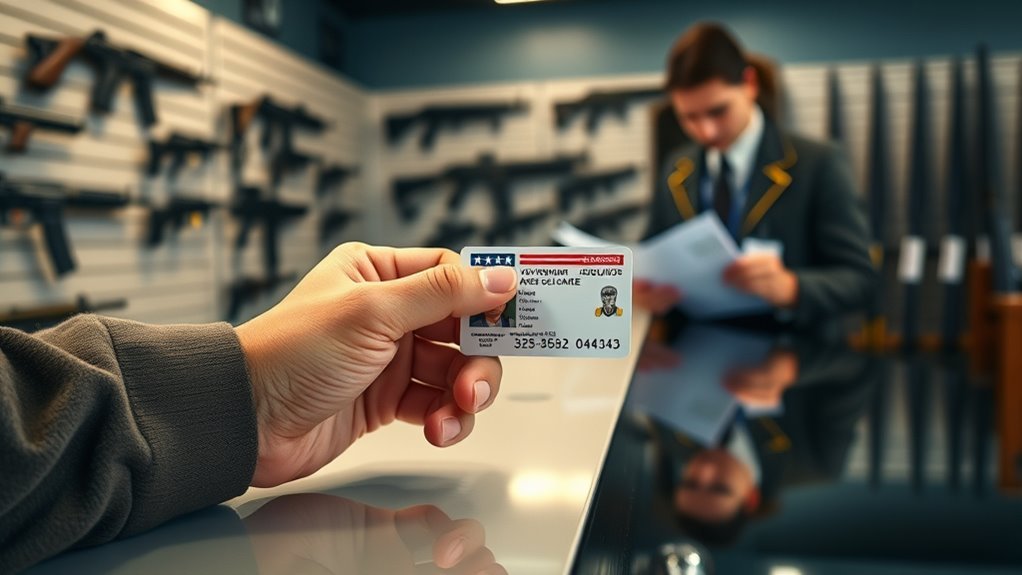
Since gun laws vary by state, you’ll need to confirm that you meet the age and eligibility requirements before buying a firearm. You must be at least 21 years old to purchase a handgun from a licensed dealer.
Make sure you have a valid ID ready to verify your age. Some folks with criminal convictions or restraining orders can’t legally buy guns, so keep that in mind.
In many states, you’ll also have to go through a background check to verify your eligibility. It’s important to know these details upfront to avoid any surprises.
| Requirement | Verification Needed | Additional Notes |
|---|---|---|
| Minimum Age | Driver’s license or state ID | Usually 21+ for handguns |
| Legal Eligibility | Background check | Criminal records matter |
| State-Specific Rules | Check local laws | Varies widely by location |
Confirm these details before proceeding to ensure a smooth purchase process.
Complete Required Gun Safety Training and Certification

You’ll need to complete a state-approved gun safety course that covers handling, storage, and legal responsibilities. Passing the required tests and getting certified is essential.
Many states require proof of this before you can buy a gun. Keep in mind, some exemptions may apply depending on your situation or state laws. So, it’s a good idea to check the specific rules where you live.
Mandatory Safety Courses
Completing a certified gun safety course is an essential step before you can legally purchase a firearm in most states. This mandatory safety training covers critical topics like firearm handling, storage, and your legal responsibilities as a gun owner.
You’ll typically attend classroom sessions and participate in live fire exercises to ensure you understand proper operation. Depending on your location, the course may last anywhere from 4 to 16 hours.
After finishing the training, you’ll take written and practical tests to demonstrate your knowledge and skills. Passing these tests earns you a certification, which serves as proof that you completed the required safety training.
Keep in mind, you must complete this course and obtain certification before you’re allowed to buy a gun legally. It’s a crucial step to help keep everyone safe.
Certification Requirements Overview
One key step in legally purchasing a firearm is obtaining certification by completing a state-approved gun safety training course. This certification proves you understand responsible firearm use and legal requirements.
To assure your certification is valid:
- Complete the mandatory gun safety training, including a written test and live fire exercises.
- Verify the course covers firearm handling, storage, legal responsibilities, and self-defense laws.
- Obtain certification from an authorized instructor or training provider.
- Confirm the training meets your state’s certification requirements and keep your certificate accessible for your permit application.
Following these steps guarantees your certification will be accepted by licensing authorities. This helps you move forward confidently in the legal gun purchasing process.
Exemptions and Exceptions
When do you need to complete the required gun safety training, and when can you skip it? In Maryland, certain exemptions apply. If you’re an active-duty military member or law enforcement officer, you don’t have to complete the standard 4-hour Handgun Qualification License (HQL) safety training.
However, you must provide proper documentation, like a military ID or law enforcement credentials, to prove your status. Even if you qualify for these exemptions, you still need to undergo background checks and fingerprinting.
Keep in mind, Maryland law strictly defines who qualifies for these exemptions, so you’ll need to submit proof when purchasing a firearm. Understanding these exemptions helps you navigate the process more efficiently without unnecessary training steps.
Complete Your Gun Background Check and Fingerprinting
To move forward with your gun purchase, you’ll need to submit your fingerprints for a background check. This is a requirement in many states like Maryland.
Submitting fingerprints for a background check is essential to legally purchase a firearm in many states like Maryland.
This step makes sure you don’t have any disqualifying criminal records. Here’s what you’ll do:
- Find a certified provider or law enforcement agency authorized for fingerprinting.
- Submit your fingerprints electronically as part of the background check process.
- Wait for the background check to process, which can take several days to weeks.
- Receive confirmation of approval, confirming you passed the fingerprinting and background check.
Completing fingerprinting and the background check is mandatory before you can legally buy or possess a firearm.
Apply for and Obtain Necessary Gun Permits or Licenses
You’ll need to apply for the Handgun Qualification License (HQL) or carry permit required in your state. This usually means completing a safety training course and submitting your application with all necessary documents.
Make sure to follow your local rules carefully to get your permit approved without delays. It helps to double-check everything before you submit, so you don’t run into any issues later on.
Handgun Qualification License
Obtaining a Handgun Qualification License (HQL) is a crucial step before purchasing any handgun in Maryland. This license guarantees you meet all legal requirements and understand firearm safety.
To get your Handgun Qualification License, follow these steps:
- Complete a 4-hour firearms safety training course, unless you’re exempt as law enforcement or military.
- Submit your HQL application to the Maryland State Police, including fingerprinting and a background check.
- Confirm you meet eligibility criteria, such as being an adult with no disqualifying criminal convictions.
- Wait for approval; once issued, your Handgun Qualification License permits you to legally buy handguns in Maryland.
Carry Permit Requirements
After securing your Handgun Qualification License, the next step involves understanding the requirements for carrying a firearm legally in Maryland. To apply for a carry permit, you must show a “good and substantial reason” linked to personal safety or danger prevention.
You’ll need to complete at least 16 hours of training and pass a character investigation. Your application must include a detailed form, background check, and proof of training and character suitability.
Keep in mind, out-of-state permits aren’t valid here, and carrying without a valid Maryland carry permit can lead to criminal charges. Many applications get denied due to failure to prove necessity or concerns about criminal history, so prepare thoroughly to improve your chances of approval.
Choose a Licensed Firearm Dealer for Your Purchase
One crucial step in legally purchasing a gun is choosing a licensed firearm dealer. This guarantees your transaction is lawful and follows federal and state regulations.
When selecting a licensed firearm dealer, you should:
- Verify the dealer is registered with the Bureau of Alcohol, Tobacco, Firearms, and Explosives (ATF).
- Confirm the dealer holds a valid Federal Firearms License (FFL).
- Make sure the dealer complies with your state and local gun laws.
- Request to see and verify the dealer’s FFL certificate through official ATF resources.
It might seem like a lot, but taking these steps ensures you’re buying safely and legally. Always better to be sure than sorry!
Complete Legal Steps for Gun Transfer and Registration
Because gun laws vary widely, you’ll need to complete specific legal steps to transfer and register your firearm properly. First, make certain you have the appropriate license or permit required by your state, such as a Handgun Qualification License or concealed carry permit.
Ensure you have the proper license or permit before transferring and registering your firearm legally.
Then, complete a background check and any mandatory waiting period before proceeding. Obtain the firearm from a licensed dealer who’ll handle the necessary federal and state paperwork, including Form 4473.
If your state or locality requires it, register the firearm with local authorities as part of the transfer process. Finally, follow all storage, transportation, and labeling laws to transfer and register your gun legally and safely.
Make certain you stay compliant throughout. It’s really important to keep everything above board so you don’t run into any trouble later on.
Frequently Asked Questions
What Is Required to Purchase a Gun in the US?
You’ll need a valid government-issued ID, pass a background check, and meet age requirements.
Depending on your state, you might also complete safety training, wait during a mandatory period, or get a purchase permit. It really varies, so it’s good to check the specific rules where you live.
How Long Does the Process of Buying a Firearm Take?
You won’t be waiting forever—usually, buying a firearm takes anywhere from a few minutes to about a week.
If your background check’s clean, you’ll have it in your hands quicker than you’d expect.
What Do I Need to Get a Gun in PA?
You need to be at least 18 for rifles or shotguns and 21 for handguns. Also, you’ll have to provide valid ID and pass a background check through Pennsylvania State Police.
The good news? No state permit is required just for the purchase. So, it’s pretty straightforward on that front!
What Do I Need as a First Time Gun Buyer?
Remember, “measure twice, cut once.”
As a first-time buyer, you’ll need a valid permit and pass a background check. You’ll also have to complete safety training.
Don’t forget to provide proof of age and residency. Then, pick a firearm that complies with your state’s laws. Easy enough, right?
Conclusion
By boldly breaking down barriers and complying with the law, you’ll build a better, safer shooting experience. Staying savvy with state statutes, securing safety training, and selecting a licensed seller guarantees smooth, successful steps toward securing your firearm.
Don’t dash through details—diligently do your due diligence. Following these focused, fundamental phases fosters freedom and responsibility.
Remember, responsible readiness results in respect for rights and reduces risk, making your gun purchase a positive, powerful process. Being informed about the legal steps and prioritizing safety training are key to a smooth and lawful gun purchase. When you follow the rules and choose licensed sellers, you not only protect yourself but also contribute to a safer community. So take your time, understand your state’s laws, and approach your gun purchase with care and responsibility for the best experience possible.