

How Do I Apply for a Gun Permit in 7 Essential Steps?
To apply for a gun permit, first make sure you meet the eligibility requirements like being the right age and having a clean legal record. These basics are crucial before moving forward. It’s also important to understand your state’s specific permit types and rules since they can vary quite a bit.
Next, you’ll want to complete any mandatory training courses. After that, gather all the documents you need to support your application. Once you have everything ready, submit your application, pay the necessary fees, and schedule your fingerprinting appointment.
After applying, stay alert for any interviews or approval notices that may come your way. Finally, once approved, you’ll pick up your permit. Don’t forget to renew it on time and keep up with any legal updates to stay compliant.
Keep reading for detailed guidance on each step!
Key Takeaways
– Verify eligibility including age, residency, and absence of disqualifying criminal or mental health history.
Make sure you meet all these basic requirements before moving forward.
– Identify the specific gun permit type and understand applicable state laws and requirements.
Different permits come with different rules, so it’s important to know what applies to you.
– Complete mandatory firearm training and assemble all required documentation for the application.
This training is crucial for safety and legal compliance. Get your paperwork ready too.
– Submit the application with fees, schedule fingerprinting, and monitor the application status regularly.
Keep an eye on your application so you don’t miss any updates or additional steps.
– Upon approval, pick up the permit, comply with renewal procedures, and stay updated on legal changes.
Staying informed will help you stay on the right side of the law.
Check Your Eligibility for a Gun Permit

Wondering if you qualify for a gun permit in Georgia? First, check your eligibility carefully before starting the application process. You must be at least 21 years old, or 18 if you’re in the military with proof of active duty or honorable discharge.
Check if you meet age and military service requirements before applying for a Georgia gun permit.
You also need to be a U.S. citizen or legal resident and a Georgia resident. Certain disqualifying factors will prevent you from applying, such as felony convictions, pending criminal charges, or drug offenses.
Recent mental health hospitalizations or substance abuse treatments within the past five years can also disqualify you. Additionally, domestic violence convictions and recent mental health commitments are grounds for denial.
Make sure you meet all these eligibility requirements before submitting your application to avoid delays or rejection. It’s better to double-check now than face issues later.
Learn Your State’s Gun Permit Types and Rules

You’ll need to understand the different types of gun permits your state offers, like concealed carry or open carry. Each state has its own rules about who qualifies and how to apply, so it’s important to know the specifics.
Make sure you’re clear on the required training, background checks, and documentation before you start your application. It’s always better to be prepared and informed upfront!
Permit Types Overview
How does your state regulate gun permits? Understanding the different types of licenses and carry options is key before starting your application process.
States may issue concealed carry permits, open carry licenses, or firearm owner IDs. Some operate under shall-issue laws, meaning they have to give you a permit if you meet the criteria. Others use may-issue laws, which give authorities some discretion.
Permitless carry might also apply in your state. This lets you carry without a license if you’re eligible.
Training, background checks, and fingerprinting often vary depending on the type of permit you’re applying for.
| Permit Type | Carry Style | Application Process |
|---|---|---|
| Concealed Carry | Hidden | Background check, training |
| Open Carry | Visible | Varies by state |
| Firearm Owner ID | N/A (ownership) | Fingerprinting, background check |
State-Specific Eligibility
Because gun permit laws vary widely across the country, you need to understand your state’s specific eligibility requirements before applying. Each state sets its own rules for who can get a license to carry, including age limits, residency, and citizenship status.
Some states require you to complete training courses, while others don’t. You’ll also find different permit types, like concealed carry or open carry licenses, and some states allow constitutional carry without a permit.
Most states won’t issue a permit if you have certain criminal convictions, mental health issues, or domestic violence records. Expect background checks and fingerprinting as part of the process.
Knowing these eligibility requirements upfront helps you avoid delays and guarantees you meet your state’s criteria before applying. So, it’s really worth checking the details for your state before you start the application.
Application Procedure Variations
Although gun permit application processes differ substantially by state, understanding your state’s specific procedures can save you time and frustration. Some states operate under “shall-issue” or “may-issue” rules, while others allow permitless carry.
Application procedures vary, requiring you to submit fingerprints, proof of training, and sometimes apply in person or online. Background checks are standard but can differ in depth. Additionally, permits may include your photo and last for multiple years, depending on your jurisdiction.
Keep in mind: finding your way through complex rules can feel overwhelming. Missing documents may delay your permit, and fees and processing times vary widely.
Knowing these details helps you approach concealed carry permits confidently and avoid common pitfalls in the application process.
Complete Mandatory Training and Safety Courses
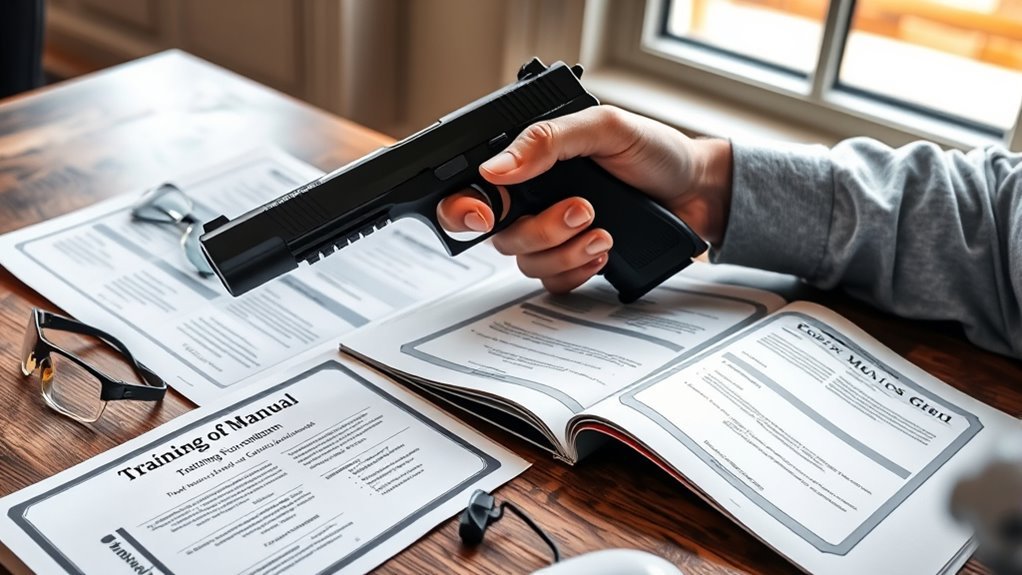
You’ll need to complete mandatory training courses that cover firearm safety and state laws. These usually last between 4 to 6 hours.
The courses often include practical range time to prove your shooting skills and safe handling. Make sure to keep your Certificate of Training. You’ll likely need it when applying for your permit.
Training Course Requirements
Before applying for a gun permit, you need to complete a mandatory firearms safety or training course in most states. This training course usually involves 4 to 6 hours of classroom instruction where you’ll learn about gun laws, safety protocols, and responsible handling.
To move forward with your permit application, you must also demonstrate your firearm proficiency—often through a practical test at a shooting range. After completing the firearms training, you’ll receive a certificate, like LTC-100 or LTC-101, which must be submitted with your application. Some states exempt military members or veterans from this requirement if they provide proper documentation.
Completing the training course guarantees you:
- Understand critical safety measures to protect yourself and others
- Gain confidence in handling firearms responsibly
- Comply fully with legal requirements for your permit application
Safety and Proficiency
Completing your firearms safety training sets the foundation for demonstrating your proficiency with a gun. Most states require you to finish a certified firearms safety and proficiency training course before submitting your permit application.
This course usually includes 4-6 hours of classroom instruction covering gun laws, safe handling, and responsible use. Beyond theory, you’ll need to show your shooting skills through range exercises or practical tests.
Once you successfully complete the training, you’ll receive a certificate of proficiency, which you must include with your permit application. Keep in mind, some states exempt military veterans and law enforcement from these requirements.
Prioritizing firearms safety and completing your proficiency training not only fulfills legal obligations but guarantees you handle your weapon responsibly and confidently. It’s worth taking the time to do it right.
Gather Required Documents and Identification
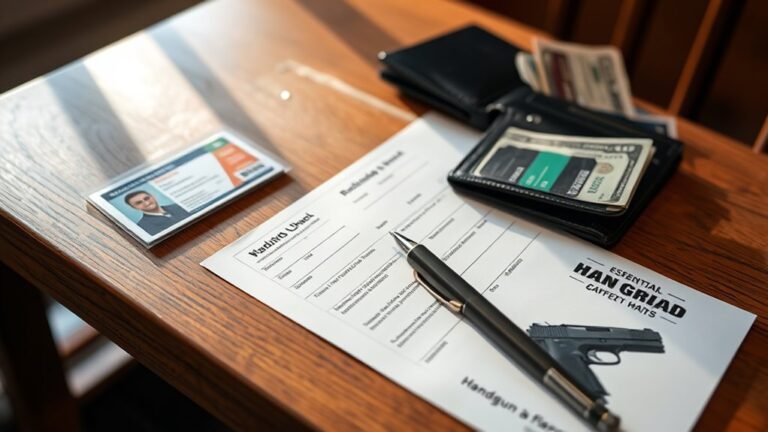
Although gathering all necessary documents might seem tedious, having them ready guarantees a smoother gun permit application process. You’ll need to provide clear proof of identity, such as a valid driver’s license or state ID card.
Equally important is your proof of residency—think utility bills or lease agreements that confirm you live in Georgia. Don’t forget to bring the application fees, which vary by county, and have the proper payment method on hand.
Depending on your permit type, additional documents like training certificates or military service records might also be required.
Make sure you gather:
- Identity documents to establish who you are
- Proof of residency to confirm your Georgia address
- Payment for application fees to avoid delays
Getting these ready shows you’re serious and helps keep the process stress-free.
Submit Your Application, Pay Fees, and Schedule Fingerprinting
Once you have your documents ready, you’ll need to submit your application either online or in person at your local issuing authority. Be sure to complete all sections accurately to avoid delays.
After submitting your application, you’ll pay the required fees, which typically average around $75 but can vary depending on your jurisdiction. Keep your payment confirmation as proof.
Next, schedule your fingerprinting appointment at an authorized law enforcement or fingerprinting center within the required timeframe. This step is vital for background checks.
Make sure to confirm your appointment and payment details with the issuing agency to make certain everything is in order. By following these steps—submitting your application, paying the fees, and completing fingerprinting—you’ll keep your gun permit process moving smoothly and on schedule.
What to Expect After Applying: Interviews, Approval, and Pickup
After submitting your application, payment, and fingerprinting, you can expect to be contacted for an interview or asked to provide additional documents if necessary. The approval process may take weeks or even months, depending on your jurisdiction and application completeness.
After applying and fingerprinting, expect interviews or document requests; approval times vary by location and application details.
Once you receive notification of approval, you’ll be instructed on how to pick up your gun permit, either in person or by mail. Some states require background checks before final approval, so stay patient.
If denied, you’ll get a notification detailing reasons and how to appeal or reapply. Remember, this phase is critical, and staying attentive can make all the difference.
Feel the anticipation build as you await approval. Experience relief when you receive your notification.
Enjoy the moment of pickup, your permit finally in hand.
Maintain Your Gun Permit: Renewals and Legal Updates
To keep your gun permit valid, you’ll need to renew it periodically, typically every 1 to 5 years depending on your state. Renewal usually requires submitting an application, paying a fee, and sometimes completing updated background checks or training.
Many states now offer online renewal options, making it easier to update your permit without visiting an office. Staying informed about changes in gun laws and permit requirements is essential for legal compliance.
Failing to renew on time can lead to penalties and force you to reapply from scratch. So, by keeping track of renewal deadlines and legal updates, you guarantee your permit stays valid and you remain compliant with all current regulations.
Frequently Asked Questions
Is It Legal to Get a Gun Permit Online?
Yes, you can legally apply for a gun permit online in some states, but it depends on your location.
You’ll need to check your state’s specific rules and guarantee you use the official, secure application platform.
It’s always a good idea to stay informed so you’re sure you’re following the right process.
What Is Required for a Gun Permit?
You might think it’s simple, but getting a gun permit requires proof of identity, residency, safety training, fingerprinting, background checks, and fees.
You’ll also need documents proving no felony convictions and sometimes additional paperwork, depending on your state. It can feel like a lot, but these steps are important to keep everyone safe.
Can You Get a Gun Permit Online in Tennessee?
Yes, you can apply for certain gun permits online in Tennessee by creating an account on the official portal and submitting your application with the required documents.
However, some permits may still need in-person processing or fingerprinting.
What Is Needed to Get a Gun Permit in Florida?
To get a gun permit in Florida, you’ll need a valid photo ID, proof of firearm proficiency, fingerprints, background check clearance, and fees paid.
Make sure your training and citizenship documents are up-to-date before you apply. It’s pretty straightforward once you have everything ready. Just double-check all your paperwork so there are no delays.
Conclusion
Applying for a gun permit might seem like a maze, but with these seven essential steps, you’re well on your way to maneuvering it smoothly. Stay sharp by knowing your eligibility, completing training, and keeping your documents ready.
Remember, the process doesn’t end at approval—maintaining your permit is just as important. Follow these steps, and you’ll hold your permit confidently, ready and responsible like a steady hand on your firearm.
By following these key steps, you ensure a smoother application process and become a responsible gun owner. From understanding eligibility requirements to completing safety training, preparing your documents properly, and staying compliant after approval, each step is vital. With patience and care, you’ll navigate the gun permit process confidently and legally, securing your right while prioritizing safety. Keep these essentials in mind, and you’ll be well-equipped to hold your gun permit responsibly and confidently.




8 Comments