What Guns Do Police Officers Use? A Clear Guide
What guns do police officers use? In most departments, the answer is a duty handgun, often backed up by a patrol rifle and, in some agencies, a shotgun. The exact setup depends on department policy, officer assignment, and training.
There is no single nationwide police gun. Different agencies approve different models, and some officers can carry personally owned firearms if they meet the department’s rules.
If you are curious about why police carry certain firearms, the short answer is reliability, training, and consistency. Keep reading to see how the common options compare and why some officers carry more than one gun.
For readers who are also learning the basics of firearm ownership, it may help to review this guide on <>how to purchase a firearm before comparing duty guns.
Key Takeaways
- Most police officers carry a semiautomatic handgun as their primary duty weapon. The gun is usually chosen by the department, not the individual officer.
- Many agencies also authorize a patrol rifle for higher-risk calls. Not every officer carries one every day, but many have access to one in the vehicle.
- Shotguns are still used in some departments, though they are less common than they once were. They may be reserved for special roles or certain units.
- Plainclothes officers and detectives often carry smaller handguns for concealment. Uniformed patrol officers usually carry full-size duty pistols.
- Firearm choice is only part of the job. Officers also train with safety rules, qualification standards, and department use-of-force policies.
Choose the Right Duty Handgun
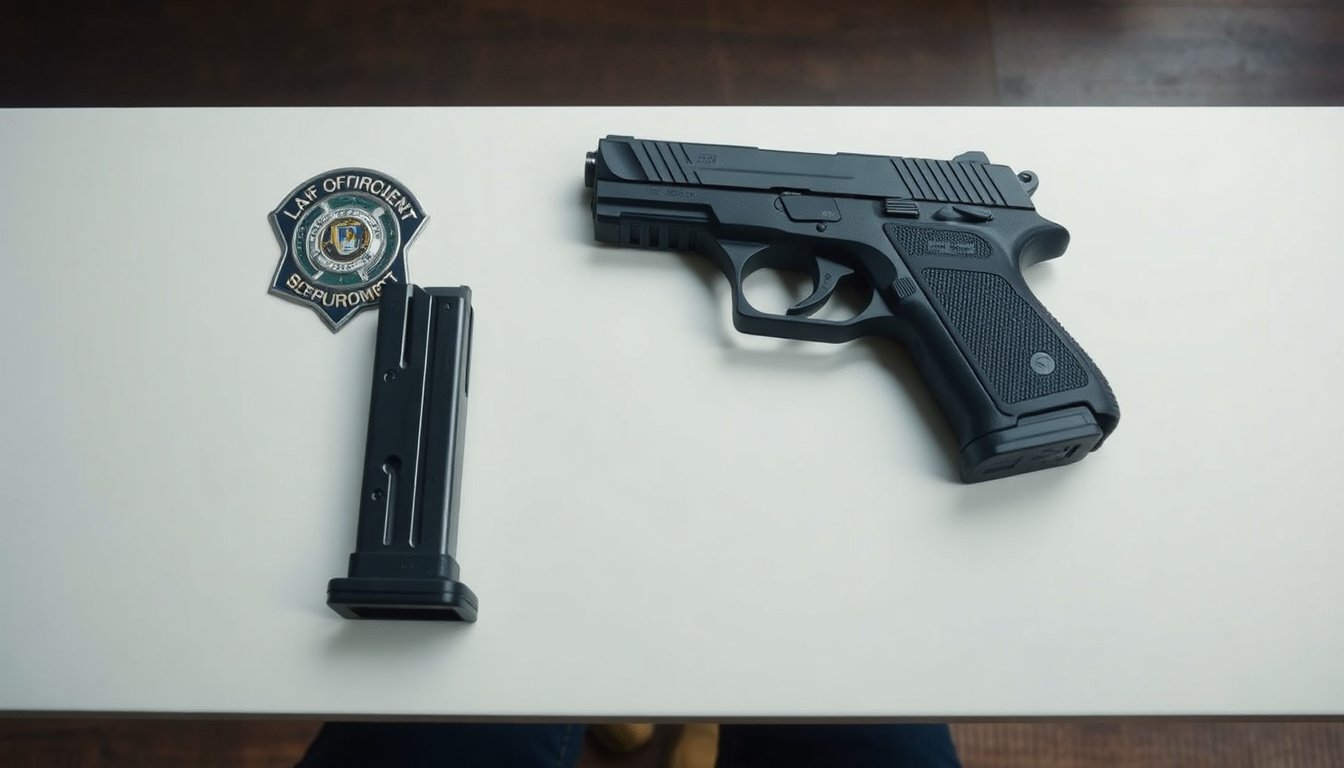
The most common answer to what guns police officers use is a striker-fired semiautomatic pistol. These handguns are popular because they are simple to operate, easy to train on, and available in duty-friendly calibers.
Departments usually pick one model or a short approved list. Officers may carry the department-issued pistol or, in some agencies, an authorized personally owned handgun that fits the policy.
Common duty handgun traits
- Reliable feeding and ignition
- High-capacity magazines
- Accessory rails for lights
- Easy-to-control trigger and sights
- Compatible holster and magazine options
| Police firearm type | Typical use | Common role |
|---|---|---|
| Duty handgun | Carried on the belt every shift | Primary sidearm for most officers |
| Patrol rifle | Stored in the vehicle or issued to qualified officers | Longer-range or higher-risk response |
| Shotgun | Kept by some departments or specialized units | Limited or supplemental use |
Pro tip: the best police duty gun is the one an officer can operate safely, accurately, and consistently under stress.
Carry a Patrol Rifle When Needed
Many agencies authorize patrol rifles as a supplement to the sidearm. These are often AR-style rifles, though the exact platform depends on department policy and approved equipment.
A patrol rifle gives officers better reach, better sight radius, and more control than a handgun. That makes it useful in active threat situations, rural areas, or when officers need to engage from farther away.
Why patrol rifles matter
- Better accuracy at distance
- More stability than a handgun
- Improved target identification with optics and lights
- Useful when a handgun may be too limited
Not every officer is rifle-qualified, and not every department issues the same setup. In many agencies, only trained officers may deploy the rifle, and some departments keep it as a vehicle resource rather than a daily carry gun.
For a related look at long-gun handling, you can also read this guide on <>how to use a nail gun only if you are interested in the site’s tool-style how-to format; it is not related to police firearms and should not be treated as a gun reference.
Use Shotguns in Limited Roles
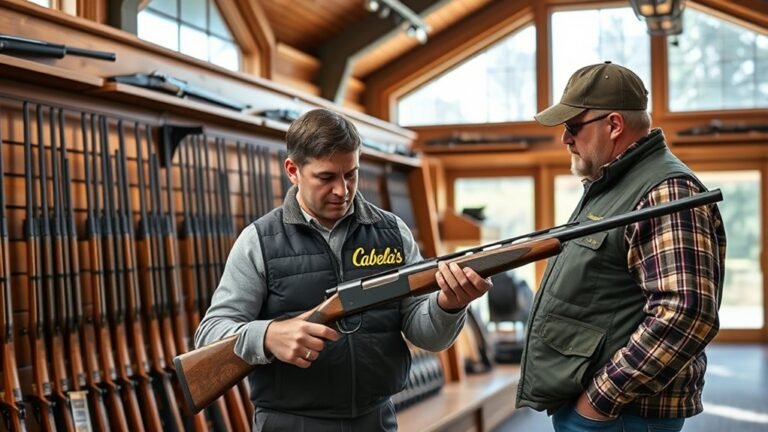
Shotguns used to be more common in police vehicles. Today, they are less dominant than handguns and patrol rifles, but some departments still authorize them.
When they are used, shotguns may serve in breaching roles, specialized applications, or as an option for officers who are qualified on them. Policies vary a lot, so the same department may have officers carrying different long guns for different tasks.
What officers may carry
- 12-gauge pump-action shotgun
- Semi-automatic shotgun in approved setups
- Rifle-caliber long gun for patrol or tactical use
Because shotgun use is more specialized now, it is best to think of it as a supplemental tool rather than the standard police firearm.
Understand Why Departments Standardize Firearms
Departments do not pick guns at random. They standardize firearms to simplify training, maintenance, magazine compatibility, qualification, and policy enforcement.
That matters because police work depends on consistency. If officers carry similar controls, similar manual of arms, and similar sights or holsters, training is easier and mistakes are less likely.
How agencies decide
- Reliability under duty conditions
- Ease of training for new officers
- Parts and holster availability
- Compatibility with lights, optics, and magazines
- Performance in qualification testing
Some agencies issue one firearm to everyone. Others approve several models that meet the same standards. In either case, the agency usually cares less about brand name and more about dependable performance.
Know What Plainclothes Officers Carry
Detectives, undercover officers, and plainclothes personnel often carry smaller handguns than uniformed patrol officers. The goal is concealment, comfort, and a lower-profile appearance.
These guns are usually compact or subcompact versions of duty pistols. Even then, the basic idea stays the same: the officer needs a firearm that is safe, reliable, and approved by policy.
Regardless of role, the core safety rules still apply. Treat every firearm as loaded, keep the muzzle pointed in a safe direction, keep your finger off the trigger, and unload and verify before cleaning or maintenance.
Follow Safety and Policy Before Handling Any Gun
Police firearms are serious tools, and the same basic rules that apply to civilian guns also apply here. A duty weapon should always be handled with discipline and verified safe before any cleaning, inspection, or storage change.
Gun laws and law-enforcement policies also vary by place. If you need legal guidance about carry, transport, or agency rules, confirm the current rules where you live with official sources or a qualified attorney.
- Treat every firearm as loaded.
- Keep the muzzle in a safe direction.
- Keep your finger off the trigger until ready to fire.
- Unload and verify before cleaning or maintenance.
- Follow department policy and local law.
Frequently Asked Questions
Do all police officers carry the same gun?
No. There is no single gun used by every police officer in the United States. Departments choose their own approved firearms, so the answer can change from one city, county, or agency to another.
Do police officers carry Glock pistols?
Many do, but not all. Glock handguns are common in law enforcement because they are simple, durable, and widely supported, but other brands are also used depending on agency policy.
Do police officers still use revolvers?
Revolvers are rare in modern uniformed policing. Most departments moved to semiautomatic pistols because they offer greater capacity and faster reloads, though some officers may still own or collect revolvers privately.
Do detectives carry different guns than patrol officers?
Often, yes. Plainclothes officers commonly use smaller handguns for concealment, while patrol officers usually carry full-size duty pistols. The exact model still depends on department approval and training.
Conclusion
So, what guns do police officers use? Most carry a semiautomatic duty handgun, many have access to a patrol rifle, and some departments still authorize shotguns. The exact firearm depends on the agency, the officer’s assignment, and the department’s approved list.
If you want the simplest summary, think of police firearms as tools chosen for reliability, training, and consistency rather than brand loyalty. The most important part is not the model name, but whether the officer is qualified, familiar, and safe with it.
If you are comparing firearms for your own use, start with safety, legal compliance, and proper training first.