
How to Legally Own Automatic Guns | Step-By-Step Guide
To legally own an automatic gun, you must first guarantee the firearm was made before May 19, 1986, as newer models are restricted to military or law enforcement. This is a crucial step because only pre-1986 automatic guns are eligible for civilian ownership under current federal law. Ensuring your firearm fits this criterion is the foundation of the legal process.
Next, you’ll need to complete ATF Form 4, which is the application to transfer and register the firearm with the Bureau of Alcohol, Tobacco, Firearms and Explosives. Along with the form, you must submit fingerprints and photos as part of the background verification process.
Don’t forget to pay a $200 tax, which is required for the transfer of National Firearms Act (NFA) items like automatic guns.
Passing a thorough FBI background check is mandatory to ensure you meet all legal requirements. Additionally, local law enforcement approval is often required, so be prepared to involve your local police or sheriff’s office.
Once approved, you must comply with strict storage and registration requirements to remain within the law.
Keep following these steps carefully to navigate the complete legal process. Owning an automatic gun legally is complex, but with patience and attention to detail, it’s entirely possible to do so in full compliance with federal and local laws.
Key Takeaways
- Confirm the automatic gun was manufactured before May 19, 1986. Newer models are restricted to law enforcement and military only.
- Complete ATF Form 4, submit fingerprints, passport photo, and pay the $200 transfer tax for ownership application.
- Obtain local law enforcement sign-off and pass FBI background check. This includes criminal and legal history verification.
- Await ATF approval, which usually takes 9 to 12 months. Make sure all documentation and registration requirements are met.
- Maintain compliance with federal and state laws. Secure proper storage, and keep all legal documentation current for ownership.
Eligibility and Legal Requirements for Owning Automatic Guns
Although owning an automatic gun is heavily regulated, you can legally possess certain machine guns if they were manufactured before May 19, 1986. Federal law restricts machine guns made after this date to law enforcement and military use only.
For ownership, you must complete ATF Form 4, pay a $200 transfer tax, and pass a thorough FBI background check. The transfer process also requires firearm registration, fingerprinting, and ATF approval.
Private individuals must follow these strict steps to comply with federal law. Remember, state laws may add further restrictions, so you need to navigate full compliance in your jurisdiction.
Application Process and Compliance for Automatic Gun Ownership
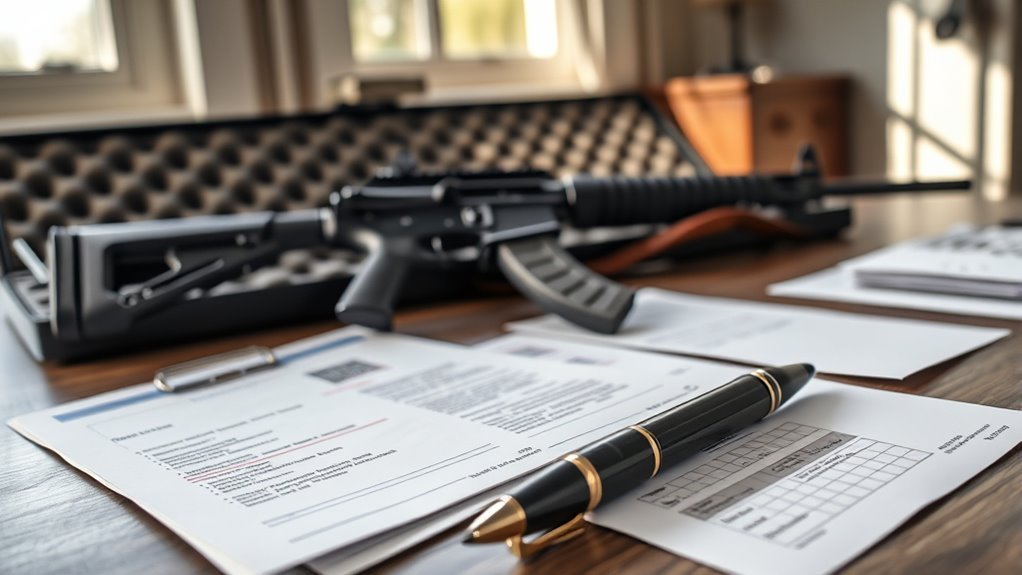
When you apply to own an automatic gun, you’ll need to complete ATF Form 4, submit your fingerprints and a passport photo, and pay a $200 transfer tax. Your application triggers a thorough background check, including an FBI background review, and requires a signature from your local law enforcement.
You must verify the firearm is one of the registered machine guns made before 1986, as only those qualify. If you hold a federal firearms license, the process remains the same but might streamline some steps.
The ATF approval process typically takes 9 to 12 months, during which your application undergoes firearm registration and ownership transfer scrutiny. Throughout, you must maintain strict legal compliance by following federal and state laws plus secure storage requirements.
Frequently Asked Questions
How to Legally Own a Fully Automatic Weapon in Ohio?
You need a Federal Firearms License with Special Occupational Tax. Next, find a registered pre-1986 machine gun.
Then, complete ATF Form 4 and pass the required background checks. Don’t forget to pay the transfer taxes as well.
Also, make sure to comply with storage and recordkeeping laws in Ohio. It’s important to stay within all legal requirements to own a fully automatic weapon.
How Much Does It Cost to Own a Fully Automatic Weapon?
You might be surprised, but owning a fully automatic weapon can cost you over $15,000 upfront.
Add a $200 tax stamp, months of waiting, and extra legal and maintenance fees, and the total climbs even higher.
It’s definitely not a cheap or quick process. So, if you’re thinking about it, be prepared for more than just the sticker price.
How to Legally Own a Machine Gun in Texas?
You’ll need to find a pre-1986 registered machine gun, complete ATF Form 4, and pay the $200 tax. You’ll also have to pass background checks and comply with Texas laws.
Make sure to securely store the gun and keep accurate transfer records. This is important to stay on the right side of the law.
Can You Own a Fully Automatic Weapon in Tennessee?
Yes, you can own a fully automatic weapon in Tennessee if it was made before 1986. It must be registered with the ATF, and you need to complete the required paperwork.
Also, there’s a $200 tax that you have to pay. Keep in mind, local laws might add some extra restrictions.
Conclusion
Owning an automatic gun legally means balancing your right with strict responsibility. While it might seem thrilling to wield such power, you must navigate complex eligibility rules and thorough application processes.
This contrast—between freedom and regulation— reminds you that owning an automatic weapon isn’t just about possession; it’s about respecting the law and ensuring safety.
If you’re ready to follow every step carefully, you can legally enjoy this right without crossing any boundaries. Remember, understanding the legal requirements and adhering to all regulations is key to owning automatic guns legally and safely.




One Comment