When Was the Revolver Invented? The History Explained
If you are asking when the revolver was invented, the short answer is 1836. That is when Samuel Colt received the U.S. patent for the revolver mechanism that made the modern repeating handgun practical.
The longer answer is a little more interesting. Revolver-like firearms existed before Colt, but his design was the one that turned the idea into a reliable, commercially successful handgun.
So the revolver was not born from a single moment. It developed through earlier experiments, then became famous after Colt’s patent and the first production models that followed.
In this guide, you will see how the revolver evolved, why 1836 matters, and what came before and after it.
Key Takeaways
- The modern revolver is usually dated to 1836, when Samuel Colt received his U.S. patent. That patent covered the mechanism that made repeating handguns practical.
- Earlier revolving firearms existed before Colt. They were important steps, but they were not as practical or widely adopted as Colt’s design.
- Colt’s revolver used a rotating cylinder to line up a fresh chamber with the barrel after each shot. That was the key breakthrough.
- The first successful revolvers helped reshape handgun design and later influenced military and civilian sidearms.
- If you are learning about revolvers for safe handling, always treat every firearm as loaded, keep the muzzle pointed in a safe direction, and verify the gun is unloaded before any cleaning or maintenance.
Trace the Revolver Back to Its Earliest Forms
People often say Colt invented the revolver, but the full history starts earlier. Engineers and inventors had already been working on multi-shot handguns and revolving mechanisms long before 1836.
Those early designs were the foundation. They showed that a firearm could fire more than one shot without full reloading, even if the system was still clumsy, fragile, or hard to produce.
What came before the modern revolver
Before Colt, there were revolving firearms with multiple chambers and earlier ideas that used rotating barrels or cylinders. Some were clever, but they often lacked the reliability, sealing, or manufacturing consistency needed for widespread use.
That is why the revolver history is not just about one inventor. It is also about the long path from experiment to practical sidearm.
Pro tip: When you study firearm history, separate the first idea from the first practical design, because those are not always the same thing.
Understand Why Samuel Colt Matters
Samuel Colt’s big contribution was not simply the idea of a revolving chamber. It was making the concept practical enough to produce, sell, and use effectively.
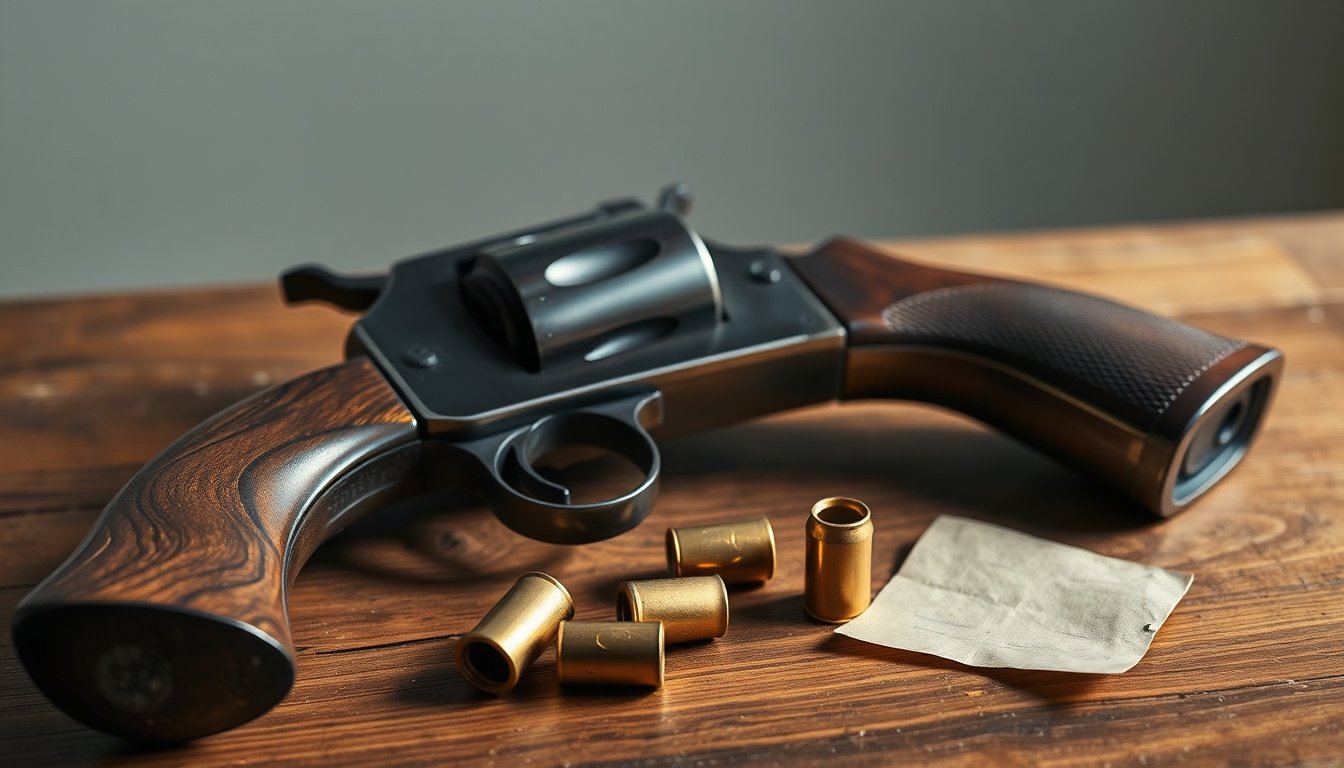
His patent in 1836 is the date most people mean when they ask when the revolver was invented. The Colt Paterson revolver followed soon after and became the best-known early example of the type.
That matters because the revolver became truly influential once it could be made in useful numbers and trusted in the field. In other words, the revolver was invented as a concept earlier, but it became the modern revolver with Colt.
If you want a simple one-sentence answer, this is it: the revolver as we know it is generally credited to Samuel Colt’s 1836 patent.
See How the Mechanism Changed Handguns
The revolver’s key advantage was simple. Instead of loading and firing one chamber at a time, the cylinder rotated to bring a fresh chamber into alignment with the barrel.
That gave shooters more shots before reloading and made the handgun far more practical for defense, duty use, and travel. It also set the pattern for many revolvers that came later.
Why the design was a breakthrough
- More shots without a full reload.
- Faster follow-up firing than many earlier handguns.
- More practical carry for civilians and soldiers.
- A lasting design that stayed relevant for generations.
| Milestone | What happened | Why it matters |
|---|---|---|
| Early revolving firearms | Inventors experimented with rotating chambers and barrels. | These proved the basic idea could work. |
| 1836 Colt patent | Samuel Colt received the U.S. patent for a revolver mechanism. | This is the date most people use for the modern revolver. |
| Early production models | Colt’s designs entered manufacture soon after the patent. | The design became practical, visible, and influential. |
For a broader look at the development of firearms in general, you can also read the blog’s <>guide to purchasing a firearm, which covers modern ownership considerations from a practical angle.
Recognize the Difference Between Invention and Adoption
One reason this topic gets confusing is that “invented” can mean different things. It can mean the first sketch of an idea, the first patent, the first working model, or the first successful commercial product.
For the revolver, those stages do not all point to exactly the same year. That is why historians usually give 1836 as the important date, while also acknowledging earlier revolving-gun ideas.
If you are looking for a clean answer for general use, 1836 is the safest and most common one. If you want the deeper historical view, the revolver was part of a longer chain of invention that came before Colt.
Common ways people describe the date
- First idea: earlier revolving firearm concepts existed before Colt.
- First practical revolver: usually tied to Colt’s 1836 patent and early production.
- First modern revolver: also commonly linked to Colt.
Know What Came After the First Revolver
After Colt’s breakthrough, revolvers kept improving. Later designs refined loading, durability, ignition systems, and cartridge use.
Those improvements helped revolvers stay important even as other handgun types developed. The basic rotating-cylinder concept remained central, but the details changed over time.
This is why revolvers still have a strong place in firearms history. They were not just a passing invention. They became one of the defining handgun designs of the 19th century and beyond.
For readers interested in safe handling and lawful ownership, it is worth remembering that firearm rules vary by place. Always confirm current local and federal requirements with official sources or a qualified attorney before buying, carrying, or transferring any firearm.
Frequently Asked Questions
Was the revolver invented in 1836?
Yes, 1836 is the date most often used for the invention of the modern revolver. That was when Samuel Colt received his U.S. patent for the mechanism that made the design practical. Earlier revolving firearms existed, but 1836 is the key date for the modern version.
Did Samuel Colt invent the first revolver ever made?
Not exactly. Colt did not create the first revolving firearm idea, but he is widely credited with inventing the first practical modern revolver. Earlier inventors had worked on similar concepts before him.
Why is the revolver such an important invention?
The revolver made it possible to fire multiple shots before reloading, which was a major advance in handgun design. That improved speed, convenience, and usefulness for both civilian and military users.
What is the difference between a revolver and a pistol?
In common use, a revolver is a handgun with a rotating cylinder, while a pistol usually means a semi-automatic handgun. The terms are sometimes used loosely, but the operating systems are different.
Conclusion
If you are asking when the revolver was invented, the best short answer is 1836. That is when Samuel Colt’s patent made the modern revolver a practical reality.
At the same time, the story started earlier, with revolving firearms and repeated attempts to solve the same problem: how to fire more than one shot without a full reload. Colt’s design turned that idea into a lasting success.
Once you know that timeline, the revolver’s place in firearms history becomes much clearer. The invention was not a single isolated moment, but 1836 is the year that changed everything.