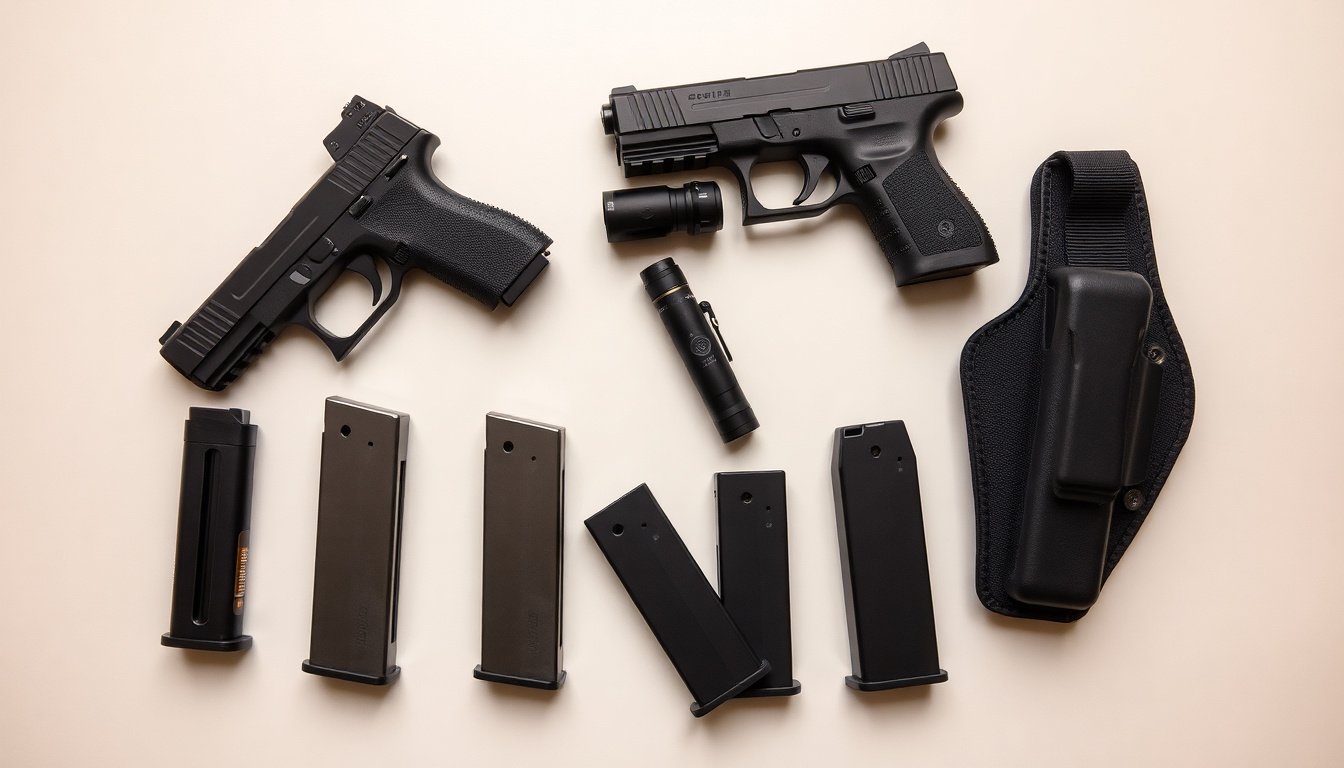
What Guns Do Cops Use? Duty Pistols Explained
If you’re asking what guns cops use, the short answer is that most officers carry a semiautomatic pistol as their main sidearm. The exact make and model depends on the department, the job, and the officer’s duty requirements.
There is no single police gun used everywhere. One agency may issue one approved pistol, while another lets officers choose from a list of approved handguns after qualification.
In addition to a sidearm, many officers also have access to a patrol rifle or a shotgun in the vehicle. Those long guns are usually reserved for specific situations, not everyday belt carry.
This guide breaks down the common police firearms, why departments pick them, and what you should know if you’re comparing police guns to civilian carry guns. It also explains the safety basics that matter anytime a firearm is handled.
For readers researching firearm ownership more broadly, the process of choosing and buying a gun is covered in our guide on <>how to purchase a gun.
Key Takeaways
- Most police officers carry a semiautomatic pistol as their primary duty weapon. The exact model varies by department and agency policy.
- Common duty calibers are usually 9mm today, although some agencies still authorize other calibers. Departments balance recoil, capacity, cost, and training needs.
- Many patrol cars also carry a rifle or shotgun. These are typically used for higher-risk calls or specialized situations, not normal patrol work.
- Departments often choose firearms based on reliability, compatibility with optics and lights, qualification results, and logistics like ammo and holster support.
- If you are handling any firearm, follow the basic safety rules: treat it as loaded, keep the muzzle in a safe direction, keep your finger off the trigger, and unload and verify before cleaning or maintenance.
What Guns Do Cops Use on Duty?
For most officers, the answer starts with a handgun on the belt. That duty pistol is the firearm they are most likely to carry every shift, and it is usually the gun they train with the most.
Departments can issue a specific model or allow approved personal carry options. Either way, officers normally have to qualify with the gun and meet agency standards for holsters, ammunition, and accessories.
Common duty pistol features
- Semi-automatic action for faster reloads and higher capacity than older revolvers.
- 9mm chambering in many departments because it tends to balance recoil, capacity, and training costs well.
- Accessory rails for lights.
- Optic-ready slides on newer models.
- Polymer frames and striker-fired designs, which are common in modern law enforcement.
That does not mean every officer carries the same thing. Some departments still authorize.40 S&W or.45 ACP, and some agencies issue revolvers only for very specific roles. But the overall trend has moved toward modern semi-automatic pistols.
Pro tip: If a department changes pistol models, it usually has to change holsters, training, and qualification standards too.
Which Police Handguns Are Most Common?
When people ask what cops carry, they often want brand names. The most common answer in the U.S. is still a family of well-known duty pistols from a few major makers, especially in 9mm.
Instead of guessing one universal model, it helps to think in categories. Departments often look for a pistol that is reliable, simple to train on, and easy to support with parts, magazines, and duty holsters.
| Common police handgun type | Why departments like it | Typical use |
|---|---|---|
| Striker-fired 9mm pistol | Simple manual of arms, good capacity, manageable recoil | Primary duty sidearm |
| Full-size duty pistol | Longer sight radius, better grip, duty-ready controls | Uniformed patrol |
| Compact approved pistol | Easier concealment and off-duty carry | Backup or plainclothes carry |
| Older metal-frame pistol | Already in inventory, familiar to some officers | Legacy issue or specialized use |
Some agencies also permit a backup handgun for concealed carry on duty or off duty. Those smaller guns are usually chosen for convenience, not as a replacement for the primary duty weapon.
What Long Guns Do Police Keep in Vehicles?
Many patrol vehicles carry more than a handgun. A rifle or shotgun may be stored in the cruiser for situations where the duty pistol is not the best tool.
These long guns are usually not carried in the same way as a sidearm. They are brought out for active threats, barricaded subjects, or other incidents where more accuracy, reach, or power is needed.
Patrol rifle
A patrol rifle is often an AR-pattern rifle in a common intermediate caliber. Departments like rifles because they are familiar to train with, easy to accessorize, and useful at longer distances than a handgun.
Shotgun
Some agencies still use 12-gauge shotguns in patrol cars. Others have reduced shotgun use in favor of rifles, but shotguns still appear in many fleets for breaching, less-lethal loads, or specialized needs.
Policies vary a lot here. One department may require officers to carry a rifle in the vehicle, while another may keep long guns for supervisors, SWAT, or other designated roles only.
How Police Departments Choose Firearms
Police firearm selection is usually a practical decision, not a fashion contest. Departments want guns that are dependable, affordable to support, and easy to train around.
That is why the same model may show up in many agencies. Once a department invests in one platform, it often keeps using it because switching pistols affects holsters, armorers, magazines, and retraining.
Main selection factors
- Reliability under duty conditions.
- Ease of training for new and experienced officers.
- Parts and magazine availability.
- Compatibility with lights, optics, and duty holsters.
- Recoil control and shooter confidence.
- Cost of guns, ammo, and support equipment.
Departments also have to think about qualification scores and user preference. A gun that works well on paper still has to fit the officer well enough to be carried safely and accurately every day.
If you are interested in the paperwork side of firearm ownership, you may also want to read about <>how to obtain a gun license.
Police Guns vs Civilian Carry Guns
A police duty gun and a civilian concealed-carry gun can overlap, but they are not the same thing. Police often need a firearm that works with a uniform, a retention holster, a light, and a long shift.
Civilians usually care more about concealment, comfort, and simple carry under everyday clothing. That is why a full-size duty pistol may be common in police work, while a compact or subcompact gun may be more popular for concealed carry.
Practical differences
- Duty guns are often larger and easier to shoot well under stress.
- Civilian carry guns are often smaller and easier to hide.
- Police holsters usually have retention features that are not common on civilian range rigs.
- Police setups are more likely to include weapon lights and optics.
That said, some of the same brands and models appear in both worlds. The difference is often less about the gun itself and more about the role it has to fill.
Pro tip: A gun that is easy to carry but hard to shoot well is usually the wrong tradeoff for duty use.
What About Safety and Training?
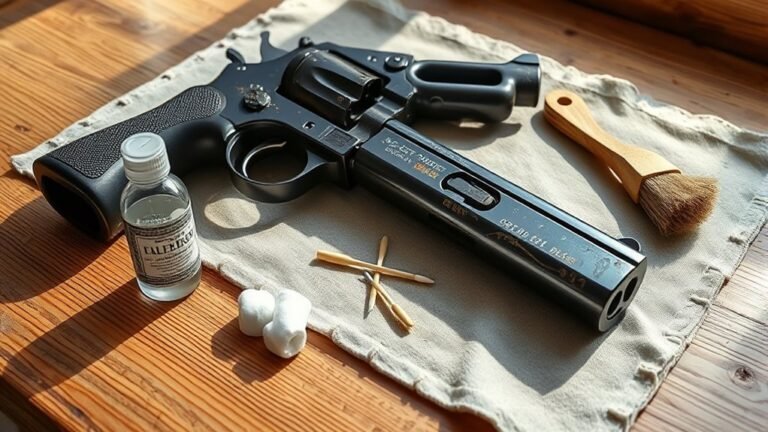
No matter what gun a cop carries, safe handling is non-negotiable. The basic rules still apply: treat every firearm as loaded, keep the muzzle pointed in a safe direction, keep your finger off the trigger until you are ready to fire, and unload and verify before cleaning or maintenance.
Police agencies spend a lot of time on qualification, judgment, and use-of-force policy because the firearm is only one part of the job. Training matters as much as the brand name on the slide.
If you are a civilian choosing a firearm for home defense, carry, or the range, do not assume a police gun is automatically the best fit for you. The right choice depends on your hand size, training, local laws, and how you plan to use it.
Frequently Asked Questions
Do all cops carry the same gun?
No. Many departments issue one approved handgun, but others allow several models from an approved list. The exact gun can vary by state, agency, assignment, and whether the officer is on duty or plainclothes.
What caliber do police usually use?
9mm is the most common modern duty caliber in many agencies. Some departments still authorize.40 S&W,.45 ACP, or other calibers, but 9mm has become the most widely used choice for many police handguns.
Do police keep rifles in their cars?
Often, yes. Many patrol cars carry a rifle or shotgun, but policies vary by department. Long guns are usually reserved for situations that call for more reach, precision, or tactical flexibility than a handgun can provide.
Can police officers choose their own gun?
Sometimes. Some departments issue a fixed sidearm, while others allow officers to carry approved personal firearms after qualification. Even when officers can choose, the gun still has to meet department policy for safety, optics, holsters, and ammunition.
Conclusion
If you wanted a simple answer to what guns do cops use, the best one is this: most police officers carry a modern semiautomatic duty pistol, and many also have a rifle or shotgun available in the patrol car.
The exact model changes from one department to another, but the logic behind the choice is usually the same. Agencies want a firearm that is reliable, controllable, easy to train with, and supported by the right gear.
Whether you are a new gun owner, a collector, or just curious about police equipment, the key is to look past the brand name and focus on role, policy, and safe handling. Keep learning, keep training, and always follow the basic firearm safety rules.