What Guns Do Police Use? Common Duty Weapons Explained
If you are wondering what guns police use, the short answer is that there is no single nationwide model. Most officers carry a duty pistol, and many departments also authorize a patrol rifle or shotgun for specific jobs.
The exact firearm depends on the agency, the officer’s assignment, training rules, and local policy. In some departments, officers can choose from a short approved list, while others issue one standard sidearm to everyone.
That is why you will hear different answers from different cities and counties. Keep reading to see the common types, how they are used, and why police firearms are chosen the way they are.
If you are also comparing the civilian side of firearm ownership, it helps to understand the basics of <>how to purchase a firearm and the rules that apply where you live.
Key Takeaways
- Police do not use one universal gun. Departments set their own approved duty weapons and training standards.
- The most common police handgun today is usually a striker-fired semi-automatic pistol, often chambered in 9mm.
- Many officers also have access to a patrol rifle or shotgun for higher-risk calls or special assignments.
- Some agencies still allow revolvers or older calibers in limited roles, but that is less common now.
- Firearm choices for law enforcement are shaped by reliability, training, magazine capacity, and policy, not by brand loyalty alone.
Choose the Right Duty Handgun
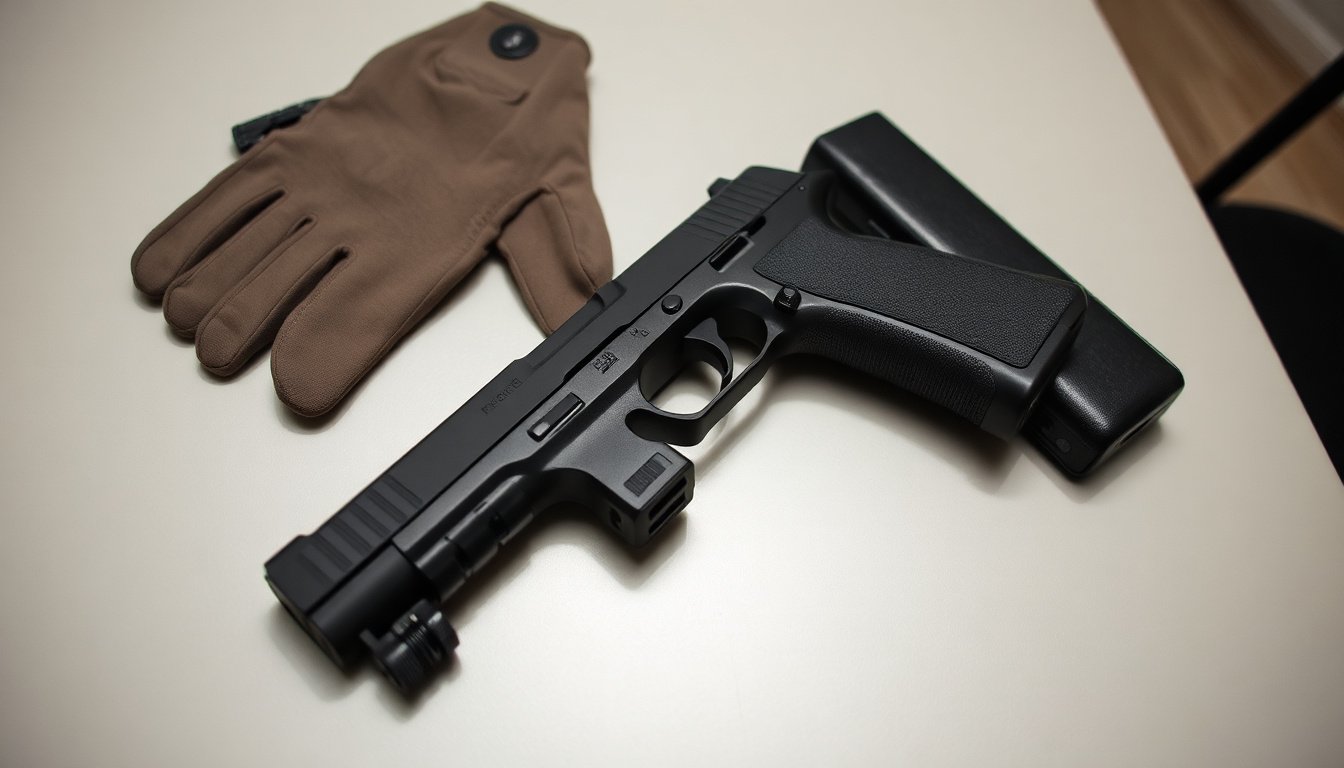
The handgun is the main sidearm for most police officers. It is usually carried on the belt in a holster and is meant for daily patrol work, traffic stops, and defensive use when a firearm is needed.
In many agencies, the preferred handgun is a striker-fired semi-automatic pistol. These guns are popular because they are simple to train on, fairly rugged, and available in common service calibers.
Common handgun features
- Striker-fired action for a consistent trigger pull.
- 9mm chambering in many modern departments.
- Detachable magazines for faster reloads than older revolvers.
- Accessory rails for lights on some duty models.
- Optic-ready slides in newer issue guns or approved upgrades.
Departments may also approve.40 S&W or.45 ACP handguns, especially if they were adopted years ago. However, many agencies have moved toward 9mm because it offers lower recoil and higher magazine capacity in a similar-sized pistol.
Pro tip: if you are trying to identify a police handgun by sight, focus on the holster, magazine size, and trigger style first, not just the logo on the slide.
Pick a Patrol Rifle for Longer Distances
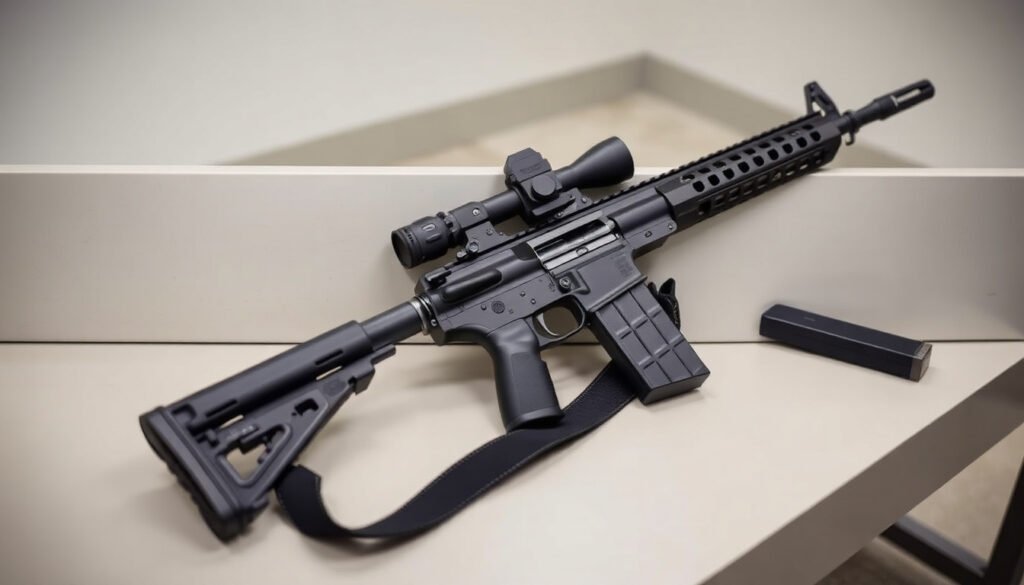
Many departments now issue or authorize a patrol rifle for situations that are too far away or too dynamic for a handgun alone. This is often a semi-automatic rifle in a carbine format, commonly based on the AR-style platform.
A patrol rifle is usually stored in a locked rack or case in the vehicle. Officers may deploy it for active threats, rural calls, building searches, or incidents where greater accuracy and distance are important.
These rifles are not meant to replace the sidearm. They are a backup long gun that gives the officer more precision and more control when policy allows its use.
Why rifles are common
- Better accuracy at distance than a handgun.
- More stable shooting platform.
- Often easier to control under stress than a pistol.
- Compatible with lights, slings, and optics in many agencies.
Some agencies have the rifle as a standard patrol long gun, while others reserve it for specific officers or specialized teams. The exact setup depends on budget, training, and department policy.
Use Shotguns and Specialty Long Guns
Shotguns used to be even more common in police cars than they are now, but they are still present in many departments. They may be used for breaching, less-lethal launchers in some setups, or as a close-range long gun when policy and training support it.
Police shotguns are often pump-action models, though some departments use semi-automatic versions. Common examples in law enforcement are selected for reliability, manageable recoil, and ease of maintenance.
Other long guns you may see
- Patrol shotguns for close-range work and special tools.
- Designated marksman rifles for trained officers in some agencies.
- Specialty tactical rifles for SWAT or specialized units.
Long guns are usually policy-controlled and may require extra qualification before an officer can carry them. That helps ensure the firearm is used only by trained personnel.
Compare Common Police Firearm Types
If you want a quick reference, this table shows the most common categories of police firearms and how they are typically used.
| Firearm type | Typical role | Common modern choice | Why agencies choose it |
|---|---|---|---|
| Duty pistol | Everyday carry | Striker-fired 9mm semi-automatic | Reliable, easy to train on, good capacity |
| Patrol rifle | Long-range response | AR-style carbine | More accurate and controllable at distance |
| Shotgun | Close-range and specialty tasks | Pump-action or semi-auto | Simple, durable, and versatile |
| Revolver | Limited or older-approved carry | .38 Special or.357 Magnum | Still allowed in some places, but less common |
That table is only a general guide. The approved firearms in your area may be narrower or broader depending on department policy.
Understand Why Police Choose Certain Guns
Police firearms are selected for practical reasons, not because of advertising or trends. The main concerns are reliability, safety, training simplicity, parts availability, and how well the gun fits the job.
A department may also think about how easy the gun is to qualify with each year. If a firearm is hard to maintain or hard to train on consistently, it is less attractive for duty use.
Main selection factors
- Reliability under dirty, wet, or hard-use conditions.
- Ease of training for many officers with different experience levels.
- Magazine capacity and overall handling.
- Parts and holster support for large-scale issue.
- Policy compliance across shifts and assignments.
That is also why a police department may switch from one caliber or platform to another over time. The decision is often based on training data, procurement needs, and instructor feedback, not just personal preference.
Know How Police Guns Differ From Civilian Guns
Police guns are often similar to civilian models, but the rules around them are different. An officer may carry a department-approved version, a duty-graded optic, a weapon light, or other accessories approved by policy.
For civilians, the same firearm may be legal to own only if it meets local and federal rules. Gun laws change, and they vary by state and country, so you should confirm the rules where you live before buying, carrying, or transporting any firearm.
If you are interested in the process of lawful ownership, review a practical guide on <>how to purchase a gun and make sure you understand the legal steps in your jurisdiction.
Also remember the core safety rules whenever a firearm is handled: treat every gun as loaded, keep the muzzle pointed in a safe direction, keep your finger off the trigger until ready to fire, and unload and verify before cleaning or maintenance.
Frequently Asked Questions
Do police use Glock pistols?
Yes, many departments and officers use Glock pistols or other striker-fired service handguns. They are common because they are durable, simple to train on, and available in the calibers many agencies prefer.
That said, Glock is only one of several common duty options. Police agencies may also approve SIG Sauer, Smith & Wesson, and other service pistols depending on local policy.
Do police still carry revolvers?
Some officers or agencies still allow revolvers, but they are much less common than semi-automatic pistols. Revolvers remain legal in many places, yet most modern departments have moved toward higher-capacity duty pistols.
In practice, a revolver today is more likely to be found in a niche role, an older agency policy, or a personal choice where department rules allow it.
Do police carry rifles in their cars?
Many officers do, especially in agencies that authorize patrol rifles. These long guns are usually stored secured in the vehicle and taken out only when policy and the situation call for it.
The exact setup varies a lot by department, training level, and available equipment.
Is there one gun every police officer carries?
No. There is no single gun every police officer in the United States carries. Each department sets its own approved list, and some agencies issue one standard firearm while others allow several options.
That is why the answer to what guns police use depends on the agency, the region, and the officer’s role.
Conclusion
When people ask what guns police use, the best answer is that most officers carry a duty pistol, and many also have access to a patrol rifle or shotgun. The most common modern sidearm is usually a striker-fired 9mm handgun, but the exact model changes from one department to another.
If you want to understand police firearms clearly, focus on the role each gun plays rather than trying to find one universal answer. Duty handguns, patrol rifles, and shotguns each fill a different need, and agencies choose them based on training, reliability, and policy.
Use that same careful approach if you are researching firearms for personal ownership or training. Know the rules, handle every gun safely, and always check local laws before making any decisions.