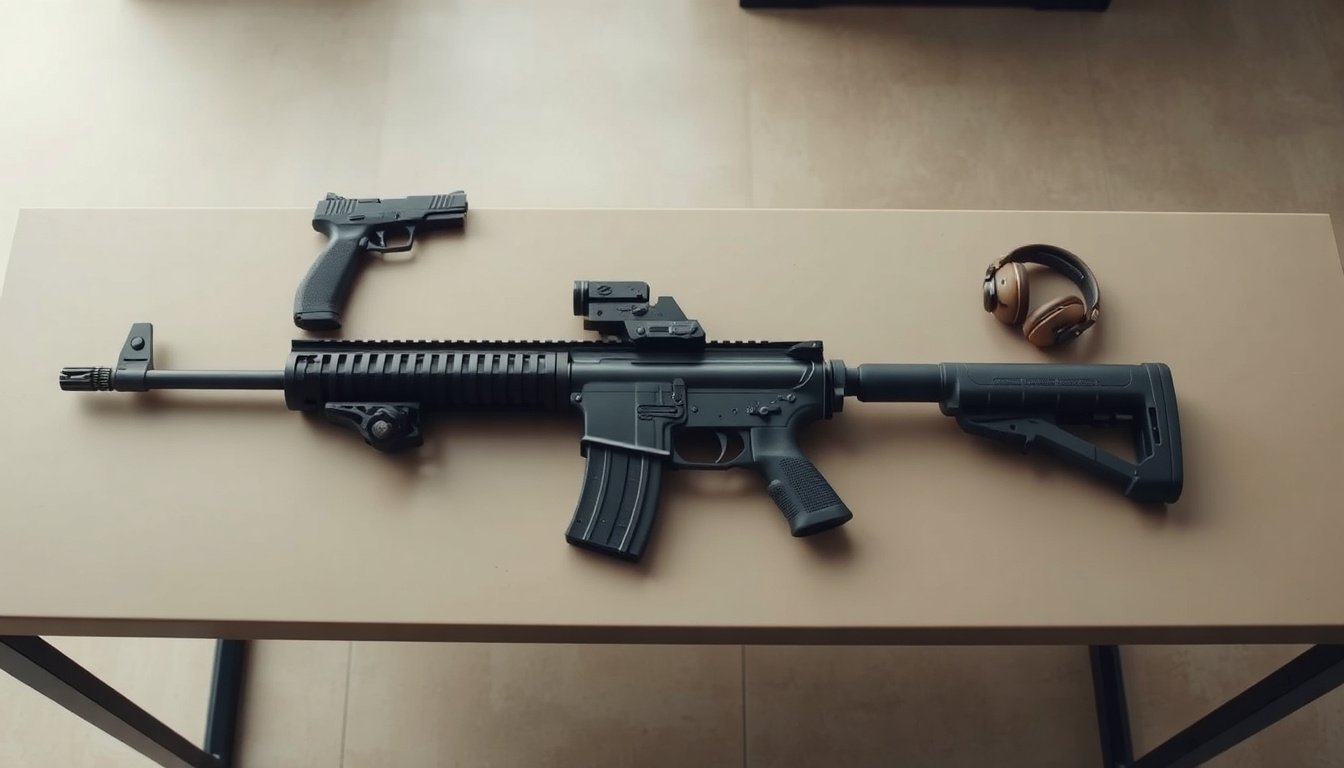
What Guns Do Navy Seals Use? A Clear Breakdown
If you are asking what guns Navy SEALs use, the short answer is: it depends on the mission. The most common answer usually includes a carbine rifle, a 9mm pistol, and, when needed, support weapons like machine guns or precision rifles.
There is no single gun that every SEAL carries all the time. Mission role, unit preferences, and the job at hand all affect the loadout.
That is why online lists can look inconsistent. Some weapons are widely associated with SEALs, while others are used only in certain roles or on certain operations.
In this guide, you will see the most common categories of guns linked to Navy SEAL use and how they fit into a typical special operations toolkit. Keep reading for the clearest practical breakdown.
Key Takeaways
- Navy SEALs do not use one universal gun. Their weapons change based on mission, environment, and role.
- Carbine-style rifles are the most common primary weapons. Shorter rifles are useful for close-quarters work and flexibility.
- Sidearms are secondary weapons. A pistol supports the primary gun rather than replacing it.
- Support weapons, sniper systems, and specialty guns appear in certain missions. They are not carried by every SEAL on every job.
- Always separate public discussion from official issue. Exact current loadouts can vary, and some details are not publicly confirmed.
Start With the Primary Rifle
When people ask what guns Navy SEALs use, they are usually thinking about the main rifle first. In broad terms, that means an M4-style carbine or a similar short rifle platform.
That kind of rifle is popular because it balances size, weight, and control. It works well in tight spaces, vehicles, and mixed environments where a full-size rifle can be harder to handle.
Some public reporting and long-running military coverage also points to other 5.56mm carbines in special operations use, including rifles such as the HK416 in certain contexts. The exact rifle can vary by unit and mission, so it is safer to think in terms of a rifle family rather than one fixed answer.
If you want a general primer on gun ownership and process, see this guide on <>how to purchase a firearm.
Why a carbine makes sense
- It is easier to move with in confined areas.
- It is versatile enough for many mission profiles.
- It can be fitted with optics, lights, and other accessories.
- It gives better reach and control than a handgun.
Pro tip: For any firearm, reliability matters more than hype, so the best weapon is the one that fits the job and has been properly trained with.
Understand the Pistol Role
SEAL sidearms are secondary weapons, not the main fighting tool. A pistol is there for close-range use, backup, and situations where a long gun is not practical.
Public discussion has often centered on the SIG P226 Mk25 and, more recently, Glock 19-style pistols in some special operations circles. The important point is not the exact model in every case, but the fact that handguns are selected to support the mission rather than define it.
That also means pistol rumors spread quickly online. A firearm may be associated with SEALs for years, but that does not mean every team member carries it in every period or every operation.
For general safety and handling guidance, it always helps to review the basic rules before touching any gun: treat every firearm as loaded, keep the muzzle pointed in a safe direction, keep your finger off the trigger until ready to fire, and unload and verify before cleaning or maintenance.
| Weapon type | Typical role | Why it matters |
|---|---|---|
| Carbine rifle | Primary weapon | Most versatile option for general mission use |
| Pistol | Secondary weapon | Backup and close-range flexibility |
| Machine gun | Support weapon | Provides sustained fire for a team |
| Sniper rifle | Precision role | Used for longer-range engagement and observation |
Recognize Support Weapons and Special Roles
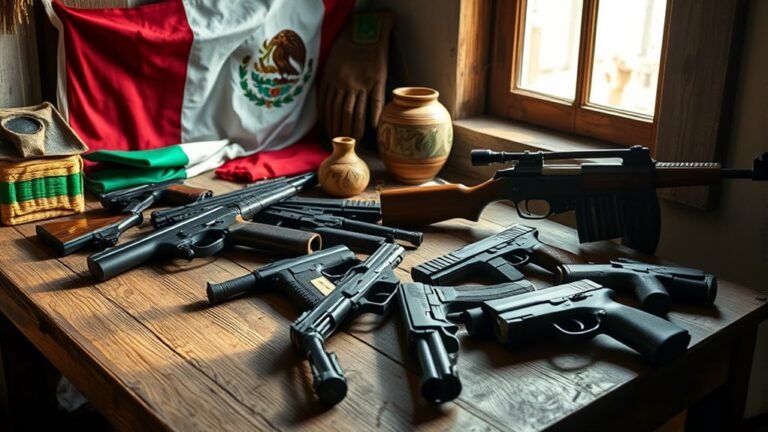
Not every SEAL is carrying the same kind of gun. A team may include people using support weapons, designated marksman rifles, or precision rifles depending on the mission.
These weapons are not everyday general-purpose carbines. They are specialized tools for specific jobs such as longer-range precision, overwatch, or suppressive fire.
Common support categories
- Machine guns for team fire support.
- Precision rifles for longer-distance shots.
- Shotguns for limited breaching or specialized use.
- Compact PDWs for very close-range or specialized environments.
Public sources also mention ammunition categories used by Naval Special Warfare, including 5.56mm, 7.62mm, and.50 caliber rounds. That tells you a lot about the range of weapon systems in the broader SEAL toolkit, even if the exact setup changes from one mission to another.
Separate Popular Myths From Real-World Use
A lot of internet lists present one rifle or one pistol as “the SEAL gun.” That usually oversimplifies the real picture.
Special operations units choose tools based on practical needs. A weapon that appears in one famous mission or one public photo is not automatically the standard across the whole community.
It is also worth remembering that public sources do not always show the full current inventory. Some details remain unconfirmed, and some weapons are used more often by specific elements than by the entire SEAL community.
If you are comparing military firearms, this is a good time to stay skeptical of any list that claims certainty without context. A better question is not “What is the one SEAL gun?” but “What weapons fit this mission and why?”
What Navy SEALs Use by Mission
Mission context changes the loadout more than most people expect. Close-quarters operations, long-range surveillance, maritime work, and vehicle-based missions can all call for different tools.
That is why SEAL weapon choices are better understood as a toolkit than as a fixed inventory. The same operator might use different weapons on different tasks over time.
Quick mission match
- Close-quarters entry: compact rifle or carbine, often with accessories for fast handling.
- General patrol or assault: carbine as the primary weapon, pistol as backup.
- Longer-range role: precision rifle or designated marksman setup.
- Support role: machine gun or another sustained-fire platform.
Because of that flexibility, there is no honest one-line answer that covers every SEAL in every situation. The right answer is broader and more useful: they use mission-appropriate rifles, pistols, and support weapons from a special operations arsenal.
Know the Limits of Public Information
Some weapon information is widely discussed because it has appeared in official documents, military publications, or long-running public reporting. Other details are harder to confirm and may change over time.
That is especially true with elite units. Exact current issue weapons can shift, and some gear is intentionally not publicized in detail.
If you are researching for lawful ownership, training, or history, focus on the broad categories and verified examples instead of chasing rumors. If law matters where you live, check your local rules and official guidance before buying or transferring any firearm.
Frequently Asked Questions
Do Navy SEALs use Glock pistols?
Glock pistols are often discussed in connection with special operations, including SEAL use in some contexts. The exact handgun can vary by era, unit, and mission, so it is better to think of Glock as a commonly mentioned option rather than a universal answer.
Do Navy SEALs still use the SIG P226?
The SIG P226 has a long association with Navy SEALs and special operations history. That said, handgun preferences and issue patterns can change, so the current answer is not always the same across every team or period.
What rifle do Navy SEALs use most often?
The most common public answer is a carbine in the M4 family or a similar short 5.56mm rifle. Some units and missions may also use other carbines, but the general category is the same: a compact, versatile primary rifle.
Do Navy SEALs use sniper rifles?
Yes, SEALs in precision or overwatch roles can use sniper or designated marksman rifles. Those guns are specialized tools, so they are not carried by every operator on every mission.
Conclusion
If you are trying to figure out what guns Navy SEALs use, the most accurate answer is that they use a range of mission-driven weapons. The core idea is simple: a carbine or rifle for primary use, a pistol for backup, and specialized support weapons when the mission demands them.
That makes more sense than chasing one “official” SEAL gun. The real pattern is flexibility, training, and choosing the right tool for the job.
For your own lawful firearm knowledge, keep the focus on safe handling, verified information, and the rules that apply where you live. That is the most practical way to learn from how professionals work without overcomplicating it.