Are Gun Silencers Legal and How to Navigate the Laws
You can legally own a gun silencer in many states, but it’s important to understand the complex laws around them. Gun silencers are regulated by both federal and state laws, so navigating these rules carefully is essential.
Federal regulations require background checks, tax stamps, and registration with the ATF. However, recent court rulings have made some of these steps easier.
That said, some states ban silencers completely or have much stricter regulations in place.
So, before you buy or use a silencer, make sure to check your local laws and any recent changes. Staying informed will help you avoid penalties and stay on the right side of the law.
Keep exploring to learn exactly how these regulations might impact you.
Key Takeaways
- Gun silencers are federally legal but classified under the NFA, requiring registration and background checks. However, the tax stamp fee was eliminated in 2026, making things a bit easier.
- State laws vary widely; some states ban silencers outright. This means they override federal permissions and restrict ownership.
- Recent court rulings have eased federal registration requirements in certain states. So, some buyers can now skip waiting periods, which is great news.
- To legally purchase a silencer, buyers must comply with both federal and state laws. Often, this means working through licensed dealers.
- Always verify local regulations and stay updated on legal changes. That way, you can ensure your silencer ownership is compliant and lawful.
Federal and State Regulations Governing Gun Silencers
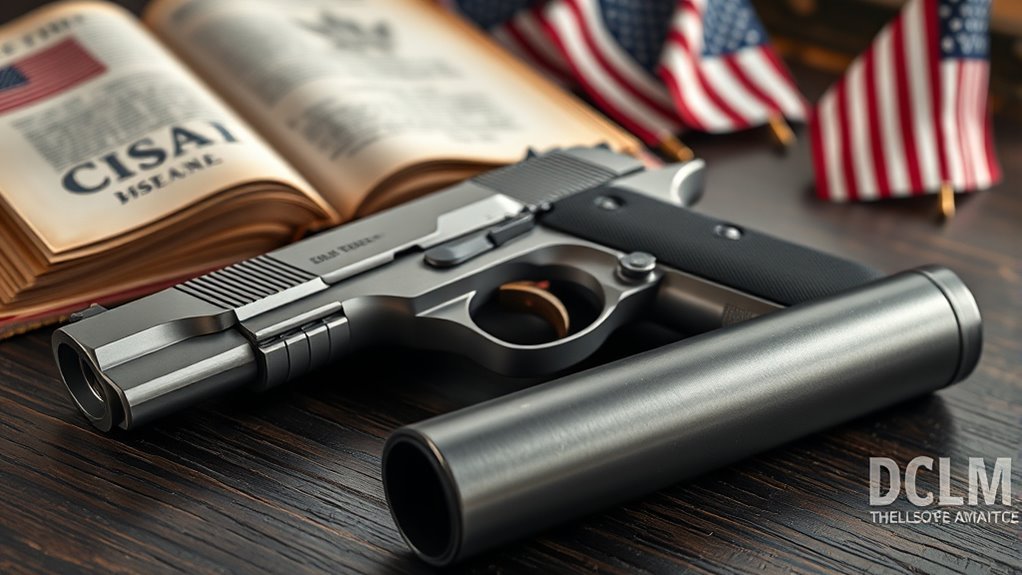
How do federal and state laws impact your ability to own a gun silencer? Under the National Firearms Act (NFA), silencers are classified as firearms, requiring ATF registration, background checks, and a tax stamp—historically $200, now $0 as of 2026.
Federal laws mandate strict compliance with these firearm regulations for transfer and manufacture. However, a 2025 court ruling halted NFA registration enforcement for certain silencers, letting eligible buyers skip registration and waiting periods.
Despite this, you must navigate state bans; places like California, New York, and Illinois prohibit silencers outright, regardless of federal rules. So, while federal laws set a baseline, state bans can further restrict your legal compliance and ability to own a silencer where you live.
Steps to Legally Purchase and Possess a Silencer
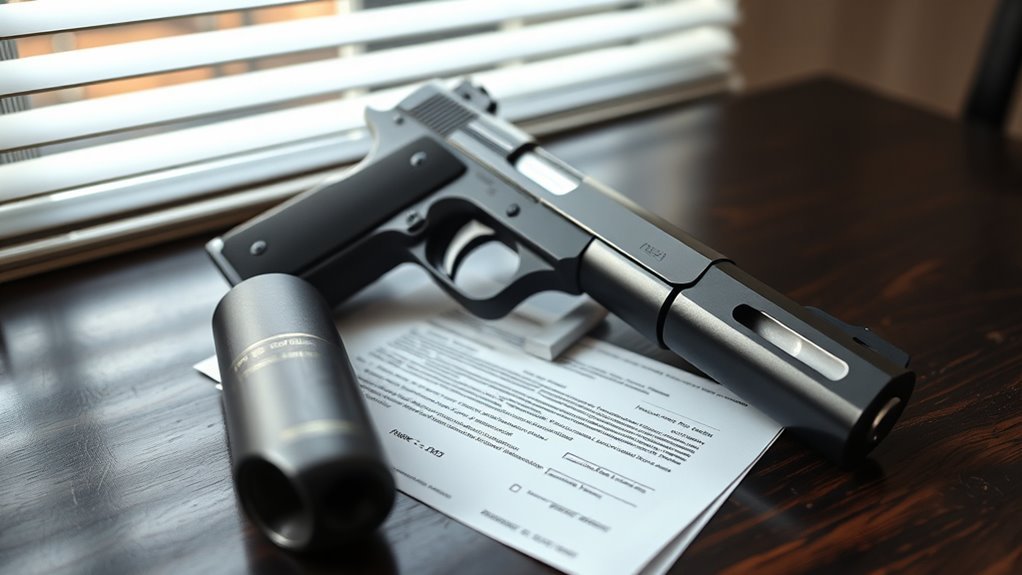
Although federal regulations historically required extensive paperwork and waiting periods, recent changes have streamlined the process for many buyers. To legally purchase gun silencers, you’ll start by passing a federal background check through a licensed FFL dealer.
Thanks to recent court rulings, some states allow suppressor purchases without NFA registration or ATF approval, treating them like standard firearms. However, you must verify your state laws carefully—eight states and D.C. ban silencers outright.
In 27 states, you can even take your suppressor home the same day without waiting for Form 4 or fingerprints. Staying updated on silencer regulations and evolving court rulings is vital to guarantee legal possession and avoid violations.
Always confirm your local laws before proceeding with any purchase. It’s better to be safe than sorry when it comes to these rules!
Frequently Asked Questions
Can ATF Come to Your House if You Have a Suppressor?
The ATF can’t just come to your house for owning a suppressor. They need a warrant or specific cause.
If you’ve legally registered it and follow laws, you don’t have to worry about random visits or searches. So, as long as you’re playing by the rules, you’re pretty much in the clear.
What Is the New Rule on Suppressors?
You might think suppressors still need federal approval, but the new rule lets you buy them without registration, tax, or waiting.
Just remember, this only applies in states that don’t ban suppressors outright.
How Much Jail Time for a Silencer?
You could face up to 10 years in federal prison for illegal silencer possession.
If used in a crime, your sentence might exceed 20 years, especially with prior convictions or additional charges involved.
What Disqualifies You From Owning a Suppressor?
You’re disqualified from owning a suppressor if you’re a convicted felon or have a history of domestic violence.
Also, if you fail background checks or provide false information, that can stop you from owning one.
Being mentally incompetent, having illegal drug convictions, or certain court orders against you will also disqualify you.
Basically, there are several reasons that can prevent you from legally owning a suppressor. Just make sure you check your status before applying!
Conclusion
Charting the maze of gun silencer laws might feel like walking through a dense forest, but with the right knowledge, you’ll find your path clearly. Remember, federal and state regulations are your map—follow each step carefully to legally purchase and possess a silencer.
Staying informed and compliant isn’t just smart; it’s your key to unlocking responsible ownership. So, take the reins confidently, and silence won’t just be a sound—it’ll be your safeguard.
Navigating gun silencer laws can be tricky, but understanding both federal and state regulations helps make the process smoother. By knowing what’s legal and what isn’t, you ensure that you’re protected under the law while enjoying responsible ownership.
So, whether you’re a first-time buyer or a seasoned gun owner, staying up-to-date with silencer laws is essential. It keeps you safe and ensures your ownership remains fully legal—turning silence into your ultimate safeguard.