
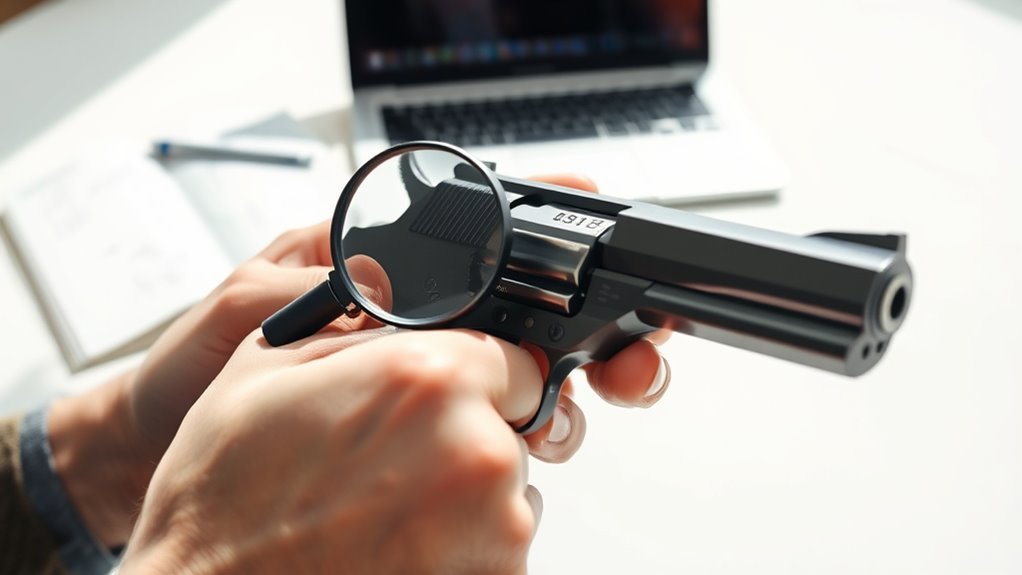
How to Tell if a Gun Is Stolen: Step-by-Step Guide
To tell if a gun is stolen, start by accurately recording its make, model, caliber, and full serial number. Double-check any confusing characters to avoid mistakes.
Next, search state and online databases for potential matches. Keep in mind, these aren’t official sources, so they might not have the complete info.
For certainty, bring the gun or clear photos to your local police station for a definitive NCIC/FCIC check. If a hit comes up, cooperate promptly and keep all paperwork.
Curious about how dealers and law enforcement handle this process and protect buyers? It’s a thorough system designed to keep everyone safe and informed.
Key Takeaways
- Record the firearm’s make, model, caliber, and serial number accurately. Double-check similar characters and note any uncertainties or distinguishing marks.
- Use public stolen-gun databases for a quick preliminary check. But remember, always confirm with local law enforcement for official NCIC/FCIC verification.
- If you find a potential match indicating the gun might be stolen, contact the reporting agency right away. Provide case numbers or bring the firearm—or clear photos of the serial number—to the police.
- Police usually seize firearms that have a confirmed stolen status. They’ll give you a report and an NCIC/FCIC hit response for documentation and to maintain the chain of custody.
- Be honest and cooperative with law enforcement throughout the process. If your ownership is questioned, having proof of purchase can help reduce or even avoid prosecution.
How to Check If a Gun Is Stolen: Quick Overview
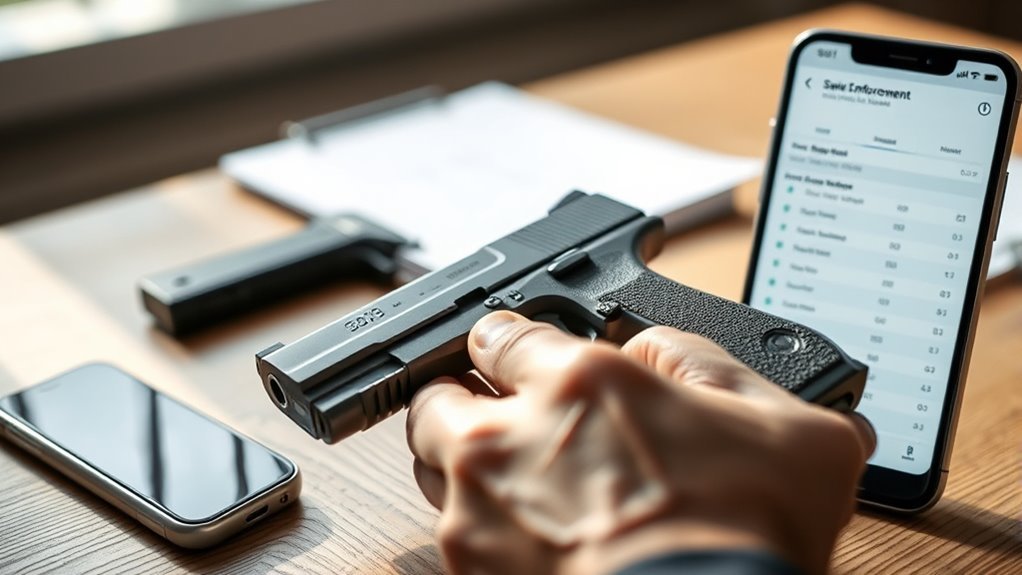
Although only law enforcement agencies can access the official stolen gun databases like NCIC or FCIC, you can still start by checking public resources in certain states such as Florida or Ohio. These states maintain online stolen gun search pages where you can check a gun’s serial number yourself.
Keep in mind, public and user-submitted sites also exist but aren’t authoritative since they rely on voluntary reports. If you suspect a firearm is stolen, the best step is to take the gun or its serial number to your local police or sheriff’s non-emergency line for an official check.
When reviewing results, be careful to avoid transcription errors or duplicate serial numbers by verifying the gun’s make, model, and caliber along with any case numbers provided. It’s always good to double-check to make sure you have the right information.
Record a Gun’s Make, Model, and Serial Number Correctly
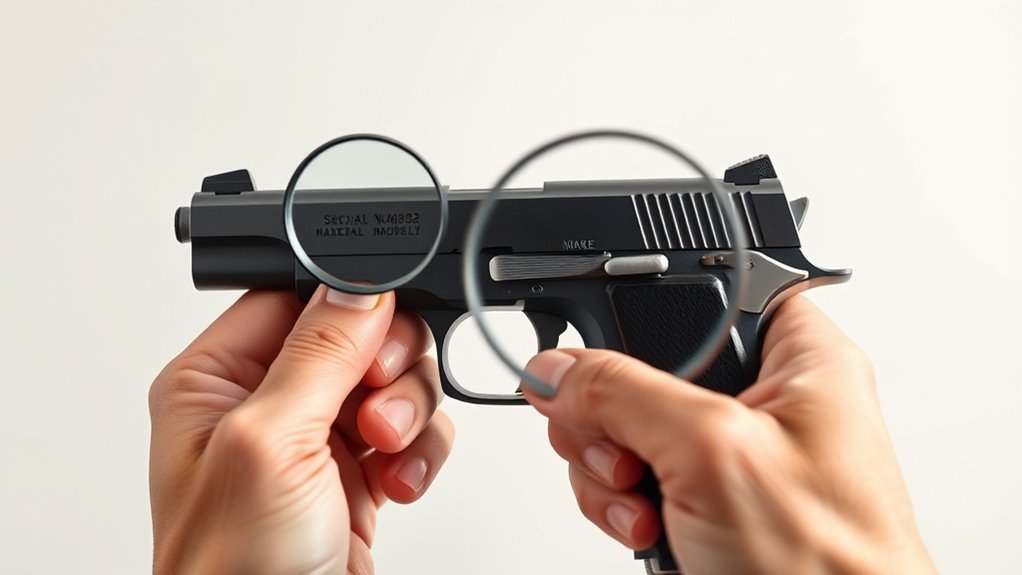
Start by carefully recording the gun’s make, model, caliber, action type, and the full serial number exactly as they appear on the firearm. Pay close attention to similar characters, like the letter O versus the number 0, and I versus 1.
Write the gun’s serial number twice—once by eye and once using a magnified or well-lit view—to catch faint or unclear digits. It’s a good way to make sure you don’t miss anything.
Note any owner-added engravings and the gun’s finish or color. Take some photos of the serial number, the receiver or frame, and any distinguishing marks with a ruler or scale for reference.
If the serial number is worn, try using angled lighting or gentle methods to reveal characters. And don’t forget to record any uncertainties you might have.
Keeping an accurate record guarantees you have reliable information for verification. It’s all about being thorough and precise.
Check State and National Stolen Gun Databases
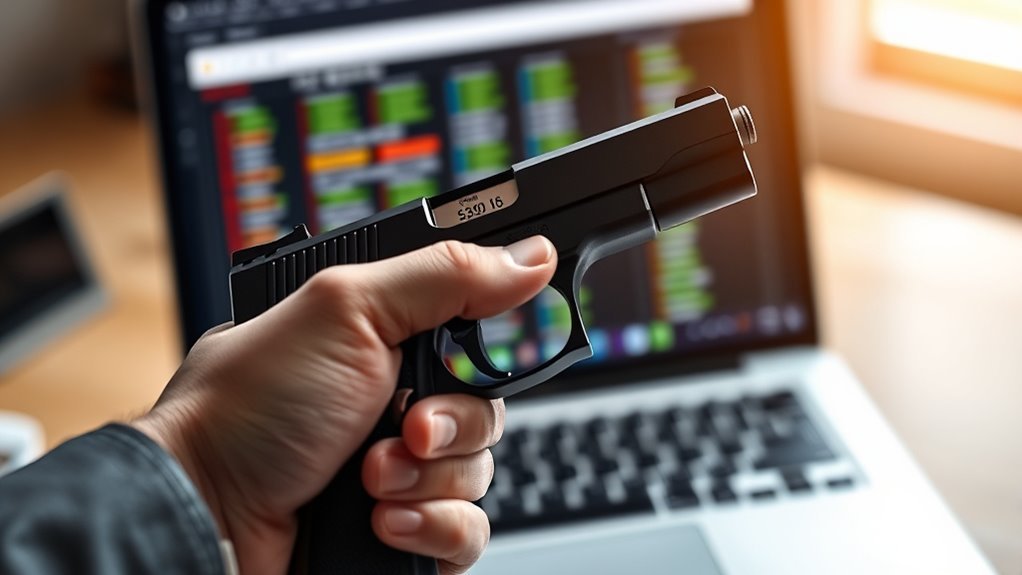
You can start by checking your state’s public stolen gun database online, if available, to see if the serial number matches any reported firearms.
Keep in mind that the most accurate and up-to-date information is held in law enforcement databases like NCIC, which only police can access.
For a quick initial check, you might use online serial number lookup sites, but remember they aren’t official and should never replace a police verification.
Accessing Public Databases
When checking if a gun is stolen, you’ll find that only law enforcement has direct access to the national NCIC/FCIC stolen-gun database. As a civilian, your best bet is to start with public state databases—some states, like Florida and Ohio, offer online tools where you can enter the firearm’s serial number to see if it’s reported stolen.
You can also use user-submitted sites like HotGunz for a preliminary check, but remember these aren’t official and may have errors. If you get a potential match, note the case number and contact the reporting agency to confirm.
When your state lacks a public database, bring the firearm or clear photos of the serial to local law enforcement so they can run an official check for you. It’s always better to double-check than to take any chances!
Law Enforcement Database Limits
Public state databases can provide a helpful starting point, but their scope and accuracy vary widely. When checking for a stolen gun, keep in mind these law enforcement database limits:
The NCIC Stolen Gun File is only accessible 24/7 to law enforcement and federal agencies—not civilians. Some states offer public stolen gun portals, but completeness and availability differ markedly.
NCIC entries rely on exact serial-number matches, but transcription errors and duplicate serial numbers can cause false hits or misses. So, it’s not always foolproof.
For a definitive stolen gun check, you’ll need to bring the firearm to your local police or sheriff’s office. Officers can run a full NCIC/FCIC check and provide official documentation of the results.
Using Online Serial Checkers
Online serial checkers frequently offer a convenient way to get a preliminary idea of whether a firearm might be stolen by searching state and some national databases.
While only law enforcement can access the national NCIC/FCIC stolen gun database directly, some states, like Ohio and Florida, provide public online databases you can check. Florida’s FDLE site is especially useful for weekly updates.
You can also find user-submitted sites like HotGunz, but remember these rely on voluntary reports and aren’t authoritative.
When you check serial numbers, watch out for transcription mistakes—confusing O with 0 or I with 1—and manufacturers sometimes reuse serials, which can cause errors.
If your online check suggests a gun is stolen, take it to local law enforcement for an official check and proper handling.
Use Public Sites to Lookup Stolen Gun Serial Numbers
You can use free online databases and some state-specific sites to check a gun’s serial number for theft reports. Keep in mind that public lookups often rely on voluntary data and may not be complete or official.
If you get a hit, always follow up with law enforcement for an accurate check. It’s better to be safe and double-check than to miss something important.
Free Online Databases
Several websites let you search firearm serial numbers to check if a gun might be stolen, but keep in mind these rely on voluntary user reports and aren’t official or all-encompassing.
When using free online databases, consider these points:
- Most public sites, like hotgunz.com, depend on user-submitted stolen gun reports and may miss many entries.
- Some states offer public search portals, but availability and coverage vary widely.
- Matches often rely solely on serial numbers—always verify the manufacturer, model, and caliber to avoid errors.
- Transcription mistakes and recycled serials can cause false hits; if uncertain, contact local law enforcement for confirmation.
Using these databases can be a helpful first step, but don’t rely solely on them to determine if a gun is stolen.
State-Specific Resources
Many states offer their own public stolen gun databases where you can look up serial numbers. These often provide more reliable and localized information than general user-submitted sites.
For example, Florida’s FDLE Stolen Gun Database and Ohio’s public listings let you search by serial numbers directly on their official websites. Start by checking your state’s law enforcement or FDLE/BCI site for these resources.
When entering serial numbers, be careful to distinguish similar characters like O and 0 or I and 1. Also, include details like make, model, and caliber to improve accuracy.
If you find a match or remain uncertain, take the firearm and proof of ownership to your local police. They can run official checks and confirm its status.
Limitations Of Public Lookups
Although public websites can help you check stolen gun serial numbers, they come with significant limitations that affect their reliability. You should always double check results and never rely solely on public lookups. Here’s why:
Official databases like NCIC/FCIC are only accessible to law enforcement, so public sites can’t query them directly.
Some states offer public lookup pages (e.g., Florida’s FDLE), but coverage is limited and may not be fully up to date.
User-submitted sites depend on voluntary reports, making them incomplete and unverified.
Transcription errors, faint digits, or reused serial numbers can cause false negatives or positives.
If a public lookup shows no match, you must double check with law enforcement for a definitive answer.
What to Do If Your Gun Is Listed as Stolen
If a law enforcement check shows your gun’s serial number as stolen, the police will usually seize the firearm and hold it as evidence until they locate the original owner and resolve the case.
You should obtain and keep a copy of the police report and the NCIC/FCIC hit response, which includes the reporting agency and case number. This documentation proves chain-of-custody and can speed up the return if the gun’s stolen status is later cleared.
If you suspect errors in the serial number, ask detectives to verify details before permanent seizure. Cooperate promptly and honestly with investigators; good-faith proof of purchase can reduce or avoid prosecution.
Expect delays and follow up regularly with the reporting agency using the case number to monitor your gun’s status. It’s important to stay on top of things and keep communication open.
How Dealers and Police Help Verify Gun Serial Numbers
Law enforcement agencies verify gun serial numbers by running them through the NCIC/FCIC stolen gun database. This database provides detailed information like manufacturer, model, and case numbers to confirm matches.
When you bring a gun for verification, police dispatchers and analysts interpret these results to guarantee accuracy despite common data-entry errors or duplicate serials. It’s pretty thorough!
Dealers can’t access NCIC, but many offer private checks for a fee to help confirm a gun’s legitimacy. Here’s how they assist:
- Police cross-check serials against NCIC/FCIC for exact or close matches.
- Analysts review detailed firearm info to confirm stolen status.
- Dealers perform background checks, though not official stolen-gun verifications.
- Police may physically inspect guns to resolve discrepancies.
This process helps you confirm a gun’s legal status safely and accurately. So, you can feel confident about what you’re dealing with.
What Happens When a Stolen Gun Is Recovered by Police
When police recover a stolen gun, they immediately run its serial number through the NCIC/FCIC database. This confirms its status and matches it with the original owner’s information and burglary report.
If the match is exact, they note the reporting agency and case number. Then, they hold the firearm as evidence while notifying the owner.
You’ll usually get your gun back after verification and clearance of any legal holds. But if there’s a mismatch or recycled serial numbers, officers verify details with reporting agencies and may inspect the firearm further.
Sometimes, errors or changed contact info can delay getting your gun back. Detectives might need to correct records or resolve ongoing investigations.
Until then, the recovered gun stays in evidence to guarantee proper handling. This way, everything is done by the book.
Tips to Protect Yourself When Buying or Receiving a Gun
Always take thorough precautions before buying or accepting a gun to protect yourself from unknowingly acquiring stolen property. To make sure you stay safe, follow these key tips:
First, record the gun’s full serial number, make, model, caliber, and take dated photos of unique marks. This can be really helpful for future reference or if the police need to get involved.
Next, ask the seller for government-issued ID and a detailed bill of sale. You might also want to consider a private-party background check through a local FFL to reduce your risk.
Take a close look at the serial number for any signs of alteration or recycling. It’s easy to mix up confusing characters like O vs 0 or I vs 1, so double-check carefully.
If something feels off or suspicious, don’t try to verify the gun yourself. Instead, bring it to your local law enforcement and have them run the serial number.
And finally, avoid rushed or secretive deals — trust your instincts. If it doesn’t feel right, it probably isn’t.
Frequently Asked Questions
Can I Look up Gun Serial Numbers?
You can look up gun serial numbers through some state websites or user-submitted databases, but they’re limited.
For the most accurate info, bring the firearm to local law enforcement to run an official stolen check. It’s the best way to be sure.
Can I Do a Nics Check Online?
Sure, you can totally do a NICS check online—if you’re a superhero or an authorized dealer.
For mere mortals like you, only FFLs and law enforcement can access that info legally and officially.
What Happens if You Have a Gun Without a Serial Number?
If you have a gun without a serial number, you risk legal trouble since it’s often illegal. Authorities may seize it for investigation, so don’t use or transfer it.
Instead, contact law enforcement or an FFL for help immediately. It’s better to be safe and get the right guidance before doing anything with the firearm.
Is There a Free Way to Look up a Gun Serial Number in Texas?
You can’t access a free, official gun serial lookup online in Texas. Instead, contact your local police or sheriff’s office to request a free check.
Make sure to bring the firearm or clear photos with the exact serial number. That way, they can help you out more easily.
Conclusion
You might think it’s unlikely your gun is stolen—until you find it listed in a database by pure coincidence. That’s why you should always record the make, model, and serial number carefully. Check trusted sources before buying or receiving any firearm.
Taking these simple steps not only protects you legally but also helps keep guns out of the wrong hands. Don’t leave it to chance—verify every time. You never know when that coincidence could save you.
Remember, knowing how to tell if a gun is stolen is essential for responsible firearm ownership. Always double-check serial numbers and use reputable databases to confirm a gun’s history. This way, you protect yourself and contribute to preventing illegal gun circulation. Stay vigilant and keep your firearms safe and legal.



One Comment